Key Takeaways
- Cascade and ClearPoint suit leaders who want a full strategy map and scorecard.
- Quantive, Perdoo, WorkBoard and Tability are built around OKRs, from lightweight to enterprise.
- monday.com and Asana are flexible work platforms that track initiatives if you supply the structure.
- Software only helps once priorities, owners and a review rhythm are already in place.
The Best Strategy Execution Software at a Glance
| Tool | Type | Best for |
|---|---|---|
| 1. Cascade | Strategy execution platform | Linking strategy, initiatives and KPIs in one place |
| 2. Quantive StrategyAI | OKR and strategy platform | Companies that run strategy on OKRs |
| 3. Perdoo | OKR and KPI software | Teams that want a free start with OKRs and KPIs |
| 4. monday.com | Work management | Teams that want flexible boards for initiatives and owners |
| 5. Asana | Work management | Linking company goals to the daily tasks of teams |
| 6. WorkBoard | Enterprise OKR platform | Large organizations running OKRs across many teams |
| 7. ClearPoint Strategy | Strategy management software | Scorecards and reporting for the leadership team |
| 8. Tability | Goal and OKR tracking | Small teams that want lightweight goal tracking |
The 8 Best Strategy Execution Software Tools, Ranked
I start with platforms built for strategy and move toward general work tools that you can adapt. Software is the last piece of the system, not the first. In my strategy execution consulting work, I only introduce a platform after the owners, measures and rhythm exist, because a tool on top of unclear priorities makes confusion look tidy.
Cascade
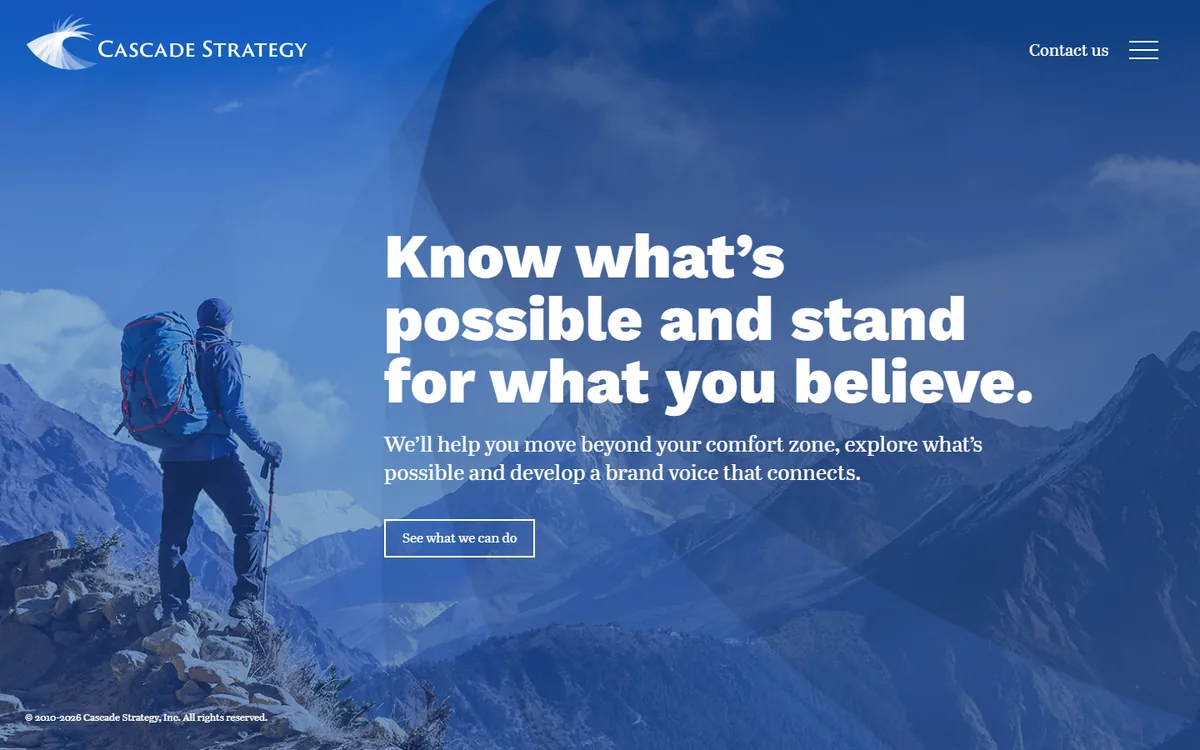
The Most Complete Platform for Linking Strategy, Initiatives and KPIs, With Plenty of Reviewer Praise
Cascade connects your plan, initiatives, KPIs and OKRs, and shows progress from the top-level strategy down to individual tasks.
Cascade is the tool I think of first when a client says, "we have a plan, but we can't see it moving." It models the plan as a cascade from vision to objectives to initiatives and measures, with owners and status at every level, and it rolls the progress back up for leaders.
What I value most is that it fits the method rather than forcing one. Teams that use OKRs, a balanced scorecard or a simple initiative list can all set it up in a way that matches how they already work. The cost is that you have to define the structure carefully at the start. If you want the model behind that structure, my strategy execution framework walks through it.
Pros of Cascade
- Shows how every initiative links to the strategy
- Works with OKRs, scorecards or simple initiative lists
- Reporting that leaders can read quickly
Cons of Cascade
- Needs careful setup of the plan structure
- Pricing is not published
Cascade Pricing
Capterra shows a free version and a free trial, with Essentials and Enterprise plans available only by contacting the vendor. Pricing is not published.
Cascade Reviews
- G2: 4.8/5 average (from +260 reviews)
- Capterra: 4.9/5 average (from +25 reviews)
Quantive StrategyAI
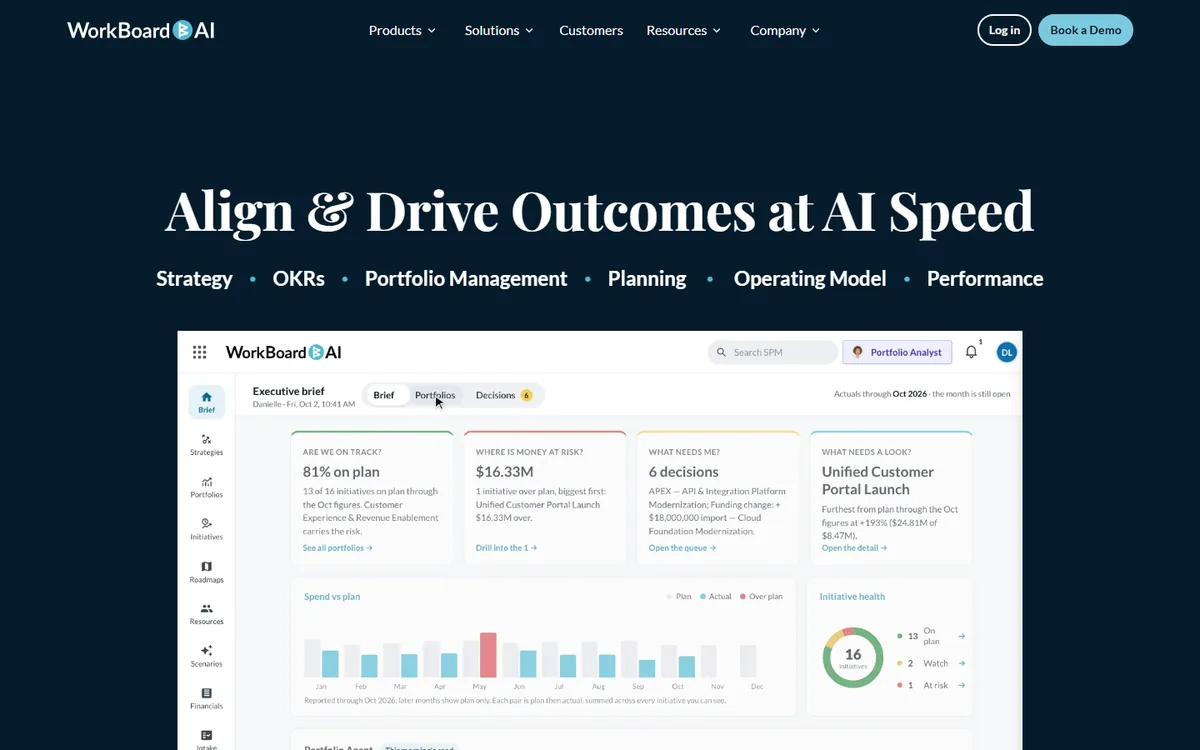
A Strong OKR-Based Platform for Companies That Manage Strategy Through Objectives and Key Results
Quantive StrategyAI, formerly Gtmhub, is an OKR and KPI platform with integrations that pull results from your business tools.
Quantive is built around OKRs. You set objectives, define key results and connect them to data from tools such as Jira, Salesforce or Slack, so progress updates itself where possible. Weekly reflections prompt owners to explain what moved.
I recommend it for teams that have already decided to use OKRs and want automatic data. Capterra reviewers praise ease of use and support, and mention limited notification settings. If your teams still argue about priorities, solve that first with the practices in my guide to strategy execution best practices, since software will not settle it.
Pros of Quantive StrategyAI
- Pulls key result data from connected tools
- Weekly reflections keep owners reporting
- Good support, according to reviewers
Cons of Quantive StrategyAI
- Best for teams already committed to OKRs
- Limited control over notifications
Quantive StrategyAI Pricing
Capterra lists the Teams plan from $9 per user per month. There is a free trial and no free version. Business and Enterprise plans are custom, and Enterprise requires a minimum of 25 users.
Quantive StrategyAI Reviews
- G2: Rating not shown on the G2 page when this article was updated
- Capterra: 4.7/5 average (from +90 reviews)
Perdoo
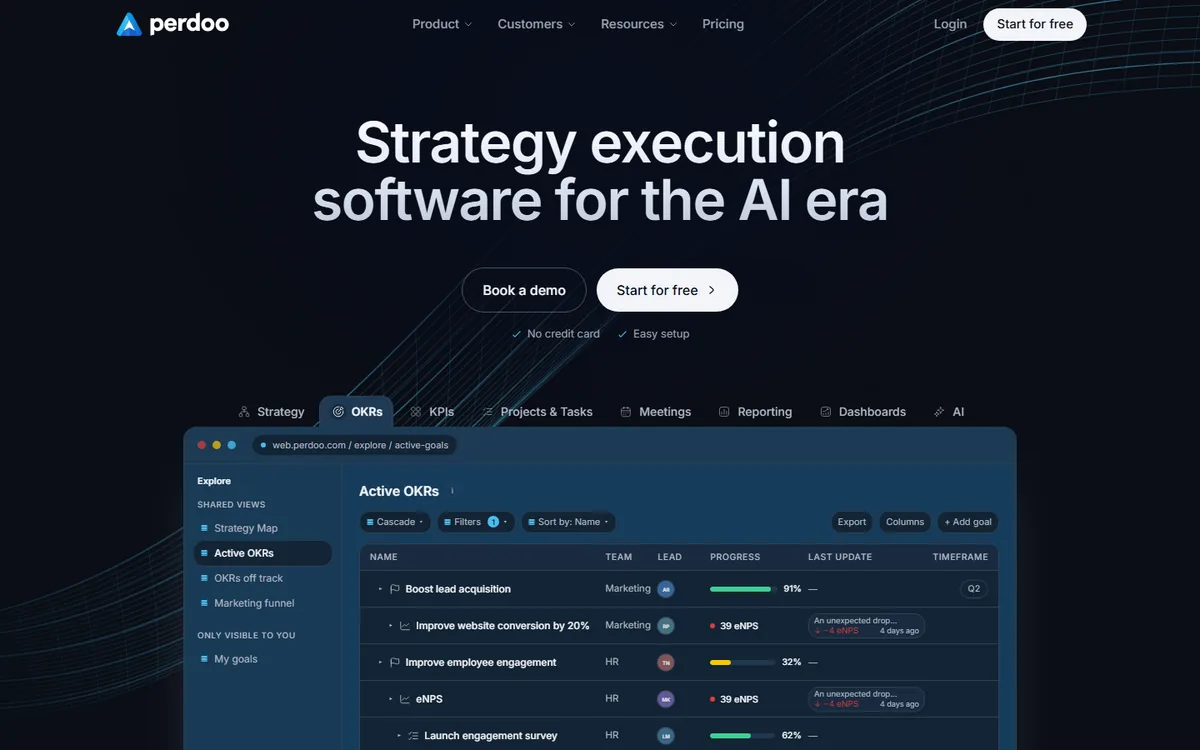
A Clear, Affordable OKR and KPI Platform With a Free Plan to Test the Method
Perdoo handles OKRs, KPIs and check-ins, with a simple interface that helps teams link goals across levels.
Perdoo makes OKR work approachable. The interface is clean, goals link up from team to company level, and check-ins remind owners to update progress. A free plan lets you test the method before you pay.
It is lighter than Cascade on initiative and project tracking, so I pair it with a task tool where teams need detailed plans. For small and mid-sized companies that want OKRs without a heavy rollout, it is a sensible first choice.
Pros of Perdoo
- Free plan that covers core OKR and KPI features
- Clear linking of goals across levels
- Prices are low per user
Cons of Perdoo
- Light on initiative and project tracking
- Some advanced features sit in higher plans
Perdoo Pricing
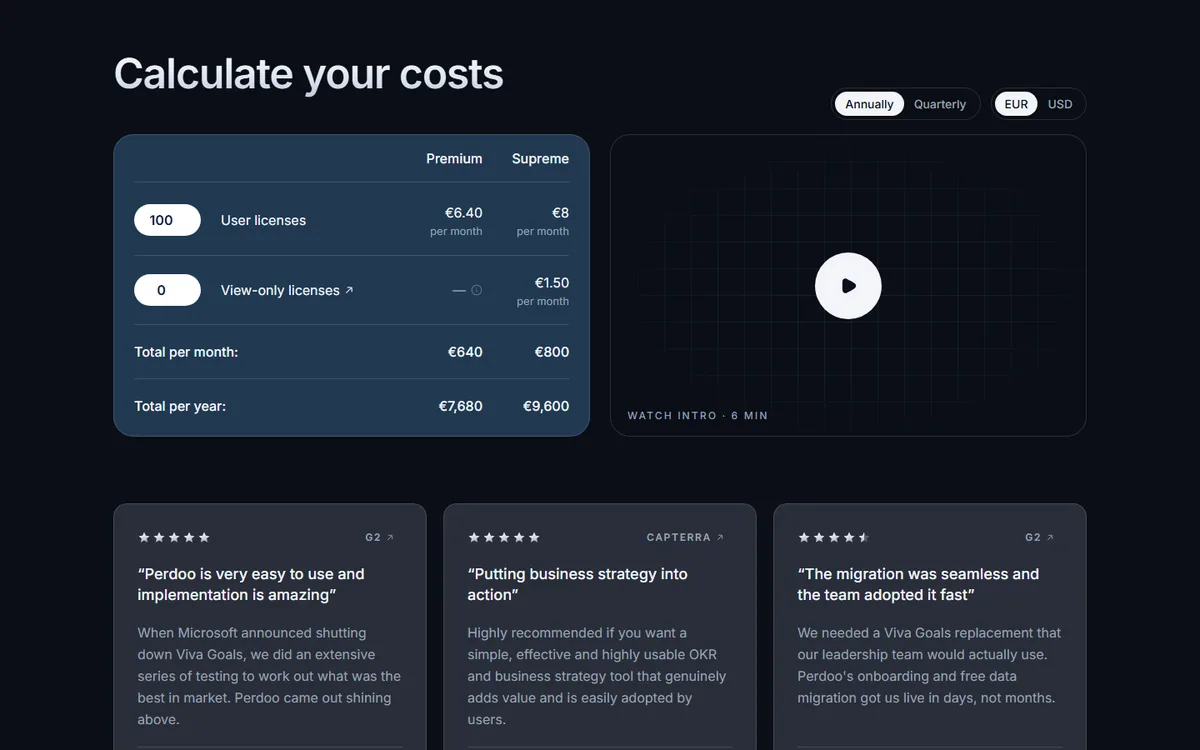
Perdoo has a free plan at €0. G2 lists the Premium plan at €6.40 per user per month and Supreme at €8 per user per month.
Perdoo Reviews
- G2: 4.4/5 average (from +550 reviews)
- Capterra: 4.4/5 average (from +75 reviews)
monday.com
The Most Flexible Option for Teams That Want Initiatives, Owners and Dashboards in a Familiar Board Format
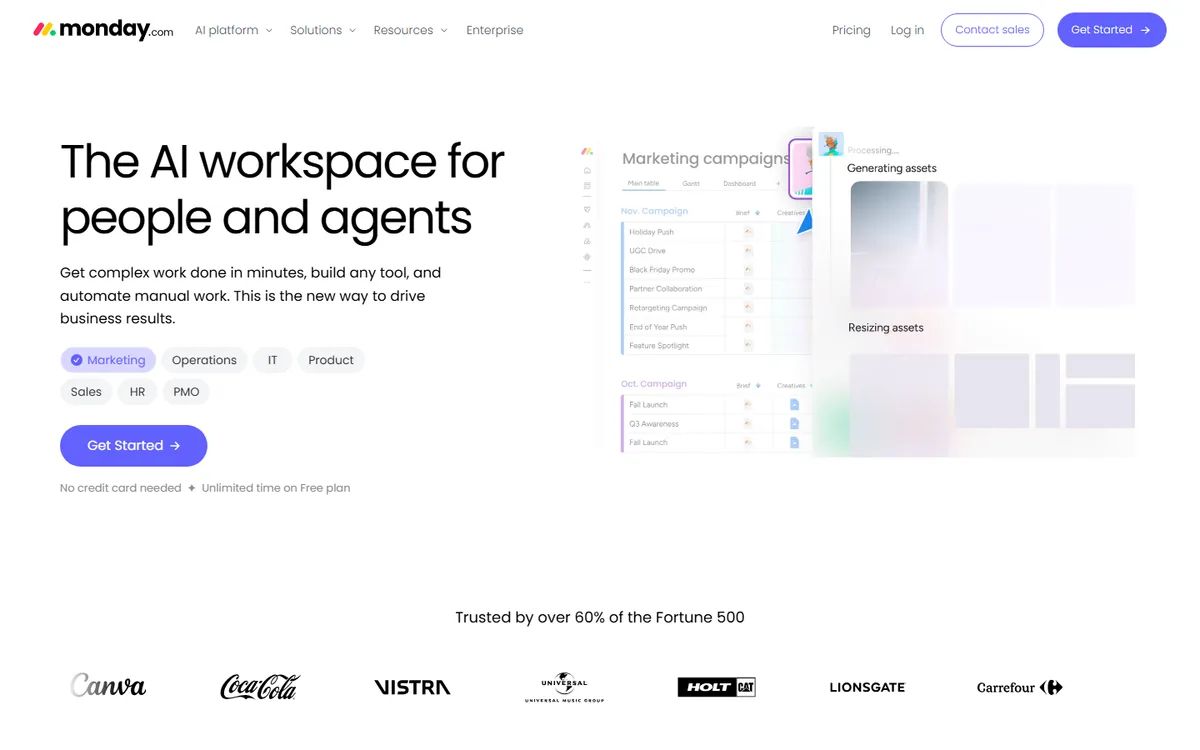
monday.com is a flexible work platform with boards, dashboards and automations that adapt to strategy tracking with some setup.
monday.com is not a strategy tool by design, but it is one of the easiest ways to track initiatives. You build a board with owner, status, date and a measure column, then roll the boards up into a dashboard for the leadership review. Automations nudge owners when updates are late.
It gives you flexibility rather than a prebuilt strategy method, so you supply the structure. I use it when a client's teams already work in monday and I want to avoid a new system. The risk is a board for everything and no clarity on priorities, which is why you should cap the number of initiatives first.
Pros of monday.com
- Easy to adapt to initiatives, owners and status
- Dashboards roll up progress across boards
- Large library of integrations and templates
Cons of monday.com
- No built-in strategy method
- Boards can multiply without clear rules
monday.com Pricing
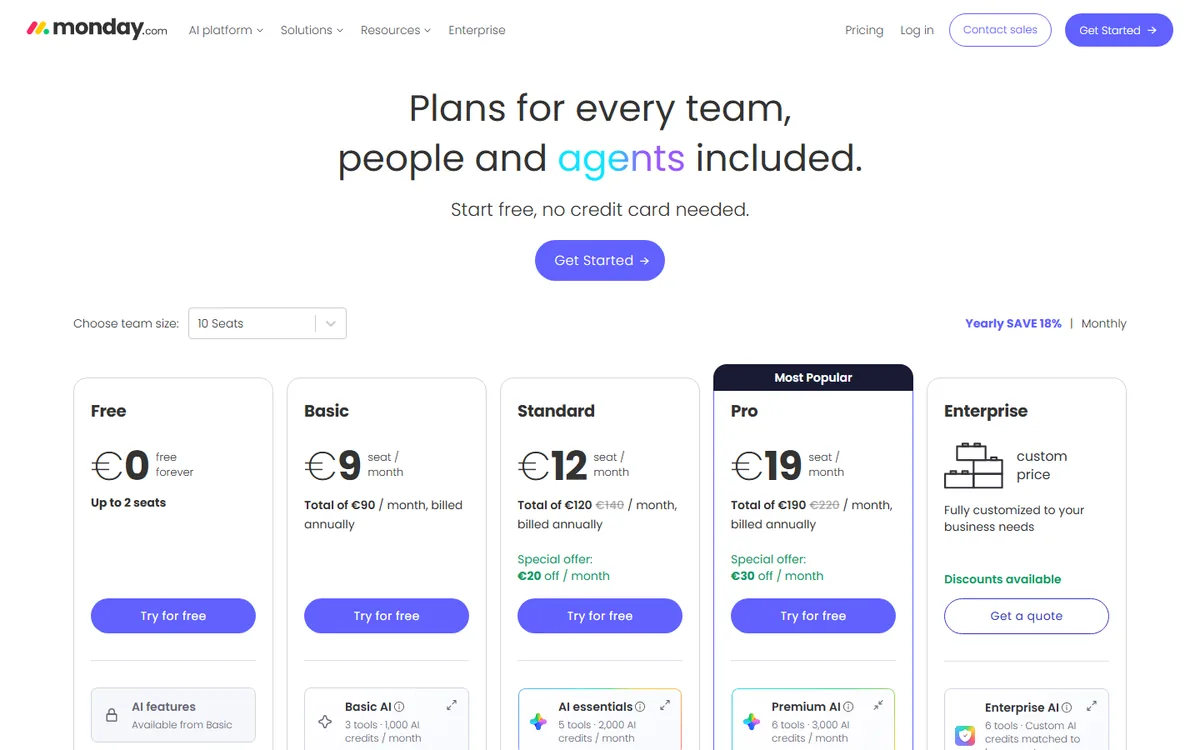
monday.com has a free plan. G2 lists the Basic plan at $9 per user per month and the Standard plan at $12 per user per month. Capterra notes a three-seat minimum on paid plans billed annually.
monday.com Reviews
- G2: 4.7/5 average (from +17,900 reviews)
- Capterra: 4.6/5 average (from +6,100 reviews)
Asana
A Reliable Way to Link Company Goals to the Daily Tasks Your Teams Already Manage
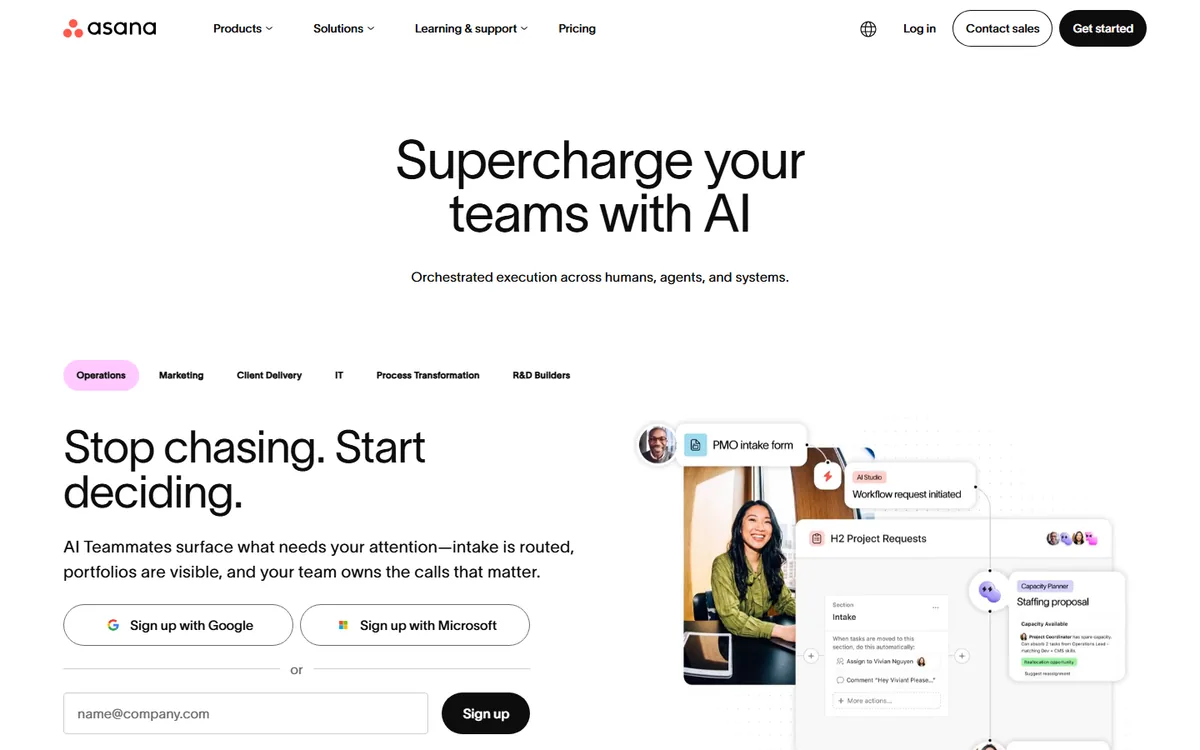
Asana manages tasks and projects and links them to goals, so you can see which work supports which objective.
Asana has a goals feature that connects company objectives to the projects and tasks underneath them. If your teams already plan their work in Asana, that link gives leaders a view of progress without a second system.
The strategy layer is simpler than in dedicated platforms. I find it fits companies with strong project management habits that want a light link to goals. For a full scorecard with KPIs and strategy mapping, a dedicated tool does more.
Pros of Asana
- Goals link to projects and tasks
- Familiar to many teams already
- Free plan for small groups
Cons of Asana
- Strategy features are lighter than in dedicated tools
- Goal and reporting features sit in paid plans
Asana Pricing
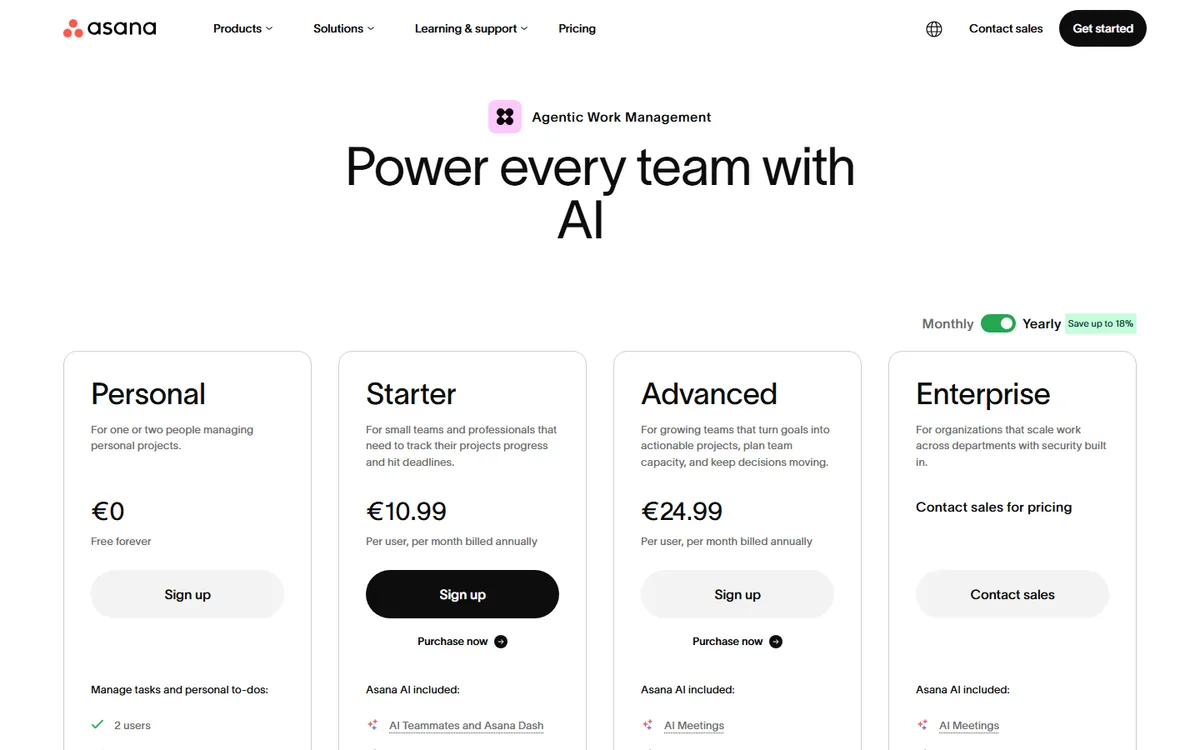
Asana has a free Personal plan. G2 and Capterra list the Starter plan at $10.99 per user per month, with higher plans adding goals, portfolios and reporting.
Asana Reviews
- G2: 4.4/5 average (from +14,100 reviews)
- Capterra: 4.5/5 average (from +13,700 reviews)
WorkBoard
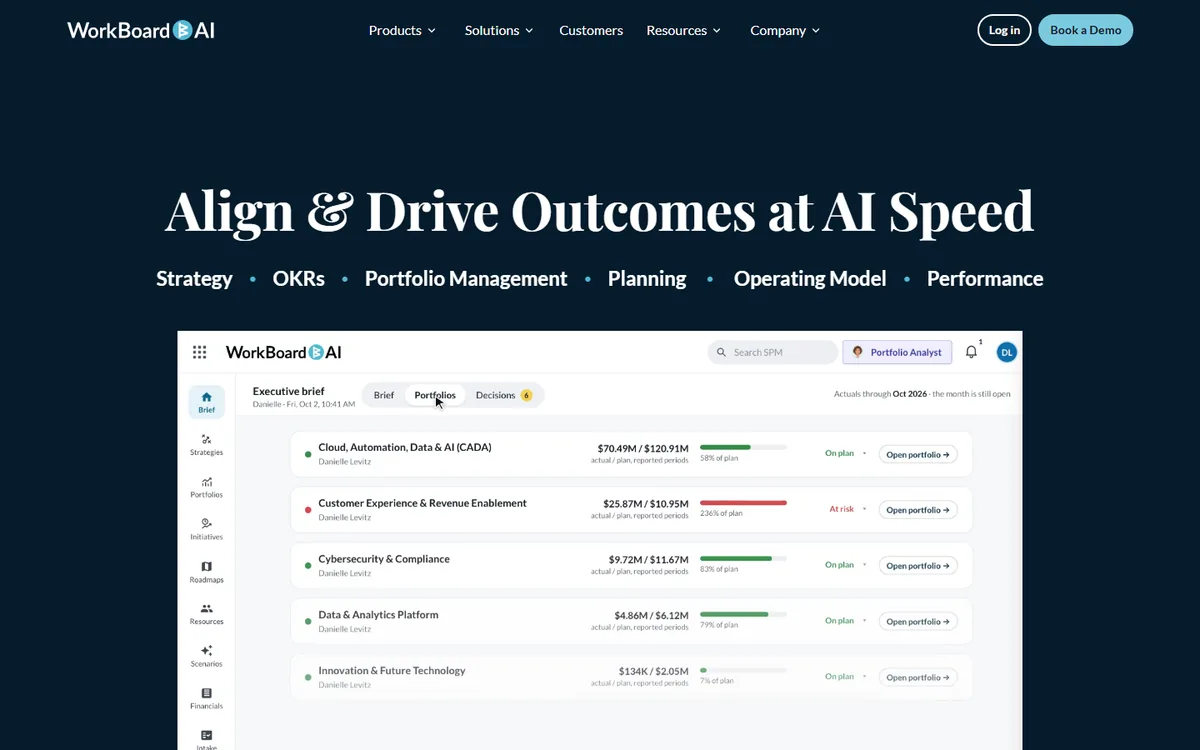
An Enterprise-Grade Platform for Running OKRs and Strategy Reviews Across Many Teams
WorkBoard is an enterprise OKR and strategy execution platform with tools for leadership reviews and alignment.
WorkBoard targets large organizations that need a formal system for OKRs, results reviews and alignment across many units. It supports business reviews, links to enterprise data and includes coaching resources for teams new to the method.
The price and the rollout effort match that scope. G2 reviewers report about two months to implement and roughly eight months to see a return. For smaller companies it is more than you need.
Pros of WorkBoard
- Built for alignment across large organizations
- Supports structured leadership reviews
- Strong ratings from enterprise users
Cons of WorkBoard
- Pricing is not clearly published
- Long implementation, according to G2 reviewers
WorkBoard Pricing
G2 lists a Basic edition at $20 per month, notes that some plans need custom pricing and shows a free trial but no free plan. Confirm current pricing with the vendor.
WorkBoard Reviews
- G2: 4.6/5 average (from +300 reviews)
- Capterra: Not checked
ClearPoint Strategy
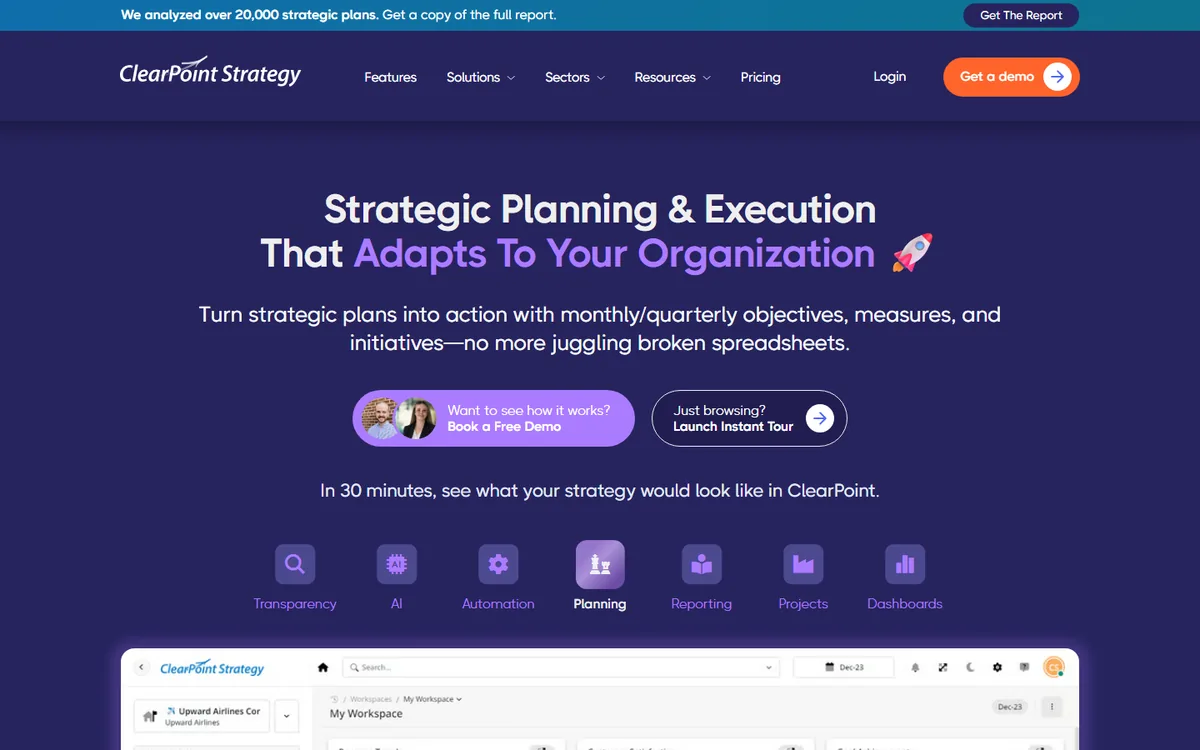
A Reporting-Focused Platform for Scorecards and Strategy Reviews at the Leadership Table
ClearPoint Strategy builds scorecards and strategy reports that link measures, initiatives and owners.
ClearPoint is built around reporting. You map objectives to measures and initiatives, and the platform produces scorecards and reports for strategy reviews. Many public-sector and mid-sized organizations use it to keep leadership meetings focused on data.
It is stronger on reporting than on day-to-day task work, so teams often keep a separate tool for tasks. The pricing is unusual: G2 lists the starter plan per feature per month, which means you should map your needs to the plan before you buy.
Pros of ClearPoint Strategy
- Strong scorecard and report building
- Strategy maps link measures and initiatives
- Highly rated by reviewers on both sites
Cons of ClearPoint Strategy
- Less suited to everyday task tracking
- Per-feature pricing needs careful scoping
ClearPoint Strategy Pricing
G2 and Capterra list the starter plan at $50 per feature per month. Capterra notes no free trial.
ClearPoint Strategy Reviews
- G2: 4.6/5 average (from +175 reviews)
- Capterra: 4.8/5 average (from +50 reviews)
Tability
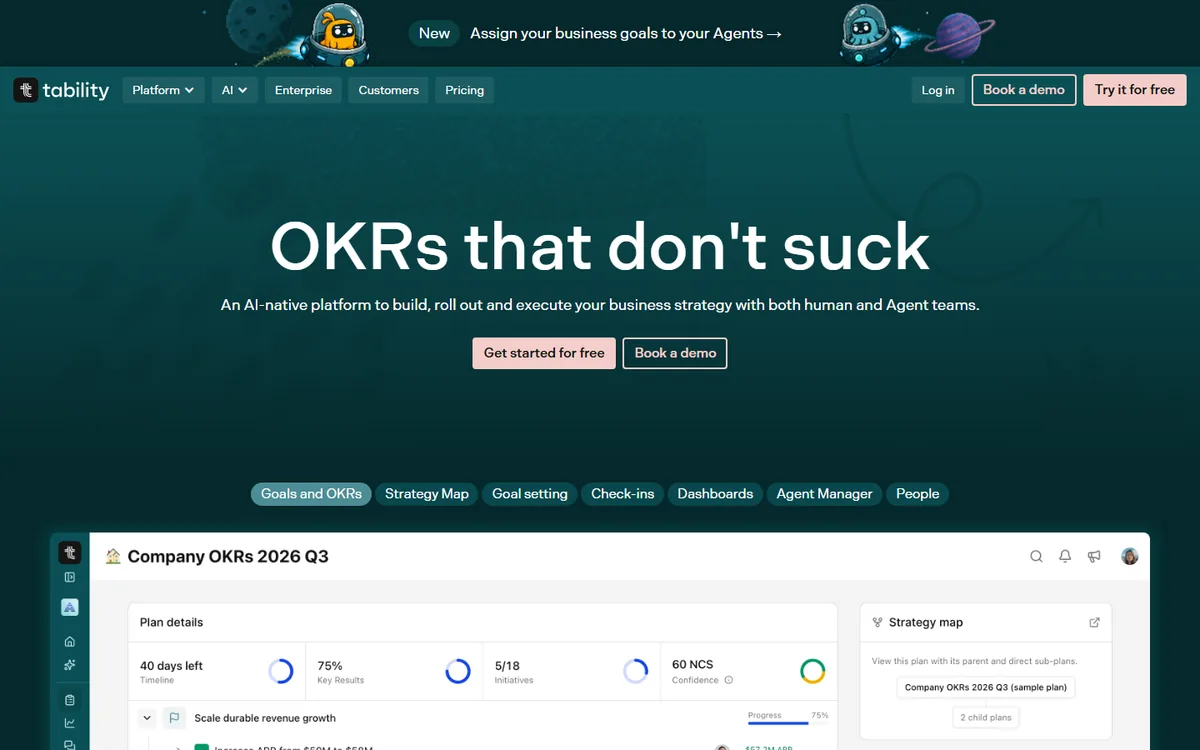
A Lightweight Goal Tracker That Small Teams Can Start Using in an Afternoon
Tability tracks goals and OKRs with automated check-ins, AI-assisted objective writing and simple reports.
Tability is light on setup. You write goals, assign owners and let check-ins collect updates. Reports summarize progress for leaders, and integrations with Asana, Jira, Notion and Google Sheets keep data in sync.
The review base on Capterra is tiny, with only a few reviews, so I lean on G2 for a signal. It is a good fit for small teams that want accountability without a platform rollout. Larger companies will want more governance.
Pros of Tability
- Quick to set up and easy to use
- Automated check-ins keep updates flowing
- Low price per user
Cons of Tability
- Less governance for large organizations
- Few Capterra reviews to learn from
Tability Pricing
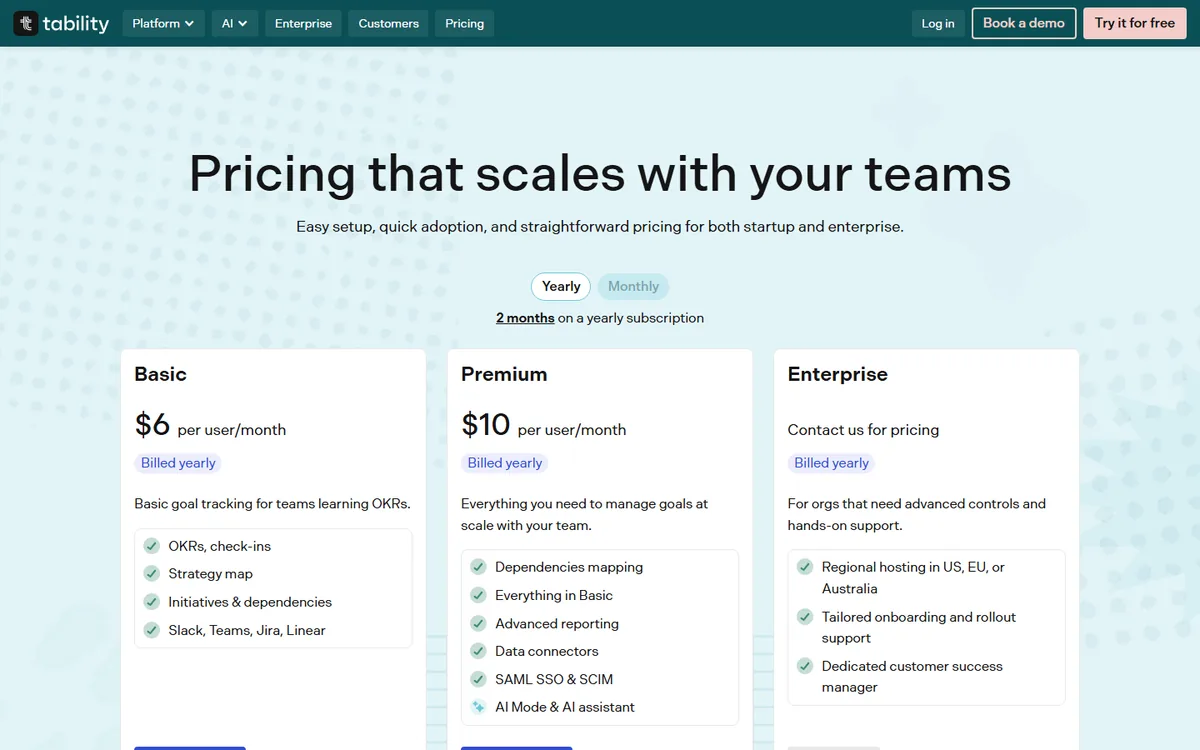
Tability has a free version. G2 and Capterra list the Basic plan at $6 per user per month, and Capterra lists the Premium plan at $10 per user per month.
Tability Reviews
- G2: 4.6/5 average (from +160 reviews)
- Capterra: 4.7/5 average (from 3 reviews)
Estimate the Return on Strategy Execution Software
Before you pick a plan, check whether the numbers work for you. Enter the hours your team spends compiling status reports and chasing updates, and the monthly price of the plan you are considering, to see what it could return in a year.
Will the Tool Pay Off for You?
Use the sliders to enter your workload and the plan you are considering.
How to Choose Strategy Execution Software
In my experience, how your teams already work decides more than any feature list. Before you compare vendors, I suggest you answer four questions:
- Do you run on OKRs, a balanced scorecard or a simple initiative list?
- Do your teams already use a work tool that could carry the plan?
- Who will update progress, and how long can an update take?
- What do your leaders need to see, and how often?
If you run on OKRs, look at Quantive, Perdoo, WorkBoard or Tability. If you want a strategy map and scorecard, look at Cascade or ClearPoint. If your teams live in a work tool, check monday.com or Asana first. Before you buy anything, compare the ideas in my strategy execution examples with your own plan, and read about strategy execution challenges that software alone does not fix.
Questions About Choosing Strategy Execution Software
What Is Strategy Execution Software?
It is software that tracks a strategy as owned initiatives with targets and progress. It often includes OKRs, KPIs, scorecards, reports and reminders. It gives leaders a shared view of what is moving and what is stuck, and it gives owners a place to report.
Do I Need Software to Execute Strategy?
Not at first. A shared spreadsheet and a weekly meeting cover the basics for many teams. Software helps when you have many initiatives, several teams and a need for history and reporting.
What Is the Best Strategy Execution Software for Small Businesses?
For small teams I would start with Perdoo or Tability if you want OKRs, or with monday.com or Asana if you already use them. All four have free or low-cost entry plans. Check the limits of the free plans before relying on them.
What Is the Difference Between OKR Software and Strategy Execution Software?
OKR software tracks objectives and key results. Strategy execution software is a broader term that also covers scorecards, initiative portfolios and strategy maps. Several tools in this list cover both, with different strengths.
How Long Does It Take to Roll Out a Tool Like This?
A small team can start in a few days. A company-wide rollout with integrations and training usually takes weeks, and G2 reviewers report about two months for WorkBoard. Plan time for defining the structure and training owners, not only for setup.
Can I Connect These Tools to My Existing Apps?
Most connect to common tools such as Jira, Slack, Google Sheets, Salesforce or Microsoft products. Quantive lists 60+ integrations on Capterra, and Tability lists 20+. Check that the apps you need are supported on the plan you are considering.
How Much Does Strategy Execution Software Cost?
Entry plans in this list run from free to about $20 per user per month, according to G2 and Capterra, while enterprise platforms are quoted individually. Total cost depends on how many editors you need, so count the people who must update progress, not only those who read reports.
Heads up: vendors change prices, plans and ratings often. Everything was checked at the last update date, but confirm on each vendor’s website first. This article is not legal or financial advice.
Was this article helpful?
Thank you for letting us know.
Russell Tennant
Russell leads the Brook editorial team and works with our consultants to turn real client engagements into practical guides on roadmaps, go-to-market planning, growth and competitive strategy. Before joining Brook, he spent 11 years in strategy and product marketing roles at software and financial services companies. He has since edited more than 300 articles on strategy practice and drawn on roadmaps and growth plans from over 100 client projects. He is based in Denver, Colorado.