Key Takeaways
- Name one owner and one measure for each initiative before the first review.
- Size the plan to the hours teams really have and defer the rest in writing.
- A weekly, monthly and quarterly rhythm with recorded decisions catches problems early.
- Change targets in the open, with a reason, or the plan loses credibility.
Most execution advice comes down to habits you can start this month. I list eight that I rely on in strategy execution consulting projects, each with a short explanation and a list of what to do and what to avoid. They are sorted roughly in the order I introduce them with clients, so the first ones create the footing the later ones need.
If you want the underlying model first, my strategy execution framework explains the five components these practices belong to. Otherwise, read on and pick the two or three that match your biggest gap.
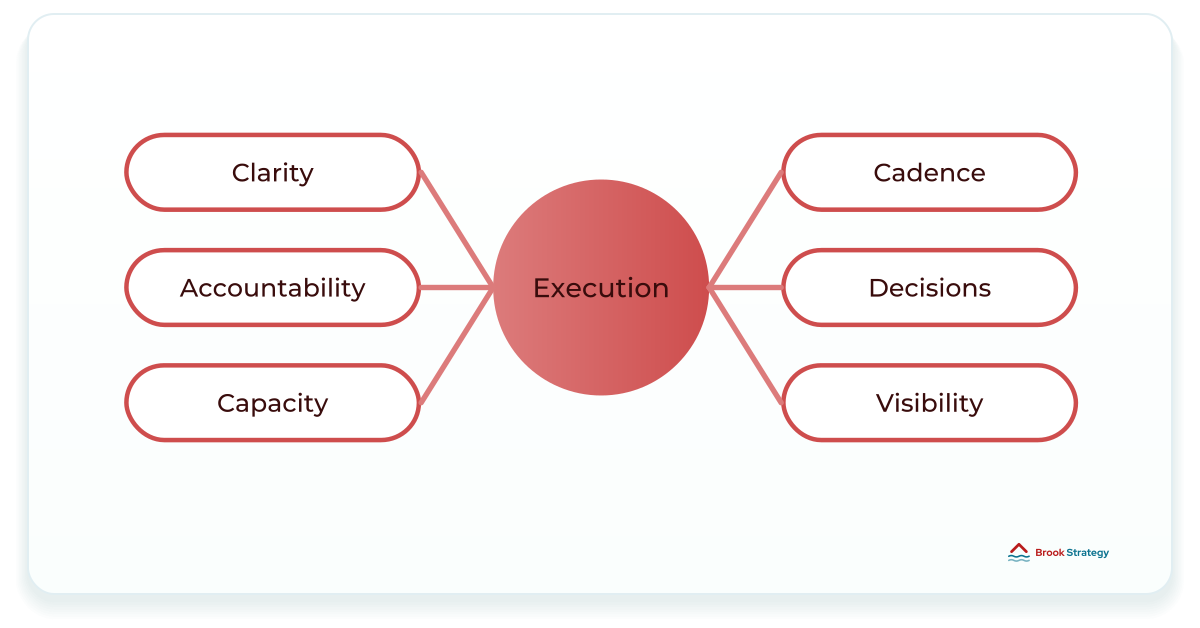
The Eight Practices Side by Side
| Practice | Do this | Avoid this |
|---|---|---|
| 1. Clarity first | Fit the strategy and the three to five priorities on one page, plus a short list of what you will stop | Long documents full of terms that need a glossary, or a list of ten priorities that all sound urgent |
| 2. Accountability | Name one person, one measure, one baseline and one target date for each initiative | Assigning a team or committee as owner, or tracking five measures where one would show whether it works |
| 3. Capacity | Estimate the hours each team can give to strategic work and size initiatives against that figure | Adding a new priority without removing one, or assuming people will find time on top of operations |
| 4. Cadence | Hold short weekly check-ins, a monthly scorecard review and a quarterly reset | Reviewing strategy only at the annual offsite or turning reviews into status presentations with no decisions |
| 5. Decisions | Agree the rule for settling conflicts, such as the highest-impact initiative wins unless a leader overrules in writing | Letting conflicts sit until the quarterly meeting or settling them in private chats nobody else can see |
| 6. Communication | Give managers a one-page briefing, a short Q and A and a way to feed back what their teams say | A single all-hands announcement followed by silence, or assuming managers will translate the strategy on their own |
| 7. Visibility | Show owner, measure, baseline, target, current value, status and one line of explanation for each initiative, on one page | Dashboards with dozens of charts that nobody checks, or green statuses with no explanation |
| 8. Adaptation | Revisit assumptions each quarter, drop initiatives that no longer fit and write down each change with the reason and approver | Letting targets drift quietly, or keeping an initiative alive only because it was announced |
The Eight Practices in Detail
1. Write the Strategy in Words a New Hire Understands
Plain wording is the cheapest way to improve execution. When I interview managers about a plan, the ones who cannot restate it are usually working from a slide that was written for a board, not for them.
A useful test is the elevator version. If the head of one team cannot explain to another team what the company is trying to do this year in two sentences, the plan is not yet clear enough to execute.
Do This
Fit the strategy and the three to five priorities on one page, plus a short list of what you will stop. Test it by asking five managers to state the priorities without notes.
Avoid This
Long documents full of terms that need a glossary, or a list of ten priorities that all sound urgent.
2. Give Every Initiative One Owner and One Measure
Owners do not have to do the work. They have to know where it stands and escalate when it is stuck. This is the practice that most often changes results within a month.
Pick measures that move within the review period. A measure that only changes once a year cannot support a monthly review, so add a leading indicator, such as qualified conversations per week.
Do This
Name one person, one measure, one baseline and one target date for each initiative. Let the owner pull in help from anywhere in the company.
Avoid This
Assigning a team or committee as owner, or tracking five measures where one would show whether it works.
3. Fit the Plan to Real Capacity
In my client work, teams often have 10 to 20 percent of their time available for strategic work. Plans written as if the figure were 50 percent fail quietly, because people work longer hours for a month and then stop.
A short capacity table per team, shown at each leadership review, makes the trade-offs visible. When a new request arrives, the question becomes what moves out, not whether it can be squeezed in.
Do This
Estimate the hours each team can give to strategic work and size initiatives against that figure. Defer what does not fit, with a date to look again.
Avoid This
Adding a new priority without removing one, or assuming people will find time on top of operations.
4. Run a Weekly, Monthly and Quarterly Rhythm
Rhythm is where most plans are won or lost. A weekly check-in of 15 minutes per owner finds blockers while they are small, and a monthly review gives leaders a place to settle trade-offs.
Fit the cadence to your existing calendar. If a new meeting is needed, drop an old one. Meetings that only repeat information are the first thing to cut.
Do This
Hold short weekly check-ins, a monthly scorecard review and a quarterly reset. End every meeting with recorded decisions.
Avoid This
Reviewing strategy only at the annual offsite or turning reviews into status presentations with no decisions.
5. Decide Trade-Offs Fast and in the Open
When two initiatives compete for the same people, the delay costs more than the wrong choice. A simple decision rule and a named decider shorten the wait from weeks to days.
Publishing decisions has a side effect I value: it teaches teams how leaders think, so later conflicts get resolved lower down without escalation.
Do This
Agree the rule for settling conflicts, such as the highest-impact initiative wins unless a leader overrules in writing. Publish the decision and the reason.
Avoid This
Letting conflicts sit until the quarterly meeting or settling them in private chats nobody else can see.
6. Equip Middle Managers to Explain the Strategy
Middle managers turn strategy into daily work. If they cannot explain it, their teams fill the gap with local priorities that pull in different directions.
A short feedback loop helps in both directions. Managers raise capacity problems early, and leaders learn which parts of the message did not land. For the common reasons strategy communication fails, see my overview of strategy execution challenges.
Do This
Give managers a one-page briefing, a short Q and A and a way to feed back what their teams say. Check that their teams can name the priorities after a month.
Avoid This
A single all-hands announcement followed by silence, or assuming managers will translate the strategy on their own.
7. Use a Scorecard People Can Read in Five Minutes
A good scorecard prompts a conversation, not a presentation. When status is red, the line beneath it should say what is needed and from whom.
If you are choosing software to carry the scorecard, compare the options on how fast an owner can update it. Tools that take ten minutes per update get ignored. My review of strategy execution software covers prices and ratings for eight platforms.
Do This
Show owner, measure, baseline, target, current value, status and one line of explanation for each initiative, on one page.
Avoid This
Dashboards with dozens of charts that nobody checks, or green statuses with no explanation.
8. Review the Plan and Change It on the Record
Plans age fast. A quarterly reset that removes initiatives is as valuable as one that adds them, and it signals that stopping is allowed.
The change log becomes a record of what your company learned. After a year, it is one of the best inputs to the next planning cycle, and it shows your board that adjustments were reasoned. Companies that put this practice to work are described in strategy execution examples.
Do This
Revisit assumptions each quarter, drop initiatives that no longer fit and write down each change with the reason and approver.
Avoid This
Letting targets drift quietly, or keeping an initiative alive only because it was announced.
Where to Start With Limited Time
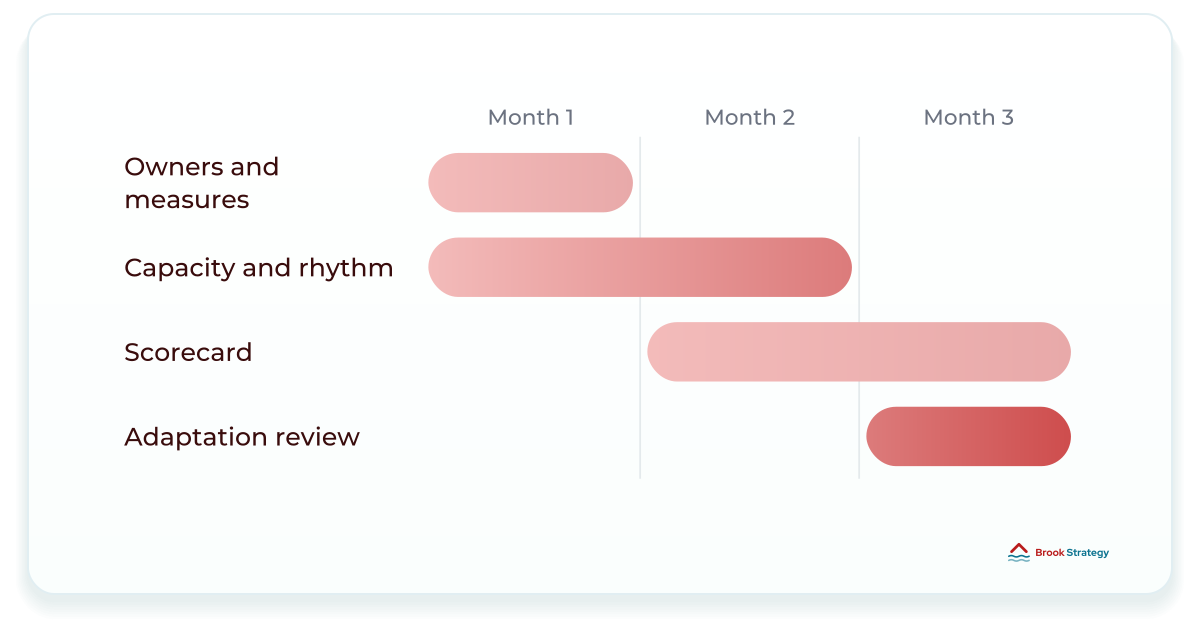
You do not need all eight at once. If you have an hour, do practice 2: name one owner and one measure for every initiative and send the list to the leadership team. If you have a day, add practices 1 and 3 by writing the one-page priorities and sizing the plan against capacity. If you have a month, add the rhythm and the scorecard.
Order matters more than speed. Owners and measures come first, then a capacity count, then the weekly rhythm and finally the scorecard.
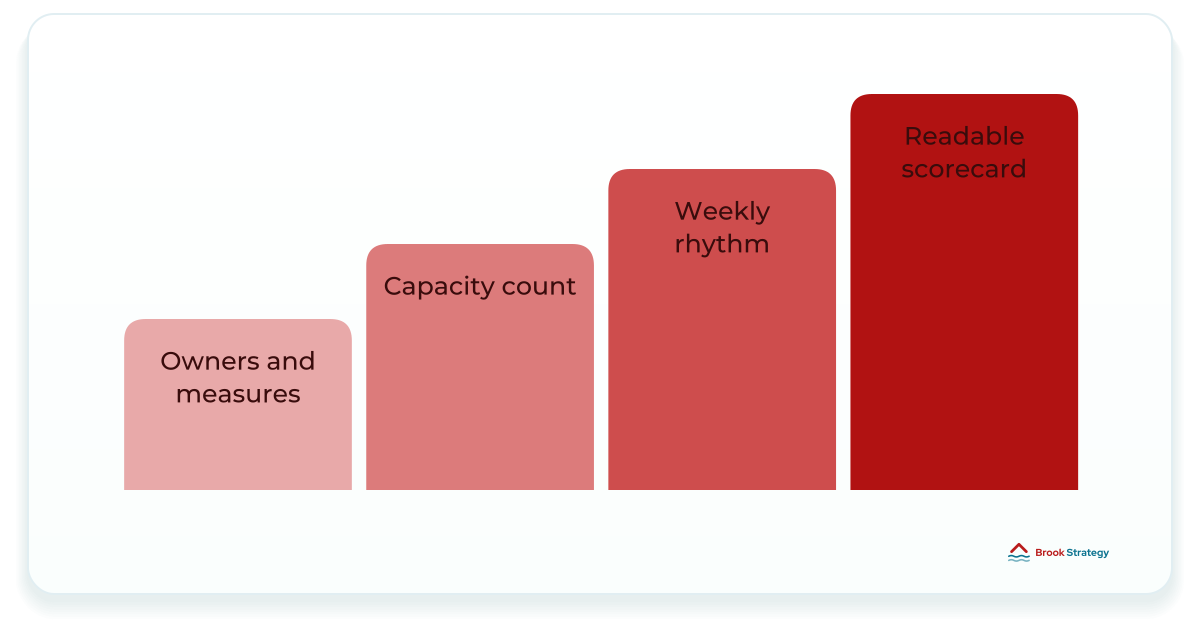
I would leave the adaptation practice for the second quarter, when you have real results to react to. The same goes for software: it helps after the routines hold, not before.
How to Choose the Practices That Fit Your Plan
Match the practice to the symptom you see. Missed deadlines with no surprise point to ownership and cadence. Managers who disagree on priorities point to clarity and communication. Teams who say they are overloaded point to capacity. Old plans that nobody mentions point to adaptation.
Ownership problems usually show up first as missed dates, so look there before you change the rhythm or the tools.
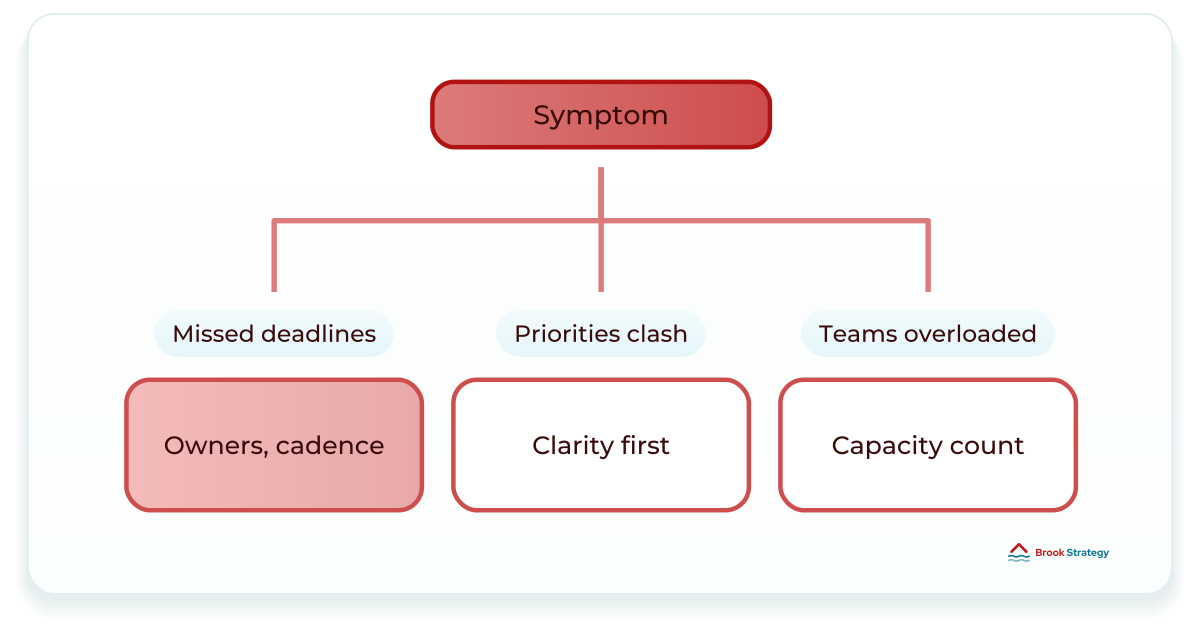
- Pick the one symptom that costs you the most this quarter.
- Start with the matching practice and a clear test for success.
- Review the result at the next monthly meeting and add the next practice.
If you would like help diagnosing which practices will do the most for your plan, a short call is usually enough to find the first one.
Questions About Strategy Execution Practices
What Is the Most Important Strategy Execution Best Practice?
Naming one accountable owner per initiative gives the biggest return for the least effort. It removes the diffusion of responsibility that sinks shared projects, and it makes every later practice, from reviews to scorecards, easier to run.
How Do I Get Middle Managers to Buy In?
Involve them before the plan is final. Ask them to test the priorities against what their teams can really deliver, and change the plan when they find a real problem. People support what they helped shape, and managers are the ones who know where the capacity limits are.
How Many Priorities Is Too Many?
More than five for a company, and more than three for a single team, is usually too many. I have seen the pattern repeat: once the list passes five, managers stop agreeing on what is on it. If everything feels important, rank by impact and effort, then defer the bottom half in writing.
Do I Need Software to Execute Strategy?
Not at first. A shared spreadsheet and a fixed review meeting cover the basics for most teams. Software starts to pay off once you have many initiatives, several teams and a need for history and reporting. Pick the tool after the routines work.
How Often Should I Change Targets?
Change them when evidence says the assumption behind the target was wrong, not when a number looks hard. Review targets quarterly, record every change with its reason and the person who approved it. Frequent silent changes teach teams that targets do not matter.
What Should a Strategy Scorecard Include?
For each initiative: the owner, the measure, the baseline, the target, the current value and a simple status with a one-line reason. Add a short list of open blockers and the decisions needed from leaders. A page that a leader can read in five minutes works better than a long dashboard.
How Do I Keep Execution Going After the First Quarter?
Keep the rhythm, show visible wins and drop work that no longer fits. Interest fades when reviews become routine without decisions. End each review by recording at least one decision, and use the quarterly reset to remove initiatives, not just add them.
Note: This article is general information, not legal, financial or tax advice. Figures and examples are estimates based on typical projects, so check current details with your providers and advisers before you decide.
Was this article helpful?
Thank you for letting us know.
Russell Tennant
Russell leads the Brook editorial team and works with our consultants to turn real client engagements into practical guides on roadmaps, go-to-market planning, growth and competitive strategy. Before joining Brook, he spent 11 years in strategy and product marketing roles at software and financial services companies. He has since edited more than 300 articles on strategy practice and drawn on roadmaps and growth plans from over 100 client projects. He is based in Denver, Colorado.