Key Takeaways
- The best execution examples are simple: one page, one owner per initiative, one regular review.
- Pilots only scale when the success metric and the decision date are agreed before launch.
- Stopping weak initiatives early frees capacity for the ones that work.
- Write down what you learn after each launch, so the next plan starts from evidence.
Most companies have a strategy. Far fewer deliver it. When I review stalled plans, the gap sits in execution: unclear owners, too many initiatives and no habit of checking progress. That is the work behind every strategy execution consulting project, and it is easier to learn from examples than from theory.
Below are ten examples I have seen work in SaaS and financial services teams, with the typical result and the steps to copy. Details are anonymized, and results are from my own client work, so treat them as a starting point for your numbers.
What Strategy Execution Looks Like in Practice
Execution is the set of habits that turns a plan into decisions and delivered work. It covers who owns what, how work is prioritized and how progress is reviewed. If you want a full model behind these habits, my strategy execution framework lays out each step.
| Layer | What it answers | Typical failure |
|---|---|---|
| Priorities | Which few things matter this quarter? | Twenty initiatives, none finished |
| Ownership | Who decides and who delivers? | Decisions wait for committees |
| Rhythm | When do we check and adjust? | Reviews only when something breaks |
| Learning | What do we change next time? | Lessons live in people's heads |
10 Strategy Execution Examples You Can Copy
Each example shows what changed, the result I typically see and the steps to set it up. Many of these habits also show up in my list of strategy execution best practices, which adds do and avoid guidance.
| Example | Area | Typical result |
|---|---|---|
| 1. One-Page Plan With Named Owners | Planning | 6 weeks to 3 to get a plan signed off |
| 2. Quarterly Roadmap Reset | Alignment | 2 days per quarter instead of ad hoc changes all quarter |
| 3. Initiative Owners With Decision Rights | Ownership | Fewer stalls from unclear approvals |
| 4. Pilot With a Pre-Agreed Scale Decision | Pilots | 1 in 3 pilots scaled in my reviews, up from fewer |
| 5. OKRs Cascaded to Team Level | Goals | Clearer priorities in team stand-ups within a quarter |
| 6. Monthly Strategy Review That Kills Projects | Reviews | 2 to 4 initiatives stopped per year in healthy portfolios |
| 7. Strategy Story Told in One Place | Communication | Faster alignment after a reorganization |
| 8. Effort and Impact Scoring Session | Prioritization | 20 to 8 initiatives after one scoring session |
| 9. Execution Office of Two People | Governance | Small team keeping 15 initiatives on track |
| 10. Post-Launch Review After 90 Days | Learning | Faster next launch because lessons are written down |
One-Page Plan With Named Owners
A software company I worked with kept a 40-slide strategy deck that nobody read. We cut it to one page: three goals, five initiatives, one owner per initiative. The page went into every leadership meeting, and the plan stopped being reopened each quarter. In my client work, sign-off time dropped from about six weeks to three once leaders argued over one page instead of forty.
The page forced trade-offs early. Each goal had to fit one sentence, and each initiative needed a person who could say yes or no without a committee.
How the Page Comes Together
- List every current initiative on one sheet.
- Group them under no more than three company goals.
- Cut anything without a named owner or a date.
- Write each goal as a single sentence with one measure.
- Pin the page where the leadership team meets.
Tools That Help
A shared document or slide is enough. I have seen teams lose weeks picking software for something a single page solves.
Quarterly Roadmap Reset
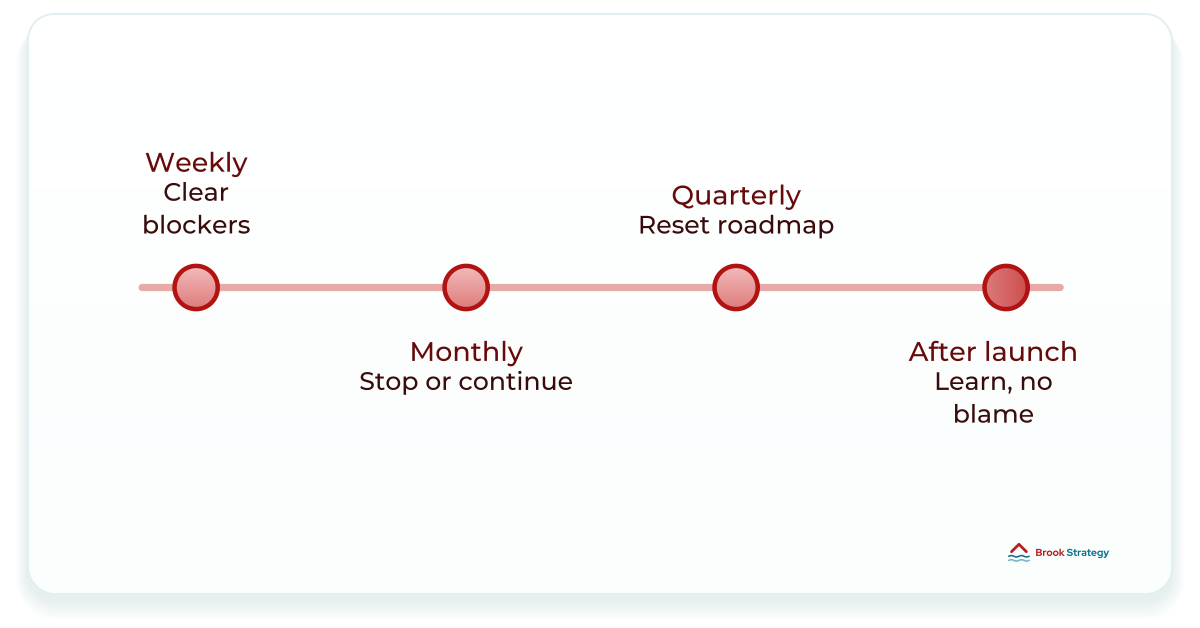
A fintech team changed priorities every few weeks, so engineers never finished anything. We moved all re-planning into one two-day reset per quarter. Between resets, only a stop-the-line event could change the roadmap. Delivered initiatives per quarter rose, and the product team stopped dreading Monday meetings.
The rule needed a sponsor. When the CEO personally declined mid-quarter requests, the habit held. When she didn't, the old chaos returned within a month.
How the Reset Runs
- Fix the reset dates for the whole year.
- Collect requests in one backlog between resets.
- Score the backlog against the goals before each reset.
- Publish the new roadmap within 24 hours.
- Define what counts as a stop-the-line event.
What You Will Need
A roadmap tool such as Productboard or a simple spreadsheet works. The scoring session matters more than where the roadmap lives.
Initiative Owners With Decision Rights
In one professional services firm, initiatives slipped because every decision went to the same three partners. We gave each initiative owner a spending limit and a scope they could change without approval. Escalations fell to the few that really crossed budgets, and owners started reporting problems early instead of hiding them.
Decision rights are boring to write down, which is why most plans skip them. They are also the first thing that breaks when a plan hits real work.
How to Set It Up
- Name one owner per initiative, never a group.
- Write the spending and scope limits on one line.
- Agree which decisions go to the leadership team.
- Review the limits after the first quarter.
- Log escalations to see where limits are too tight.
Keep the Setup Light
A decision-rights table in your plan document does the job. Keep it to one page per initiative.
Pilot With a Pre-Agreed Scale Decision
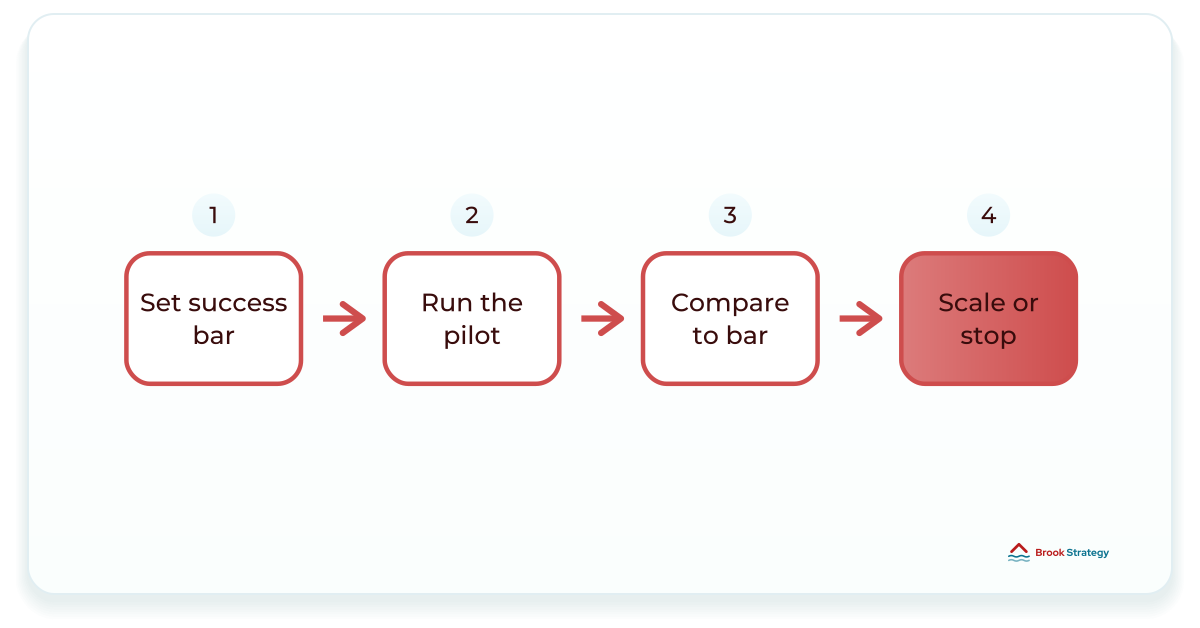
Pilots stall when nobody agrees upfront what success means. A bank client launched a new onboarding flow in two branches. Before the pilot started, we wrote the metric, the threshold and the date the scale decision would be made. When the numbers cleared the bar, the rollout started the same week. Without that agreement, the same pilot would have sat in review for months.
The most useful line in the pilot brief was the one that said what would make us stop. Teams that cannot write that line are not ready to run a pilot.
How the Pilot Runs
- Write the metric and threshold before the pilot starts.
- Set the date and the person who decides.
- Define the stop rule in plain words.
- Run the pilot with a control group where you can.
- Hold the decision meeting on the date, whatever the data looks like.
The Only Tool Required
A one-page pilot brief is the main tool. Add a dashboard only if the metric is not already tracked.
OKRs Cascaded to Team Level
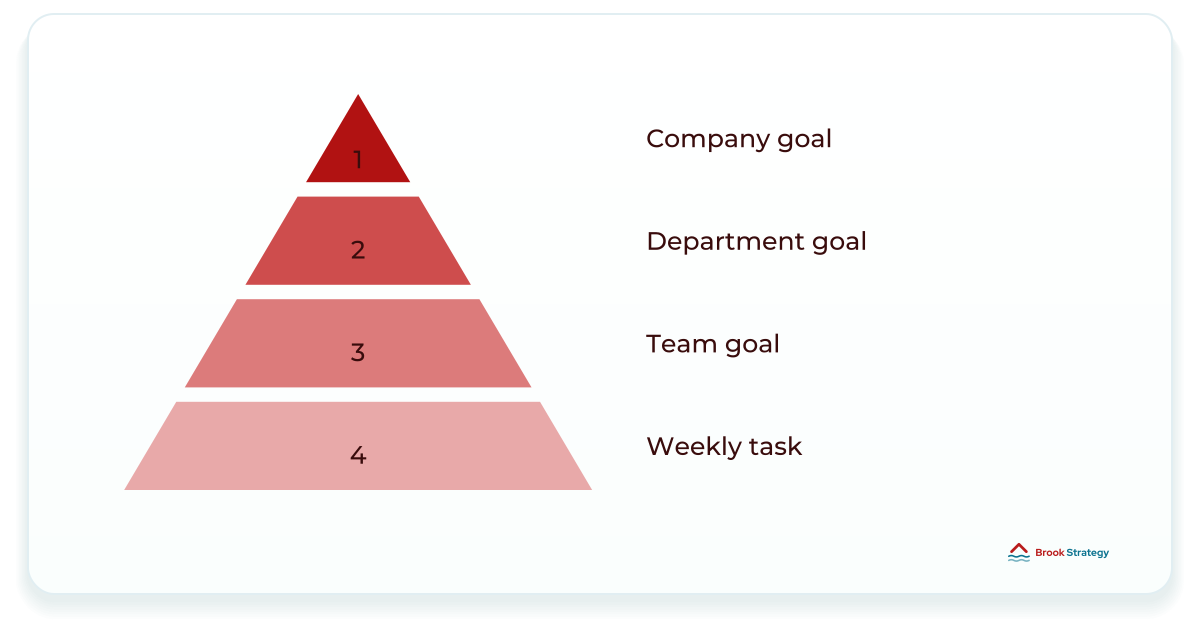
A 90-person SaaS company set three company objectives, then asked each team to pick one or two key results that moved them. Teams dropped work that did not connect to a key result. Within a quarter, stand-ups talked about outcomes instead of task lists.
The first round was messy. Teams wrote activities as key results, and we spent a workshop turning tasks into measurable outcomes. By the second quarter they did it without help.
How Goals Flow Down
- Set company objectives first, no more than three.
- Let each team draft key results, not activities.
- Review drafts in one cross-team session.
- Score progress every two weeks.
- Retire goals that no longer matter instead of carrying them.
Software Options
A spreadsheet works for under 100 people. Tools such as Lattice or Perdoo help once you have many teams to connect.
Monthly Strategy Review That Kills Projects
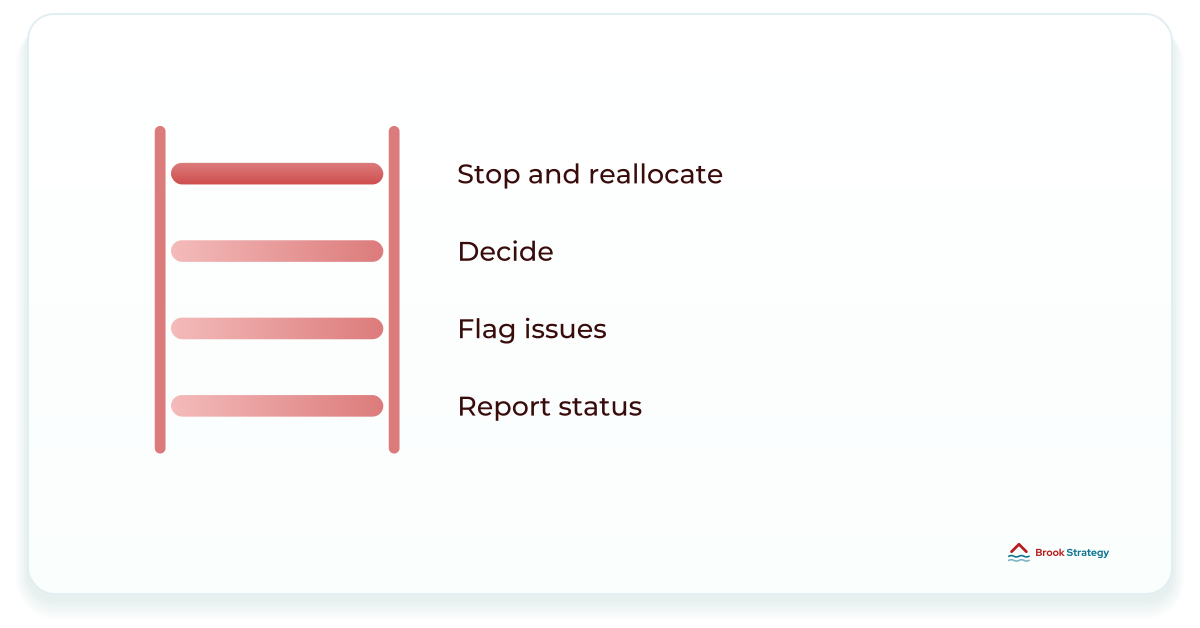
Most review meetings only add work. One insurance software client ran a monthly review where each initiative earned its next month with data. Two initiatives were stopped in the first half year, and the freed engineers moved to the ones that were working.
Stopping something needs a face-saving route. We called it a reallocation, not a failure, and the owners volunteered the data themselves.
How the Review Runs
- Show each initiative on the same one-page status.
- Compare progress against the plan, not last month.
- Ask whether you would start it today.
- Decide continue, change or stop in the meeting.
- Record the reason for every stop.
Format and Cadence
A shared status template and a 60-minute slot. Keep the deck to one slide per initiative.
Strategy Story Told in One Place
After a reorganization, a financial services firm had five versions of the strategy floating around. We wrote one narrative of about 500 words and used it for every all-hands, onboarding and board update. Questions from staff shifted from what the plan was to how to help with it.
I tell clients to test the story on someone outside the company. If they cannot repeat it back in two sentences, it is too long.
How to Write and Share It
- Write the story in plain language in 500 words or less.
- Test it with three people outside the leadership team.
- Publish it on the intranet next to the one-page plan.
- Reuse the same wording in every meeting.
- Update it only when the plan truly changes.
Where to Publish It
Your intranet or a shared document. The wording matters far more than the format.
Effort and Impact Scoring Session
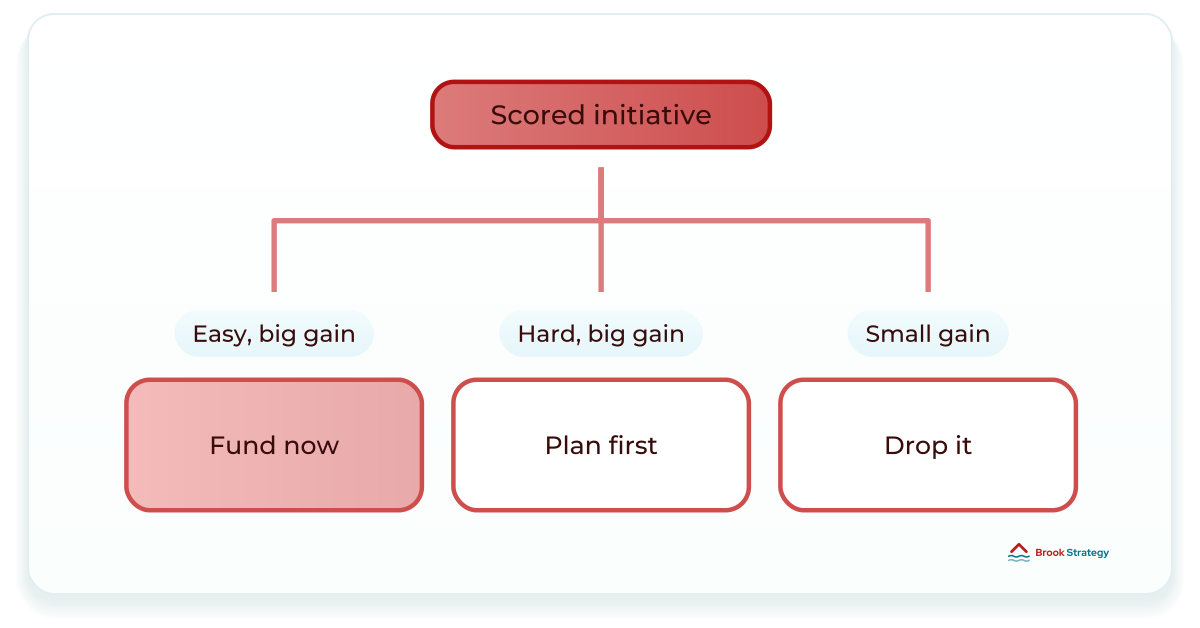
A scale-up had 20 active initiatives for a team of 12. In a two-hour session, we scored each one for impact and effort and dropped everything in the bottom half. The remaining eight shipped on time for the first time in a year.
The scores were rough on purpose. The aim was to get a conversation, and the arguments about scores taught the team more than the scores did.
How the Session Works
- List all initiatives with a one-line description.
- Score impact and effort from 1 to 5 as a group.
- Plot them on a simple grid.
- Pause anything with low impact and high effort.
- Commit capacity to the rest before adding anything new.
Equipment for the Session
A whiteboard or a shared sheet. Scoring in the group, not alone, is what makes it work.
Execution Office of Two People
Large companies build a transformation office. A mid-sized lender used two people: one tracked progress and risks, the other cleared blockers with senior leaders. They ran the weekly 30-minute check and escalated early. The office was too small to become bureaucracy and big enough to keep the plan visible.
Their best rule was that the office never owned an initiative. Owners stayed in the business, and the office only made progress visible.
How the Office Works
- Pick two people with credibility in the business.
- Give them access to leadership for blockers.
- Run one weekly check of 30 minutes.
- Publish a one-page progress view every week.
- Review the office's role after two quarters.
Tracking Setup
A shared tracker and a standing meeting. A dedicated project platform can wait until you have more than twenty initiatives.
Post-Launch Review After 90 Days
After a product launch missed its target, a SaaS team held a structured review at day 90: what we assumed, what happened, what we change. The notes became input for the next plan. The second launch used the same checklist and hit its date.
The review worked because it was blameless and short. Nobody was asked to defend decisions, only to describe what they knew at the time.
How the Review Works
- Schedule the review at launch, not afterwards.
- Compare original assumptions with actual results.
- Name two changes for the next plan.
- Write them into the next planning template.
- Share the notes with everyone who plans work.
Template to Use
A simple document template. Keep every review to one page so people read it.
How to Choose Your First Execution Change
You do not need all ten. In my experience, one change that fixes your biggest bottleneck beats five that nobody maintains. Check your shortlist against these points:
- It fixes a delay you can already point to in recent work.
- One named person can own it from day one.
- You can see whether it worked within a quarter.
- It adds less work than it removes.
If your team keeps losing weeks to status reporting, software can help, and my review of strategy execution software compares the main platforms. When the same problems repeat across teams, my breakdown of strategy execution challenges shows what usually sits underneath.
Questions About Strategy Execution Examples
What Is a Good Example of Strategy Execution?
A one-page plan with three goals, named owners and a monthly review is the example I see work most often. It is simple, visible and easy to keep alive. Bigger systems only help once this basic rhythm is in place.
Why Do Strategies Fail at Execution?
In the projects I review, the usual causes are unclear owners, too many initiatives and no regular review. The plan itself is rarely the main problem. Work that nobody owns or checks tends to stop quietly.
How Long Does It Take to See Results from Better Execution?
You can usually see a difference in meetings within one quarter, since priorities become clearer. Business results such as faster delivery or a higher win rate take two to three quarters to show up in the data.
How Many Initiatives Should a Company Run at Once?
Fewer than you think. For a team of about a dozen people, five to eight active initiatives is workable. If everything is a priority, none of it is.
Do Small Companies Need a Formal Execution Process?
They need a light version: one page, one owner per item and one monthly check. You don't need an office or software for it. Formal tools matter later, when many teams depend on each other.
Which Tool Should I Use to Track Execution?
Start with the tool your team already opens every day, usually a spreadsheet or a project board. Move to a dedicated platform only when reporting across teams becomes painful.
When Should I Bring in a Consultant for Execution Problems?
When the same priorities keep slipping and internal reviews have not fixed it. An outside view helps with ownership disputes and trade-offs that insiders avoid. Your first call should end with a written list of what to change.
Note: This article is general information, not legal, financial or tax advice. Figures and examples are estimates based on typical projects, so check current details with your providers and advisers before you decide.
Was this article helpful?
Thank you for letting us know.
Russell Tennant
Russell leads the Brook editorial team and works with our consultants to turn real client engagements into practical guides on roadmaps, go-to-market planning, growth and competitive strategy. Before joining Brook, he spent 11 years in strategy and product marketing roles at software and financial services companies. He has since edited more than 300 articles on strategy practice and drawn on roadmaps and growth plans from over 100 client projects. He is based in Denver, Colorado.