Key Takeaways
- Unclear ownership and too many priorities cause most stalled plans.
- Each challenge has an early warning sign you can spot in meetings and status reports.
- Small fixes, such as one owner per initiative and a monthly stop-or-go review, beat large programs.
- Fix the habits first, then add software to support them.
A plan that looks good on paper can still stall within a quarter. When I walk into a stalled project, the strategy is rarely wrong. The hurdles sit between the plan and the daily work, which is exactly where strategy execution consulting spends most of its time.
Below are eight challenges I see again and again, with the warning sign to look for and the fix that has worked. The order follows how often they show up in my reviews, most common first.
The Eight Challenges at a Glance
| Challenge | Early warning sign | First fix |
|---|---|---|
| Unclear ownership | Two names on one initiative, or none | One owner with decision rights |
| Initiative overload | Everything is priority one | Cap active initiatives |
| Plan not translated to teams | Teams cannot state the top goal | Cascade goals to team level |
| No capacity for new work | Plan work runs on evenings | Remove work before adding |
| Reviews that report only | Same status deck each month | Decide continue, change or stop |
| Silos between functions | Handoffs take weeks | Shared goals across teams |
| Measures that mislead | Green dashboards, flat results | Track outcomes over activity |
| Change fatigue | Quiet resistance, low energy | Slow the pace, show early wins |
Unclear Ownership of Initiatives
The most common problem is also the cheapest to fix. A product launch has a product lead, a marketing lead and a sales lead, and each assumes one of the others will make the call. Decisions then wait for the next leadership meeting, which is weeks away. In a financial services client, one compliance question held up a launch for five weeks because nobody was allowed to answer it.
The fix is a single named owner for every initiative, with a written limit on what they can decide alone. Group ownership does not count. If an initiative truly needs two leaders, split it into two initiatives. My strategy execution framework uses one-owner rules in every phase for this reason.
Expect pushback from senior people who like to stay close to everything. The compromise I use is a visible escalation path: owners decide inside their limits, and anything above them goes to the leadership team within a week. That keeps leaders informed without making them a bottleneck.
Too Many Initiatives at Once
Leaders add and rarely remove. After two years a team of 15 can carry 20 initiatives, each one getting a fraction of anyone's attention. The warning sign is that every project is described as top priority. Output looks busy, and little ships.
Put a hard cap on active initiatives, based on the number of people who can work on them. Then force a trade: a new initiative enters only when another one finishes or stops. I ask clients to list every initiative on one page and mark the bottom third for a pause. Only a few teams argue once they see the page.
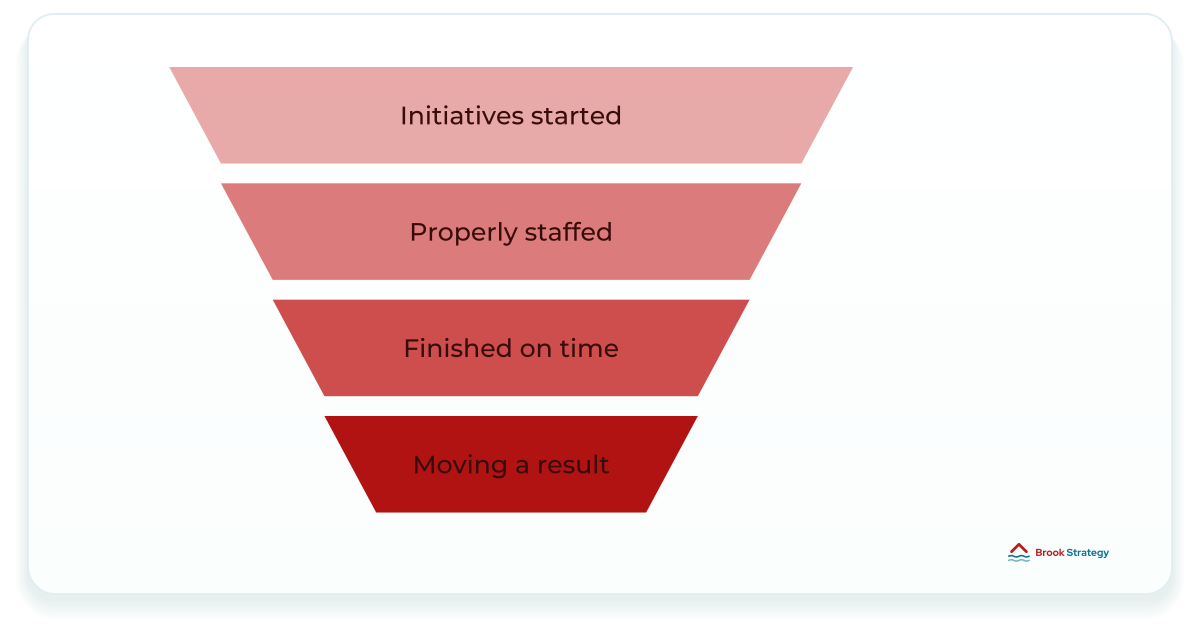
One software client paused six of 19 initiatives after this exercise. Nothing bad happened. Two of the paused items were never missed, and the rest restarted two quarters later with a clearer scope and a real owner. The pause cost less than the confusion it replaced.
A Plan Nobody Below Leadership Can Explain
Ask five people two levels down what the top company goal is. If you get five answers, the plan never left the boardroom. This happens when strategy lives in a long document and gets presented once at an all-hands.
Translate the plan into goals each team can influence, in sentences without jargon. Then repeat it at every meeting for a year. I have seen a 500-word narrative do more than a 50-page deck, because people could repeat it. For samples, my strategy execution examples show how teams phrase and share their goals.
Test the translation with a simple check: ask three people in each team to write the top goal and their own contribution on a sticky note. Compare the notes in the next leadership meeting. The gaps are your communication plan for the next month.
No Room for the New Work
A new initiative needs hours from people who already have a full week. If nothing else is removed, the plan work happens on evenings, and quality drops. The sign is plan tasks that are always almost done.
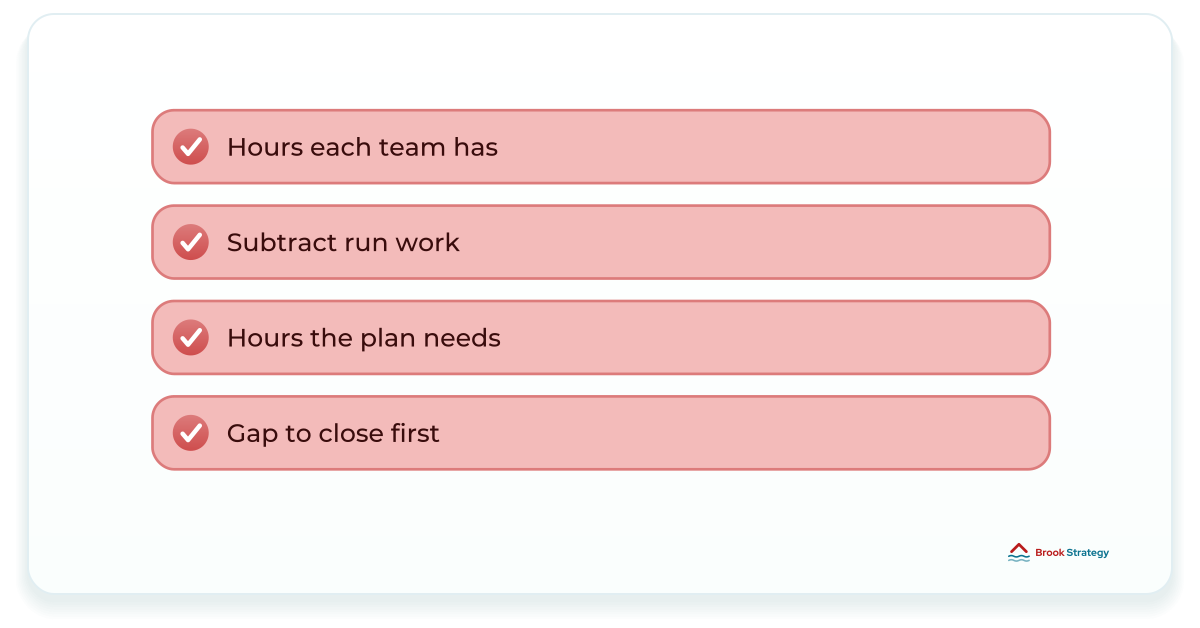
Before you approve a plan, estimate the hours it needs and subtract the same from the work it replaces. This is uncomfortable because it means saying no to something. It is still cheaper than a quarter of half-finished projects.
A simple capacity table helps. List each team, the hours per week they can give to plan work after normal duties, and the hours each initiative needs. Where the second number is larger, something has to move. Teams I work with are often surprised that the available number is closer to 10 or 15 percent of the week than the 30 they assumed.
Reviews That Report but Never Decide
Many monthly reviews are status readouts. Each owner shows slides, nobody challenges anything and the meeting ends with the same list. The result is a review that costs two hours and changes nothing.
Give each initiative a single question at review: continue, change or stop. Show the same one-page status for all of them, compared to the plan. Teams that adopt this stop two to four initiatives a year in my experience, and the freed people move to work that is moving. My notes on strategy execution best practices cover the review routine in more detail.
Silos Between Functions
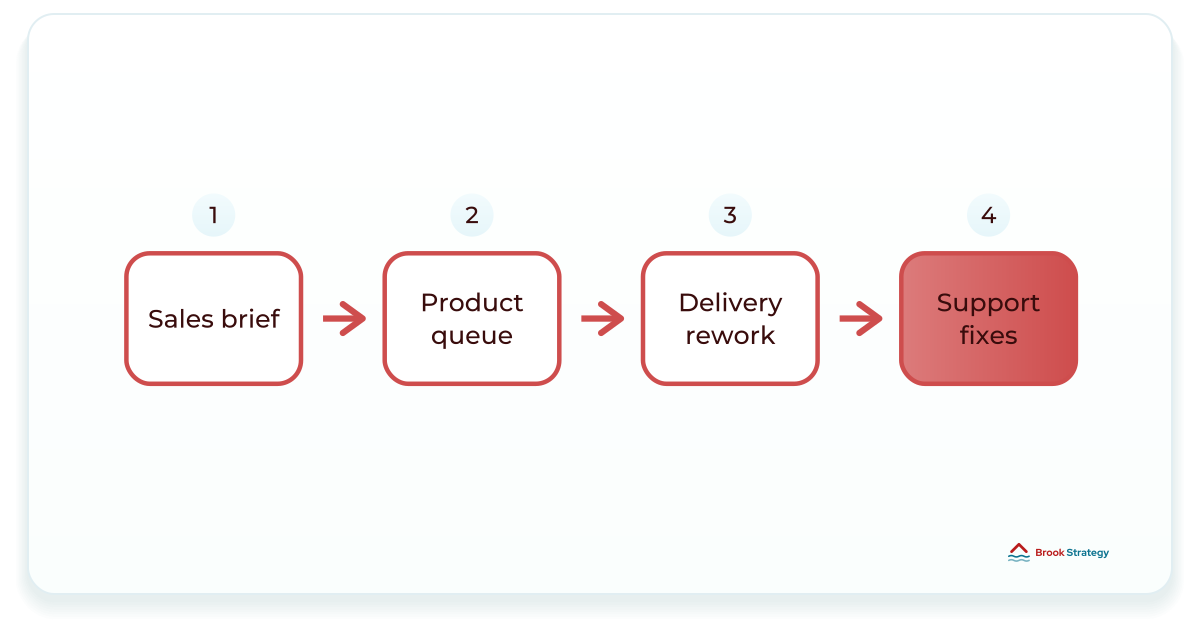
Strategy rarely fits one department. A pricing change needs product, finance, sales and support. When each function has its own goals, a handoff can take weeks, and the initiative stalls at the border.
Give cross-functional initiatives a shared goal that appears in each contributing team's plan. Name one lead and give them a standing 30-minute check with the other teams. The meeting is small, and it removes the long email chains where nothing gets decided.
Also check the handoff points on a one-page map before the initiative starts. Mark each place where work moves from one team to another and agree who answers questions within two working days. Most delays I see sit in those few handoffs, not in the work itself.
Measures That Show Green While Results Stay Flat
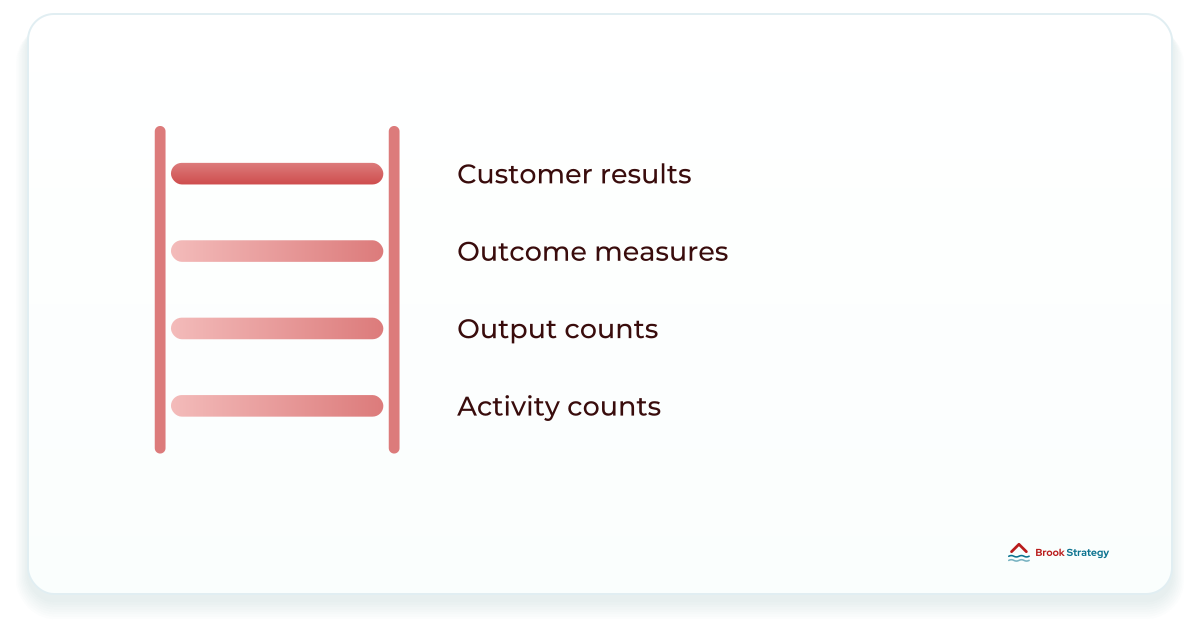
Dashboards often track activity: features shipped, meetings held, hires made. All can be green while customers, revenue or margin do not move. The warning sign is a leadership team that trusts the dashboard and not the results.
Pair every initiative with one outcome measure, such as win rate, time to onboard or churn in a segment. Keep activity measures as secondary checks. If you are weighing platforms to track both, I compared the main options in my review of strategy execution software.
Change Fatigue Among the People Doing the Work
Teams that have lived through three reorganizations in four years do not believe the fourth plan. They comply on the surface and wait it out. You will see polite meetings and slow follow-through.
Slow the pace of new plans, and show early wins that people can feel in their week, such as a removed approval step. Ask frontline staff what they would stop doing. Their answers are usually better than a consultant's list, and they show you are listening.
Watch your own habits as a leader, too. If every quarter brings a new slogan, people learn to wait. Keep the same three goals for at least a year unless the market forces a change, and say so openly when it does.
In What Order to Fix Them
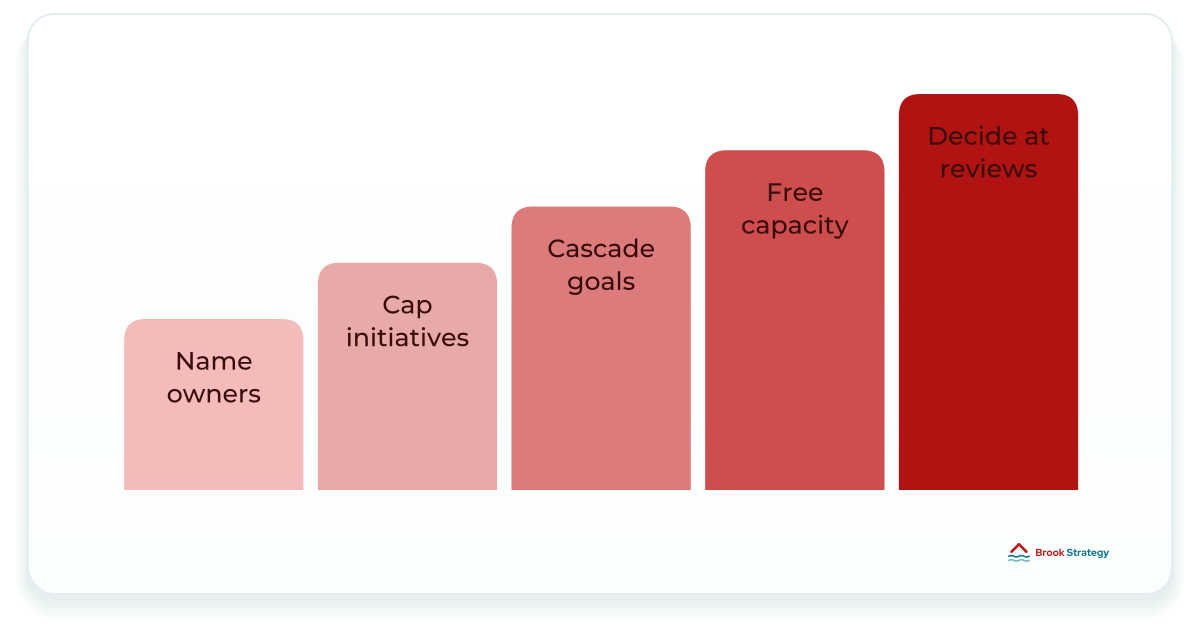
Ownership comes first because every other fix needs a person to carry it. Capacity and overload come next, since they decide whether anyone has time for the rest. Reviews and measures follow, because they only work once owners exist and the list is short. Silos, translation and change fatigue take longer and run alongside, usually over two to three quarters.
Do not expect a smooth line. In one engagement the review fix failed twice because the leader kept adding items to the agenda. It worked the third time, once the rule became that nothing enters the review without a one-page status. Plan for slips like this, and keep the fixes small enough to try again.
A Ten-Minute Diagnosis for Your Own Team
You can test your team against these challenges in one meeting. Ask the questions below out loud and note the answers without debating them. Two or more weak answers in one row point to where to start.
| Question to ask | Healthy answer | Warning answer |
|---|---|---|
| Who owns the largest initiative? | One name, said immediately | Silence or several names |
| How many initiatives are active? | A number that fits team capacity | Nobody knows the number |
| What did the last review stop? | A specific item | Nothing, it never does |
| What is the top goal this quarter? | Same sentence from every person | Different answers by team |
| Which result moved last month? | An outcome measure | A count of activities |
How to Choose Which Challenge to Tackle First
Look at your last three leadership meetings. Which problem showed up most often, even in different words? That is usually the one with the highest cost. Check your pick against these points:
- You can describe the problem with a recent, real example.
- One person can own the fix.
- You will see a change in a month, not a year.
- The fix removes work from someone instead of adding it.
If two or three challenges overlap, which is common, an outside review of your current plan can separate cause from symptom quickly.
Questions About Strategy Execution Challenges
What Is the Biggest Challenge in Strategy Execution?
In my client work it is unclear ownership. When two people think they own an initiative, or nobody does, work waits for a decision that never arrives. Fixing ownership usually removes more delay than any new tool or process.
How Do You Know Your Strategy Is Not Being Executed?
Look for three signs: priorities that change every few weeks, status meetings that only repeat last month's update and initiatives with no owner or date. If two of the three apply, execution is the problem, not the plan.
How Many Strategic Priorities Are Too Many?
More than three goals or around eight active initiatives for a mid-sized team is where I see focus break down. The right number depends on capacity, so count how many people can truly work on each one.
Why Do Middle Managers Resist Strategy Execution?
They often carry the plan on top of their normal job and rarely helped write it. Give them a say in the trade-offs and remove something from their workload when you add a new initiative.
Can Software Fix Execution Problems?
Software makes progress visible, but it cannot create ownership or settle trade-offs. I suggest you fix the habits first, then pick a tool that supports them.
How Often Should Leaders Review Strategy Progress?
A short check every month for initiatives, and a deeper review every quarter for the goals themselves. Weekly reviews suit only the few initiatives at risk.
When Is It Worth Hiring a Consultant for Execution?
When the same blockers repeat and internal reviews have not removed them. An outside view helps most with ownership disputes and stopping projects that people are attached to.
Note: This article is general information, not legal, financial or tax advice. Figures and examples are estimates based on typical projects, so check current details with your providers and advisers before you decide.
Was this article helpful?
Thank you for letting us know.
Russell Tennant
Russell leads the Brook editorial team and works with our consultants to turn real client engagements into practical guides on roadmaps, go-to-market planning, growth and competitive strategy. Before joining Brook, he spent 11 years in strategy and product marketing roles at software and financial services companies. He has since edited more than 300 articles on strategy practice and drawn on roadmaps and growth plans from over 100 client projects. He is based in Denver, Colorado.