Key Takeaways
- A strategic roadmap orders bets over four quarters, and every item links to a goal and a metric.
- Quarter one is for evidence and choices, so building starts on bets you can defend.
- Dates are firm for the next quarter and rough after that, which keeps the plan believable.
- A gate at the end of each quarter decides whether to continue, change or stop every bet.
A roadmap is the most visible product document in a company, and often the least trusted. Sales treats the dates as promises, engineering treats them as guesses and leadership wonders why last quarter’s plan looks nothing like this one. The cause is usually the same: the roadmap was assembled from requests, without the strategy that would let anyone defend the order.
Below is the 12-month plan I use as a starting point in my product strategy consulting work. It runs in four quarters, each with a purpose, a set of outputs and a gate. Copy it, and change the details to fit your product. If you haven’t chosen your bets yet, start with the product strategy framework, then return here to schedule them.
The Four Quarters at a Glance
| Quarter | Purpose | Key outputs | Gate question |
|---|---|---|---|
| Q1: Ground | Gather evidence and choose bets | Evidence table, ranked bets, not-doing list | Do we have two sources behind each bet? |
| Q2: Prove | Test the riskiest assumptions cheaply | Prototypes, pilots, first metric readings | Which bets show signal and which don’t? |
| Q3: Build | Ship the bets that proved out | Releases, launch plan, enablement | Is adoption on track against the target? |
| Q4: Scale | Expand what works and reset the plan | Scale plan, next year’s evidence, new bets | What do we keep, change or stop? |
Quarter One: Ground the Plan in Evidence
Spend the first quarter on the decisions that every later quarter depends on. In weeks one to four you interview customers, including a few who left, and review usage and sales data. In weeks five to eight you turn the findings into bets, rank them and write the not-doing list. In weeks nine to twelve you align leadership, assign owners and set metrics with baselines.
Don’t treat this as a pause in delivery. Your team continues to ship from the existing plan, and a small group, usually a product lead, a designer and one engineer, does the discovery. The temptation is to skip ahead to building, and I have seen that cost companies a full year on bets nobody had checked.
Quarter Two: Prove the Riskiest Assumptions First
Every bet rests on assumptions, and some are riskier than others. Quarter two tests the riskiest ones cheaply, using prototypes, concierge tests, fake-door pages or small pilots with five to ten customers. The goal is a first reading on the metric, not a finished feature.
Each bet gets a one-page test plan: the assumption, the test, the success threshold and the date. At the gate you sort bets into three piles: strong signal, weak signal and no signal. Teams often find that one of their top three bets collapses here, and that is a good result, because the cost is a few weeks of work instead of a full build.
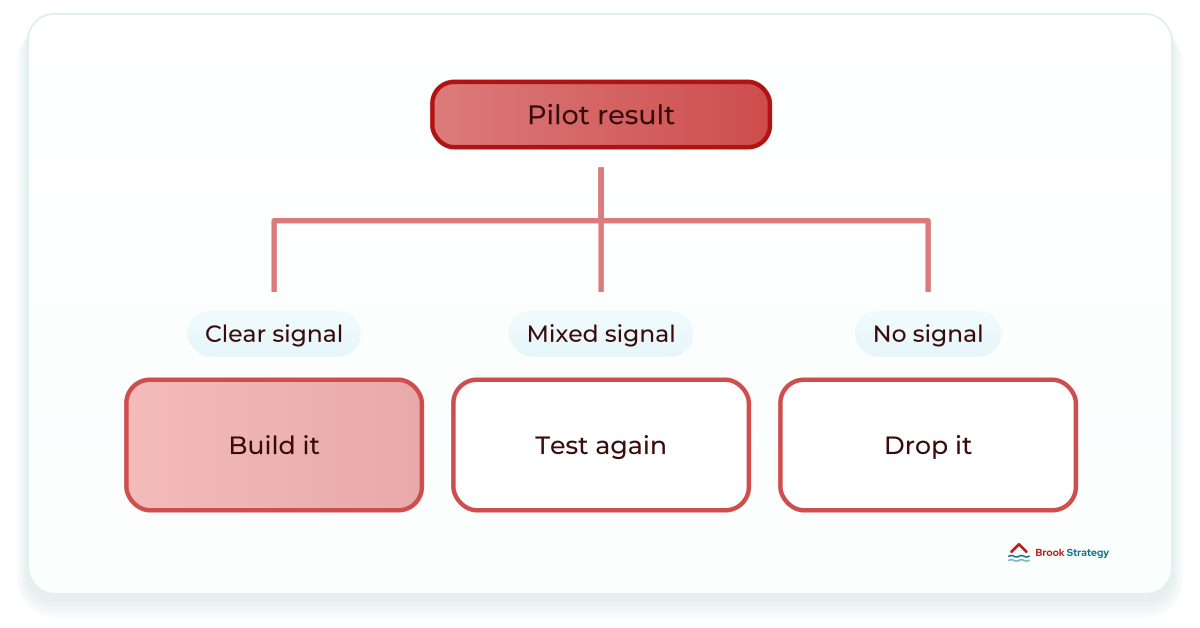
What a pilot often reveals
A pattern I see often in small pilots: customers care about a side output more than the headline feature. Say you plan an automated reconciliation module for finance teams. In a pilot with five or six customers, the exception report may turn out to matter more than the matching engine. If so, you rebuild the bet around the report and ship it in roughly half the time. Without the pilot, you would have built the wrong half first.
Quarter Three: Build, Launch and Enable the Teams Around You
Now you build the bets that proved out. Engineering capacity is the limit, so protect it. Cap work in progress, and reserve fifteen to twenty percent of capacity for incidents and requests that jump the queue. Sequence by dependency first and by score second, because a high-value bet blocked by a missing platform piece creates idle time.
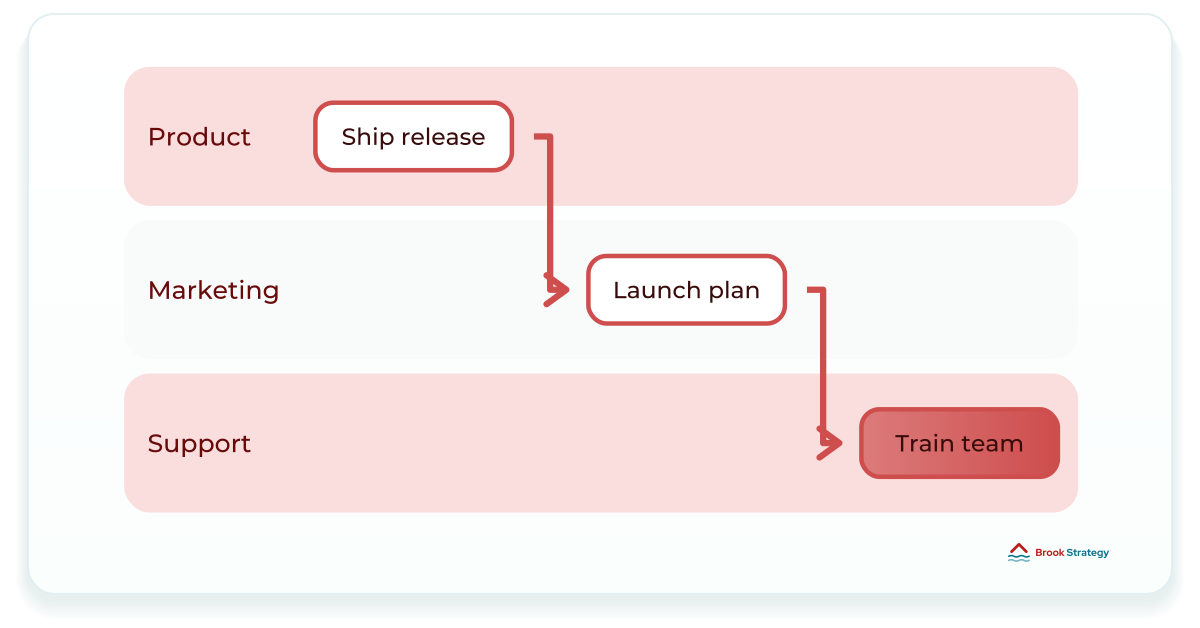
Launch plans belong in this quarter too. For each shipped bet, decide who must know, what they must be able to say and how you will measure adoption. Sales needs a one-page brief, support needs an update to the help content and marketing needs the positioning. If your plan includes entering new segments with the release, the go-to-market work ties in closely with the product work.
Quarter Four: Scale What Works and Rewrite the Plan
Quarter four does two jobs. First, it extends the bets that are working: more segments, more regions or deeper features, funded by what you learned. Second, it prepares next year’s plan by repeating a lighter version of quarter one with fresh evidence.
At the year-end gate, review every bet against its original metric. Write a short retrospective: what you expected, what happened and what you would change. Share it with leadership. The habit of writing down predictions and comparing them with results is the single best way I know to improve strategy over time.
One Plan, Four Audiences
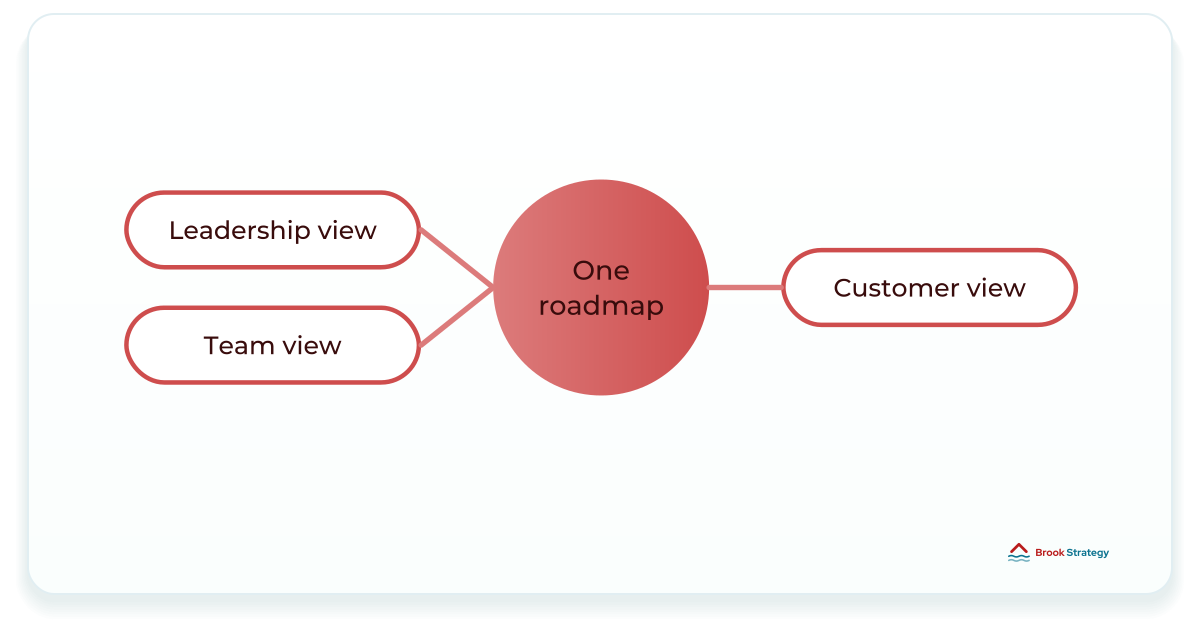
The same roadmap answers different questions depending on who reads it. Leadership wants to know whether the bets match the company’s goals and what they cost. Sales wants to know what it can say to a customer this quarter. Engineering wants to see dependencies and the order of work. Support wants early notice of anything that changes the help content.
I keep one source of truth and publish three views from it: a one-page strategy view for leadership, a themes view for sales and customers, and a delivery view for engineering. Each view is generated from the same table, so a change in one place shows up everywhere. The common mistake is to maintain separate decks, which drift apart within a month and leave people arguing over which one is current.
Four Ways a 12-Month Roadmap Fails
After many planning cycles, the failures repeat. The first is a plan that ignores capacity: the sum of the bets needs twice the people available, so everything slips by a quarter. Fix it by estimating effort in weeks of one team, and cut the list until the numbers fit with a reserve.
The second is a plan with no owner for the gates. Quarterly reviews get postponed, bets continue by default and the roadmap becomes a historical record. Name the person who calls each gate and put the dates in calendars on day one. The third is a plan that promises dates to customers a year out. Share themes externally, and give dates only for the next quarter.
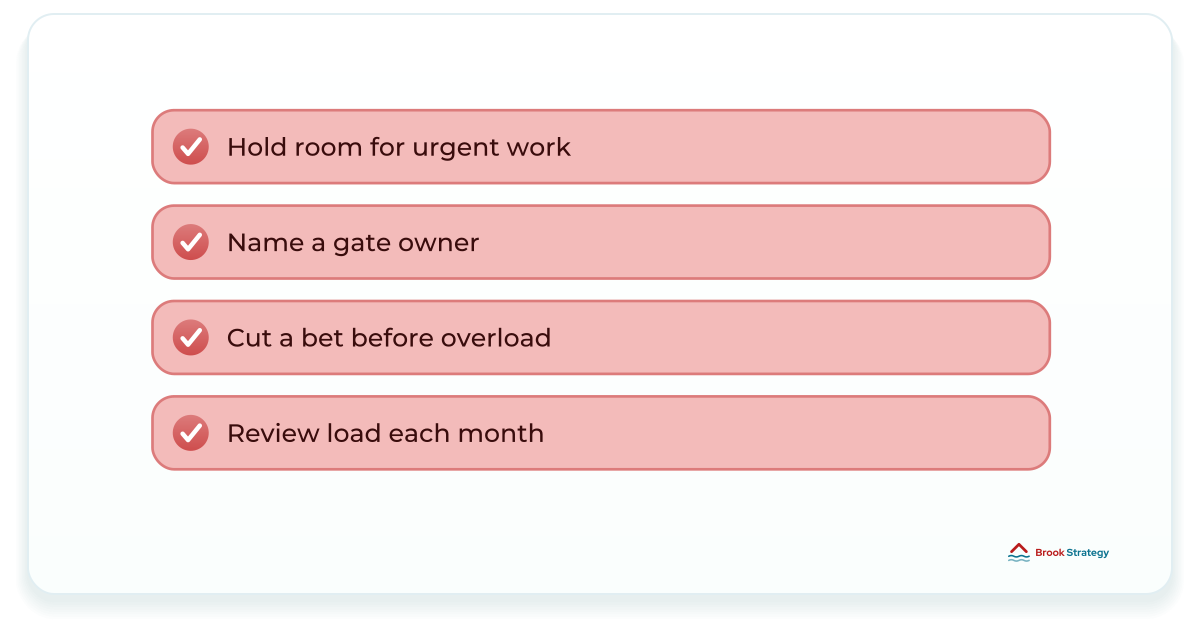
The fourth failure is subtle: the plan survives but the evidence doesn’t. Nobody interviews customers after quarter one, so by quarter three the team plans on stale assumptions. Keep a standing rhythm of three or four customer conversations a month, and feed the notes into the next evidence table.
One more habit pays off here: publish the reasons for removed items. When a bet is stopped, add a line to a shared log with the date, the evidence and the decision maker. Stakeholders who see why something left the plan stay more willing to trust the next version, and your team avoids reopening the same debate six months later.
The Roadmap Template to Copy
Here is the structure I use for each bet, repeated per quarter. Keep it in a spreadsheet or in your roadmap tool, and make sure each row has one owner.
| Field | What to write | Example |
|---|---|---|
| Bet | One sentence you can prove wrong | Cut setup to one day to lift activation |
| Segment | The customer it serves | Finance teams at 50 to 200 person firms |
| Metric and baseline | Current value and target | Activation 38%, target 50% |
| Owner | One named person | Product lead for onboarding |
| Milestones | Three to five with dates for the next quarter | Prototype by week 4, pilot by week 8 |
| Dependencies | What must exist first | New import service |
| Gate | Decision and date | Continue, change or stop on June 28 |
Adapting the Plan to Your Stage
A company with a single product and a team of ten can compress the plan: two quarters of evidence and proof, then a plan reset. Founders in that position will find more detail in my guide to product strategy for startups. Larger companies run the plan per product, then hold a joint review to allocate shared capacity.
It also helps to see how other companies sequenced their moves. The product strategy examples include pivots, resets and distribution plays with the order of steps spelled out, which makes good reference points for your own timeline.
Tools for Keeping the Roadmap Alive
The roadmap only works if people open it. In a small team a spreadsheet and a monthly review are enough. When several teams need different views, a dedicated tool pays off, and I compare the main ones in my ranking of product management tools.
Where You Should Begin
Before you copy the plan, answer four questions:
- Do you have recent customer evidence for each bet, or do you need quarter one first?
- Who owns the roadmap, and who will make the stop decisions at each gate?
- How much of your capacity is already committed to work you cannot move?
- Which stakeholders need a different view, and who will keep those in sync?
If the answers show gaps, the quickest fix is a short working session to set owners and the first gate date. An outside facilitator can also help when the team is divided on priorities.
Questions About the Product Strategy Roadmap
What Is a Product Strategy Roadmap?
A product strategy roadmap is a time-ordered plan that shows which strategic bets your team will pursue, in what sequence and with which review points. It differs from a feature roadmap because every item traces back to a goal and a metric. The 12-month version in this article is organized by quarter, with a decision gate at the end of each one.
Should a Roadmap Show Dates or Time Frames?
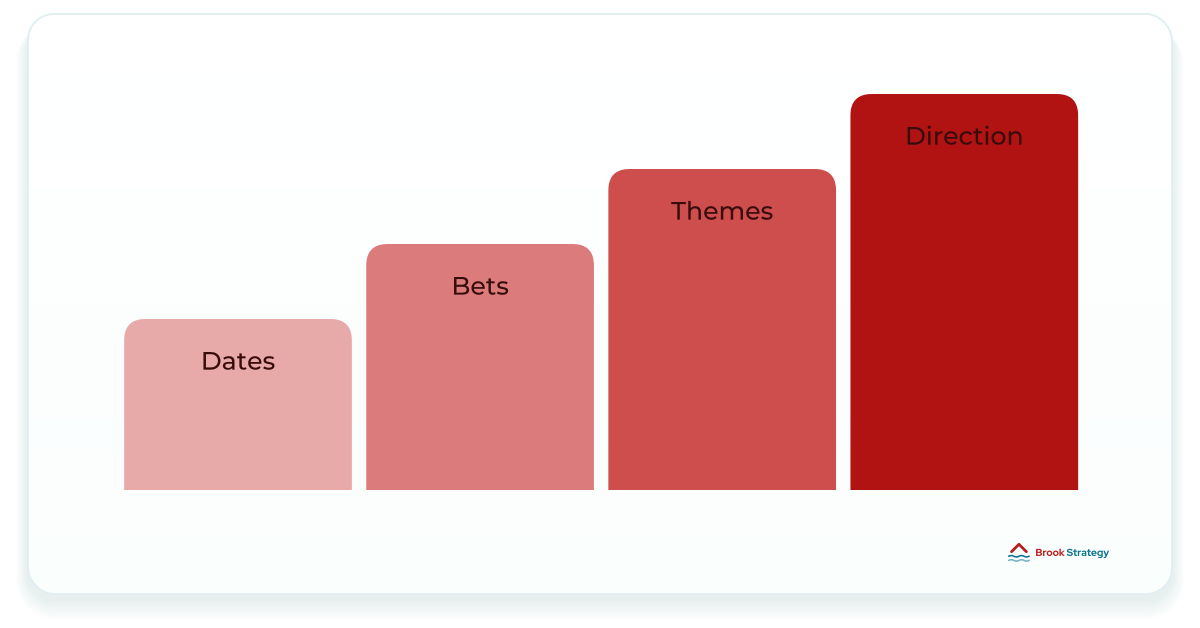
Show dates only for the next quarter, where your team has real information. For the second and third quarters use themes and rough time frames, and for the fourth show direction. This keeps the roadmap honest and avoids a stream of missed commitments that teaches stakeholders to ignore it.
How Many Items Should a 12-Month Roadmap Contain?
Three to five bets in total, each broken into milestones. If your roadmap has twenty features per quarter, it is a backlog. Fewer, larger items force the prioritization work to happen before the plan is published, which is where it belongs.
How Do I Handle Requests That Arrive Mid-Quarter?
Hold a short weekly triage. New requests are scored against the same criteria as existing bets, and anything that beats a planned item swaps in with the trade-off written down. Reserve about fifteen to twenty percent of capacity for incidents and surprises, so the swap rarely breaks the plan.
Who Should See the Roadmap?
Everyone who needs to plan around it: leadership, sales, support, marketing and engineering. Give each audience a view that fits its questions, and keep the underlying plan in one place. External versions for customers should show themes, never dates you can’t keep.
How Often Should I Update the Roadmap?
Review it every month and rewrite it every quarter. A monthly review checks progress and risks, and the quarterly rewrite moves the window forward, retires finished bets and adds new ones from your latest evidence. Changing the plan weekly signals that no strategy sits behind it.
Which Tool Should I Use to Build a Roadmap?
A slide or a spreadsheet works for one team. When several teams need different views, use a roadmap tool. I compare the main options, with prices and ratings, in my article on product management tools.
Note: This article is general information, not legal, financial or tax advice. Figures and examples are estimates based on typical projects, so check current details with your providers and advisers before you decide.
Was this article helpful?
Thank you for letting us know.
Russell Tennant
Russell leads the Brook editorial team and works with our consultants to turn real client engagements into practical guides on roadmaps, go-to-market planning, growth and competitive strategy. Before joining Brook, he spent 11 years in strategy and product marketing roles at software and financial services companies. He has since edited more than 300 articles on strategy practice and drawn on roadmaps and growth plans from over 100 client projects. He is based in Denver, Colorado.