Key Takeaways
- A pricing strategy ties your costs, customer value and market position into one set of rules for what you charge.
- Cost sets the floor, competitors set the range and customer value sets the ceiling.
- Seven approaches cover most cases, and most companies combine two or three.
- Review prices at least once a year, and test changes on new customers first.
Price is the one lever in a business that changes revenue without changing the product. A small shift in what you charge, or in how you structure plans, can move profit more than a large push in marketing. Yet most companies price by habit, copy a competitor or add a margin to cost and move on.
This guide starts at the beginning. If you want hands-on help, pricing strategy consulting covers the full process from research to rollout. If you want a structured method, my pricing strategy framework walks through six steps with a worked example.
What a Pricing Strategy Covers
A price is a number. A pricing strategy is the reasoning behind that number and the rules around it. It answers what you charge for, how much, how the price differs between customers and when you change it.
It has four parts. The approach is the logic you use to set levels, such as value-based or competitive. The structure covers tiers, packages and the metric you charge on. The policies cover discounts, contracts and renewals. The review rhythm says when you check and change.
The Floor, the Range and the Ceiling
Three forces shape any price. Cost sets the floor: below it you lose money on each sale. Competitors set the range, because buyers compare you to alternatives. Customer value sets the ceiling: above it, the buyer sees no gain.
Good pricing happens inside that space. When the space is wide, you have room to choose a position. When it is narrow, because costs are high or the market is crowded, you win on efficiency or on differentiation.
Seven Pricing Approaches Compared
Each approach answers the question "how do I choose the number?" differently. None is right everywhere, and the table shows where each fits.
| Approach | How it works | Fits when | Main risk |
|---|---|---|---|
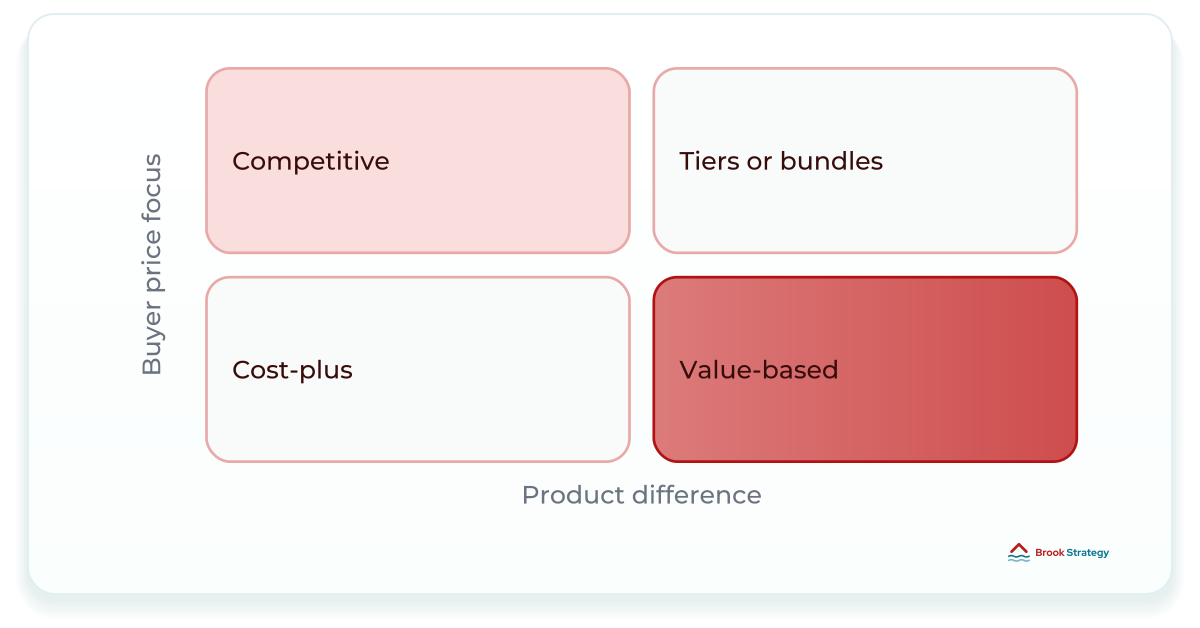
| Cost-plus | Cost per unit plus a fixed margin | Stable costs, commodity products | Ignores what buyers would pay |
| Competitive | Price relative to rivals | Similar offers, price-aware buyers | Price wars and thin margins |
| Value-based | Price tied to the result for the buyer | Clear outcomes, differentiated product | Needs research and a sharp message |
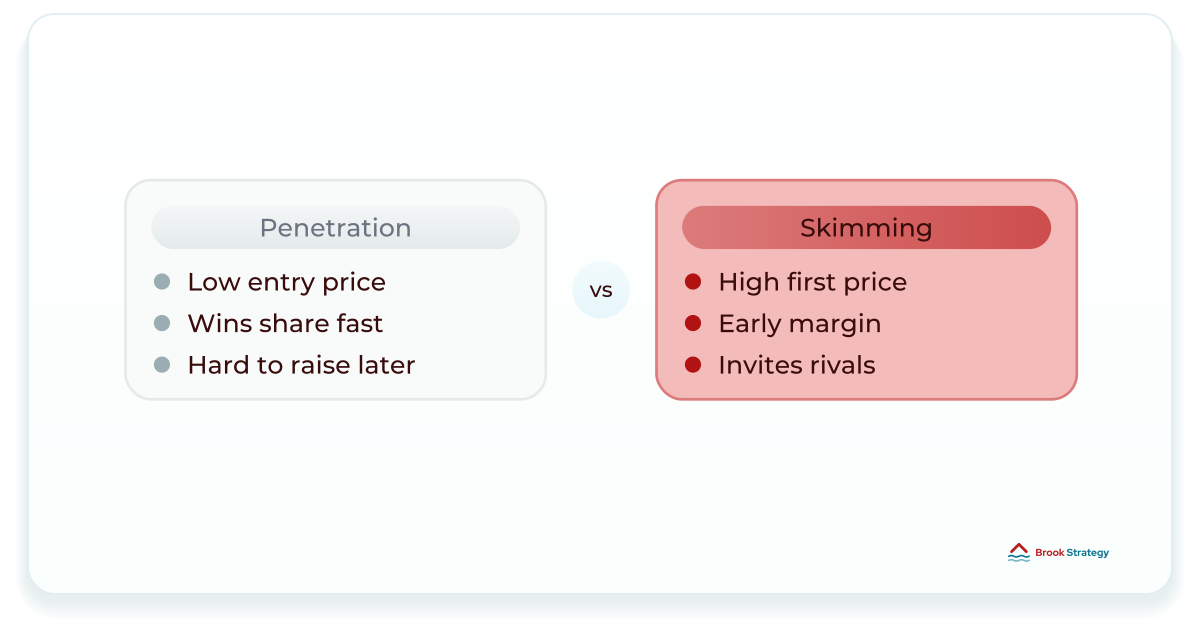
| Penetration | Low entry price to win share | Network effects, high switching cost | Hard to raise prices later |
| Skimming | High price first, lowered over time | New or scarce products | Invites competitors in |
| Freemium | Free plan, paid upgrade | Low cost to serve, viral use | Free users who never convert |
| Bundling | Several items sold as one package | Complementary products, varied needs | Customers pay for parts they ignore |
Cost-Plus: Simple and Often Too Low
Cost-plus pricing adds a set margin to the cost of making and delivering something. It is easy to explain and quick to apply, which is why many small firms start here. The weakness is that the buyer never sees your costs. A product that saves them ten thousand dollars can be priced at five hundred because it was cheap to make.
I treat cost-plus as the floor calculation and not the final answer. Use it to check that a price covers its costs, then look at value before settling.
Value-Based: Charge for the Outcome
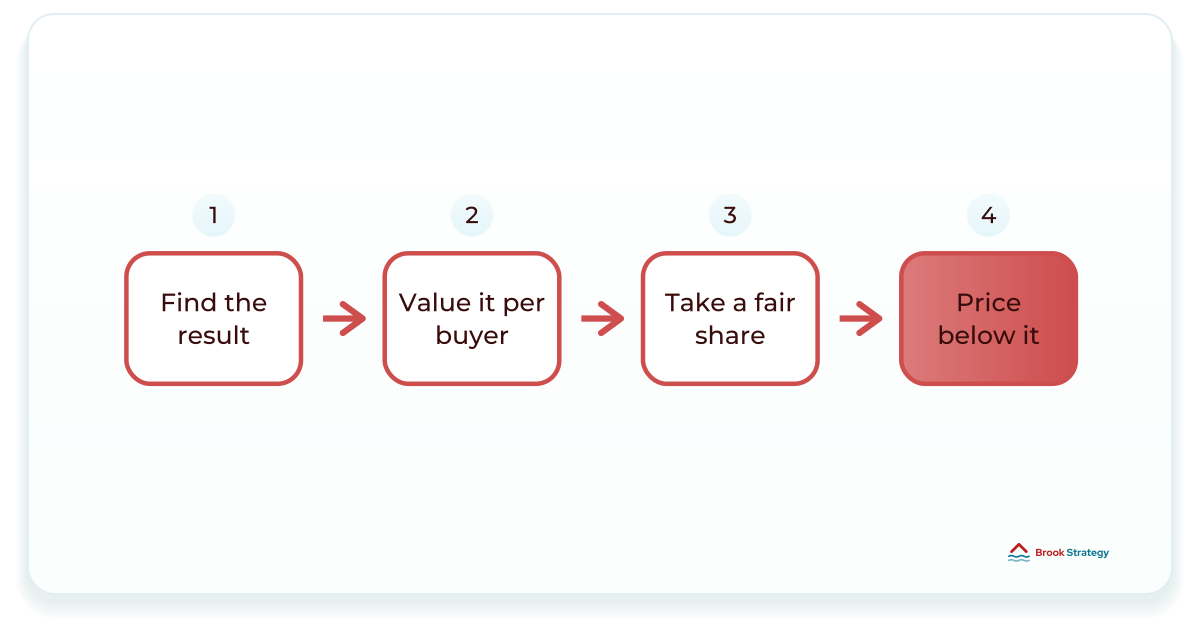
Value-based pricing starts from what the product is worth to the customer and takes a share of it. It rewards companies that can prove results, such as hours saved or revenue gained. The work lies in the research: interviews, deal reviews and a clear model of the customer's alternative.
It is the approach I recommend most often for businesses that sell to other businesses, and it fits well with a tiered structure, where each tier maps to a customer segment with a different value range. If you want to see how this looks as a process, the framework piece gives the steps.
Competitive: Know the Range, Do Not Chase It
Competitive pricing looks at what others charge and positions you above, below or in line. Competitor data is useful as a reference, and the risk is letting it set your price. Rivals may have different costs, a different customer or a plan to lose money for share.
Retail and ecommerce teams track competitor prices daily, often with software. If you are in that situation, my overview of pricing strategy tools compares options and what they charge.
Penetration, Skimming and Freemium at Launch
Three approaches matter most when you introduce something new. Penetration sets a low price to gain customers fast and works when later switching costs keep them. Skimming starts high to capture buyers who value novelty, then lowers the price as the market widens. Freemium gives a basic version away and charges for the rest.
Founders often pick freemium because it feels safe, and then find that most free users never pay and support costs rise. Choose it only when serving a free user is cheap and a clear moment turns them into a buyer. A discussion of these choices for early companies is in my pricing strategy for startups guide.
Bundling and Tiers: Pricing the Whole Offer
Bundling groups items so that buyers see one price for a set. Tiers do the same with feature levels. Both help when customers differ in what they need, because each buyer finds a fit without negotiation.
A few rules keep tiers clean. Use three tiers unless you have a strong reason for more. Make the gap between tiers meaningful, so the upgrade reason is obvious. Name tiers after the buyer, such as team or business, and avoid abstract names that force people to guess.
How Buyers Read a Price
The same price can feel fair or steep depending on how it is shown. A monthly figure feels smaller than the yearly total, and a plan labeled as most popular draws more choices than the same plan with no label. Buyers also compare within the page: a mid-tier next to a much more expensive top tier looks reasonable.
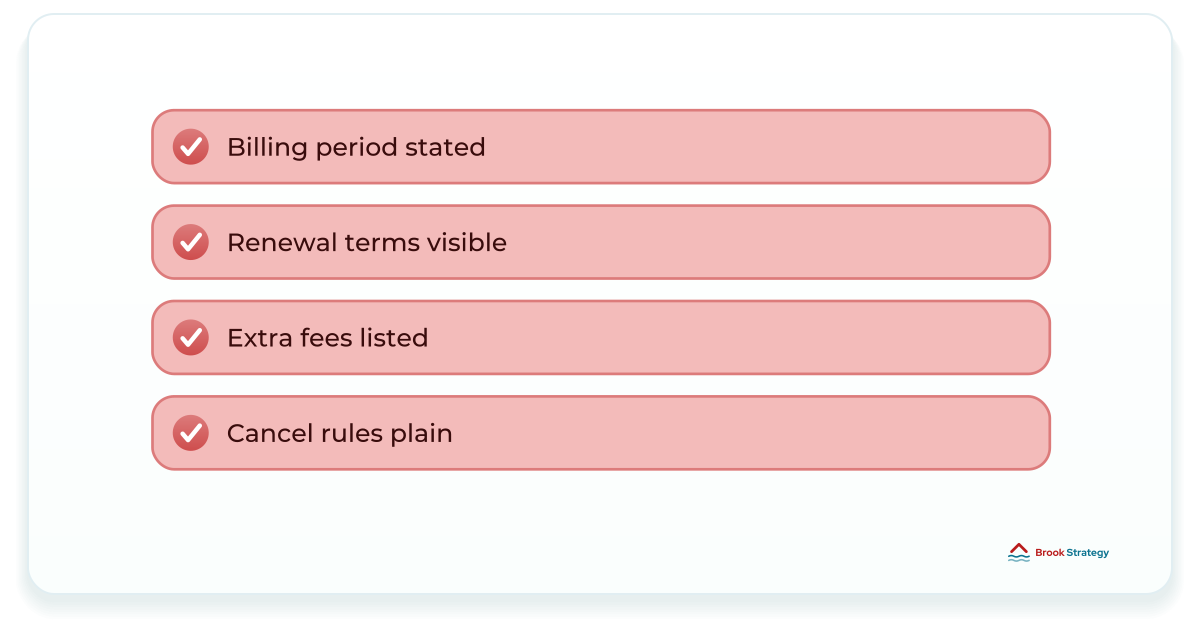
These effects are real but small compared to the basics. A clear value statement and a sensible structure do more than any presentation trick. Use presentation to remove confusion, such as listing what each plan includes in plain words, and not to hide costs. Buyers who feel misled by fees at checkout leave and rarely return.
Discount presentation matters as well. Show a discount as a trade, for example a lower price for an annual commitment, and not as a favor. Trades keep the list price intact and give you something in return.
A last point on terms: buyers dislike surprises more than high prices. Whatever structure you choose, state setup fees, minimum terms and renewal conditions up front so the first invoice matches expectations.
A Short Example: A Consulting Firm Moves From Hours to Projects
An illustrative case: a three-person analytics consultancy bills 120 dollars an hour. Clients ask for estimates, push back on hours and treat the firm as a cost to reduce. The owners notice that their best work, a quarterly reporting setup, saves a client's finance team about forty hours each quarter.
They switch the offer to a fixed project fee of 6,000 dollars, priced against the value of the time saved and not against their own hours. Because the work takes them about thirty hours, the effective rate rises to 200 dollars an hour, and clients compare the fee to the benefit and not to the rate card. The shift needed a clear scope, a written outcome and a stop rule for extra requests, but the result was fewer negotiations and higher margins.
How to Choose Your Approach
Work through four questions in order. Each narrows the field.
- Can you describe the value you create in money or time? If yes, lean value-based.
- Are buyers comparing you line by line to similar offers? If yes, keep a competitive check.
- Is the product new, with little data? If yes, pick a simple tier structure and plan to revisit it.
- Do customers vary a lot in what they need? If yes, use tiers or bundles.
A small team without much data can use a lighter process, which I describe in pricing strategy for small business.
A Checklist for Setting Your First Prices
- Calculate cost per customer, including support and onboarding.
- Interview five to ten buyers about the result and their alternatives.
- List three to four competitors with prices, inclusions and metrics.
- Pick the approach and the metric you charge on.
- Draft three tiers and write the upgrade reason for each.
- Set discount rules and who can approve exceptions.
- Test on new customers and set a review date.
Mistakes That Cost the Most
The costliest mistake is pricing too low out of fear. A price that is too low also hurts how buyers see quality, and raising it later is harder than starting right. The second is unlimited discounting: once reps can cut price without a rule, the list price becomes a starting bid.
Another is changing everything at once. If you alter the model, the tiers and the price points together, you cannot tell which change moved the result. Change one element per test where possible.
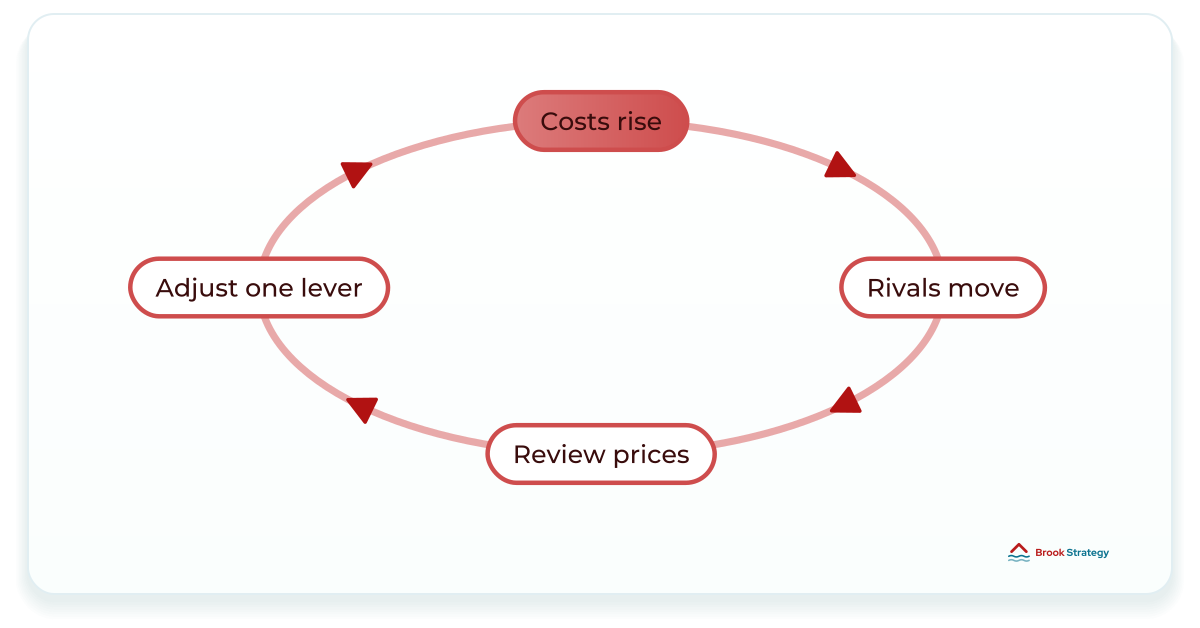
Finally, many teams never review. Costs rise, competitors move and the product improves, yet prices stay the same for years. A yearly check with simple data is enough to avoid this.
Questions About Pricing Strategy for Beginners
What Is a Pricing Strategy?
A pricing strategy is the logic behind what you charge: the approach you use to set prices, the structure of your plans and the rules for discounts and changes. It connects your costs, your customers' view of value and your position in the market.
What Are the Most Common Pricing Strategies?
Cost-plus, competitive, value-based, penetration, skimming, freemium and bundling cover most cases. Many companies combine two or three, for example value-based tiers with a free entry plan.
Is Value-Based Pricing Always Better?
It tends to earn higher margins, since it ties price to the result for the buyer. It also takes more research and a clear view of customer outcomes. For commodity products with little differentiation, competitive pricing can be the more realistic choice.
How Do I Know If My Prices Are Too Low?
Common signs are a very high win rate, customers who accept quotes without questions, low discounts requested and few complaints about price. If almost nobody pushes back, you may have room to increase prices on new deals.
How Do I Know If My Prices Are Too High?
Look for long cycles that stall at the proposal stage, heavy discounting, losses where buyers name price and a gap between your price and the value buyers describe. Check whether the problem is price or an unclear message before cutting.
How Often Should I Change Prices?
Review at least yearly and after major shifts in cost, competition or product value. Many companies raise prices in small steps on a regular schedule, which is easier for customers to accept than rare large jumps.
Do I Need Pricing Software?
Not at first. A spreadsheet with deal data and a customer survey cover most early needs. Dedicated tools help once you track many competitors, run many price points or need automated rules. See my ranking of pricing tools for options.
Note: This article is general information, not legal, financial or tax advice. Figures and examples are estimates based on typical projects, so check current details with your providers and advisers before you decide.
Was this article helpful?
Thank you for letting us know.
Russell Tennant
Russell leads the Brook editorial team and works with our consultants to turn real client engagements into practical guides on roadmaps, go-to-market planning, growth and competitive strategy. Before joining Brook, he spent 11 years in strategy and product marketing roles at software and financial services companies. He has since edited more than 300 articles on strategy practice and drawn on roadmaps and growth plans from over 100 client projects. He is based in Denver, Colorado.