Key Takeaways
- A pricing framework has six steps: costs and goals, customer value, competitors, model and metric, price points and testing.
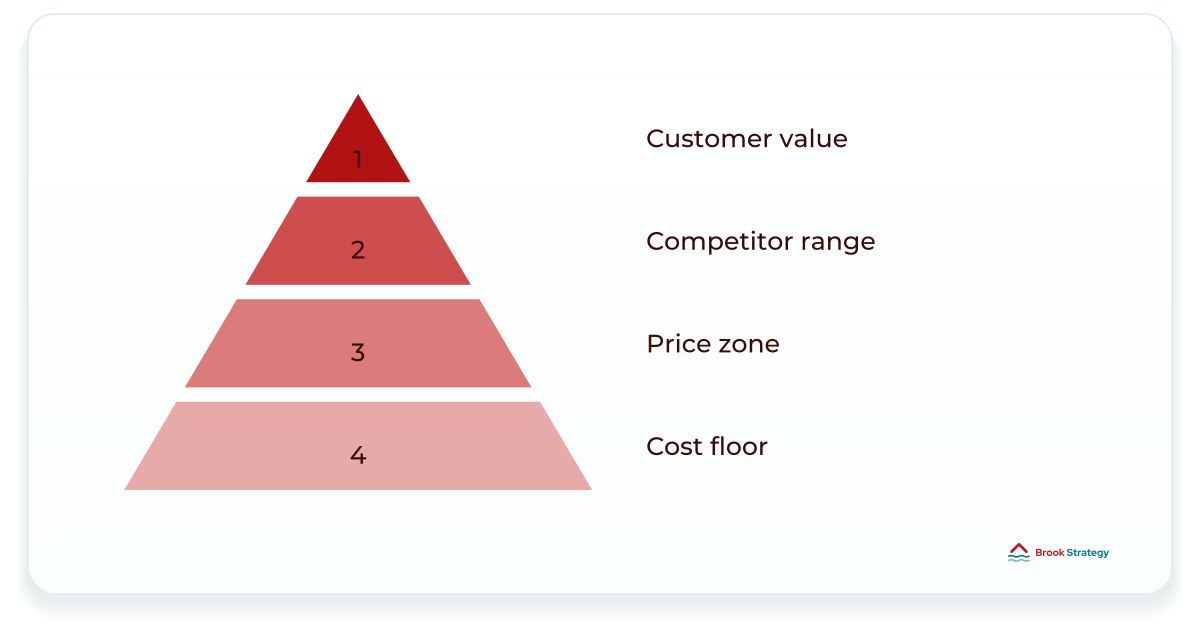
- Cost sets the floor, competitors set the range and customer value sets the ceiling.
- Choose the value metric before the price, because it decides how your revenue grows with the customer.
- Test changes on new customers first and review prices every quarter.
Most companies set prices once, adjust them when something hurts and never look at the logic behind them. Discounts pile up, plans overlap and sales reps explain the pricing page instead of using it.
A framework puts the decisions in order. The model below comes from pricing strategy consulting work, and the same six steps apply to software, services and physical products. Each step has a question, an output and a typical trap.
The Six Steps in One Table
| Step | Question | Output | Typical trap |
|---|---|---|---|
| 1. Costs and goals | What must a sale cover, and what do you want from pricing? | Margin floor and a goal such as growth or profit | Ignoring delivery and support costs |
| 2. Customer value | What is the result worth to each segment? | Value range per segment | Asking customers directly what they would pay |
| 3. Competitors | What do buyers compare you against? | Price map with your position | Copying a rival whose costs differ |
| 4. Model and metric | What do you charge for, and how? | Chosen model and value metric | Charging for what is easy to count |
| 5. Price points and packages | How many tiers, at which prices? | Tier table with a clear upgrade logic | Too many tiers with small gaps |
| 6. Testing | Does the change work? | Test plan, success measure and review date | Changing everything at once |
Step 1: Set the Floor and the Goal
Begin with what each sale must cover. List direct costs, such as delivery, hosting, payment fees and support, and divide by the number of customers or units to get a cost per sale. Your price floor is that figure plus the minimum margin your business needs to stay healthy.
Then pick one primary goal for this pricing round: grow customer count, raise average revenue or defend margin. You can care about all three, but one has to win when they conflict. A team that wants growth should accept a lower margin on entry plans, while a team that wants profit should accept a lower win rate.
Step 2: Estimate What the Result Is Worth
Customer value is what the buyer gains from your product, in money or time, compared to their next best option. For a billing tool that saves a finance team twenty hours a month, the value is those hours at their loaded cost, plus any errors avoided.
Value differs by segment, so estimate it per segment. A five-person company and a five-hundred-person company use the same product for different reasons and will accept different prices. Interviews and deal data are the best sources. Ask what the buyer used before, what it cost them, and what they would have done without you.
This step sets the ceiling. Your price should capture a fair share of that value, commonly a fraction, so the buyer sees a clear gain. A pricing review often starts here when discounting is the norm, because discounting means the price sits above perceived value for some segments.
Step 3: Map Your Competitors, Including Doing Nothing
List the three or four alternatives a buyer compares you to. These include direct competitors, adjacent tools and the do-it-yourself option, which is often a spreadsheet or an employee's time. Record their public prices, what is included and the metric they charge on.
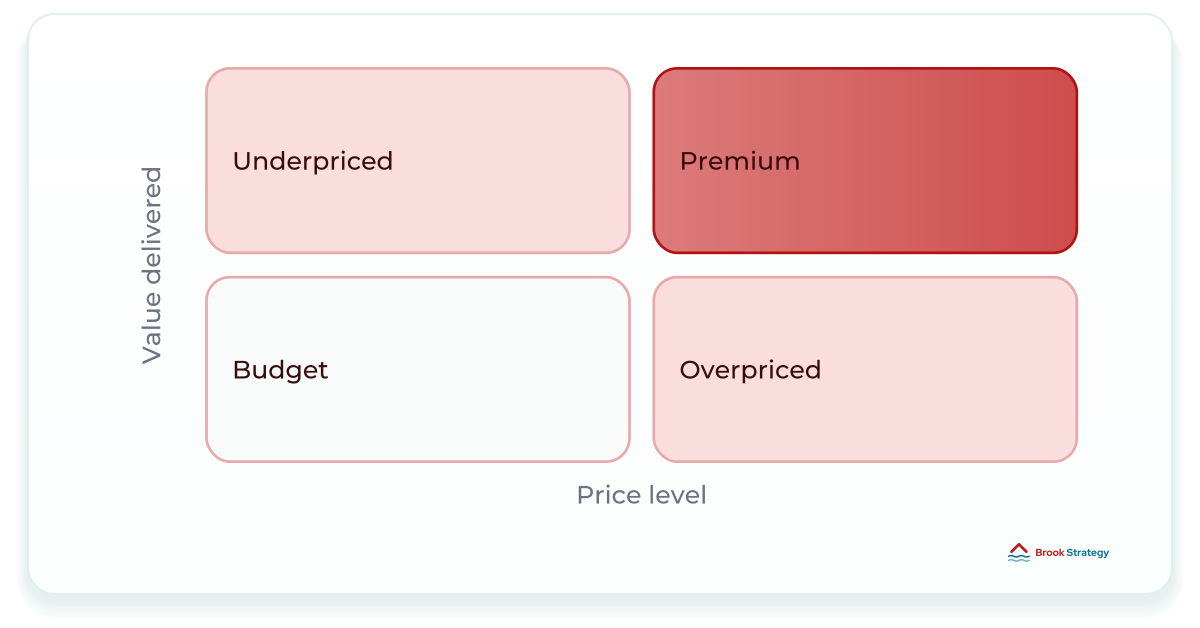
Place yourself on that map on purpose. Premium, mid-market and low-price positions all work, but only if the product and message support the position. A premium price with a bare-bones offer loses deals, and a low price with a strong offer leaves money on the table.
Competitor prices are a reference point, nothing more. Their costs, goals and customers may differ from yours, which is why this step sits third and not first. If competitor tracking is a regular job in your business, the tools ranking in pricing strategy tools shows which products automate it.
Step 4: Choose the Model and the Value Metric
The model is how you charge: flat fee, per seat, usage-based, tiered or a hybrid. The value metric is the unit you charge on, such as users, transactions, projects or revenue managed. A good metric rises when the customer gets more value, so revenue grows with success.
| Model | Works when | Watch for |
|---|---|---|
| Flat fee | Customers use the product in similar ways | Heavy users cost more and pay the same |
| Per seat | Value grows with the number of users | Customers share logins to save money |
| Usage-based | Usage tracks value and cost | Unpredictable bills slow buying |
| Tiered | Segments need different feature sets | Too many tiers confuse buyers |
| Hybrid | You need a base fee and growth with use | Pricing page becomes hard to read |
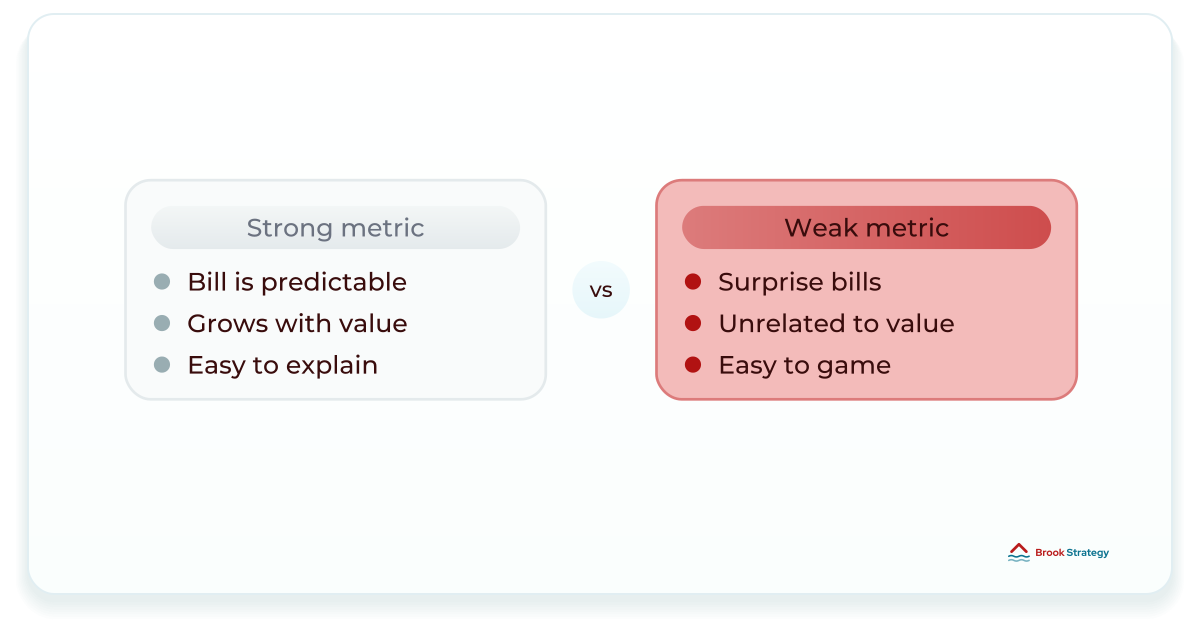
A useful test for a metric: can a buyer predict their bill, and does the bill grow when they succeed? If either answer is no, look for a different metric.
Step 5: Set Price Points and Build Packages
With model and metric chosen, pick the number of tiers. Three is a common starting point because it gives buyers a clear entry option, a main option and a premium one. Name tiers by who they serve, and make the gaps between them large enough that the upgrade logic is obvious.
Anchor the price points on the value ranges from step 2. If your target segment values the result at about 1,200 dollars a month, a main plan at 300 to 400 dollars leaves them a clear gain. Round numbers read as simple, and prices that end in nine suggest a bargain. Choose according to the position you picked in step 3.
A Worked Example: Repricing a Project Management Add-On
The numbers below are illustrative, to show the arithmetic. A software company sells an add-on at a flat 40 dollars per month. Delivery and support cost 9 dollars per customer, so the margin is 31 dollars, or 78 percent. Interviews suggest finance teams save about ten hours a month, worth around 400 dollars. Competitors charge 25 to 90 dollars, mostly per user.
| Item | Before | After |
|---|---|---|
| Model | Flat 40 dollars | Three tiers by number of projects |
| Entry tier | None | 25 dollars, 5 projects |
| Main tier | 40 dollars | 70 dollars, 25 projects |
| Premium tier | None | 150 dollars, unlimited and priority support |
| Cost per customer | 9 dollars | 9 to 22 dollars |
The new structure lets small teams start cheaply, charges mid-size teams closer to the value they get and covers the extra support that large users need. Even at 150 dollars, the premium tier is well below the 400 dollars of value estimated. The team tested it on new sign-ups for two months before moving existing customers.
The formula behind the check is simple: margin equals price minus cost, and the share of value captured equals price divided by customer value. At 70 dollars against 400 dollars of value, the customer keeps about 83 percent of the benefit.
Where Rollouts Go Wrong
Even a sound price structure can fail in the rollout. The most common problem is that sales and support hear about the change at the same time as customers. Reps then improvise answers, and the first week of objections sets the tone. Brief the team two weeks ahead, with a one-page explanation of the logic and three example answers to the questions you expect.
A second problem is grandfathering without an end. Letting old customers stay on old prices indefinitely creates a second price list you must support forever. Set a date, communicate it early and offer a clear path to the new plan.
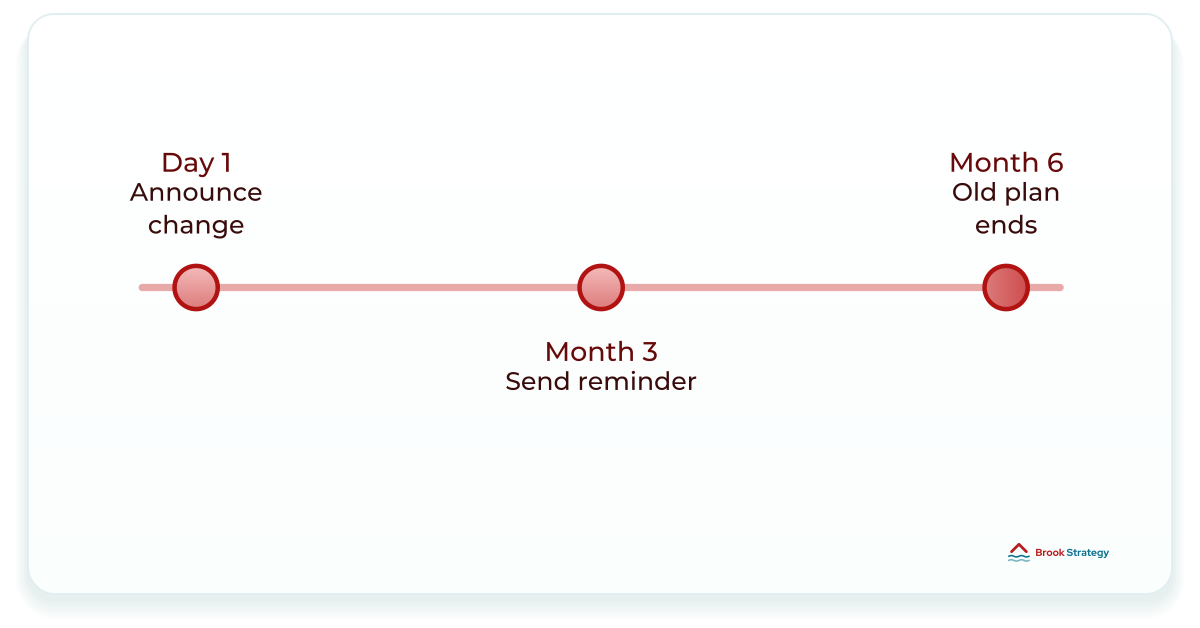
The third is measuring too soon. A price change can lift conversion in week one and show its churn effect only after a billing cycle or two. Look at the numbers at 30, 90 and 180 days before you call the result.
Step 6: Test, Roll Out and Review
Change one thing at a time where you can. Test on new customers first, because existing ones remember what they paid before. Track win rate, discount depth, average revenue per account and early churn for at least one full sales cycle.
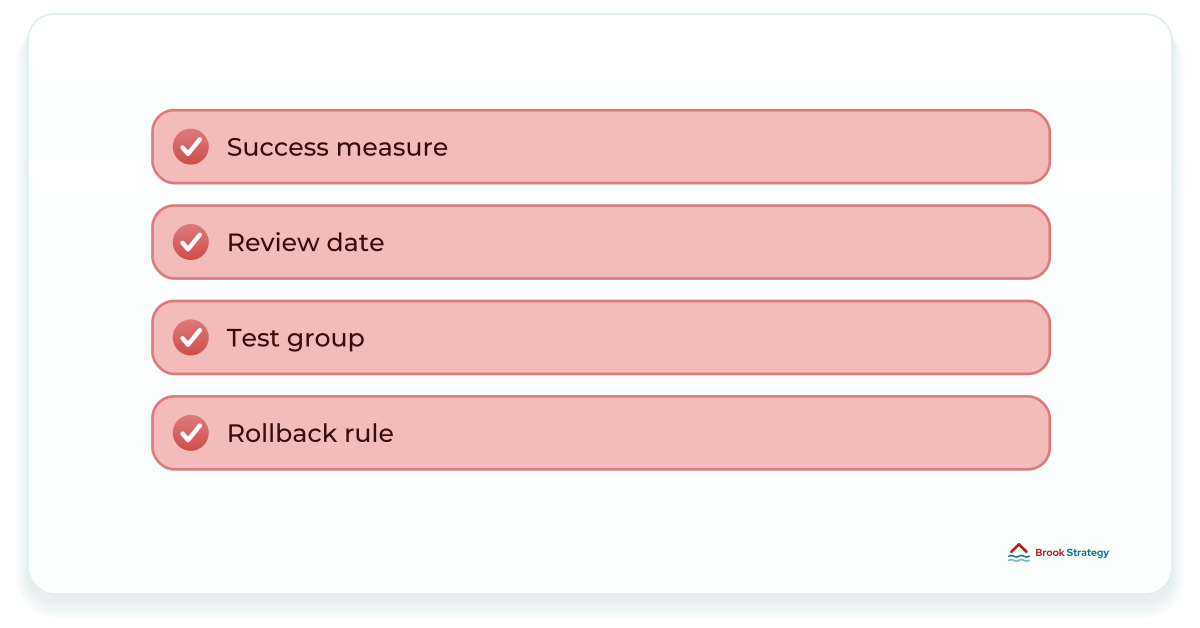
Set the success measure before the test begins, together with the date when you will look at it. Roll out to existing customers with notice, a clear reason and ideally a short period at the old price. A review each quarter keeps small drifts from piling up. If you need the vocabulary behind these steps first, my pricing strategy guide explains it from scratch.
Keep a written log of every price decision with its date, the reason and the result you expected. A year later, the log tells you which changes worked and why, and it stops the same debate from restarting each time a new manager joins.
Adapting the Framework to Your Stage
Early companies have little data, so lean on interviews and a simple tier structure, and expect to change it within a year. The founder-focused version is in my pricing strategy for startups piece. Owners of established small firms with a handful of services will find a shorter path in pricing strategy for small business.
Picking a Place to Begin
- Discounts above your plan: start with customer value and tiers.
- Heavy users who cost you money: revisit the metric and model.
- Competitors undercutting you: check your position and message before cutting price.
- Low margins on small plans: return to the cost floor.
Pick one of these and run the six steps on that part only. A full pricing overhaul is rarely needed.
Questions About the Pricing Strategy Framework
What Is a Pricing Strategy Framework?
It is a step-by-step model for setting and changing prices: understand costs and customer value, choose a pricing model, set price levels, build packages and test the result. Following the same steps each time keeps pricing from turning into a series of one-off guesses.
How Many Steps Does a Pricing Framework Need?
Six covers most cases: costs and goals, customer value, competitor position, model and metric, price points and packages, and testing. Fewer steps skip something that matters, and more tend to slow teams down.
Should I Price on Cost, Competitors or Value?
Use all three, with different jobs. Cost sets your floor, competitors show the range buyers compare against and customer value sets the ceiling. When they disagree, value should carry the most weight.
How Do I Find Out What Customers Will Pay?
Ask in a way that forces trade-offs: show packages at different prices, run a willingness-to-pay survey or compare win and loss data at different price levels. Asking 'would you pay X?' gives inflated answers.
How Often Should I Review Prices?
Look at price performance every quarter and run a full review once a year. Review sooner after a cost jump, a competitor move or a clear change in win rate or discounting.
What Is the Risk of Raising Prices?
You may lose some price-sensitive customers and see more objections. The risk is smaller when you tie the increase to added value, give notice and keep existing customers on a short grace period. Test with new customers first.
Can I Use This Framework for Services as Well as Software?
Yes. The steps hold for services, with a different value metric, such as a project, a retainer or an outcome. The costs step matters more for services, because delivery time is your main cost.
Note: This article is general information, not legal, financial or tax advice. Figures and examples are estimates based on typical projects, so check current details with your providers and advisers before you decide.
Was this article helpful?
Thank you for letting us know.
Russell Tennant
Russell leads the Brook editorial team and works with our consultants to turn real client engagements into practical guides on roadmaps, go-to-market planning, growth and competitive strategy. Before joining Brook, he spent 11 years in strategy and product marketing roles at software and financial services companies. He has since edited more than 300 articles on strategy practice and drawn on roadmaps and growth plans from over 100 client projects. He is based in Denver, Colorado.