Key Takeaways
- Treat your first price as a hypothesis and plan to change it at least twice in the first year.
- Each stage has a different job: learn what buyers value, find a price that closes, then shape plans that grow with the customer.
- Raise prices before you feel ready. Founders almost always set them too low.
- Keep the price book simple until you have enough deals to see what segments want.
Pricing is the decision startups postpone longest and regret most. The first number usually comes from a guess, a competitor's page or fear of hearing no, and it sticks for a year because nobody has time to revisit it. Good pricing strategy consulting for startups starts by treating that number as a draft.
I split the work into four stages, because the right move changes as you gain customers and data. Read down to where you are now, and skim the rest so you know what is coming.
The Four Pricing Stages at a Glance
| Stage | Typical signal | Main job | Pricing move |
|---|---|---|---|
| 1. Discovery | No paying customers yet | Learn what the problem is worth | Show a real price in every interview |
| 2. First sales | Fewer than 20 customers | Find a price that closes without heavy discounting | Test 2 or 3 price points on new deals |
| 3. Packaging | Repeatable sales, mixed customer sizes | Let different buyers pay different amounts | Build two or three plans around one value metric |
| 4. Expansion | Growing accounts, churn data | Grow revenue per customer | Add upgrade paths, annual terms and a yearly review |
Stages overlap, and some products skip one. A self-serve app might jump straight to packaging. An enterprise tool might stay in stage two for a year because every deal is custom. For the broader method behind each stage, see my pricing strategy framework.
Stage 1: Discovery, Before You Have Customers
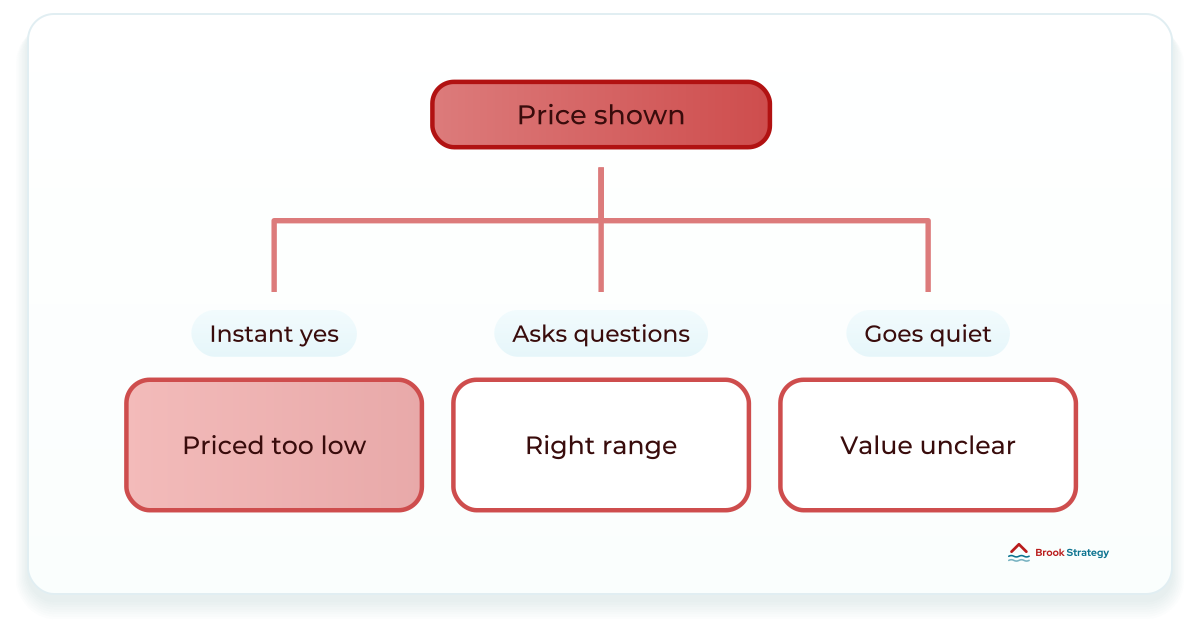
The usual advice is to ask buyers what they would pay. It rarely works, because people give low, polite answers to hypothetical questions. Show a specific price instead. In a customer interview, describe the product, say "it would cost $X per month" and watch what happens. Silence, a laugh and a shrug each tell you something different.
Ask three further questions: what do you use today, what does it cost you in money and time, and what would you need to see to switch? The answers give you a corridor. The cost of the current workaround sets the ceiling, and your delivery cost sets the floor. Your first price belongs well inside it.
Stage 2: First Sales, Finding a Price That Closes
With a few customers on the books, you can test. Quote your next ten to fifteen prospects at one price, the following ten to fifteen at another, and compare closing rates and deal size. Do not test below your cost to serve, and do not give away the product to learn.
A founder I advised sold a scheduling tool at $29 per seat. Early customers said yes quickly, which felt like validation. We raised the entry quote to $49 for new deals. Close rate fell from about two in three demos to about one in two, while revenue per won deal rose by more than two thirds. Net new revenue per demo went up, and support load per dollar went down.
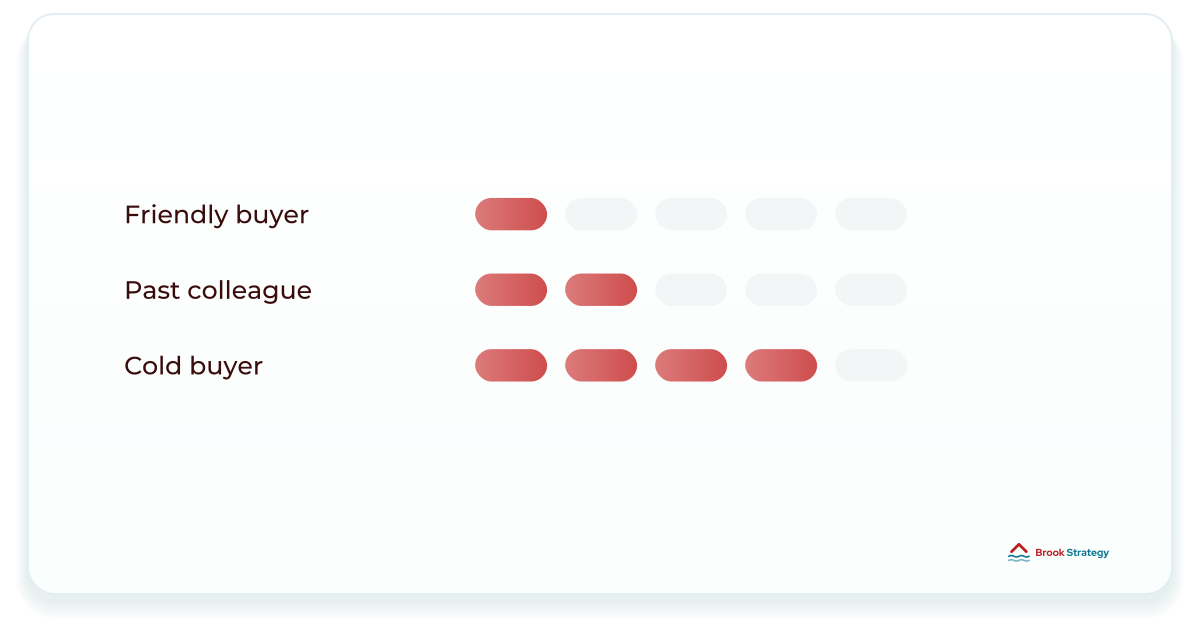
Beware the friendly early customer. Friends, past colleagues and people who like you will accept almost any price. Weigh the quotes from strangers more heavily than the quotes from your network.
Avoiding the Free Trap
Free pilots feel safe and often cost more than they return. If you offer one, define the length, the success measure and the paid price in writing before it begins. Customers who will not discuss the paid price before a pilot rarely buy after it.
Stage 3: Packaging Around One Value Metric
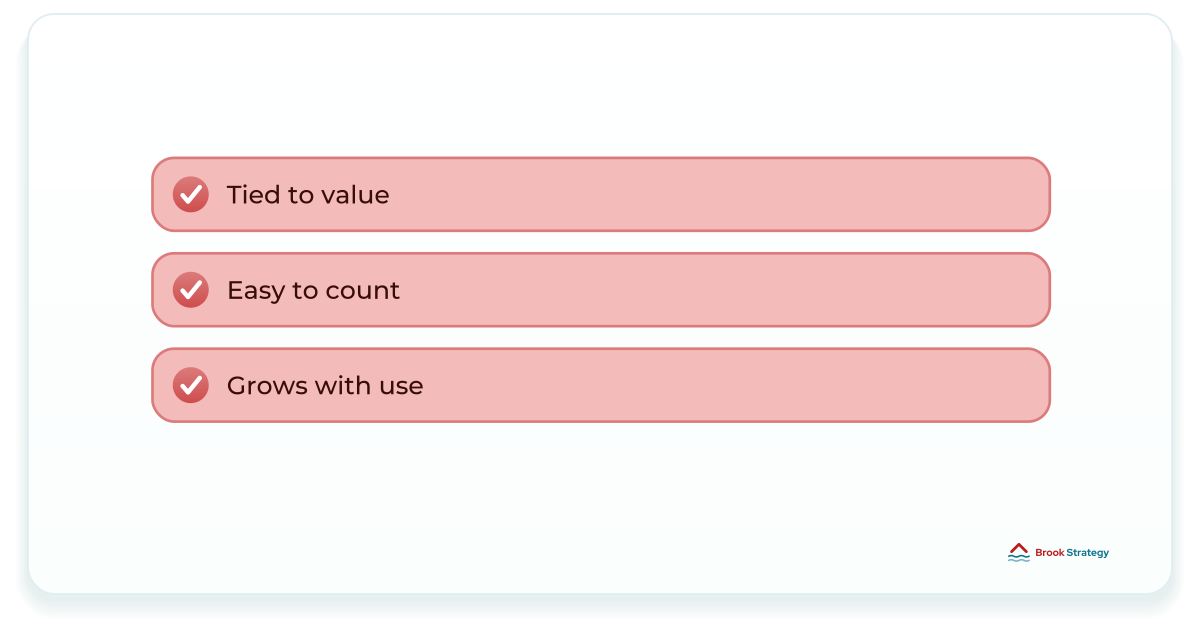
By now you will see that customers differ: a five-person team and a 200-person team use your product in different ways and should not pay the same. A value metric is the unit that links price to value, such as seats, projects, transactions or revenue managed. Choose one that grows when the customer gets more benefit, that the customer can predict and that you can measure without arguments.
Then build two or three plans. Keep the differences easy to explain: limits, support level, security features or integrations. A fourth plan is rarely worth the sales confusion. If you want to compare approaches such as seat-based, tiered and usage-based pricing side by side, my pricing strategy guide sets out how each works.
| Model | Works well when | Watch for |
|---|---|---|
| Per seat | Value grows with the number of users | Customers sharing logins to cut cost |
| Tiered plans | Customer groups clearly want different features | Too many features gated, which frustrates buyers |
| Usage-based | Cost and value rise with consumption | Bills that surprise the customer |
| Flat fee | Product is simple and used evenly | Heavy users paying the same as light users |
Stage 4: Expansion, Growing Revenue Per Customer
Once you have real retention data, pricing becomes a growth channel. Ask which customers outgrow their plan, which features they use most and where they churn. Build the upgrade path around those answers, and add annual terms that give you cash up front in exchange for a modest discount.
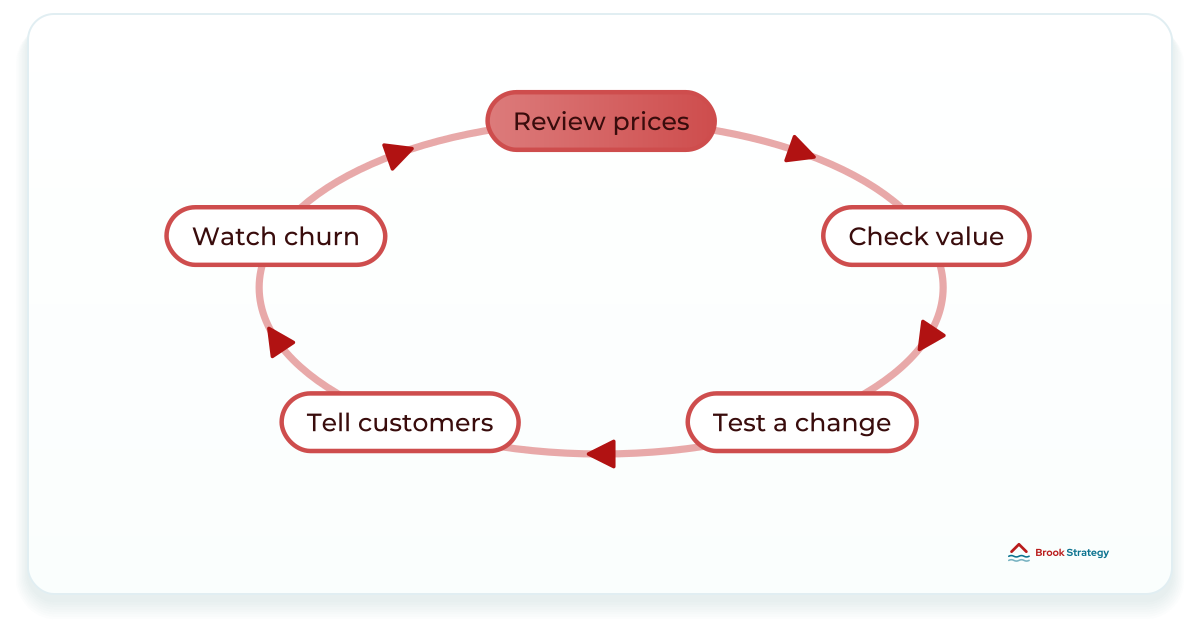
Set a calendar reminder to review prices every 12 months. Compare your prices with delivered value, check discount patterns and look at win rate by segment. Small, steady changes of 5 to 10% on new customers are easier to manage than a big reset every three years. Founders who do not have time for the review will find the pattern in my pricing strategy for small business article useful, since several moves carry over directly.
Founder Pricing Mistakes and What to Do Instead
- Copying a big competitor. Their cost structure and brand let them price differently. Use competitor prices as context and anchor on customer value.
- Underpricing to avoid rejection. If every deal closes, you are leaving money on the table. Aim for a healthy share of "no".
- Discounting in the first call. Hold your price and trade scope or term instead. Early discounts become the new baseline.
- Hiding the price. Buyers who cannot find a price assume it is high. At least show a "from" figure.
- Grandfathering forever. Early customers deserve a thank-you, but a lifetime price on a product that has doubled in value drags your average revenue down.
The first mistake is the one I see most. Founders compare themselves to the best-known product in the category, then price at a discount to feel safe. Customers rarely care about the comparison. They care whether the price is fair for what they get.
Tools Worth Having at Each Stage
Stage one needs a spreadsheet and a notes file. Stage two adds a CRM with quote tracking so you can compare win rates by price. Stage three adds billing software that supports plans and usage. Stage four often adds analytics that show revenue per account and expansion over time. My overview of pricing strategy tools compares options by stage and budget, so you can avoid buying a heavy platform too early.
Two Founder Stories on Raising Price
A founder of a compliance workflow tool came to me convinced that her customers were price sensitive. She had priced at $19 per user because a competitor charged $22, and her sales calls felt like constant negotiation. Our first move was to ask the five customers who had signed fastest what they would have paid. The answers ranged from $45 to $80 per user, mostly because the tool replaced hours of manual tracking.
She moved new quotes to $39, held existing customers at the old price for a year and added a team plan at $59 per user with audit exports. Over the next two months, she lost two deals that cited price and won several that had been stalling, because the higher price signaled that the product was a serious option for their compliance work. The pattern is common: a low price creates doubt as often as it removes it.
The second story goes the other way. A founder of a developer tool tried to jump from $15 to $50 in one step, with no change to the product. Sign-ups fell by more than half, and the people who stayed asked for features worth $50. He reversed the change within three weeks and then raised the price in steps tied to new releases. The lesson is that a price rise needs a reason the customer can see, whether that is more capacity, more support or a new feature.
What to Say When a Prospect Pushes Back
Founders tend to react to pushback by cutting the price. Ask a question first: "What are you comparing it to?" and "What would make it worth it at this price?" The answers show whether the objection is about budget, about value or about trust. If it is budget, offer a smaller plan or a longer payment term. If it is value, show a result from a similar customer. If it is trust, offer a short paid pilot with clear success criteria.
Keep a record of every objection and its category for a month. You will usually find that one or two types account for most of them, and each has a clear fix in your pitch or packaging.
How to Choose Your Next Move
Find your stage, then pick one action for the next 30 days. If you are in discovery, run ten interviews with a price on the table. If you are selling, set up a clean test on new deals. If you are packaging, pick a value metric and write the plan differences on one page. If you are expanding, schedule your first annual price review.
Outside help is useful when you are stuck between two options, when your numbers are thin, or when you are preparing for a fundraise and need a defensible model. Keep the scope small: one question, one test and one decision date.
Questions About Startup Pricing
Should a Startup Price Low to Win Its First Customers?
Price low only if the discount buys you something specific, such as a case study, a reference or a quick feedback loop, and write the end date on the offer. A permanent low price attracts buyers who leave when you raise it, and it makes your later revenue targets harder to hit.
When Should a Startup Raise Its Prices?
Raise them when most prospects say yes without discussing price, when you are close to capacity, or after you ship something that clearly adds value. If nobody has ever pushed back on your price, you are almost certainly too cheap.
Is Usage-Based Pricing Better than Subscription Pricing for Startups?
Usage-based pricing fits products where cost and value grow with consumption, such as infrastructure or API calls. Subscriptions fit products used on a steady basis. Many startups start with a simple subscription and add a usage component once they see how customers differ.
How Many Pricing Tiers Should an Early-Stage Startup Have?
Two or three. A fourth tier or a long list of add-ons adds support and billing work before you have the data to justify it. Add complexity when customer segments clearly want different things.
Do I Need to Offer a Free Plan or a Free Trial?
Neither is required. A free plan suits products with low cost to serve and a clear upgrade trigger. A trial suits products where value shows up within days. If your sales are high-touch, a paid pilot often works better and screens out casual interest.
How Do I Price a Product That Has No Market Yet?
Work from the cost of the buyer's current workaround and the value of the problem solved. Then interview ten target buyers, show them a price early in the conversation and note how they react. Reactions to a real number teach you more than answers to a hypothetical question.
How Do Investors Look at Startup Pricing?
They look at whether prices hold as you grow, whether discounts are controlled and whether revenue per customer rises over time. A clean, simple price book and a record of tested changes tell them more than a clever model does.
Note: This article is general information, not legal, financial or tax advice. Figures and examples are estimates based on typical projects, so check current details with your providers and advisers before you decide.
Was this article helpful?
Thank you for letting us know.
Russell Tennant
Russell leads the Brook editorial team and works with our consultants to turn real client engagements into practical guides on roadmaps, go-to-market planning, growth and competitive strategy. Before joining Brook, he spent 11 years in strategy and product marketing roles at software and financial services companies. He has since edited more than 300 articles on strategy practice and drawn on roadmaps and growth plans from over 100 client projects. He is based in Denver, Colorado.