Key Takeaways
- Price from your cost floor and your customer's alternative, never from a competitor's price list alone.
- A 1% price improvement usually moves operating profit far more than a 1% cut in cost or a 1% gain in volume.
- Small, regular increases and clearer packages beat a single big jump or a blanket discount.
- Track won and lost quotes for 90 days before you change anything else.
Most small business owners set their prices once, usually by looking at two competitors and shaving a little off. Years later the costs have changed, the offer has changed and the price still sits where it started. A pricing strategy consulting engagement often begins by fixing exactly this.
You do not need a pricing department to fix it. Below are the moves I recommend to owner-led companies with fewer than 50 staff: how to find your cost floor, how to read your customers, how to package, how to raise prices and how to test without risking your best accounts.
Why Small Changes in Price Matter More Than You Think
McKinsey's long-running analysis of company margins found that a 1% improvement in price, with volume and cost unchanged, lifted operating profit by about 8.7% on average across large companies. Small firms have thinner margins, so the effect is often bigger. A shop earning 8% net that raises realized prices by 2% can see profit climb by a quarter.
The same logic works against you. A 5% discount on a job with a 20% margin gives away a quarter of your profit on that job. You would need roughly a third more sales to make up for it. Owners underestimate this because the discount feels like a small gesture and the lost profit never shows up as a line item.
The figure is an average for large firms, so treat it as direction and run your own numbers in the next section.
Win 1: Find Your Cost Floor Before Anything Else
Your cost floor is the lowest price you can accept on a product or job and still pay for the real cost of delivering it. Most small businesses skip this and guess. The ones that calculate it usually find that two or three of their offers lose money once owner time is counted.
Include materials or software, direct labor at a true hourly rate (pay plus payroll taxes and benefits), a share of overhead and a target profit. Then compare the floor with the price you charge today.
| Cost line | Example: monthly retainer | How to find it |
|---|---|---|
| Direct labor | $1,150 (18 hours at $64 loaded) | Hours logged times pay plus taxes and benefits |
| Tools and materials | $140 | Software seats, supplies or subcontractors for this client |
| Overhead share | $210 | Rent, insurance and admin divided by billable hours |
| Target profit (15%) | $265 | Your goal after owner pay, applied to the total above |
| Cost floor | $1,765 | Sum of the lines above |
If you charge $1,500 for this retainer, you are working 18 hours a month for less than your target. The fix might be a price change, a smaller scope or ending the account. Knowing the number lets you choose.
Win 2: Price Against Your Customer's Alternative
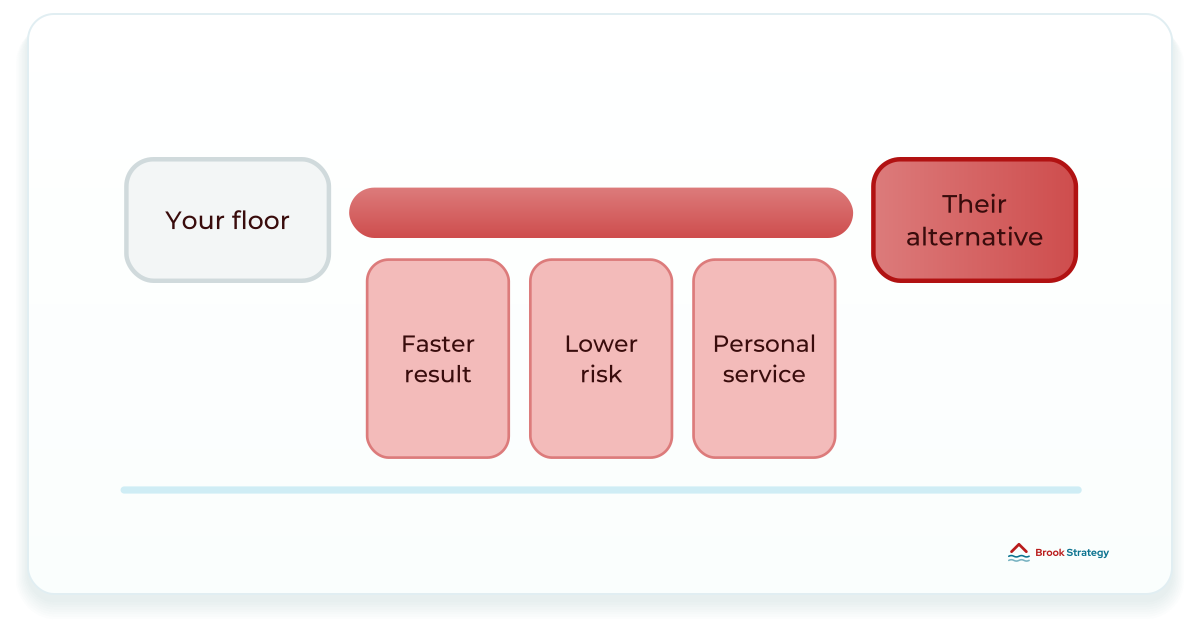
Your floor tells you the bottom. The ceiling comes from your customer's best alternative: hiring in-house, buying from a bigger vendor, doing it themselves or doing nothing. Ask five recent customers what they would have done without you and what that cost. Write the answers down in their words.
I did this with a regional bookkeeping firm that charged $420 a month and assumed its clients were price-sensitive. Four of five clients said the alternative was a part-time hire at $2,000 or more. The firm raised its entry package to $540 for new clients, kept existing clients at the old rate for six months and lost one prospect out of the next fourteen quotes. Nobody had pushed back on the number itself.
Your price belongs in the corridor between the floor and the alternative. Where in the corridor depends on how different you are. If you are faster, more specialized or easier to work with, sit near the top. If you are one of many identical providers, sit near the middle and compete on reliability. If you want a fuller walkthrough of the logic, my pricing strategy guide covers each method in detail.
Win 3: Package Three Options, Not One Price
A single price forces a yes or no decision. Three options turn the question into "which one", and that change alone often lifts average order value. Good, better and best works when each step has a clear reason to exist and the middle option is the one you want most buyers to pick.
Keep the packages simple. Differences should be easy to describe in a sentence each: scope, speed, support level or number of users. Avoid building a fourth tier or a long add-on menu. More than three options tends to slow the decision rather than raise the price.
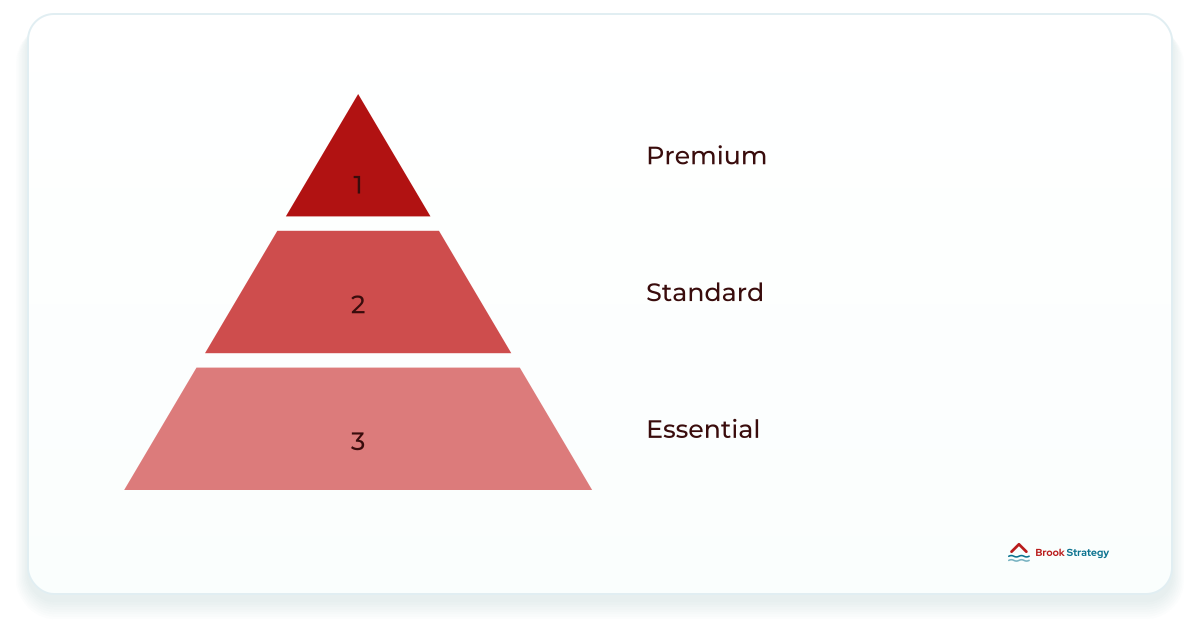
| Package | What changes | Price position | Role |
|---|---|---|---|
| Essential | Core service, standard turnaround | At or just above your floor plus margin | Entry point, keeps you in the comparison |
| Standard | Core plus the add-ons most clients buy anyway | 25 to 40% above Essential | The one most buyers should pick |
| Premium | Priority access, extra scope or a dedicated contact | 60 to 100% above Essential | Anchor that makes Standard look sensible |
Check which package people actually choose after two months. If almost everyone takes Essential, the step up is not worth it to them. If almost everyone takes Premium, you probably priced it too low.
Win 4: Raise Prices in Small, Regular Steps
The fear is losing customers. The data from small firms I have worked with shows something less dramatic: a 3 to 6% increase with 30 to 60 days of notice loses a small share of accounts, and those are often the ones with the lowest margin and the most requests. A 20% jump after four years of silence is a different story, because the customer feels it as a break in the relationship.
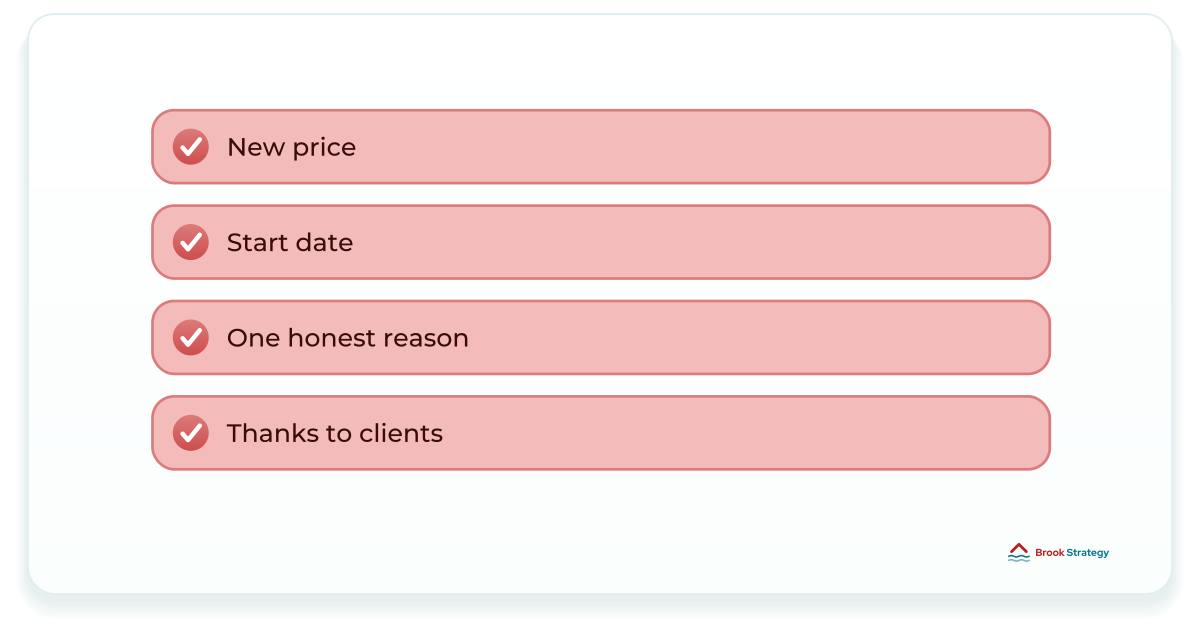
Send a short note that gives the new price, the date and one honest reason, such as supplier costs or added services. Do not apologize and do not offer a discount in the same message. Offer existing customers a longer notice period or a fixed rate for 12 months if they renew early. It keeps the account and gives you cash sooner.
Win 5: Replace Blanket Discounts With Trade-Offs
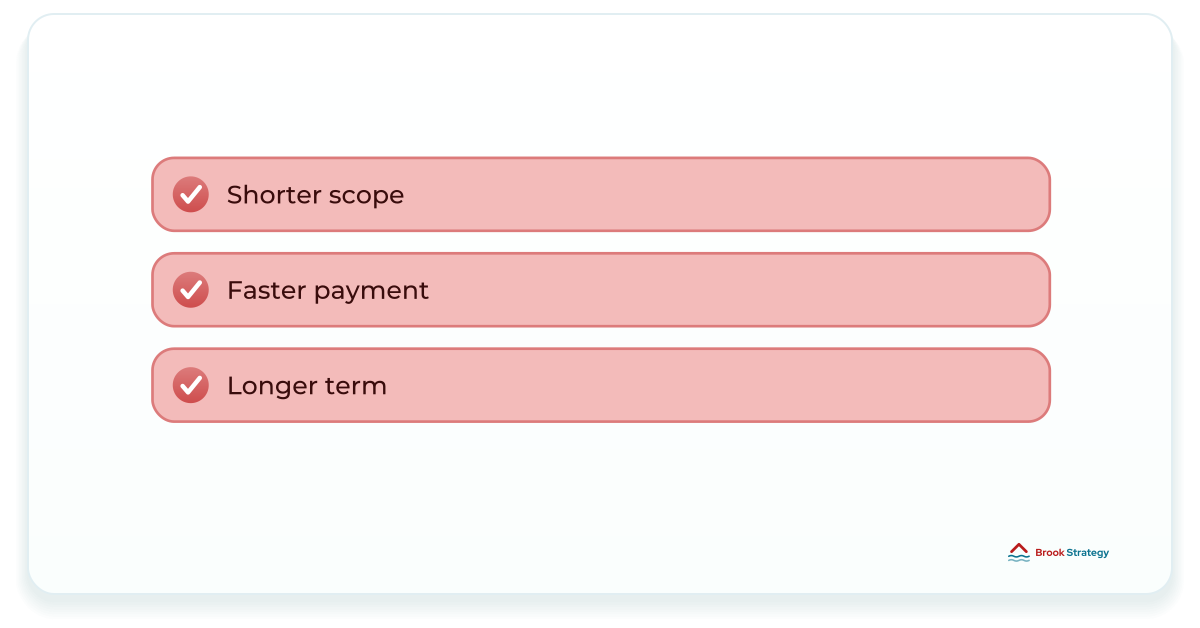
Discounts are easy to give and hard to take back. When a customer asks for a lower price, answer with a trade: a lower price for annual payment, a smaller scope, a longer commitment or a referral. You protect the number and the customer still gets something.
- Set a maximum discount you can approve without asking anyone, and write it down.
- Give discounts for something specific, such as upfront payment or volume.
- Never discount to win a customer who has said nothing about price.
- Record every discount and its reason in your quote log.
After a quarter, look at the log. Owners are often surprised to find that the same three or four customers receive most of the discounts. If you work in a high-ticket field with long sales cycles, my pricing work on the pricing strategy for startups page shows how early-stage firms handle the same issue with fewer data points.
Win 6: Test Changes on a Small Slice
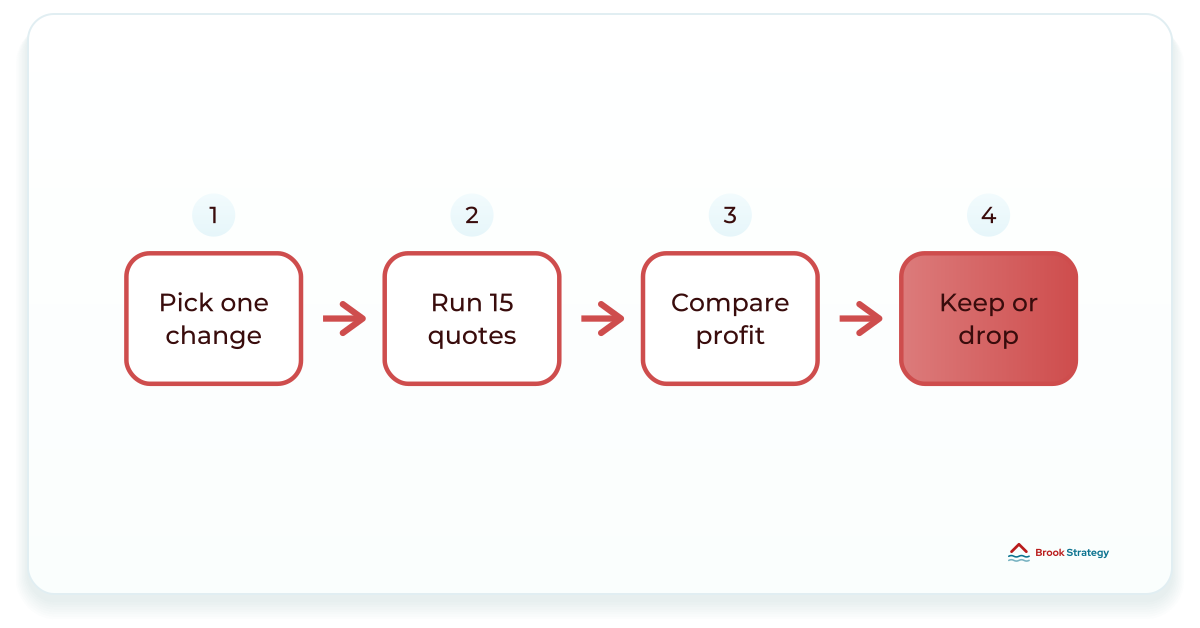
You do not need an experiment platform. Pick one product or one customer segment, change the price for the next 15 to 20 quotes and keep every other quote at the old price. Track the quote count, the win rate and the average margin. If win rate drops by more than your margin gain can cover, step back.
Test one change at a time. If you change the price, the packaging and the sales script in the same month, you will not know which one helped. Give each change 60 to 90 days, which is long enough for a typical small business sales cycle to show up in the numbers.
| Test | Sample | Track | Decision rule |
|---|---|---|---|
| New price on one offer | Next 15 to 20 quotes | Win rate, average margin | Keep if profit per quote rises |
| Three-package layout | All new quotes for 60 days | Package mix, average order value | Keep if average order value rises |
| Annual increase notice | Half of renewals, then the rest | Churn, complaints | Roll out if churn stays inside your norm |
Which Tools Help and Which Can Wait
For most small businesses, three things cover the first year: a spreadsheet for costs and price lists, a CRM or quoting tool that records won and lost deals, and your accounting system for margin by customer. If you are weighing paid software for repricing or subscription billing, my rundown of pricing strategy tools compares the options by size and budget.
I would hold off on dynamic pricing engines until you have a few hundred transactions a month and a clear reason to vary prices. Before that, the tool is more complicated than the problem.
Mistakes I See Most Often
- Copying a competitor. Their costs, positioning and goals are not yours. Use their prices as one input, never the answer.
- Pricing by hours only. It punishes you for getting faster. Where you can, price the outcome.
- Treating existing customers as untouchable. Loyalty is real, but a five-year-old price on a changed scope is a gift you did not plan.
- Skipping a floor on special deals. One unprofitable "favor" often becomes the customer's expectation.
- Changing everything at once. You lose the ability to learn what worked.
You will probably recognize two or three of these. Fix the one that costs you the most first, then move on to the next.
A 30-Day Plan You Can Start Now
Week one: calculate the cost floor for your three biggest offers. Week two: interview five customers about their alternative and write down what it costs them. Week three: draft three packages and a one-page price list. Week four: send the next quotes at the new prices and start your log. After 90 days, review win rate and margin, and decide on the next step. If you want a repeatable method for the whole process, the pricing strategy framework turns these steps into a model you can reuse every year.
How to Choose Between Doing It Yourself and Getting Help
Do it yourself if you sell a small number of offers, have clean cost data and can interview customers on your own. Bring in help when you have a complex offer set, when margin differs a lot by customer and you cannot see why, or when you have tried an increase and results were mixed. An outside view is also useful when you are too close to the numbers and cannot tell whether a price is too low or just feels uncomfortable.
Whichever route you take, decide beforehand what result would make the project a success: a margin target, a win-rate floor or a number of repriced accounts. Without a target, repricing projects drift.
Sources
Questions About Pricing Strategy for Small Business
How Do I Price My Product If I Have No Competitors?
Look at what your customers do today to solve the problem. That might be a spreadsheet, a part-time hire or a bigger vendor with features they barely use. The cost of that workaround is your reference price. Price somewhere between the workaround cost and the value you create, then test it on the next ten quotes.
How Often Should a Small Business Raise Prices?
Review prices once a year at minimum, and again any time your costs move by more than a few points. Most owners I work with wait too long and then try a large jump. Smaller, regular increases of 3 to 6% are easier for customers to accept and easier for you to defend.
Is It Better to Compete on Price or on Value?
A small business rarely wins a price war against a larger one, because the larger firm buys cheaper and spreads costs wider. Compete on speed, fit, service or expertise and price to match. If you do go cheap on purpose, make sure the margin still pays for your time.
How Do I Handle Customers Who Say My Price Is Too High?
Ask what they are comparing it to before you say anything about the number. Often the comparison is a different scope or a lower-quality option. If the gap is real, offer a smaller package instead of cutting the price on the same work. A discount teaches the customer to ask again.
Should I Publish My Prices or Quote Each Job?
Publish prices when your work is repeatable and customers compare options online. Quote each job when scope varies a lot. Many small firms do both: a published starting price with a note on what changes it. Hidden prices lose people who want a quick answer.
What Profit Margin Should I Aim For?
It depends on your industry, so check your own history before borrowing a benchmark. Work out what you need after wages, overhead and tax for the business to be worth running, then set a floor price that delivers it. Anything below the floor needs a good strategic reason.
Do I Need Pricing Software?
Not at the start. A spreadsheet with your costs, your price list and a log of won and lost quotes does most of the job. Software starts to pay off when you have many products, regions or contracts to keep consistent.
Note: This article is general information, not legal, financial or tax advice. Figures and examples are estimates based on typical projects, so check current details with your providers and advisers before you decide.
Was this article helpful?
Thank you for letting us know.
Russell Tennant
Russell leads the Brook editorial team and works with our consultants to turn real client engagements into practical guides on roadmaps, go-to-market planning, growth and competitive strategy. Before joining Brook, he spent 11 years in strategy and product marketing roles at software and financial services companies. He has since edited more than 300 articles on strategy practice and drawn on roadmaps and growth plans from over 100 client projects. He is based in Denver, Colorado.