Key Takeaways
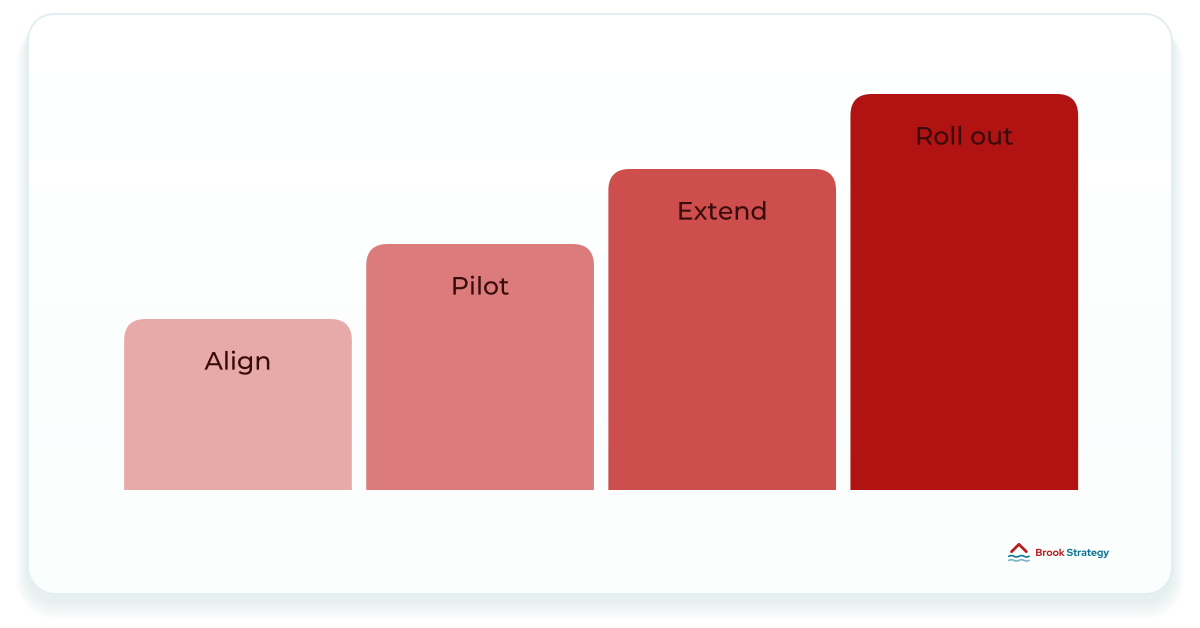
- A workable digital roadmap has four stages: align, pilot, extend and roll out.
- Each stage has entry and exit criteria, so you widen the scope only after the last stage worked.
- Pilot a small, important slice of the business with a willing owner and clean data.
- Review monthly, rewrite quarterly and keep one sponsor and one day-to-day owner.
Digital programs rarely fail because the technology does not work. They fail because the rollout reaches the whole company before anyone learned what the pilot taught. A good roadmap protects you from that by making every expansion depend on evidence.
This is the structure I use with clients after the strategy itself is agreed. If you still need that foundation, digital strategy consulting covers goals, priorities and the business case. For the underlying concepts, my digital strategy guide goes deeper.
The Four Stages and Their Gates
Each stage has a purpose, a typical length and a gate you pass before moving on. Lengths assume a mid-sized SaaS or financial services business.
| Stage | Typical length | Purpose | Exit gate |
|---|---|---|---|
| 1. Align | 4 to 6 weeks | Agree goals, scope, owners and the measure that defines success | Sponsor signs off the goal, budget range and pilot choice |
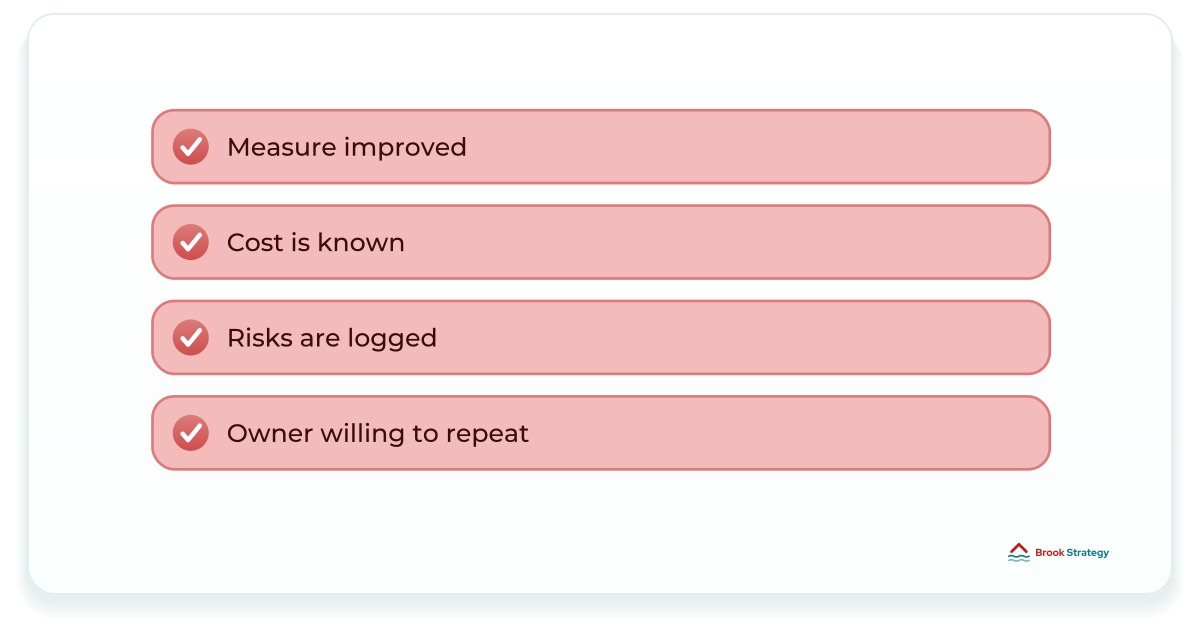
| 2. Pilot | 8 to 12 weeks | Test the change on one unit or journey | Measure hit, cost known, risks logged |
| 3. Extend | 3 to 4 months | Repeat in two or three more units, adjust the playbook | Results hold outside the pilot team |
| 4. Roll out | 6 to 9 months | Bring the rest of the business onto the new way of working | Adoption and benefit targets reached |
The lengths come from my own project experience, so adjust them for your size. A company with one product and one team can compress stage 3 into a few weeks. A group with regional entities will stretch it.
Stage 1: Align Before You Build Anything
Start with a one-page statement of what the roadmap must achieve. A good one reads like "cut onboarding time for new accounts from 21 to 10 days without adding headcount." Everything else on the roadmap has to serve that line.
In this stage you also name the sponsor, the day-to-day owner and the people who can say no. Interview each of them. In my experience the real blocker is rarely the one in the kickoff deck. It is often a team that fears losing control of a system.
By the end you should have the goal, a rough budget range, a ranked list of candidate initiatives and a pilot choice. If leaders still disagree on any of the four, stay in stage 1. Starting the pilot early only moves the argument into the pilot.
Stage 2: Pilot a Small Slice That Matters
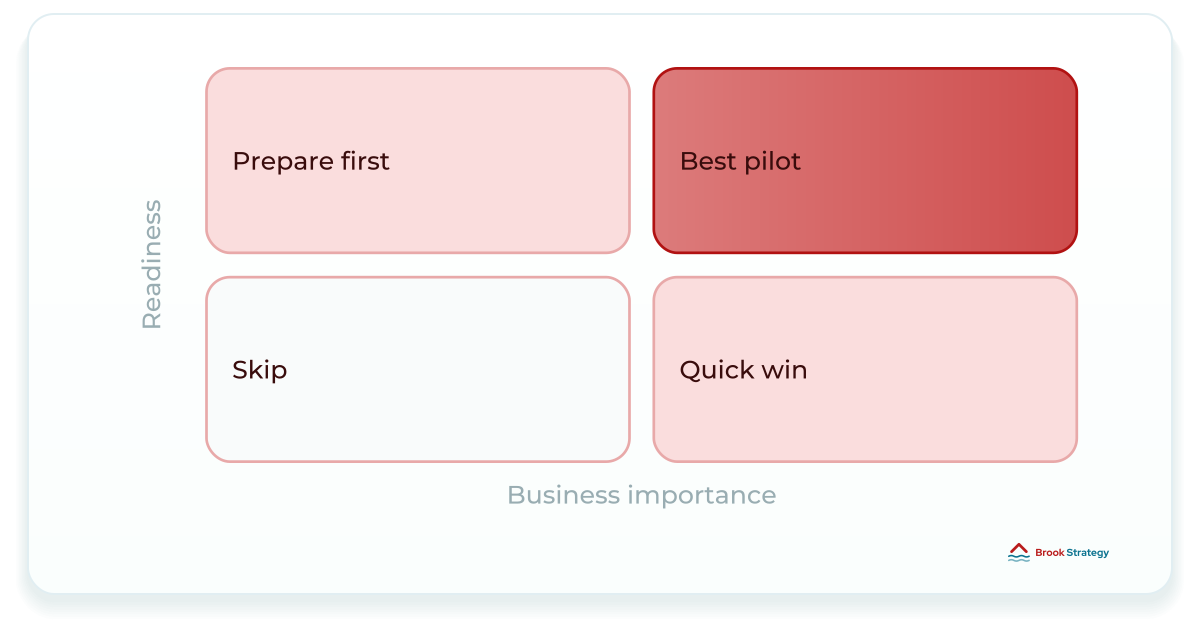
A good pilot is important enough that people care about the result and small enough that you can fix it quickly. Pick one business unit, one customer segment or one journey, such as renewal for mid-market accounts. It needs a willing owner, available data and a measure you set in advance.
Run the pilot like a small project with a start date, an end date and a weekly checkpoint. Record what the pilot costs per unit, how long each step takes and where people work around the new process. That last point tells you more than any survey.
What the Pilot Gate Checks
At the end, four questions decide whether you move on.
- Did the measure reach the target set before the pilot?
- Is the cost per unit close to the budget you plan to use at scale?
- Do the people affected use the new way without being chased?
- Were any security, compliance or data risks found, and are they resolved?
If the answer to any is no, repeat or adjust the pilot. A second pilot costs weeks. A failed rollout costs a year.
Stage 3: Extend to Two or Three More Units
The first pilot succeeded partly because of its team. Stage 3 tests whether the result survives without them. Pick units that differ from the pilot in size, region or maturity, so you learn where the playbook bends.
Write the playbook as you go: steps, owners, templates, training notes and common errors. By the end of this stage, a new unit should be able to follow the playbook with support from one person rather than a project team. That is the real test of readiness for rollout.
This is also the time to check the metrics you rely on. If your reporting depends on a platform that you plan to replace, fix that now. My digital strategy checklist lists the items teams most often forget at this stage.
Stage 4: Roll Out in Waves, Not All at Once
Group the remaining units into waves of similar size and risk. Start each wave with a short readiness check: owner named, data prepared, training scheduled and support available. Units that fail the check wait for the next wave without drama.
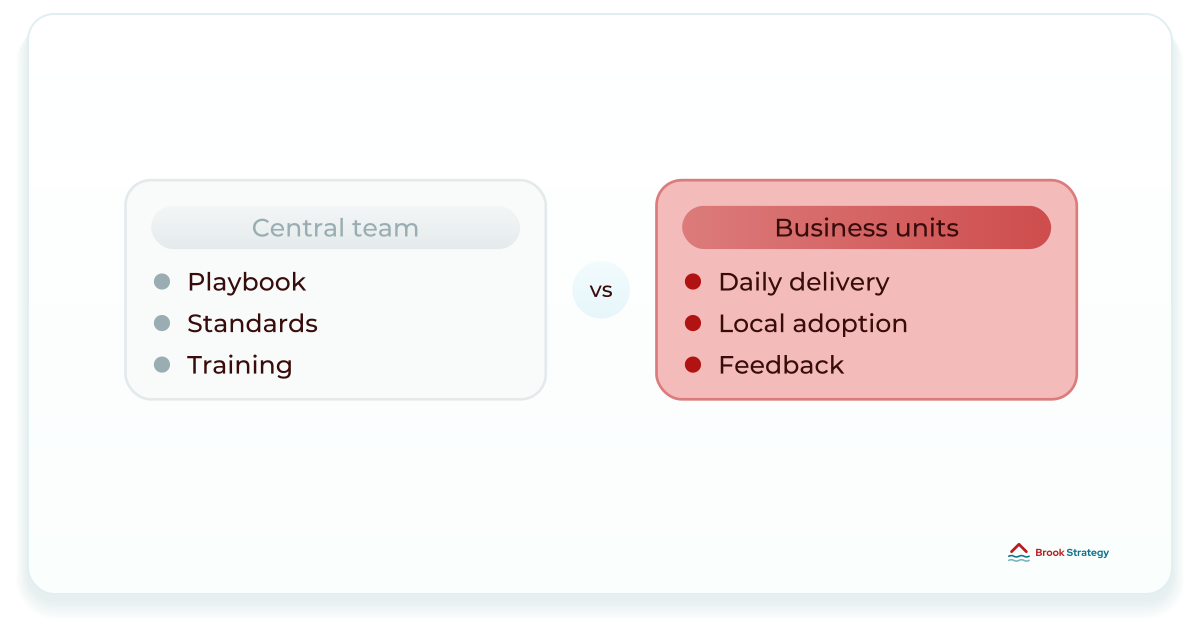
Keep a central team small, usually the owner and two or three specialists, with a named champion in each unit. As waves complete, shift ownership of the new way of working to those units. The roadmap ends when the central team is no longer needed for daily operation.
Choosing Your Rollout Pace
Faster waves finish sooner but strain support. Slower waves cost more in central team time. A useful rule from my client work is to run waves no faster than your support team can answer questions within one working day. When response times slip, adoption drops.
Where Digital Roadmaps Slip
These are the delays I see most often, with a rough cost.
| Cause | Typical delay | Prevention |
|---|---|---|
| Pilot team chosen for convenience, not fit | 1 to 2 months | Score candidates on importance, data and owner willingness |
| Security or compliance review starts late | 3 to 8 weeks | Involve reviewers in stage 1 and share the pilot design |
| Integration with a legacy system | 4 to 12 weeks | List every system touched during alignment |
| Budget reapproved mid-year | 1 to 3 months | Fund stages with gates, not the whole program |
| Sponsor changes role | 2 to 4 months | Document decisions and name a deputy sponsor |
These ranges reflect my own project history rather than a formal study. They matter mainly for sequencing: most delays come from people and approvals, so settle those early. The digital strategy best practices cover several of the fixes in more detail.
What the Roadmap Looks Like in Practice
A software company I worked with wanted a faster path from trial to paid. Stage 1 took five weeks and settled one goal: lift trial-to-paid conversion. The pilot was a single self-serve plan for small accounts. After ten weeks the measure had moved, but support tickets doubled, which the team had not planned for. Fixing that added three weeks to stage 2 and saved the rollout from a bad first month.
For more stories of strategies that worked, read the digital strategy examples I dissected for this site.
Funding Each Stage on Its Own Terms
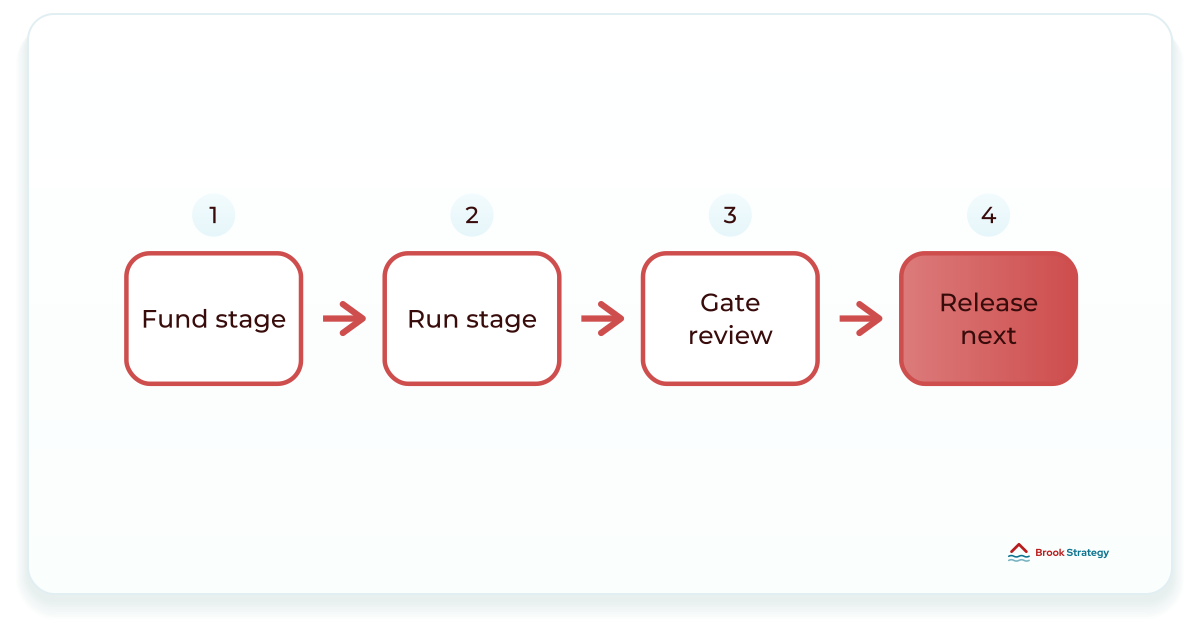
Fund the roadmap in tranches that match the stages. Stage 1 needs mainly people time. Stage 2 needs a modest budget for the pilot, often a fraction of what the full program will cost. Stages 3 and 4 are released only when the previous gate is passed, with the pilot cost per unit as the basis for the estimate.
Finance teams usually like this approach because the risk is capped at each step. It also protects you when the pilot teaches something surprising. If the cost per unit is double the estimate, you find out with a small commitment spent rather than a large one. Build a contingency of ten to twenty percent into the extend and rollout tranches, and agree who can release it.
One last tip: keep a running list of benefits next to the budget. When a sponsor asks, months later, what the program returned, you want the answer on one page, not buried in project reports.
Governance That Does Not Slow You Down
A roadmap needs a rhythm of meetings, and each one needs a purpose. A weekly thirty-minute check for the owner and the leads of running initiatives covers blockers and nothing else. A monthly review with the sponsor compares progress with the gate measures and ends in a written decision. A quarterly session rewrites the next two quarters and adjusts budget.
Keep the document short. One page per initiative is enough: goal, measure, owner, status, next gate and the last decision taken. Anything longer will not be read before the meeting, and the meeting becomes a presentation.
Finally, decide in advance what stops an initiative. A gate that cannot be failed is not a gate. Write the stop condition into the plan, such as "if the pilot measure is below half of target at week eight, pause and review." It removes the emotion from a hard conversation later.
Preparing the People Side of Each Stage
Technology gets the budget, but people decide whether the change sticks. Tell the affected teams what is coming at least a month before each stage touches them, explain what changes in their day and give them a way to raise problems. In stage 2, include a few skeptics in the pilot group. Their objections are often the ones the rollout will meet later, and fixing them early is far cheaper.
Training should be short and close to the work: a thirty-minute session, a one-page guide and a named person to ask. Long courses given months in advance are forgotten by launch day.
Choosing Where to Begin
You may already be partway through. Place yourself on the roadmap and start from the stage that fits.
- If goals are unclear or contested, start at stage 1, however far along the projects are.
- If you have a goal and a few running projects, review them against the pilot gate questions.
- If a pilot worked, write the playbook before you extend.
- If rollout stalled, check the readiness criteria for each wave and restart with the units that pass.
Questions About a Digital Strategy Roadmap
What Is a Digital Strategy Roadmap?
It is a dated sequence of the digital initiatives that serve your business goals, with owners, measures and decision points. It differs from a project plan because it covers several initiatives and says which ones come first and why.
How Long Should a Digital Roadmap Run?
Plan in detail for the next two quarters and in themes for the following two. A twelve to eighteen month view is the practical limit for most teams. Beyond that, platforms, budgets and priorities change too much for a detailed plan to hold.
Why Start with a Pilot Instead of a Full Rollout?
A pilot shows you what breaks before it breaks for everyone. It also gives you a real measure of cost and effort, which makes the rollout budget far more reliable. In my client work, teams that skip the pilot often rebuild part of the rollout later.
How Do I Choose the Pilot?
Choose a unit or journey that is important enough to matter and small enough to fix quickly. It should have a willing owner, available data and a clear measure. Avoid the most politically sensitive team as your first pilot.
What Should a Pilot-to-Rollout Gate Look At?
Look at the measure you set before the pilot, the cost per unit compared with the plan, adoption among the people affected and any risk or compliance issues found. If any of the four is weak, fix it before widening the scope.
Who Should Own the Roadmap?
One executive sponsor and one day-to-day owner. The sponsor protects budget and resolves conflicts, the owner runs the monthly review. Splitting ownership across a committee slows every decision.
How Often Should We Update It?
Review monthly and rewrite quarterly. The monthly review checks progress against the gate. The quarterly rewrite moves the horizon forward and reflects changes in the business, customers or budget.
Note: This article is general information, not legal, financial or tax advice. Figures and examples are estimates based on typical projects, so check current details with your providers and advisers before you decide.
Was this article helpful?
Thank you for letting us know.
Russell Tennant
Russell leads the Brook editorial team and works with our consultants to turn real client engagements into practical guides on roadmaps, go-to-market planning, growth and competitive strategy. Before joining Brook, he spent 11 years in strategy and product marketing roles at software and financial services companies. He has since edited more than 300 articles on strategy practice and drawn on roadmaps and growth plans from over 100 client projects. He is based in Denver, Colorado.