Key Takeaways
- Tie every digital initiative to one business goal with a number and a date.
- Keep three to five initiatives active and put the rest on a ranked waiting list.
- Decide build or buy with written criteria, and plan for legacy systems from day one.
- Review monthly, stop projects that miss their gates and say so openly.
Good digital strategy is less about clever ideas and more about discipline. After many engagements with software and financial services firms, I see the same ten practices separate plans that deliver from plans that drift. Several seem obvious, yet most companies skip at least three.
Each practice below has a do and an avoid. If you want an outside review of where you stand, digital strategy consulting begins with exactly that, and the digital strategy checklist gives you a way to score yourself first.
Setting Direction
1. Anchor Everything to One Business Goal
Pick the single outcome the strategy serves, such as lower cost to serve or faster revenue growth in one segment. A goal with a number and a date lets you rank projects and reject the ones that do not fit.
Do: write the goal on one line and put it at the top of every project brief. Avoid: a list of five equal goals that nobody can trade off.
2. Start From the Customer, Not the Tool
Walk the main customer journey yourself, then interview five customers. You will find friction that your internal dashboards hide. Tools come into the plan only when they remove a specific piece of friction.
Do: quote customers in the strategy document. Avoid: starting with a platform demo and working backward to a need.
3. Limit the Number of Active Initiatives
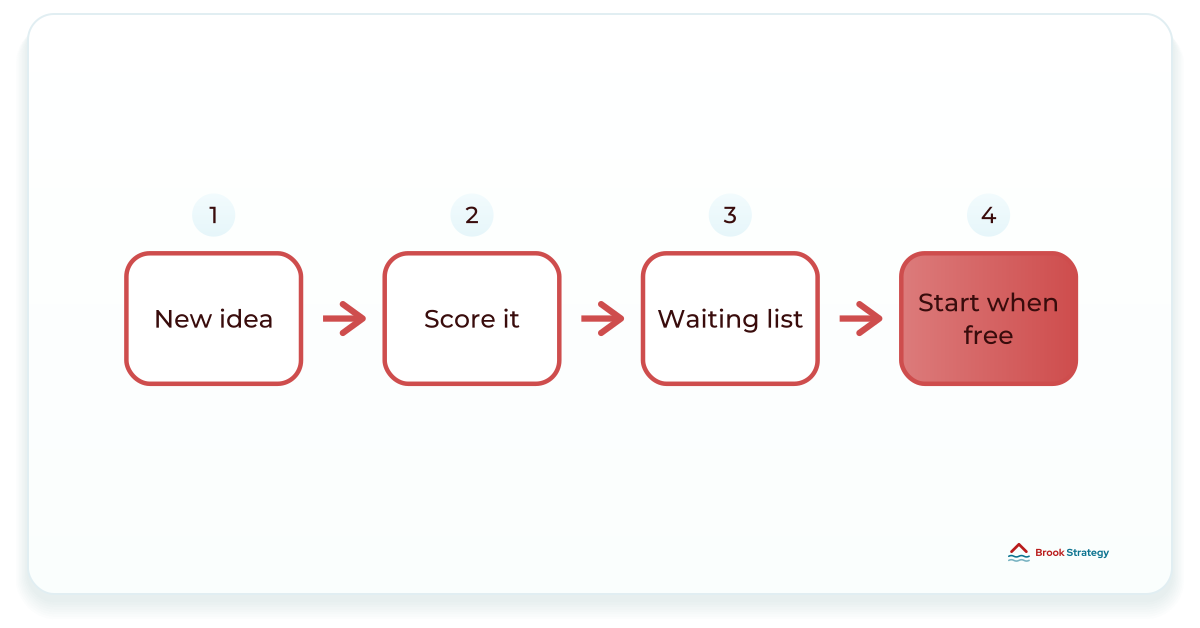
Teams overcommit because every idea looks reasonable alone. Count the people each initiative needs and compare with who you have. In most companies the honest answer is three to five at once.
Do: keep a ranked waiting list and review it quarterly. Avoid: starting a new initiative without stopping one.
4. Write Down What You Will Not Do
A strategy is a set of choices, and a choice implies a refusal. List the good ideas you decided to leave out and the reason. This stops the same idea returning at every planning meeting.
Do: include a "not now" list with a review date. Avoid: treating silence as agreement.
Choosing and Building
5. Decide Build or Buy With Written Criteria
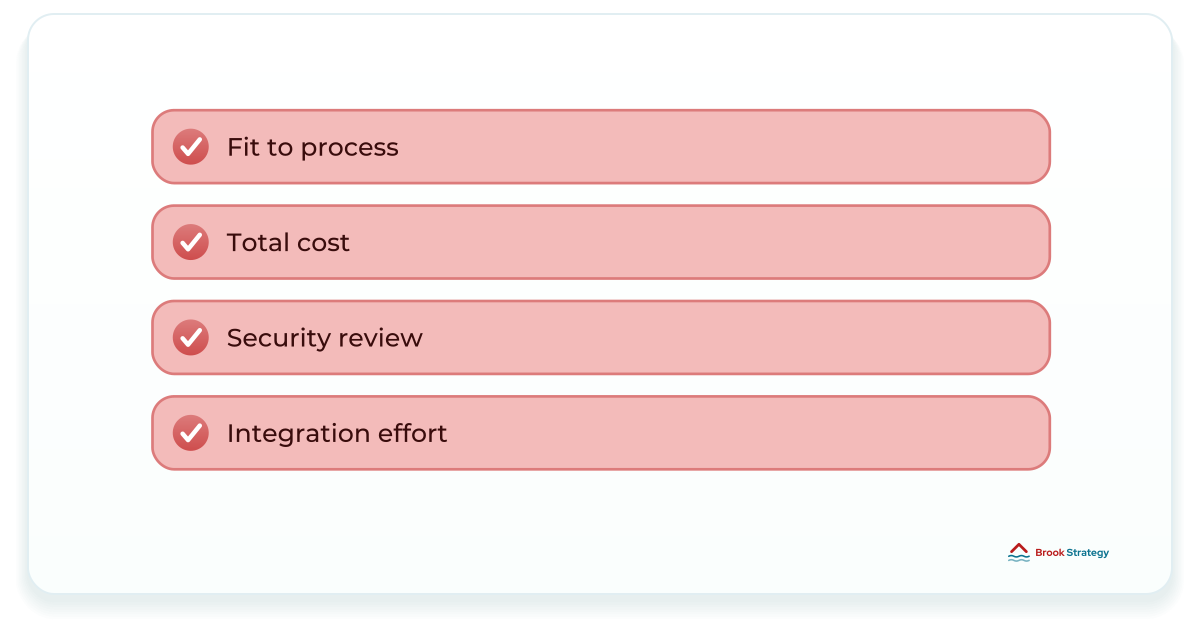
Buy what does not give you an edge and build only where the capability is core to how you win. Before you look at options, write five or six criteria with weights, such as fit, cost over three years, security, integration effort and vendor risk.
Do: score every option against the same criteria. Avoid: letting the best demo set the decision.
6. Plan for Legacy Systems Early
Every journey has an old system somewhere in the middle. List those systems, who owns them, what they cost and what depends on them. For each one, decide whether to keep, wrap, replace or retire.
I once watched a six-month customer portal project slip by four months because a billing system exported data in a format nobody remembered. A one-hour inventory in week one would have found it.
Do: map system dependencies for the top three journeys. Avoid: assuming the new tool will connect to everything.
7. Put Security and Compliance in the First Draft
In financial services and software that handles customer data, review comes late and costs time. Bring your security and compliance leads in while the strategy is a draft and share the pilot design. They will flag two or three constraints that change the plan for the better.
Do: agree review timelines before the pilot starts. Avoid: presenting a finished plan for approval in the last week.
Running and Reviewing
8. Pilot Before You Scale
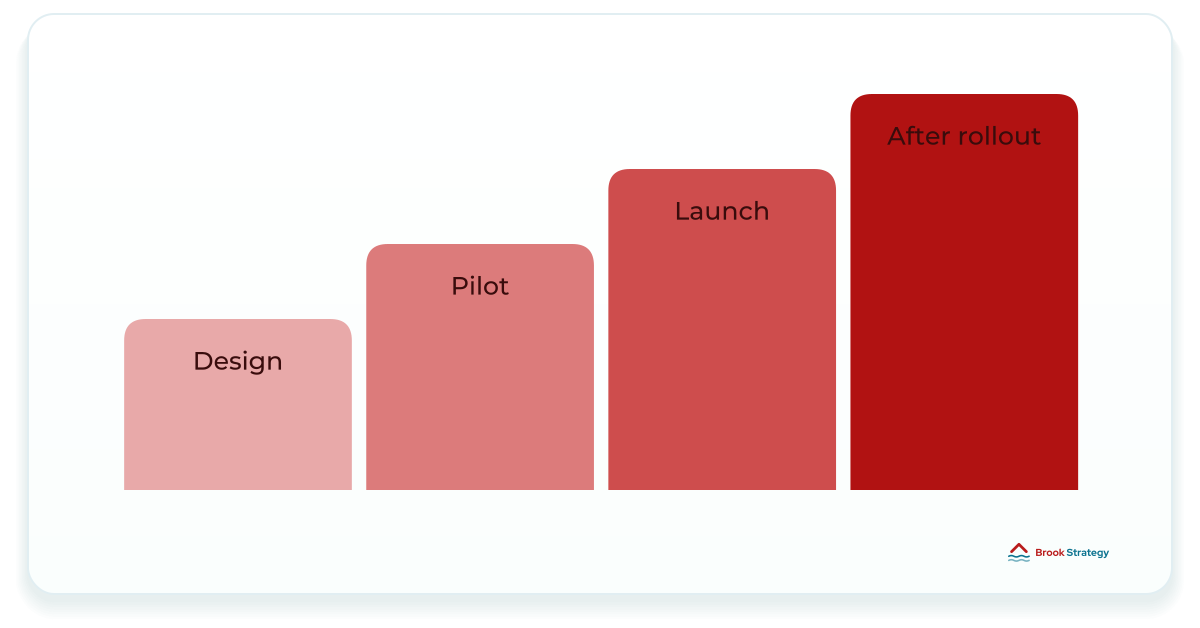
Test the change on one unit or journey, record the real cost and effort and fix what breaks. A pilot adds weeks, and it removes much larger delays later. The digital strategy roadmap shows how to set the gates between pilot and rollout.
Do: set the success measure before the pilot begins. Avoid: declaring victory because the pilot team liked it.
9. Name One Owner and One Sponsor
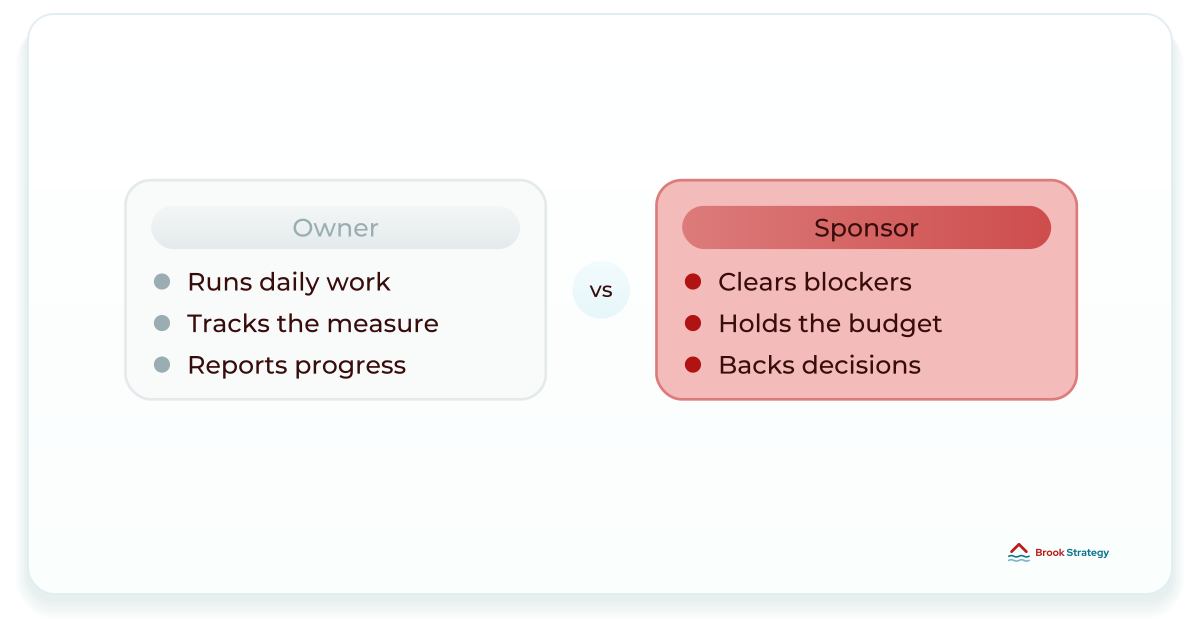
A committee cannot be held to a date. Name one executive sponsor who controls budget and resolves conflicts, and one day-to-day owner who runs the plan. Give the owner authority to decide within a clear budget and time limit.
Do: publish both names with the roadmap. Avoid: shared ownership across three departments.
10. Measure, Review and Be Willing to Stop
Hold a monthly review against the measures you set. Stop any initiative that misses its gate twice without a good reason. Stopping is a sign the process works, and it releases people for projects that can win.
Look at examples where leaders made this call in public. My digital strategy examples include a few that changed course midway.
Do: record every stop decision and what you learned. Avoid: letting a struggling project continue because it already has momentum.
The Ten Practices at a Glance
| Practice | Main benefit | Typical sign you skipped it |
|---|---|---|
| 1. One business goal | Clear priorities | Five goals, none measured |
| 2. Customer first | Fixes real friction | Plan opens with a vendor name |
| 3. Limit initiatives | Projects finish | Everything is "in progress" |
| 4. Not-now list | Fewer repeat debates | Old ideas return every quarter |
| 5. Written build or buy criteria | Defensible choices | Decision follows the demo |
| 6. Legacy planning | Fewer integration surprises | Late discovery of old systems |
| 7. Early security review | Faster approvals | Launch waits on sign-off |
| 8. Pilot first | Lower rollout risk | Big launch, big rework |
| 9. One owner | Accountability | Nobody can say who decides |
| 10. Review and stop | Capital moves to winners | No project is ever cancelled |
How the Practices Shift for SaaS and Financial Services
The ten practices hold in both sectors, but the weight changes. In SaaS, the customer journey runs mostly through your own product, so practices 2 and 8 carry the most value. Trials, onboarding and pricing pages can be tested within days, and the pilot gate can be short. The danger is endless testing with no goal, which makes practice 1 the one to protect.
In financial services, practices 6 and 7 usually dominate. Legacy cores, vendor contracts and regulatory review set the pace, so the plan should name those limits openly. Pilots run longer and need review partners from the start. The reward is that a plan with clear approvals tends to move faster than one that waits for them.
Teams that serve both, such as a fintech software provider, often need two tracks: quick product tests on one side and a slower, controlled path for anything touching money movement or customer identity on the other.
Your First 30 Days
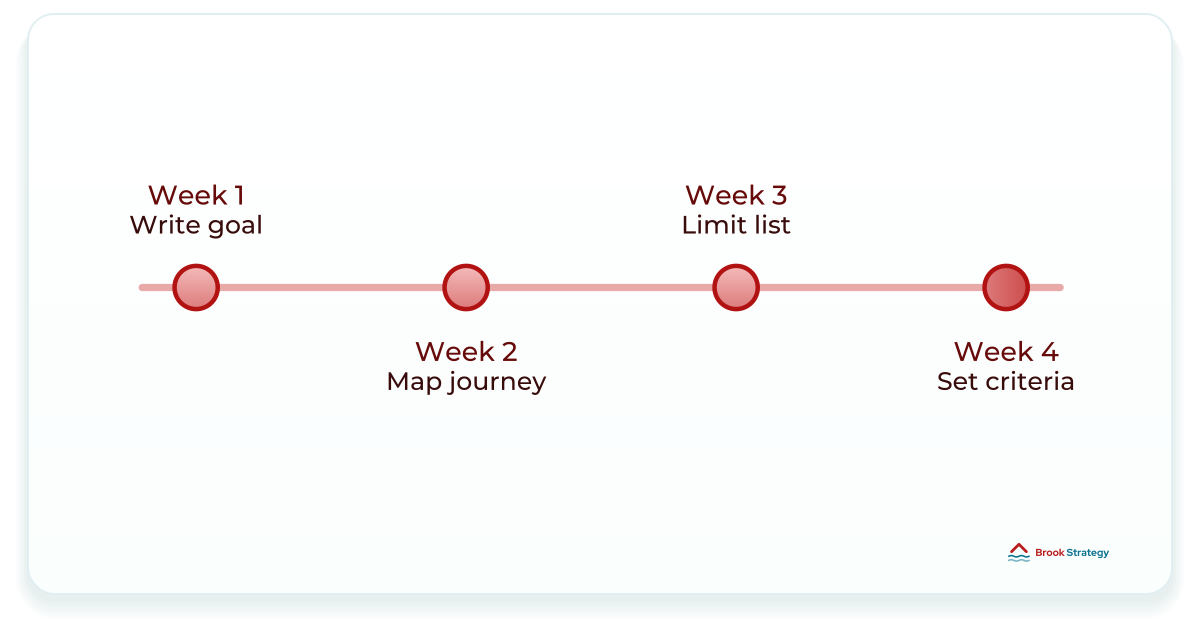
If you want to start now, here is a sequence that fits in a month. In week one, write the goal and list every digital initiative currently running, with its owner and its cost. In week two, interview five customers and map one journey. In week three, rank the initiatives, choose the three to keep and write the not-now list. In week four, name the owner and sponsor, set the measures and hold the first monthly review.
At the end of the month you will not have a perfect strategy. You will have a working one with a clear goal, fewer projects and a rhythm of review. That is a far better base than a polished document without any of those.
When to Apply Which Practice
You do not need all ten on day one. Practices 1 to 4 belong in the first weeks, because they shape everything else. Practices 5 to 7 matter as soon as you shortlist solutions. Practices 8 to 10 start with the first pilot and continue for as long as the program runs.
If you can only fix two things this month, fix the goal and the number of active initiatives. Those two changes alone often rescue a stalled program, because they free people from half-finished work and point them at a single target. The digital strategy guide explains the concepts behind each practice if you want more depth.
Three Ways Teams Misapply These Practices
The first is turning a practice into paperwork. A not-now list that nobody reads and a scorecard that nobody discusses give the feeling of discipline without the effect. Keep each artifact short and use it in a real meeting.
The second is applying everything at once. A team that tries to adopt ten practices in a quarter usually drops all of them by the second month. Add two or three at a time and give each a few cycles to settle.
The third is copying a large company's approach. A bank with thousands of engineers can run many initiatives and a central platform team. A mid-sized firm cannot, and should scale the practices down, not mimic the org chart. Take the principle, keep the size appropriate to your team.
One more check helps with all three: ask a colleague outside the program to read your one-page plan and say back what it asks them to do. If they cannot, the plan is not yet clear enough to guide anyone.
Choosing Where to Start
Score your current program from one to five on each practice. Start with the two lowest, because those are likely causing the symptoms you feel. If a low score sits in a practice that depends on others, such as measurement, begin with the ones before it. A short outside review can also speed this up and spare you from rating yourself generously.
Questions About Digital Strategy Best Practices
What Is the First Digital Strategy Best Practice to Adopt?
Write a goal with a number and a date. Without it, every other choice, from platform to channel to budget, rests on opinion. A single goal also gives you a way to say no to projects that do not serve it.
How Many Initiatives Should a Digital Strategy Include?
Three to five active at once is a workable range for most mid-sized teams. More than that spreads people too thin, and projects slow down together. Keep the rest on a ranked waiting list.
Should Digital Strategy Be Owned by IT or by the Business?
The business should own the goals and the benefits, with IT as a close partner on feasibility, security and delivery. When IT owns the strategy alone, it tends to become a technology plan. When the business owns it alone, it can ignore real limits in systems and data.
How Do I Keep a Strategy from Becoming Shelfware?
Tie it to the budget cycle, the monthly review and named owners. A strategy that decides what gets funded gets read. One that sits beside the budget gets ignored.
How Do I Handle Legacy Systems in the Strategy?
List them, rate their cost and risk and decide for each whether to keep, wrap, replace or retire. Most strategies fail by ignoring the legacy system that sits in the middle of a key journey, so map those links early.
Is It Better to Build or Buy?
Buy what does not differentiate you and build only where your advantage depends on it. Write the criteria before you compare options, so the decision does not follow the best demo.
How Often Should the Strategy Change?
The goals should change rarely, perhaps once a year. The initiative list should change every quarter. If the goals change monthly, you have a reactive plan, not a strategy.
Note: This article is general information, not legal, financial or tax advice. Figures and examples are estimates based on typical projects, so check current details with your providers and advisers before you decide.
Was this article helpful?
Thank you for letting us know.
Russell Tennant
Russell leads the Brook editorial team and works with our consultants to turn real client engagements into practical guides on roadmaps, go-to-market planning, growth and competitive strategy. Before joining Brook, he spent 11 years in strategy and product marketing roles at software and financial services companies. He has since edited more than 300 articles on strategy practice and drawn on roadmaps and growth plans from over 100 client projects. He is based in Denver, Colorado.