Key Takeaways
- The best digital strategies make one clear choice, such as a journey, a model or a platform, and back it for years.
- Most of the work sits in operations, pricing and structure, not in the technology.
- You can copy the principle at any size, and rarely the program itself.
- Build in review points so the plan can change when the results say it should.
Famous digital strategies look inevitable in hindsight. At the time, each was a bet made with incomplete information. Looking at the decisions behind them is more useful than admiring the results, because the decisions are what you can reuse.
Each example below states the choice, why it worked and what you can copy. If you want to apply them to your business, digital strategy consulting can turn a principle into a plan. I describe publicly known events only, so check each company's latest reports for current figures.
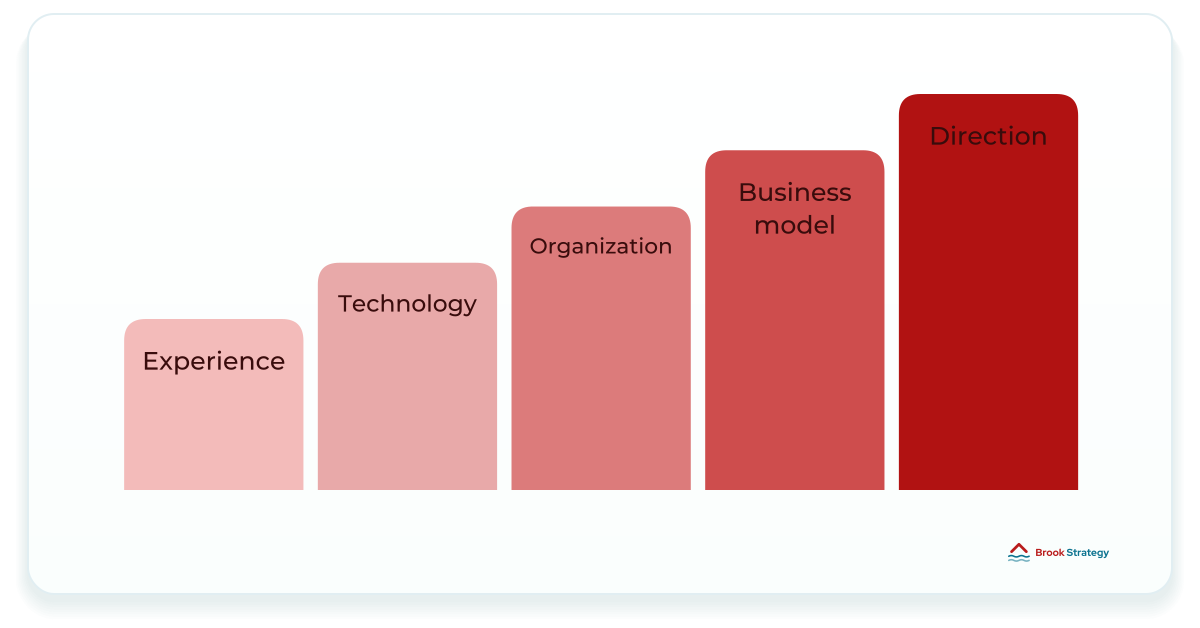
The Eight Examples at a Glance
| Example | Core decision | Lesson to copy |
|---|---|---|
| 1. Domino's | Own the ordering experience | Pick the one journey where customers feel the most uncertainty. |
| 2. Starbucks | Link loyalty to convenience | List the customer actions that already happen often, such as repeat purchases. |
| 3. Adobe | Change the business model | Model the revenue curve of the new model, including the dip in the first years. |
| 4. Netflix | Move before the old model peaks | Identify which product line a digital rival could undercut first. |
| 5. Capital One | Rebuild the technology base | Decide which capabilities give you a lasting edge. |
| 6. ING | Change how teams are organized | Pick two or three customer journeys that need fast change. |
| 7. Microsoft | Pick a clear direction and stay with it | Write the direction in one sentence that leaders can repeat. |
| 8. Nike | Adjust when the data says so | Write what you expect the new channel to deliver and by when. |
Eight Digital Strategies and the Decisions Behind Them
Domino's
Domino's treated ordering as a product long before most restaurant chains did. It introduced its Pizza Tracker in 2008 and kept adding ways to order, from its app to voice assistants and connected devices. The pattern is simple: find the moment when customers feel uncertain, here the wait after paying, and remove the uncertainty with information.
The lesson for you is the focus. Domino's did not try to digitize everything. It picked the ordering journey, put its own engineers on it and measured it constantly. A software or financial services company can do the same with onboarding or claims status.
Steps You Can Copy
- Pick the one journey where customers feel the most uncertainty.
- Map every step from the customer's side and note where they wait.
- Add a status or progress view at each waiting point.
- Offer the journey in each channel your customers already use.
- Measure completion and repeat use, not just launches.
Capabilities Behind It
A modern ordering platform, an events pipeline and an internal product team. The capability to ship small changes weekly matters more than any single product.
Starbucks
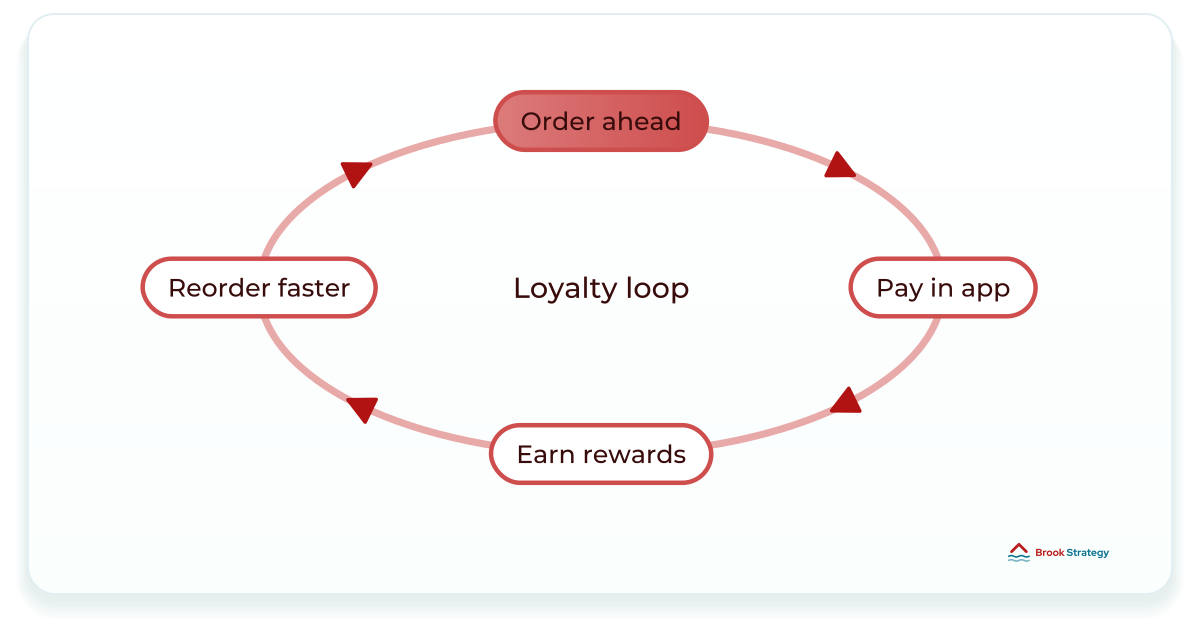
Starbucks rolled out Mobile Order & Pay across the United States in 2015, tying it to its rewards program. Customers skipped the queue, the company gained rich data on what each customer buys and rewards gave a reason to come back. The mobile app became a main channel, not an add-on.
What stands out is how the pieces reinforce each other. Payment, ordering and loyalty live in one app, so each feature makes the others more useful. Your digital strategy can look for the same loop, for example connecting billing, usage data and customer success in one view.
How to Build the Same Loop
- List the customer actions that already happen often, such as repeat purchases.
- Remove one point of friction in that action, as ordering ahead did for queues.
- Attach a reward or benefit to the improved action.
- Collect the data the new flow produces and decide who can use it.
- Review the loop quarterly and prune features that do not add to it.
What Powers the Loop
A customer data platform, an app with stored payment and a rewards engine. The harder asset is the discipline to keep the app simple.
Each piece makes the next one easier to use.
Adobe
In 2013 Adobe moved its flagship creative software from boxed licenses to a subscription called Creative Cloud. Revenue shifted from large, uneven purchases to steady monthly payments. Customers got continuous updates, and Adobe got a clearer view of product use.
It was a business model decision as much as a technology one. Product, pricing, sales and finance all had to change together. If your strategy includes a move to subscriptions, usage pricing or a platform, treat it as a company-wide program, not an IT project.
Moves to Plan for the Change
- Model the revenue curve of the new model, including the dip in the first years.
- Agree the metrics that replace the old ones, such as recurring revenue and retention.
- Align pricing, sales incentives and finance reporting before launch.
- Offer existing customers a clear path to the new model.
- Communicate the transition openly to investors and staff.
Systems the Change Needs
Billing and subscription management, product usage analytics and a finance model that tracks recurring revenue. Most of the effort sits in operations and incentives.
Netflix
Netflix began as a DVD-by-mail service and launched streaming in 2007, while the DVD business was still profitable. It later invested heavily in original content, which gave it control over what customers could watch. Each step moved the company toward the way customers were already heading.
The relevant idea for your plan is timing. Netflix cannibalized its own product before a competitor did it. Ask which of your current revenue lines is most exposed to a cheaper digital alternative, and start a controlled experiment with it now.
Steps to Test Your Own Version
- Identify which product line a digital rival could undercut first.
- Build a small version of the new offering with a separate team and budget.
- Test with a segment of customers who are open to change.
- Define the signal, such as share of customers choosing the new option, that triggers a wider shift.
- Plan how the old line winds down so it does not drag on the new one.
What the Test Requires
Content delivery infrastructure, recommendation data and a willingness to run two models in parallel for a while.
Capital One
Capital One moved most of its workloads to the cloud and announced in 2020 that it had closed its last data center. This was a long program that began years earlier, alongside a push to hire engineers and build software in-house.
The takeaway is that a platform decision can be a strategic one. A bank chose to own its engineering capability and to treat infrastructure as something it rents. For you, the question is which technical capabilities are core enough to build internally and which are better rented.
Where to Begin on Your Platform
- Decide which capabilities give you a lasting edge.
- Move the least risky workloads first and learn from them.
- Build the internal skills needed before the large migrations.
- Set standards for security and data across the new platform.
- Retire old infrastructure on a published schedule, so savings are real.
Technology Under the Move
Public cloud platforms, automation for security checks and a strong internal engineering team.
ING
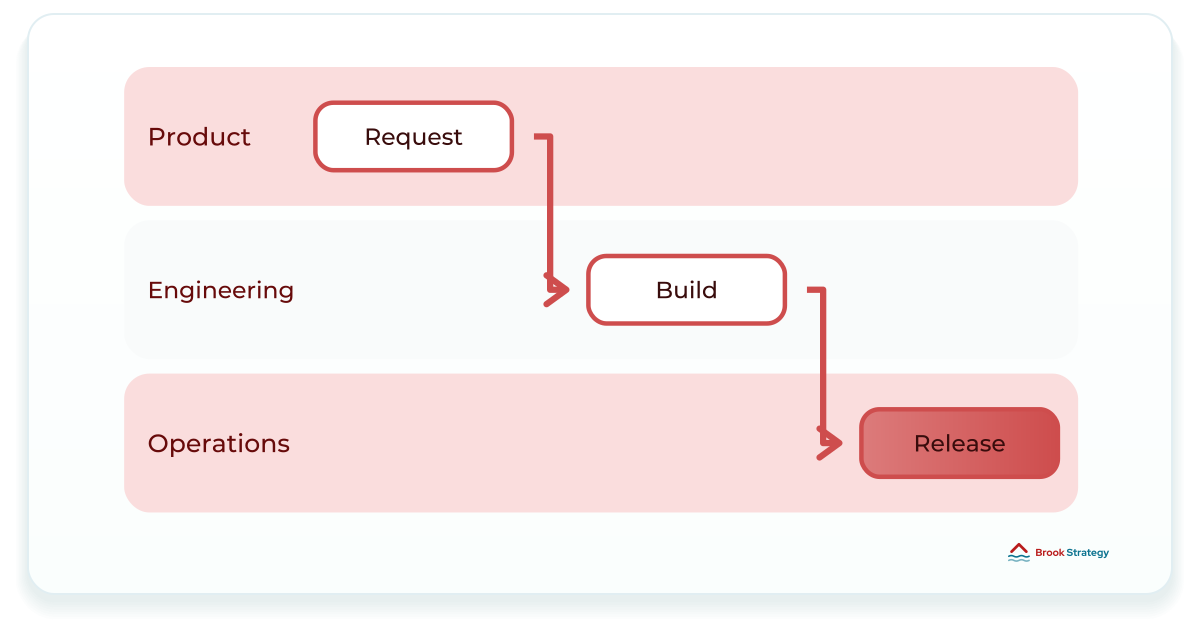
ING reorganized its Dutch headquarters around small cross-functional teams in 2015, borrowing ideas from technology companies such as Spotify. Marketing, product, data and engineering staff worked together on customer outcomes instead of passing work between departments.
The point for a digital strategy is that structure shapes speed. A strong roadmap handed to siloed teams still moves slowly. If your initiatives stall in hand-offs, an operating model change can do more than a new platform.
How to Reorganize Around Outcomes
- Pick two or three customer journeys that need fast change.
- Form a small team for each with all needed skills.
- Give each team a clear outcome measure and the authority to act.
- Keep shared standards, such as security and design, with a central group.
- Review progress every quarter and adjust team boundaries.
What Makes the Teams Work
Shared planning boards, regular cross-team reviews and a clear way to fund teams rather than projects.
The gain shows up as less waiting between teams.
Microsoft
After Satya Nadella became CEO in 2014, Microsoft put cloud services and subscriptions at the center of its plan, with Azure and Microsoft 365 as the main bets. It also changed how it worked with partners and open-source software, which opened new markets.
The lesson is consistency. The company made a direction clear, then supported it with product choices, pricing and incentives for years. A digital strategy fails when leaders praise it publicly but fund competing priorities privately.
Ways to Hold the Course
- Write the direction in one sentence that leaders can repeat.
- Check the budget against it and cut spending that points elsewhere.
- Align incentives so teams are rewarded for the new direction.
- Open the platform to partners where it expands your reach.
- Report progress on the same few measures each quarter.
Supports for the Direction
Cloud platforms, a partner program and a reporting rhythm that keeps the direction in front of everyone.
Nike
Nike invested strongly in selling directly to consumers through its own app and website, reducing its reliance on some retail partners. Later, under a new CEO in 2024, it moved to rebuild ties with wholesale partners after concluding that the balance had tipped too far.
I include this one because it shows a strategy being corrected. The first move gave Nike control of data and margin. The second restored reach. A good digital strategy builds in reviews that can change the plan when results call for it.
Checks to Build Into Your Plan
- Write what you expect the new channel to deliver and by when.
- Track the full picture, including reach and share, not just margin.
- Schedule a formal review at a set date.
- Decide in advance what result would cause a rebalance.
- Tell partners and customers about changes early.
Data That Guides the Balance
Customer data across channels, an app and a clear view of partner performance.
What the Eight Have in Common
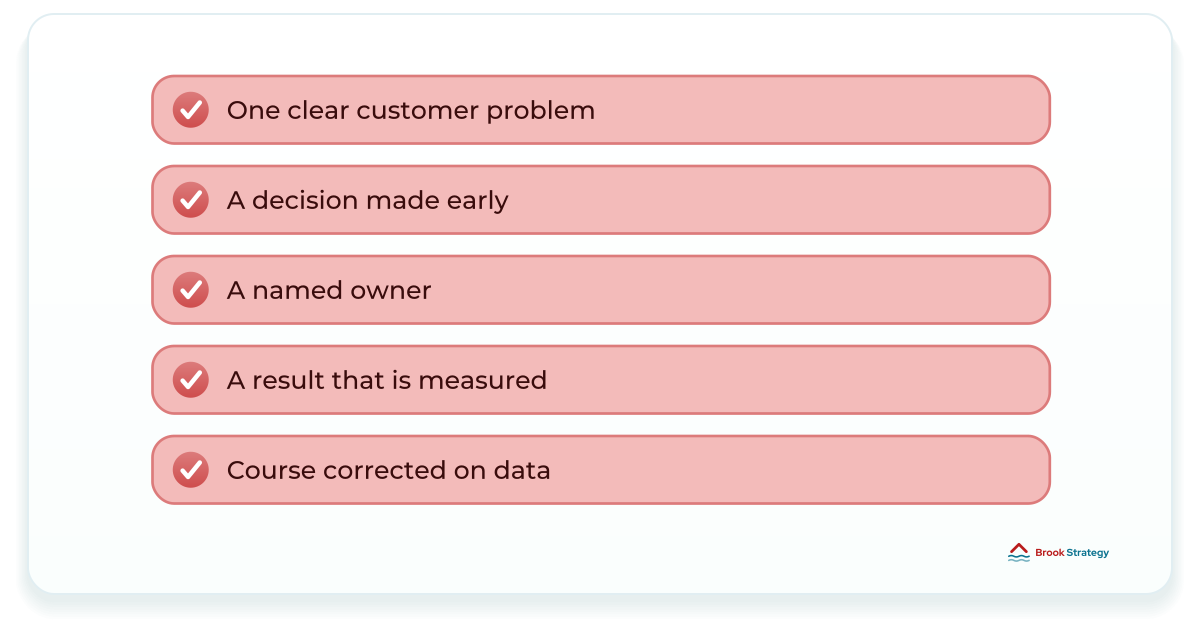
Read together, the examples share a few traits. Each had a direction that could be said in a sentence. Each backed it with money, people and incentives for years. Each paired the technology move with a change in structure or pricing. And at least one, Nike, shows a leader adjusting course when the evidence called for it.
For the building blocks behind these traits, read my digital strategy guide. For a staged way to run a similar change, copy the digital strategy roadmap.
How to Pick the Example That Fits You
Start from your problem, not from the most famous name. Use this guide to match it.
- Customers abandon a key journey: study Domino's and Starbucks.
- Your revenue model is under pressure: study Adobe and Netflix.
- Your technology base slows you down: study Capital One and Microsoft.
- Projects stall between departments: study ING.
- You suspect an earlier bet went too far: study Nike.
Once you have chosen, turn the example into a short checklist for your team. My digital strategy checklist offers a template, and the digital strategy best practices help you avoid the common errors on the way.
Questions About Digital Strategy Examples
What Makes a Digital Strategy Successful?
A clear goal, a focus on a few customer journeys, steady funding and a review rhythm that allows changes. The examples above differ in industry, but each had a direction that leadership repeated and backed with budget.
Can a Small Company Learn from These Large Examples?
Yes, at a smaller scale. You rarely copy the program. You copy the principle, such as choosing one journey, linking loyalty to convenience or testing a new model early. A two-person team can run a version of most of these ideas.
Are These Companies' Strategies Still the Same Today?
Not entirely. Strategies move, as the Nike example shows. Treat each example as a snapshot of a decision and the thinking behind it, and check current company reports for the latest position.
How Do I Find Examples from My Own Industry?
Look at annual reports and investor presentations from competitors and leading firms in nearby sectors, then read case studies from their technology partners. Ask what goal they stated and what they changed to get there.
What Should I Take from a Failed Digital Strategy?
Look at what was decided and when. Many failures come from unclear goals, too many initiatives at once or a rollout before a pilot. These patterns appear again and again, and checking your own plan for them is useful.
How Long Do Digital Strategies Take to Show Results?
Early signals, such as faster onboarding or higher completion, can show within a quarter. Larger shifts, such as a business model change or a platform migration, take years. Set short-term measures that show whether you are on the path.
How Do I Turn an Example into My Own Plan?
Write the principle in one sentence, list the steps in the example that fit your size and test the first step with a small pilot. Then judge it by your own measure, not the example's.
Note: This article is general information, not legal, financial or tax advice. Figures and examples are estimates based on typical projects, so check current details with your providers and advisers before you decide.
Was this article helpful?
Thank you for letting us know.
Russell Tennant
Russell leads the Brook editorial team and works with our consultants to turn real client engagements into practical guides on roadmaps, go-to-market planning, growth and competitive strategy. Before joining Brook, he spent 11 years in strategy and product marketing roles at software and financial services companies. He has since edited more than 300 articles on strategy practice and drawn on roadmaps and growth plans from over 100 client projects. He is based in Denver, Colorado.