Key Takeaways
- Digital strategy is a plan for how technology and data serve your business goals, not a list of tools.
- Beginners need four things: a goal, a customer journey, a short project list and a measure for each.
- Advanced strategy adds platform choices, an operating model and a managed portfolio of initiatives.
- Judge your strategy by what you decide to leave out as much as by what you include.
Ask five executives what a digital strategy is and you will get five answers, often about different things. One means the website. Another means moving to the cloud. A third means an app. None is wrong, but none is the strategy. This guide gives you a working definition and then builds on it, from the first draft to the advanced choices.
If you want a specialist to help with this, digital strategy consulting covers the full process. Otherwise, read on and apply it yourself.
What Digital Strategy Actually Means
A digital strategy answers four questions. What outcome does the business need? Which customers, staff and partners are involved? What digital capabilities does that outcome require? In what order will you build them? Everything else is detail.
The word "digital" can mislead. It suggests a separate strategy for a separate part of the company. In practice the best digital strategies are business strategies expressed through technology. If your corporate plan says "grow in the mid-market," your digital strategy says what the mid-market buyer needs from your sign-up, onboarding and support experience.
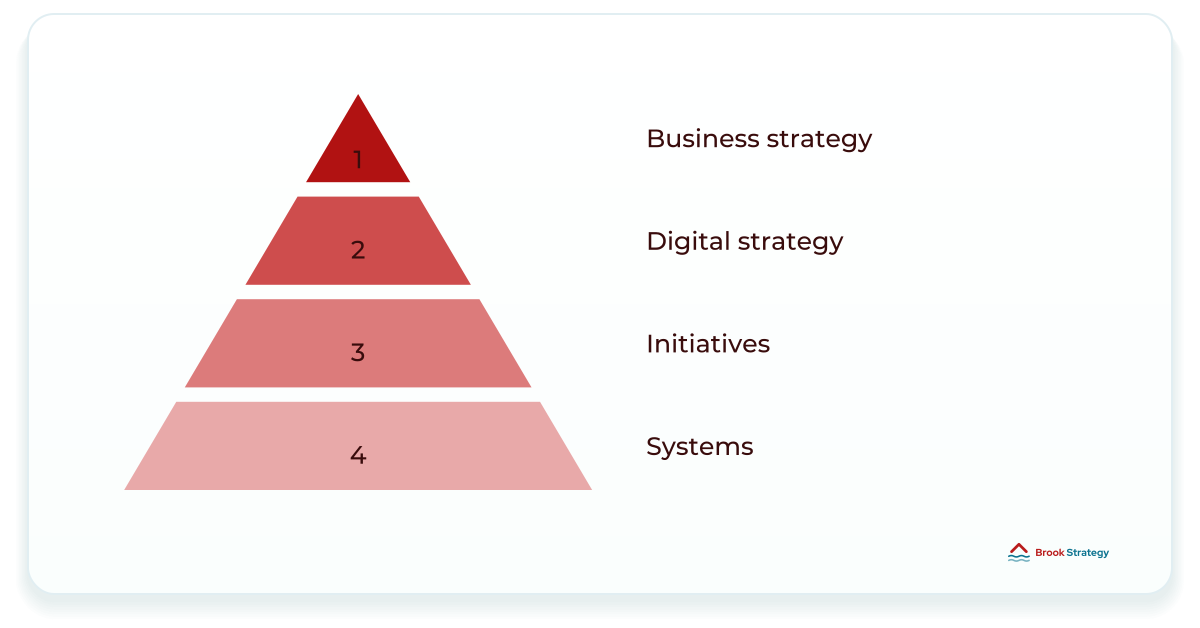
Digital Strategy Compared With Related Terms
| Term | What it is | How it relates |
|---|---|---|
| Business strategy | Where you compete and how you win | Sets the goals digital strategy serves |
| Digital strategy | How technology and data deliver those goals | Chooses the initiatives and their order |
| IT strategy | Systems, security and infrastructure plan | Supports the capabilities digital strategy needs |
| Digital transformation | The change work of people, process and systems | Carries out the strategy |
| Marketing strategy | How you reach and persuade buyers | One of several customer journeys within the plan |
The Basics: Four Parts of a First Strategy
If you are starting from nothing, build these four parts and stop. You can add more later.
A Goal You Can Check
Write one or two outcomes with numbers and dates. "Reduce cost to serve by 15 percent in 18 months" works. "Become more digital" does not, because nobody can tell when it is finished.
A Customer Journey to Improve
Choose the journey that most affects the goal, such as sign-up to first value, quote to contract or ticket to resolution. Walk it as a customer would. Count the steps, note where people wait and ask five customers where they got stuck. Most first strategies find three or four fixable problems in one afternoon.
A Short Project List
List the initiatives that would fix those problems, then rank them by value, cost and risk. Keep the top three. Teams that keep ten at once usually deliver none of them on time.
A Measure for Each Project
Before work starts, write how you will know it worked and where the number comes from. If the number is not collected today, add that to the project.
The Middle Ground: Data, Channels and Capabilities
Once the basics run, three topics decide how far you can go. The first is data. Most digital initiatives depend on trustworthy customer and product data, and many companies find in the first month that the same customer appears in four systems with four spellings. A small data foundation project often comes before the visible work, which is hard to sell but pays back. If this describes you, read about the checklist items on data and measurement first.
The second is channels. Decide which channels carry which job: self-serve web for small accounts, a sales team for large ones, partners for new markets. Each channel needs its own metrics and its own owner. The mistake I see most is building one experience and expecting it to serve every segment.
The third is capability. List what the business must be able to do, such as launch a pricing test in a week or onboard a customer without a manual hand-off. Compare that with what it can do today. The gaps become your build or buy list.
The Advanced Layer: Platforms, Operating Model and Portfolio
Mature strategies deal with how the organization runs digital work over years. Three decisions stand out.
Platform Choices and Standards
Decide which capabilities you buy, which you build and which you share across business units. A shared platform reduces duplicate costs but needs a team that treats other units as customers. Set standards for data, security and integration early, because retrofitting them across twenty tools is expensive.
Operating Model
Decide who owns what. Some companies centralize digital in one team. Others embed product teams in each unit with a small central group for standards. Neither is universally better. Centralized models move faster at first and then bottleneck. Embedded models scale but drift without strong shared standards.
Portfolio Management
Treat initiatives like an investment portfolio. Review them quarterly, stop the ones that miss their gates and move money toward those that perform. This is the habit that most separates advanced teams from the rest, and it takes discipline to stop a project someone loves. A staged plan like the one in my digital strategy roadmap makes those stop decisions easier.
Where You Stand: A Simple Maturity View
Use this table to find your level and the next step. Be honest. Most mid-sized companies sit between levels two and three.
| Level | Example | Next step |
|---|---|---|
| 1. Ad hoc | Projects start from requests, no shared goal | Write one goal and rank current projects |
| 2. Planned | A goal and a project list exist, results are patchy | Add measures and a monthly review |
| 3. Managed | Roadmap, owners and gates in place | Fix data foundations and platform standards |
| 4. Optimized | Portfolio reviewed quarterly, stops and starts are routine | Test new models and partner channels |
Some teams reach level four in one area and stay at level one in another. That is normal. Aim to raise your weakest area, since it caps what the rest can deliver.
Running Your First Strategy Session
You can draft a first strategy in a single working day with the right people. Invite the sponsor, a product or marketing lead, someone from technology or data and one person who talks to customers daily. Send a one-page brief ahead of time: the business goal, the budget range and the three biggest complaints you hear from customers.
In the session, spend the first hour on the goal until everyone can repeat it. Spend the second on the customer journey, drawing every step on a wall or shared board. Spend the third on the list of problems you found and the fourth on ranking. Close with owners and dates for the top three projects. You will leave with a rough strategy and a clear list of the facts you still need.
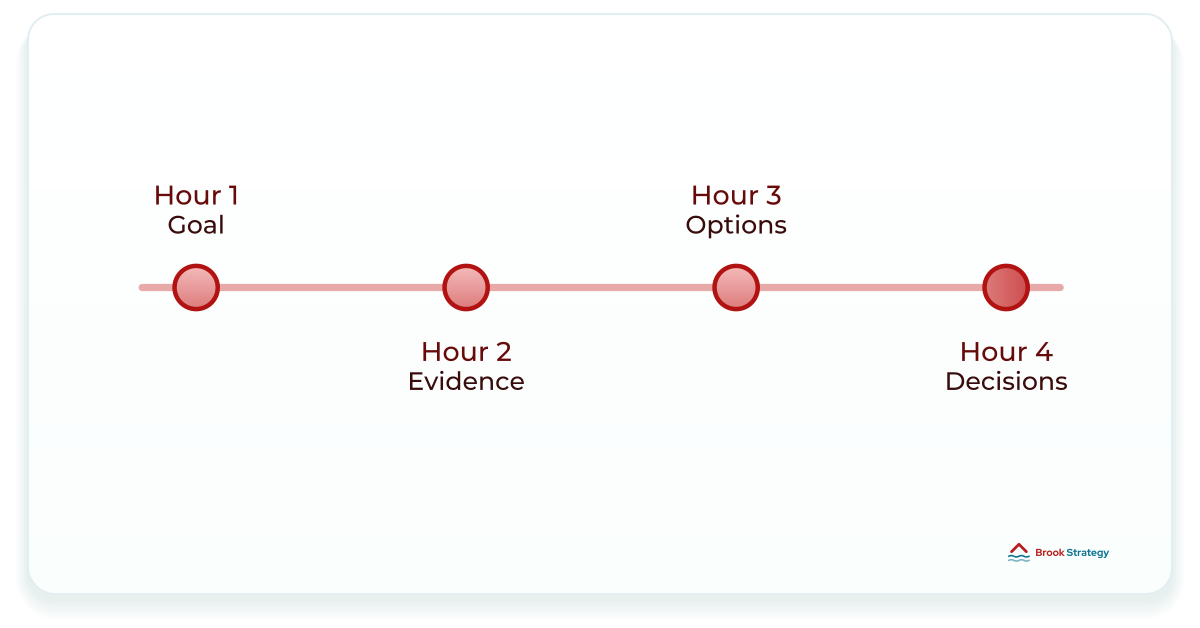
The weak point of this format is data. People bring opinions in place of numbers, and loud opinions win. Ask each person to bring one figure that supports their view and put them on the table together. It cools the room and often changes the ranking.
Which Measures to Track
Pick measures that match the goal rather than whatever your tools report by default. Four categories cover most digital strategies: revenue effects such as conversion or expansion, cost effects such as cost to serve, speed effects such as time to onboard and customer effects such as satisfaction or effort scores. Choose one or two per initiative and write down where the number comes from.
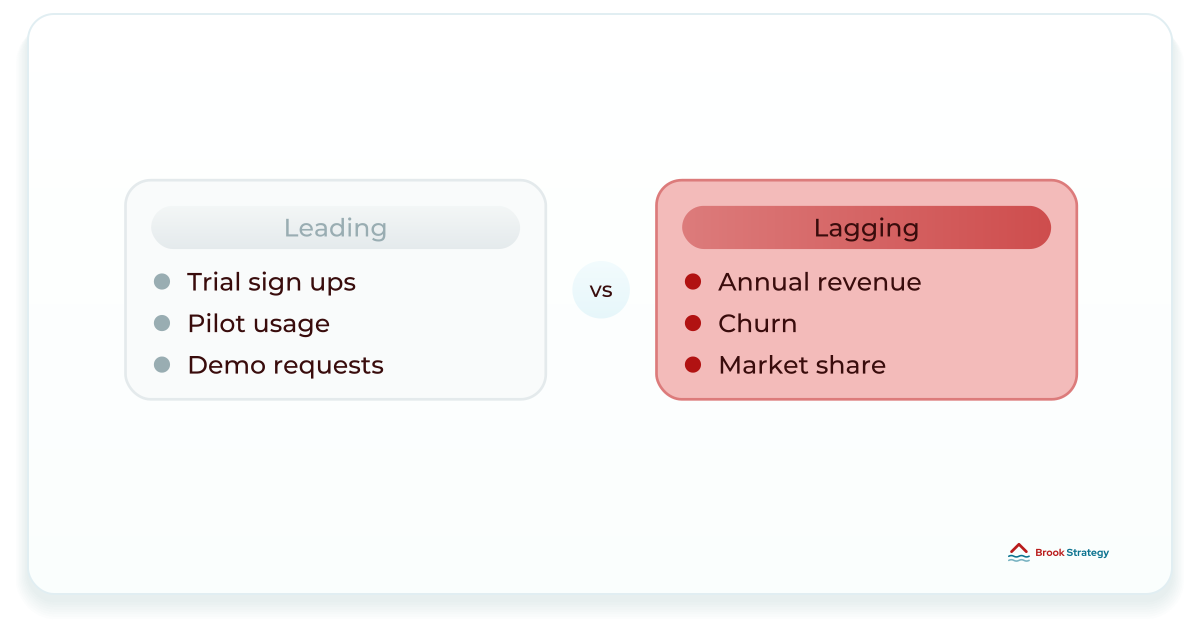
Separate leading and lagging measures. A lagging measure, such as annual churn, takes months to move. A leading one, such as the share of new users who finish setup in week one, moves in days and tells you early whether the change is working. Your monthly review should lean on the leading ones and check the lagging ones each quarter.
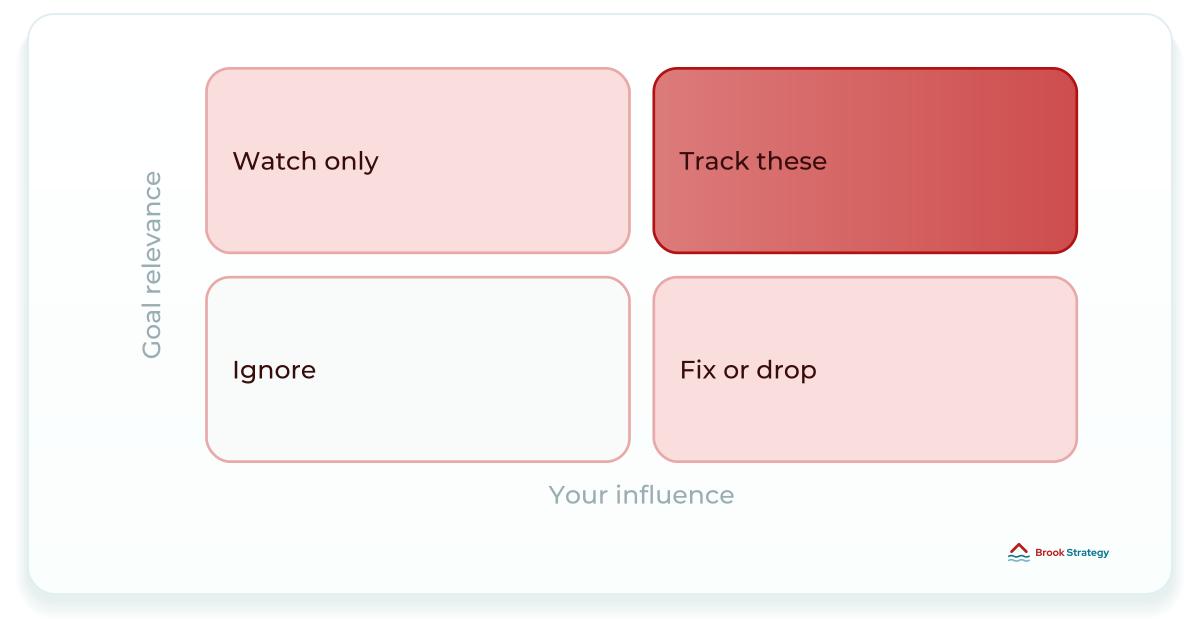
Be wary of measures you cannot influence. If a number moves with the market rather than with your projects, it belongs on a dashboard for context, not in a project scorecard.
Common Early Mistakes
Beginners and experienced teams share a few traps. They start with a tool, they skip customer interviews and they let the plan grow until it covers everything. Each one feels productive at the time. A strategy that lists everything has not made a choice.
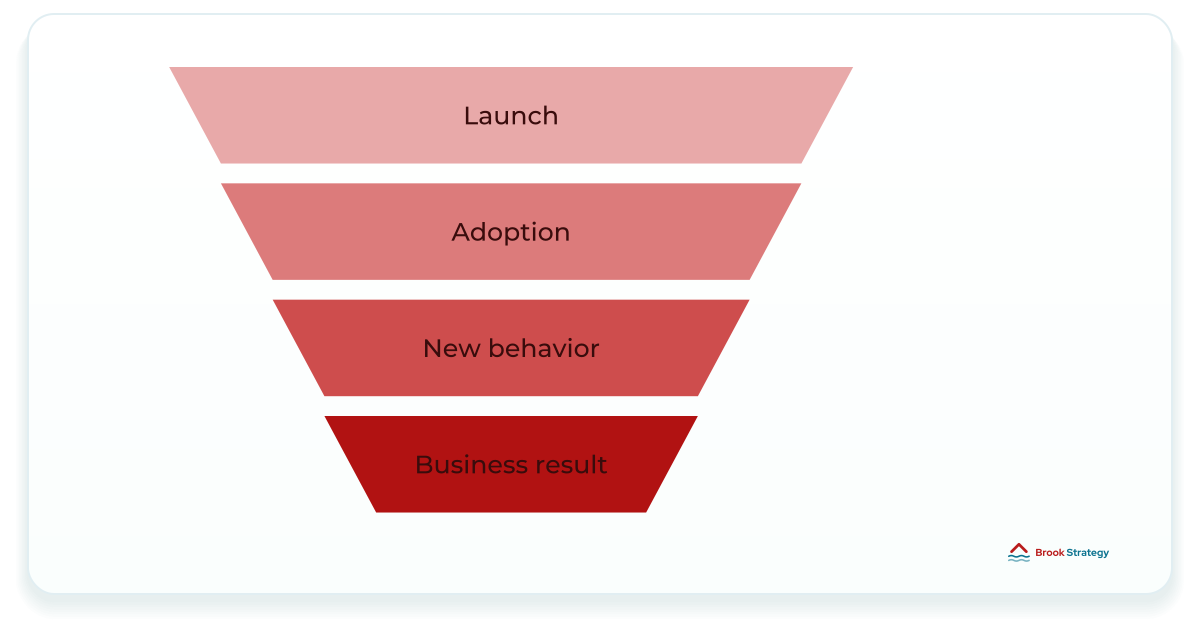
Another is confusing activity with progress. A launch of a new portal is an activity. A drop in support calls is progress. Make sure each project has the second kind of line. For habits that avoid these traps, see the digital strategy best practices, and for real company stories look at the digital strategy examples.
Choosing Your Starting Point
Pick the track that matches where you are, then apply it this month.
- New to this: write the goal, map one journey and rank three projects.
- Have a plan that is not working: add measures and gates to the projects you already have.
- Running many projects: build a portfolio view and stop the weakest two.
- Preparing to buy a platform: write the capability gap first and compare options against it.
If you are unsure which applies, a short review of your plan will tell you faster than another planning cycle.
Questions About Digital Strategy
What Is Digital Strategy in Simple Terms?
It is your plan for how technology, data and online channels help the business reach its goals. It says which customer problems you will solve digitally, which systems you need, what you will build or buy first and how you will check that it worked.
Who Needs a Digital Strategy?
Any business that sells, serves or operates through digital channels, which today is nearly all of them. It matters most when you run several digital projects at once, when budgets are tight or when leadership disagrees on priorities.
How Is Digital Strategy Different from Digital Transformation?
Strategy is the plan and the choices behind it. Transformation is the change work that carries it out, including process, people and system changes. You can have a strategy without a transformation, but a transformation without a strategy usually drifts.
How Long Does It Take to Build a Digital Strategy?
A focused strategy for one business unit takes about six to ten weeks. A group with many units can need three to four months. A fast review of an existing plan can take two or three weeks.
Do Small Companies Need One?
Yes, though a smaller version. A two-page strategy that names the goal, the customer journey you will improve, the tools you will use and the first three projects is enough for many small teams. The point is choosing what to leave out.
What Skills Does a Digital Strategy Team Need?
You need someone who understands the business model, someone who knows the customer, someone from technology or data and a sponsor with budget authority. One person can cover two roles in a small company, but all four views need to be in the room.
How Do I Know If My Digital Strategy Is Working?
Check each initiative against the measure set before it started, and review the results monthly. Revenue, cost, speed and customer satisfaction are the usual categories. If you cannot link a project to one of them, question why it exists.
Note: This article is general information, not legal, financial or tax advice. Figures and examples are estimates based on typical projects, so check current details with your providers and advisers before you decide.
Was this article helpful?
Thank you for letting us know.
Russell Tennant
Russell leads the Brook editorial team and works with our consultants to turn real client engagements into practical guides on roadmaps, go-to-market planning, growth and competitive strategy. Before joining Brook, he spent 11 years in strategy and product marketing roles at software and financial services companies. He has since edited more than 300 articles on strategy practice and drawn on roadmaps and growth plans from over 100 client projects. He is based in Denver, Colorado.