Key Takeaways
- Eleven points cover the essentials: goal, owners, journeys, systems, ranking, decisions, compliance, measures, pilot, budget and review.
- Score each point as done, partly done or missing, and note the evidence for it.
- Fix the goal and the owner first, because every other point depends on them.
- Repeat the check every quarter to catch drift early.
Most digital strategies fail from omission. The plan looks fine until someone asks who owns it, what success looks like or when the security team sees it. This checklist gathers the points I check when I review a strategy for a client, in the order that makes the most sense.
Use it as a self-review in about two hours. If the results worry you, digital strategy consulting can help close the gaps. To learn the background, the digital strategy guide explains each topic in plain language.
How to Score Your Strategy
Mark each point as done, partly done or missing. Done means you can show a document or a number. Partly done means a gap you can name. Missing means you cannot point to anything. Be strict, because generous scoring defeats the purpose.
| Score | Meaning | What to do |
|---|---|---|
| 9 to 11 done | The strategy holds together | Fix the remaining gaps within the quarter |
| 6 to 8 done | A sound base with visible holes | Close missing points in order, starting with goal and owner |
| Under 6 done | A collection of projects, not yet a strategy | Pause new starts and rebuild the foundation |
The Eleven Checks
1. A Business Goal With a Number and a Date
Everything on the list depends on this. A goal such as lowering cost to serve by a set percentage over eighteen months gives you a way to judge every initiative. Without it, projects compete on enthusiasm.
Write the goal in one sentence and check that the finance lead would sign it. If different leaders describe it differently, fix that before anything else.
- Goal stated with a number and a date
- Agreed by the executive sponsor
- Linked to the company plan or budget
2. Named Sponsor and Day-to-Day Owner
A strategy needs a person with budget authority and a person who runs it weekly. Committees tend to produce long meetings and late decisions.
Record both names on the first page of the plan. Include a deputy sponsor in case the first one changes role, which happens more often than anyone plans for.
- Executive sponsor named
- Day-to-day owner named
- Decision rights and budget limits written down
3. Customer Journeys Mapped and Checked
Pick the two or three journeys that matter most to the goal and map them from the customer's side. Count steps, waiting times and hand-offs, then confirm the map with five customer conversations.
Teams who skip this step often optimize an internal process that customers never see. The map keeps your attention on the places where people actually stall.
- Top journeys chosen
- Steps and waiting points recorded
- Findings checked with real customers
4. Current Systems and Data Inventoried
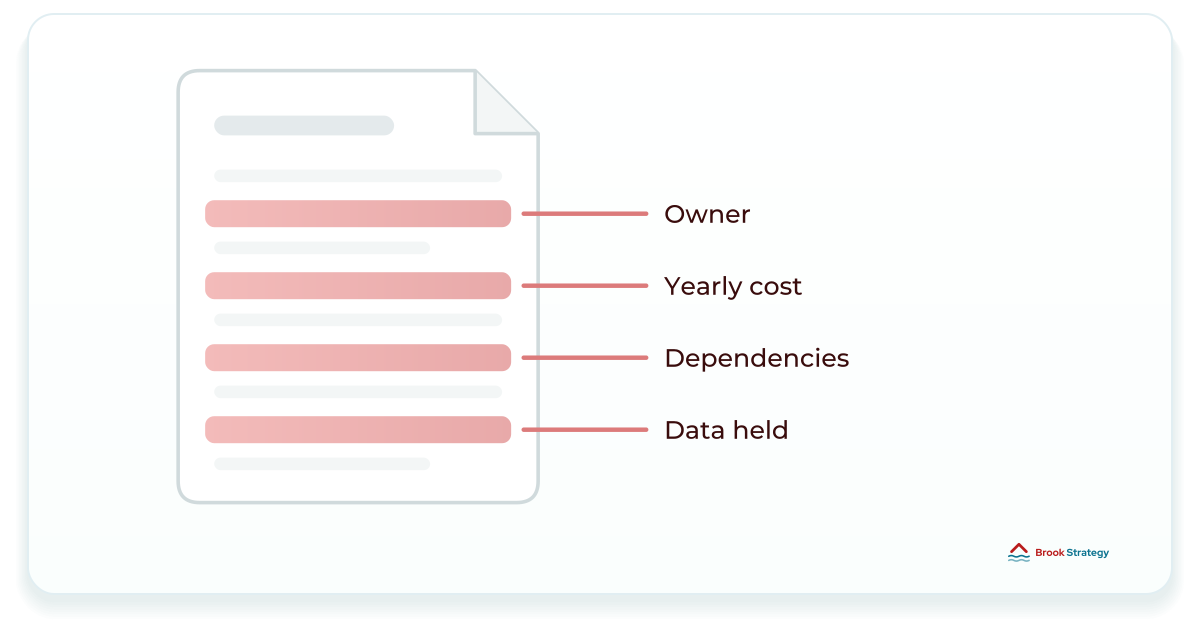
List the platforms involved in your key journeys, who owns each, what it costs and what depends on it. Note where the same customer data lives in more than one place.
This inventory is usually the most eye-opening item on the list. Legacy systems and duplicate tools surface here, and they shape what is realistic in your first year.
- Systems and owners listed
- Annual costs recorded
- Data duplicates and gaps noted
Keep one row per system.
5. A Ranked List of Initiatives
Score each candidate project on value, cost, risk and effort, then place them in order. A written score makes it easier to explain why one project waits for another.
Keep three to five active. A long list is fine as a backlog, but only a few should have people working on them. If you are unsure how many your team can carry, count the hours each project needs and compare with who is available.
- Scoring method agreed
- Top initiatives chosen
- Backlog ranked and dated for review
6. Build, Buy or Partner Decisions Written Down
For each major capability, record whether you build it, buy it or use a partner, with the criteria behind the choice. This avoids repeating the debate when someone new joins the team.
Add a three-year cost view for each option, since license fees often look small compared with integration, training and support.
- Decision criteria listed
- Options compared on a three-year cost
- Vendor and exit risks noted
7. Security, Privacy and Compliance Reviewed
In software and financial services this step decides your timeline. Name the reviewers, share the plan early and agree what evidence each needs.
If your plan involves customer data, payments or identity, add the review dates to the roadmap itself. A late sign-off is one of the most common causes of delay I see.
- Reviewers named for each initiative
- Review timing built into the roadmap
- Data handling rules documented
8. Measures and Baselines for Every Initiative
Write the measure, the current value and the target for each project, along with the source of the number. If you do not collect the measure today, add that work to the project.
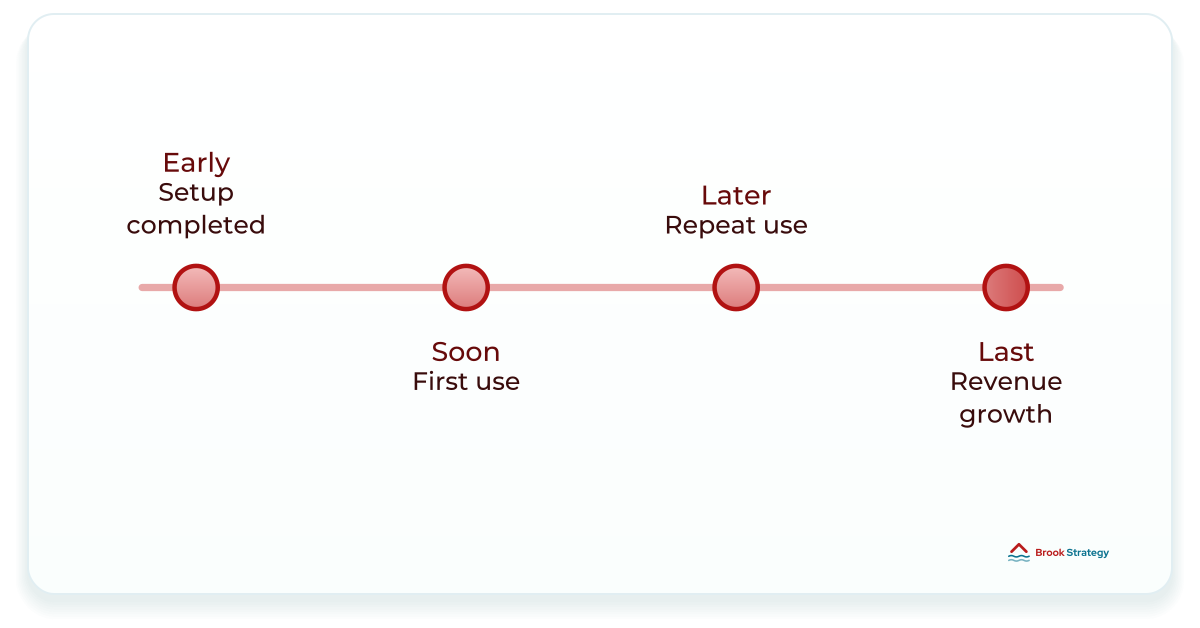
Mix leading measures that move quickly, such as completion of setup, with lagging ones, such as churn. Reviews rely on the leading ones, quarterly checks on the lagging.
- One or two measures per initiative
- Baselines recorded
- Data source and owner named
Early signals and final results answer different questions.
9. A Pilot Plan With Clear Gates
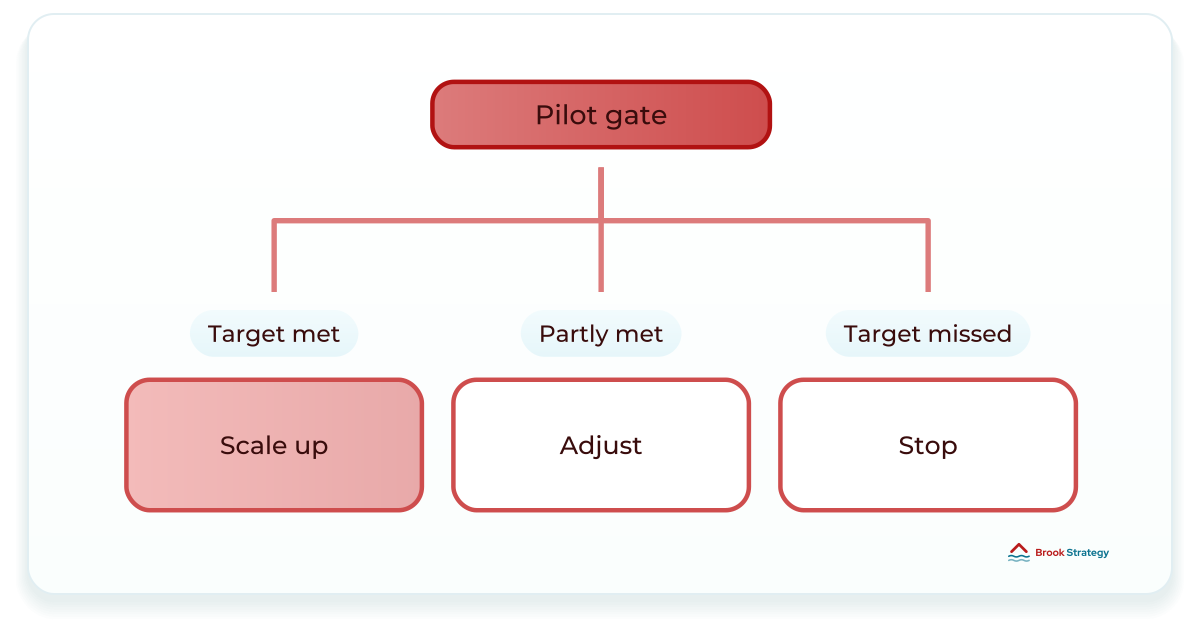
Before scaling, test on one unit or journey. State what result moves you to the next stage and what result stops the project. The digital strategy roadmap shows a four-stage version you can copy.
Check that the pilot team has the data and authority they need. A pilot that cannot make decisions only tests the paperwork.
- Pilot unit chosen
- Success and stop conditions written
- Cost and effort recorded during the pilot
Write the gate outcomes before the pilot starts.
10. Budget and Capacity Matched to the Plan
Compare what the plan needs with what you can fund and staff. Be honest about people, since many strategies assume time that nobody has. Fund the stages in tranches linked to the gates.
Add ten to twenty percent for contingency and decide who may release it. Check that no key person appears as the owner of more than two initiatives.
- Costs and people hours estimated
- Funding released by stage
- Contingency and release rules set
11. A Review Rhythm and a Stop Rule
Set a weekly owner check, a monthly sponsor review and a quarterly rewrite. End each review with a written decision. Add a stop rule, such as pausing any project that misses its gate twice.
Stopping a project is the sign of a working process. My list of digital strategy best practices explains how to keep these reviews short and useful.
- Meeting rhythm scheduled
- Decisions recorded each time
- Stop rule agreed with the sponsor
Which Gaps to Fix First
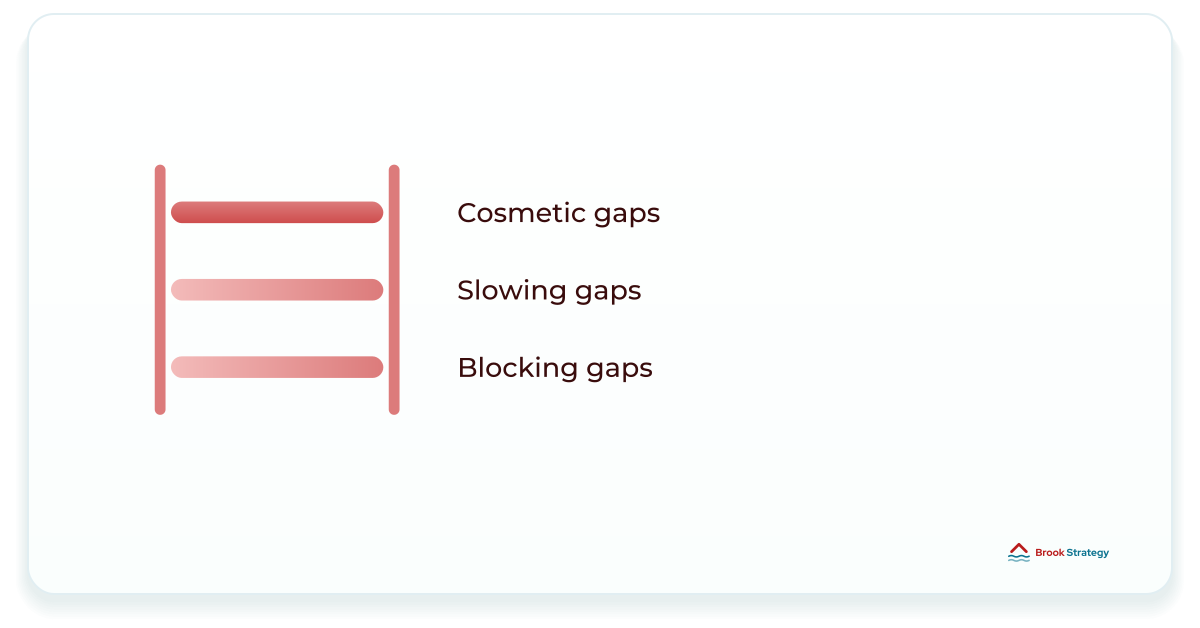
Not every gap costs the same. A missing goal or owner blocks everything else, so fix those within a week. A missing measure or baseline blocks your reviews, which makes it the next priority. A weak systems inventory can wait a few weeks, unless you are about to sign a vendor contract.
| Missing point | Why it hurts | Fix within |
|---|---|---|
| 1. Goal | No basis for ranking projects | 1 week |
| 2. Owners | Nobody decides, dates slip | 1 week |
| 8. Measures | Reviews turn into opinions | 2 to 4 weeks |
| 7. Compliance review | Late sign-off delays launch | Before the pilot |
| 4. Systems inventory | Integration surprises | 4 to 6 weeks |
The order above reflects what I see in client work, so treat it as a default. If you are choosing a platform this month, bring the inventory and the build-or-buy points forward.
See the Checklist Applied
It helps to see the points in action. In my digital strategy examples, the leaders had a clear goal, named owners and a review rhythm, even when the technology differed. Their plans would have scored high on points 1, 2 and 11.
A mid-sized software client I worked with scored four done, five partly done and two missing on the first pass. The two missing items were the owner and the stop rule. Naming a day-to-day owner took one meeting, and the stop rule led to pausing a project that had run six months over its estimate. The money released funded the pilot of the project that mattered.
Pitfalls When You Run the Checklist
The first pitfall is scoring from memory. Open the documents and check that each item exists today, in a place others can find. The second is letting the owner score alone. Ask a finance lead and a customer-facing manager to review the marks, because they notice gaps the owner has stopped seeing. The third is treating the checklist as a one-time audit. Plans change with budgets and people, so a point that was done in January can be missing by June.
Finally, do not add points to make it feel more thorough. Eleven is enough to catch the failures I meet most often. If your business has special needs, such as a regulator with its own reporting rules, add them as a separate list beside this one, so the core stays easy to repeat.
Turning the Results Into Action
Once you have scored the eleven points, write the three most important fixes with an owner and a date. Share the list with your sponsor, since gaps in the goal and the budget are usually theirs to close. Then book a repeat review for the next quarter. If your answers show a plan that needs a staged path, the roadmap gives you one.
- Score all eleven points with evidence.
- Pick the three weakest, with the goal and owner first.
- Assign an owner and a date to each fix.
- Schedule the next review before you close the meeting.
Questions About the Digital Strategy Checklist
How Do I Use This Digital Strategy Checklist?
Score each of the eleven points as done, partly done or missing, with a short note on evidence. Then pick the three weakest and fix those first. Run it again every quarter, because digital plans drift without regular checks.
How Long Does It Take to Complete the Checklist?
A first pass takes about two hours if you have the plan and the latest numbers at hand. Closing the gaps takes longer, from a few days for a missing owner to several weeks for a data foundation.
Who Should Fill It In?
The day-to-day owner of the strategy, with input from product, technology, finance and a customer-facing lead. If only one person completes it, results tend to look better than they are.
What Score Means My Strategy Is Healthy?
There is no magic number. Nine of eleven points done, with the two gaps known and scheduled, is a healthy place. Eleven points marked done with no evidence behind them is a warning sign.
Is the Checklist the Same for Small and Large Companies?
The points are the same, but the depth differs. A small company may meet a point with a paragraph and a spreadsheet. A large one may need a documented process and a named team.
What If Several Points Are Missing?
Start with the goal and the owner, because everything else depends on them. Then add measures and a short list of initiatives. Do not try to close all gaps at once.
How Is This Different from a Roadmap?
The checklist checks that the essentials exist and hold together. The roadmap sequences the work over time. Use the checklist to review the strategy, and the roadmap to run it.
Note: This article is general information, not legal, financial or tax advice. Figures and examples are estimates based on typical projects, so check current details with your providers and advisers before you decide.
Was this article helpful?
Thank you for letting us know.
Russell Tennant
Russell leads the Brook editorial team and works with our consultants to turn real client engagements into practical guides on roadmaps, go-to-market planning, growth and competitive strategy. Before joining Brook, he spent 11 years in strategy and product marketing roles at software and financial services companies. He has since edited more than 300 articles on strategy practice and drawn on roadmaps and growth plans from over 100 client projects. He is based in Denver, Colorado.