Key Takeaways
- Nine points cover what decides most cloud programs, from goals to review rhythm.
- Each point has four checks and a typical owner, so you can assign work today.
- Cost ownership and operating model are where plans most often fail.
- Score each point as done, partly done or not started, and fix gaps before you migrate.
A cloud strategy checklist is short on purpose. If you can answer yes to all nine points below, your cloud strategy consulting work, or your own planning, covers what decides most programs. If you cannot, you know where to look first.
I use the same nine points when I review a plan someone else wrote. They are ordered the way I would tackle them, and each one comes with four concrete checks you can tick off with your team.
The Nine Points at a Glance
| Point | Question it answers | Typical owner |
|---|---|---|
| 1. Business goals | What must the cloud do for you? | Executive sponsor |
| 2. Inventory | What do you run today? | IT lead |
| 3. Workload paths | What happens to each system? | IT lead and business owners |
| 4. Provider direction | Where and with whom will you run it? | Head of IT |
| 5. Security baseline | What rules must every workload follow? | Security lead |
| 6. Cost model | What will it cost and who watches it? | Finance lead |
| 7. Operating model | Who builds, runs and pays? | Head of IT |
| 8. Roadmap and gates | In what order and with which stops? | Program owner |
| 9. Review rhythm | How do you keep the plan current? | Sponsor |
The 9-Point Cloud Strategy Checklist
Work through the points in order. The later ones depend on the earlier ones, and the cloud strategy framework shows how they connect if you want the bigger picture first.
Business Goals and Success Measures
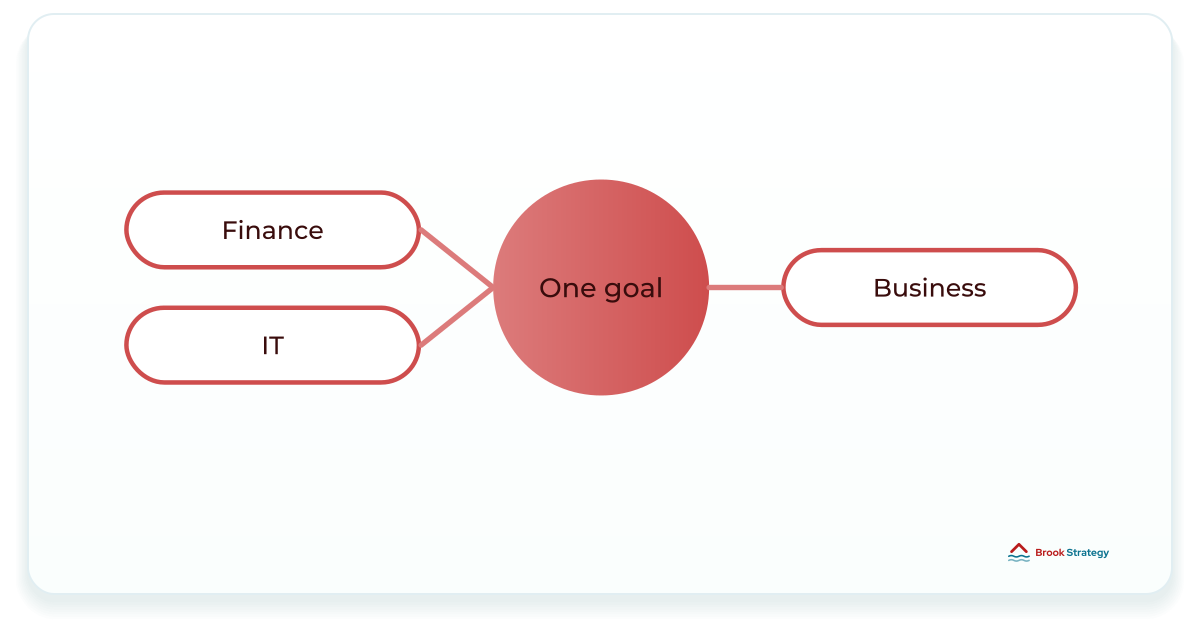
Write down the result you want from the cloud in a single sentence, and attach a number and a date to it. Lower run costs by a set percentage, release weekly instead of monthly or leave a data center before a contract renews. Goals that sound like technology projects tend to produce technology projects.
Then agree who judges success. If finance, IT and the business each hold a different definition, the program is already in trouble. I like to ask the sponsor to read the goal out loud to the three leaders affected and see whether anyone winces.
Check these
- A written goal with a number and a date
- One sponsor with budget authority
- Success measures agreed by finance, IT and the business
- A list of outcomes you are not trying to achieve
Application and Data Inventory
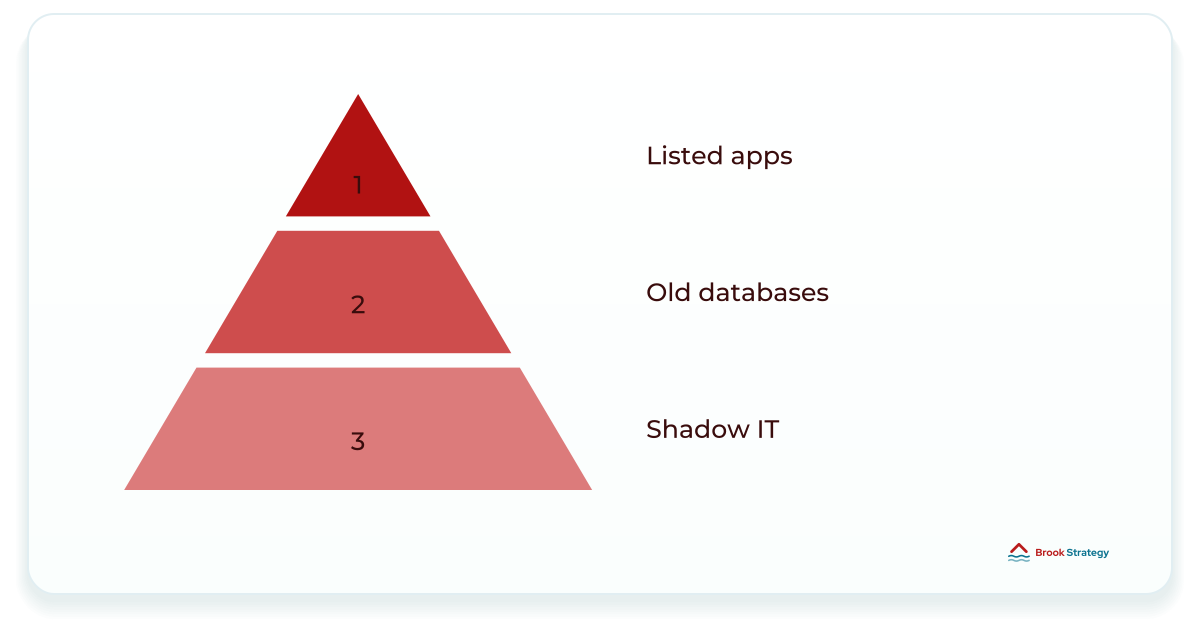
You cannot plan what you cannot list. Capture each application with its owner, users, technology, dependencies and contract end date. Add the data it holds and how sensitive that data is. A spreadsheet works, and a perfect inventory is not the aim. A good-enough one in two weeks beats a perfect one in six months.
Expect surprises. Almost every inventory I have seen turned up systems nobody could name an owner for. Those are your first retirement candidates, and they usually carry the oldest risks.
Confirm these
- Owner named for every application
- Dependencies between systems mapped
- Data sensitivity marked for each store
- Systems without owners flagged for review
Workload Paths and Priorities
Give every application a path: keep as is, move with few changes, rebuild or retire. Score each for business value, effort and risk, and sort the list. The order of moves comes from the scores, not from whichever team shouts loudest.
Check the retire column twice. It is the cheapest way to cut your bill and the one most often forgotten. The method behind the scores is described in my guide to cloud strategy assessment.
Verify these
- A path chosen for every application
- Scores written down with reasons
- Retirement candidates confirmed with owners
- A first wave of low-risk workloads
Provider and Architecture Direction
Decide which provider or providers you will use and why. Compare them on the services you actually need, your team's skills, contract terms and exit costs. Choose a direction, not a shopping list: one primary provider is the simplest setup for most companies, and a second needs a reason you can state.
Write down the principles that guide design, such as managed services first or no custom networking without approval. Teams can then make small decisions on their own without reopening the big one each time.
Settle these
- Provider choice with the reasons written down
- Exit and portability costs estimated
- Design principles agreed by IT leaders
- Rules for when a second provider is allowed
Security and Compliance Baseline
Set the rules before the first workload arrives: identity and access, encryption, network boundaries, logging and incident response. Map each rule to the standards your business follows, and ask your security lead to sign off in writing.
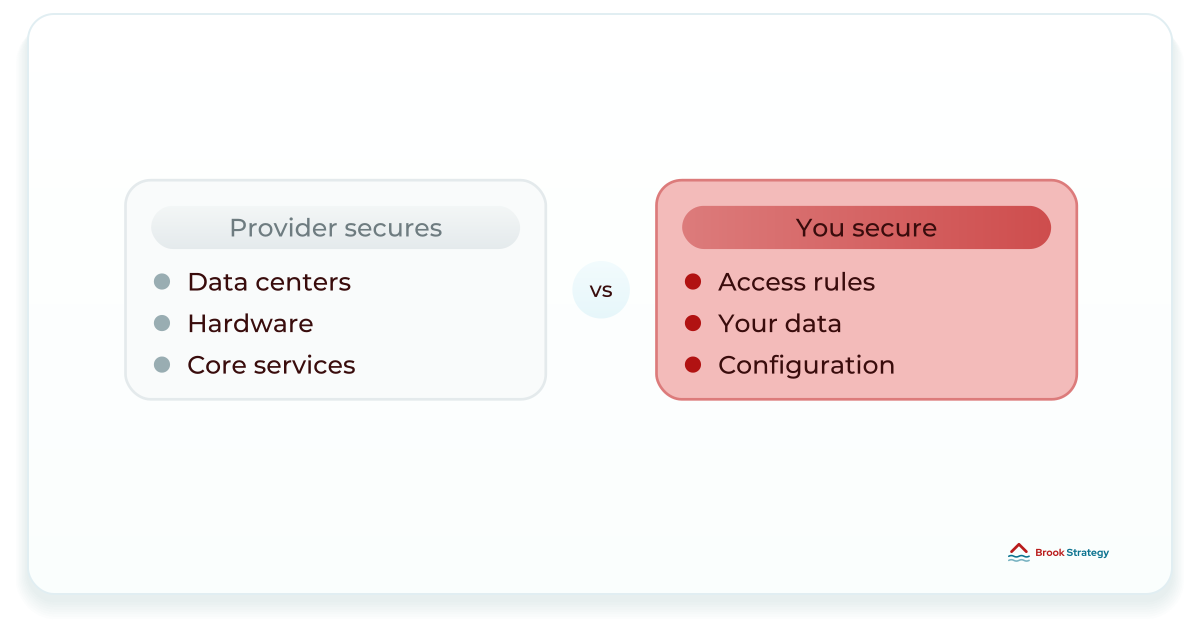
Shared responsibility is where many teams slip. The provider secures the platform, and you secure what you put on it. Write down who owns each control so a gap does not hide between two teams. Check current rules for your industry with your own advisers.
Get these in place
- Identity and access rules defined
- Encryption and logging standards set
- Responsibilities split between provider and you
- Written sign-off from your security lead
Cost Model and Governance
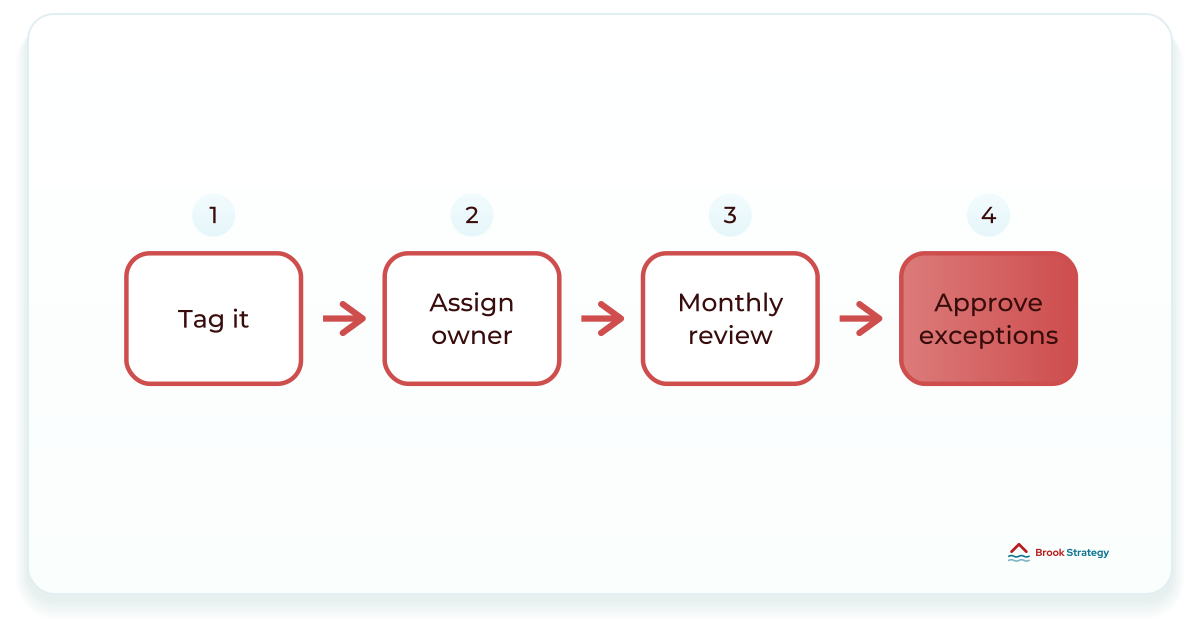
Build a cost model that covers one-off effort, new run costs and the cost of running old and new systems together. Add budgets, cost tags and alerts so every invoice line has an owner. Flexera's 2026 State of the Cloud report puts estimated wasted cloud spend at 29%, so governance is where much of the saving sits.
Agree who reviews the bill each month and who can approve exceptions. A review that nobody owns does not happen. Finance and IT should work from the same report, or the argument about the invoice never ends.
Put these in writing
- Total cost model including parallel running
- Budgets and alerts per team
- Tagging rules applied from day one
- Monthly review with a named owner
Operating Model and Skills
Decide how your teams will work with the cloud. Who builds, who runs, who approves and who pays? Some companies create a small central team that sets standards and helps others, and that setup works well when you have many product teams.
Then look at skills honestly. List which roles you need, who has them and where you need training or outside help. A short plan now is cheaper than a hiring scramble when the first wave is already moving.
Make sure you have
- Roles and responsibilities written down
- Skill gaps listed with a plan to close them
- A small central team or clear standards owner
- Training budget set
Migration Roadmap and Decision Gates
Turn the priorities into phases with owners, dates, budgets and gates. Start with a pilot that can fail safely, then move in waves grouped by dependency. The full sequence is laid out in my cloud strategy roadmap.
Gates matter more than dates. At each gate, leaders compare results with targets and choose to continue, fix or stop. Put them on the calendar now, so nobody has to ask for permission to pause later.
Lock these down
- Phases with owners, dates and budgets
- A pilot with targets set in advance
- Waves grouped by dependency
- Gates scheduled with a fixed set of attendees
Review Rhythm and Exit Options
Plans age. Set a quarterly review that asks whether the goal still holds, whether costs match the case and whether any workload should move back or be retired. Several companies have changed course when their numbers changed, and I cover real examples in cloud strategy examples.
Keep an exit option in view for your largest workloads. You may never use it, but knowing the cost keeps your provider talks honest and your design choices portable.
Keep these on the list
- Quarterly review on the calendar
- Exit cost estimated for your biggest workloads
- Contract renewal dates tracked
- A named owner for the strategy document
How to Score Your Own Checklist
Give each point one of three marks: done, partly done or not started. Count the partly done as not done, because a half-written security baseline protects nobody. Nine done means you are ready to move workloads. Six or seven means fix the gaps first. Below six, stop and finish the planning before you spend on migration.
Run the scoring as a group, not alone. When the IT lead, the finance lead and a business owner each give a mark and then compare, the disagreements are the most useful part. A point that IT calls done and finance calls not started usually hides a gap in who owns it. Write those disagreements down, because they become your first action items.
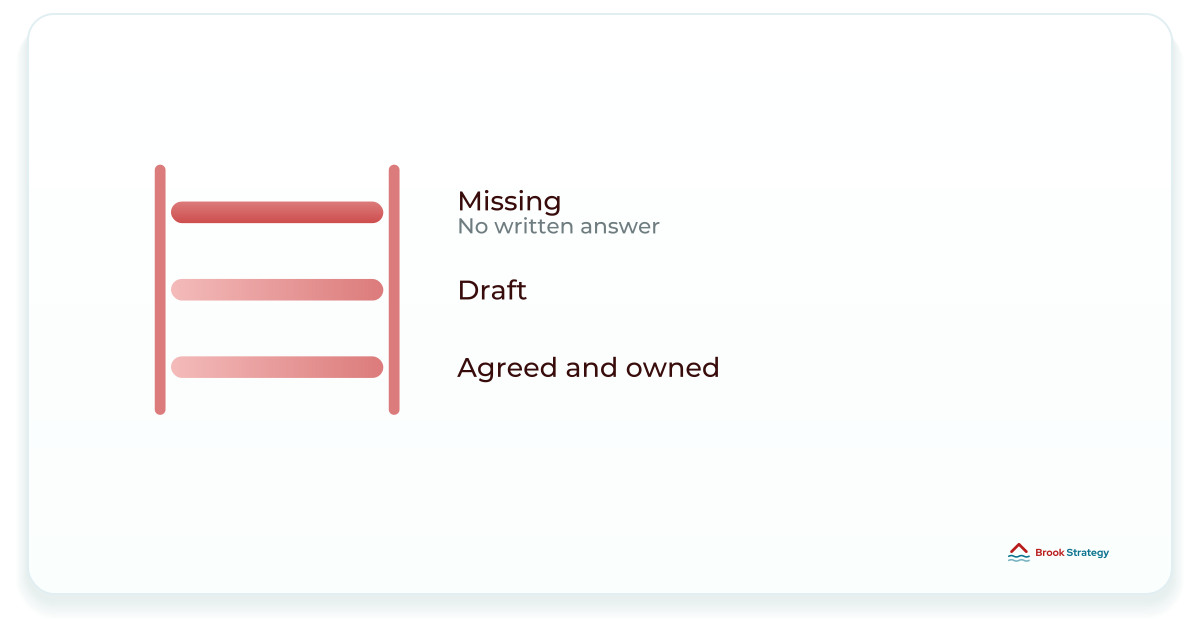
Repeat the exercise after each decision gate. The marks should move from not started to done over the months. If a point slips backward, something changed, and you want to know early.
Share the scored list with your leadership and agree an owner and a date for every gap. If you would like an outside view of your answers, a short call is usually enough to spot the weak points.
Questions About Cloud Strategy Checklists
What Should a Cloud Strategy Include?
At a minimum: business goals, an application inventory, a path for each workload, a provider direction, a security baseline, a cost model, an operating model, a roadmap with decision gates and a review rhythm. The nine points in this checklist cover each of them.
How Long Does It Take to Complete This Checklist?
For a mid-sized company, the first pass usually takes four to eight weeks, depending on how fast leaders decide and how clean your inventory is. Points 1 and 2 are quick, and points 5 and 6 need input from security and finance, which is where waiting time builds up.
Who Should Own the Cloud Strategy?
An executive sponsor owns the goals and the budget, and a program owner runs the plan day to day. Finance, security and the business areas each own their parts. A strategy owned only by IT tends to miss cost and business priorities.
Do I Need a Multi-Cloud Strategy?
Only if you can name the problem it solves, such as a regulatory need or a service one provider lacks. Multi-cloud adds skills, tooling and cost. Flexera's 2026 report says 73% of organizations run hybrid cloud models, so mixed setups are common, but common is not a reason.
How Often Should I Review My Cloud Strategy?
Review it every quarter against the goals and the cost model, and do a bigger refresh once a year. Also review after any major change, such as an acquisition, a new regulation or a large contract renewal.
What Is the Most Common Gap in Cloud Strategies?
Cost ownership. Plans often list a budget but give no one the job of watching the monthly bill and acting on it. The fix is simple: tags on every resource, an owner for every tag and a monthly review that finance and IT attend together.
Can a Small Company Use This Checklist?
Yes. A small company can answer most points in a few pages. The inventory is shorter and the operating model may be one person, but the questions are the same, and skipping them is just as costly when the bill arrives.
Sources
Note: This article is general information, not legal, financial or tax advice. Figures and examples are estimates based on typical projects, so check current details with your providers and advisers before you decide.
Was this article helpful?
Thank you for letting us know.
Russell Tennant
Russell leads the Brook editorial team and works with our consultants to turn real client engagements into practical guides on roadmaps, go-to-market planning, growth and competitive strategy. Before joining Brook, he spent 11 years in strategy and product marketing roles at software and financial services companies. He has since edited more than 300 articles on strategy practice and drawn on roadmaps and growth plans from over 100 client projects. He is based in Denver, Colorado.