Key Takeaways
- A cloud strategy assessment scores readiness across eight dimensions, from goals to governance.
- Score independently, compare results and write one line of evidence for every mark.
- The weakest dimension decides how fast you can safely go, more than the average.
- The real output is a gap list with owners and dates, not the score.
A cloud strategy assessment tells you how ready your business is to use the cloud well, before you commit to a provider or a migration date. It looks at your goals, applications, data, security, costs and people, and ends with a score and a list of gaps. If you want an outside team to run it with you, cloud strategy consulting usually begins with this step.
I run these assessments as a mix of interviews and document review. Below is the method I use, the scoring table you can copy and the mistakes I see most often when companies score themselves.
What a Cloud Strategy Assessment Covers
An assessment is not a technical audit of servers. It is a business review with a technical layer. The question is simple: given what you want from the cloud and what you have today, what stands in the way, and how big is each obstacle?
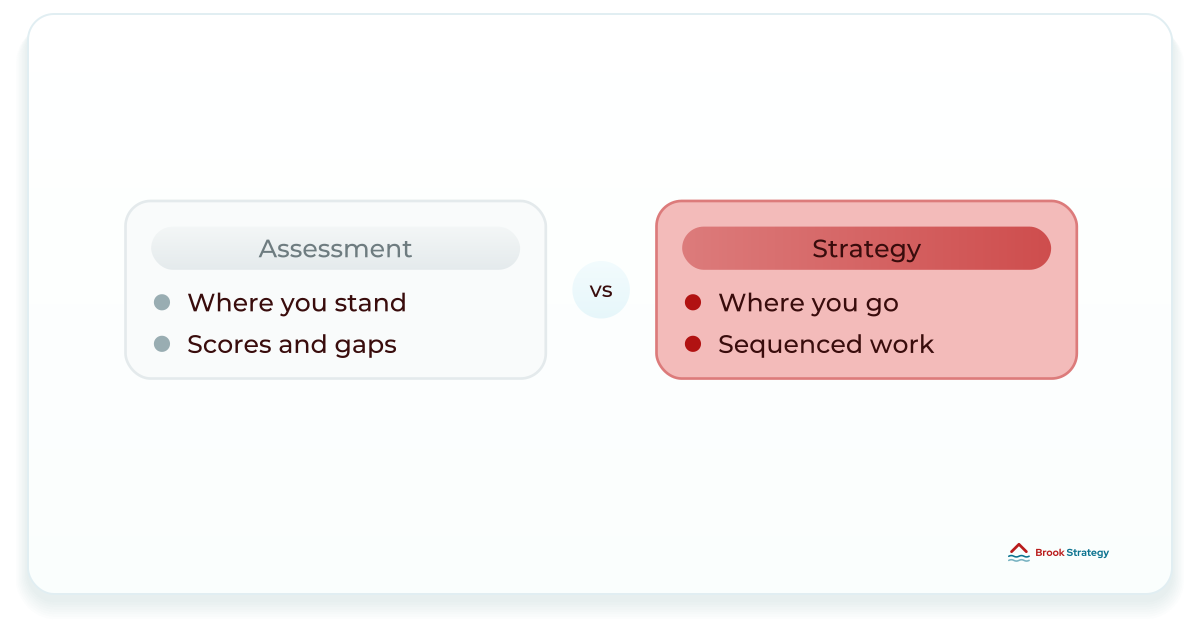
That is different from the plan itself. The assessment finds the gaps, and the cloud strategy roadmap sequences the work to close them. Keep the two apart, or you will start writing the plan before you know the facts.
Eight Dimensions to Score
Score each dimension from 1 (not started) to 5 (strong and proven). The table shows what I look for at each end of the scale. Be hard on yourself: a 3 means it works today with known gaps, not that it works most of the time.
| Dimension | A score of 1 looks like | A score of 5 looks like |
|---|---|---|
| Business goals | No written goal, leaders disagree | Measurable goal, one sponsor, agreed by finance and IT |
| Application portfolio | No inventory, unknown owners | Full inventory with owners, dependencies and paths |
| Data and integration | Data location and quality unknown | Data mapped, sensitivity marked, integrations documented |
| Security and compliance | Rules differ by team | One baseline, written sign-off, tested response plan |
| Cost management | Bill reviewed when it surprises | Budgets, tags and a monthly review with owners |
| Skills and organization | No cloud experience in-house | Roles defined, gaps planned, training funded |
| Technology foundation | Network and identity are ad hoc | Landing zone built and tested |
| Governance and change | Decisions made informally | Gates, owners and a quarterly review |
How to Run the Assessment in Five Steps
You do not need a large team. A sponsor, one person each from IT, finance and security and a facilitator can finish a first pass in three to five weeks. Here is the order I follow.
Start With Interviews
Talk to eight to twelve people: the sponsor, the heads of IT, finance and security, and the leaders of business areas that depend on the systems. Ask what the cloud should do for them, what worries them and what has gone wrong before. I always ask which system they would be most afraid to touch. The answer points to your hardest workload.
Collect the Documents You Already Have
Gather architecture diagrams, contracts, recent cloud invoices, security policies and any earlier migration reports. Do not create new documents yet. What you already have, and how out of date it is, tells you a lot about governance.
Score Each Dimension Separately
Have two people score independently, then compare. Where scores differ by two or more points, discuss the evidence and agree on a mark. Write one sentence of evidence for every score, so you can defend it later.
Score Each Application for Value, Effort and Risk
Add the portfolio view. Rate every application from 1 to 5 for business value, effort to move and risk. High value, low effort and low risk goes first. High effort and low value is a candidate for retirement or for staying where it is.
Write Up Gaps With an Owner and a Date
A gap without an owner stays a gap. For every score below 3, write what must change, who owns it and by when. Then rank the gaps by how much they block the first wave of work. The cloud strategy checklist is a good source of ready-made items for this list.
What Evidence Backs Each Score
A score is only as good as the proof behind it. For goals, ask for the written statement and the name of the sponsor. For the portfolio, ask to see the inventory and pick three applications at random to check the owner and the contract date. For data, ask where customer records live and who approved that.
For security, ask to see the baseline and the last exercise or review, and check the dates. For cost, open the last three invoices and ask who reviewed each one. For skills, list the people who have run a production workload in the cloud before, by name. For the technology foundation, ask for a walk-through of the network and identity setup, not a diagram. For governance, ask when the last decision gate happened and who attended.
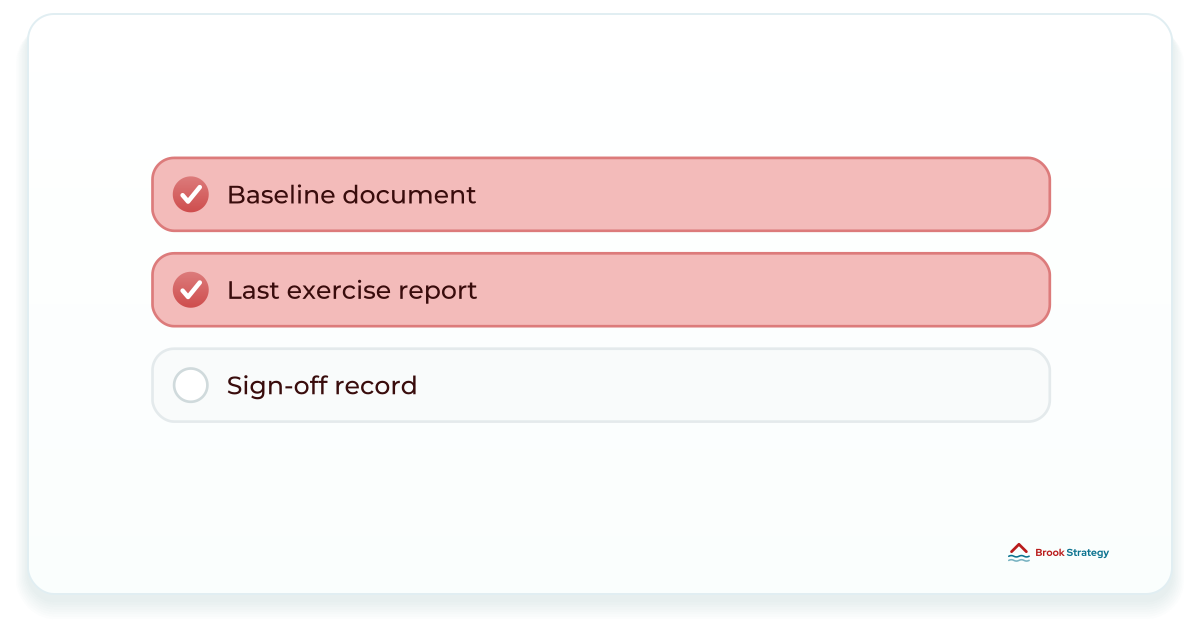
If the proof takes more than a day to produce, mark the score down by one point. Slow evidence is itself a finding, because it means the information would be slow to find during an incident too.
A Worked Example From a Mid-Sized Software Company
Take a software company with about 40 applications, a small IT team and a cloud bill that has grown for two years. The assessment gives it a 4 on goals, because the sponsor had written a clear target of lower hosting costs. Portfolio gets a 3: an inventory exists, but a fifth of the entries have no owner.
Security scores a 2, since each product team set its own access rules. Cost management gets a 2 as well, because only one person looks at the invoice and has no authority to act on it. Skills score a 3, technology a 3 and governance a 2. Data scores a 3. Total: 22, in the partly ready band.
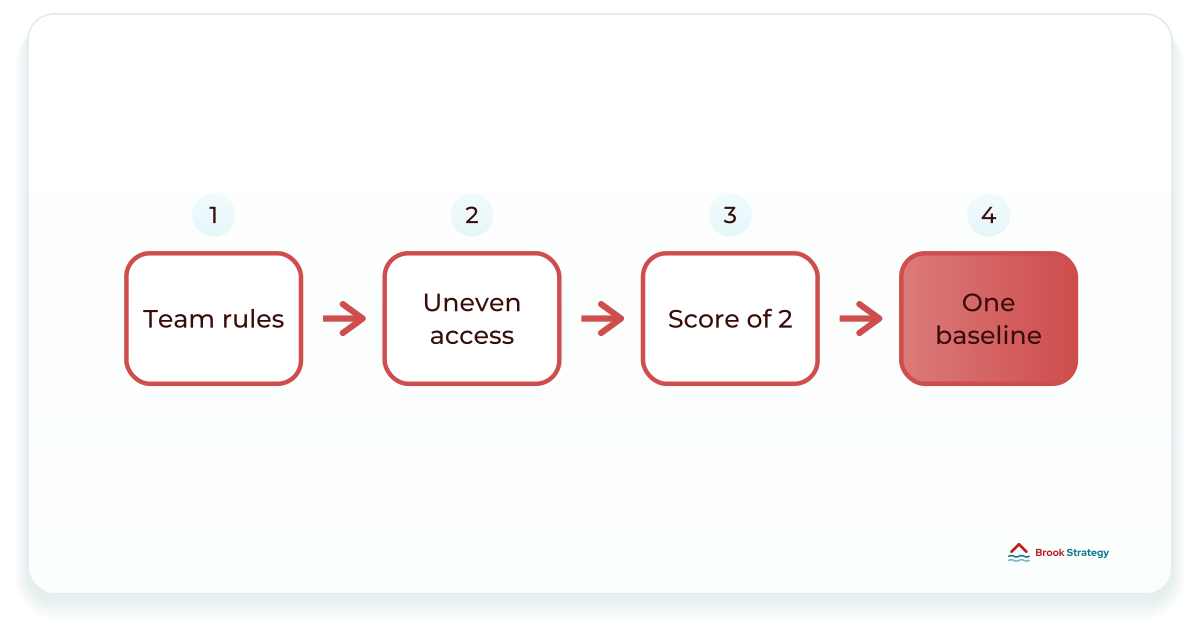
The gap list puts three items first: agree one access baseline, give the invoice an owner with authority and assign owners to every application. All three take weeks, not months, and all three come before any provider decision. That is what a useful assessment looks like: a short list that changes what you do on Monday.
Reading Your Readiness Score
Add the eight scores for a total between 8 and 40. The ranges below are my own rule of thumb from client work, not an industry standard, so use them as a guide for conversation.
| Total score | What it usually means | What to do next |
|---|---|---|
| 8 to 16 | Early stage. Goals, ownership or basics are missing | Fix the gaps and repeat the assessment in a quarter |
| 17 to 26 | Partly ready. A pilot is possible, with named gaps | Close the lowest two dimensions, then start a small pilot |
| 27 to 34 | Ready for planned waves | Build the roadmap and set decision gates |
| 35 to 40 | Mature. You may be ahead of your plan | Focus on optimization and on regular review |
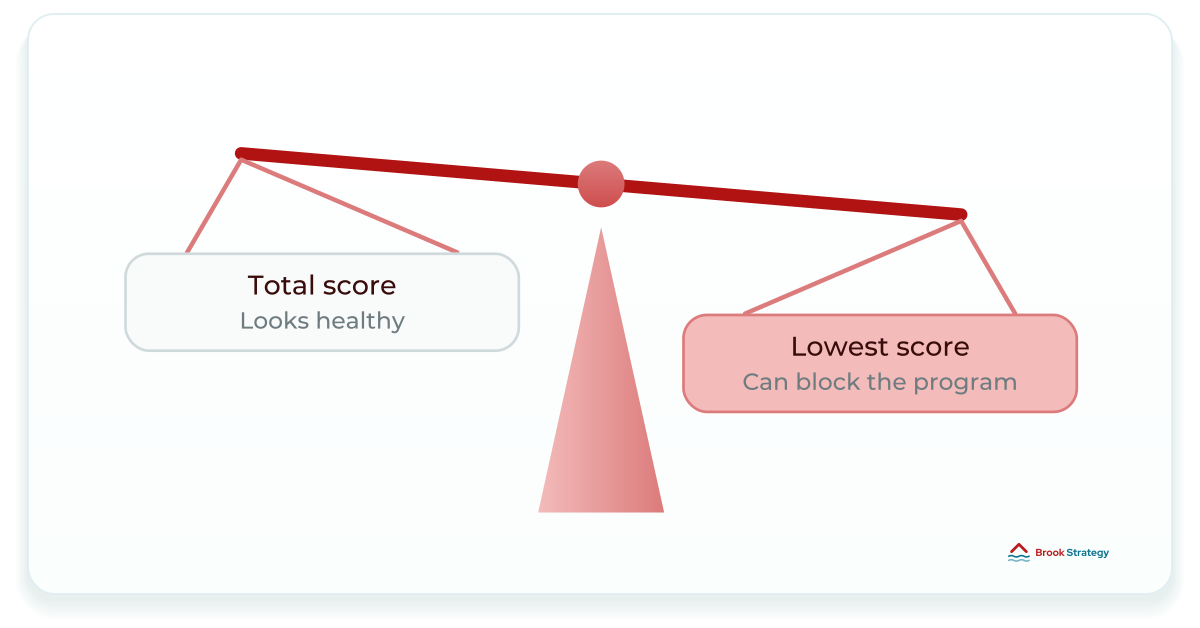
Look at the lowest single score as much as the total. A company with an average of 4 and one score of 1 in security has a bigger problem than one with all 3s. The weakest dimension tends to decide how fast you can safely go.
Four Mistakes That Skew the Result
I see the same four patterns again and again, and each one makes the score look better than it is.
- Scoring the plan, not the reality. A security baseline that is written but not applied is a 2, not a 4.
- Letting one team score alone. IT tends to rate technology high and cost governance low, while finance does the opposite.
- Skipping the interviews. Documents show intent, and people show what actually happens.
- Treating the score as the result. The result is the gap list with owners and dates.
A related trap is mixing up readiness with a business case. Readiness tells you whether you can move safely. The case tells you whether it is worth it, and it needs its own numbers, which I outline in the cloud strategy framework.
Next Steps After the Results
Share the scores and the gap list with your leadership in a single meeting, and ask for decisions on the top three gaps. Then feed them into the roadmap. Some of your gaps will be quick wins, such as tagging resources or writing a security baseline. Others, such as building skills, take months, and the roadmap has to reflect that.
Keep the write-up short. Two pages work best: the scores with one line of evidence each, the application ranking and the gap list. Long reports get filed, and short ones get acted on. Send it ahead of the meeting, so the time together goes to decisions, and record who agreed to what before everyone leaves the room.
Look at how others handled the same gaps as well. Real stories of companies moving, staying and moving back are collected in cloud strategy examples, and they are a good reality check for your own plan.
Questions About Cloud Strategy Assessments
What Is a Cloud Strategy Assessment?
It is a structured review of how ready your business is to use the cloud well. It covers goals, applications, data, security, cost, skills, technology and governance, and ends with scores and a ranked list of gaps with owners.
What Is the Timeline for an Assessment?
A first pass usually takes three to five weeks for a mid-sized company. Most of the time goes to booking interviews and collecting documents. Smaller businesses can finish in less time, while regulated ones often need more.
Who Should Be Involved in the Assessment?
Involve your sponsor, the heads of IT, finance and security and leaders from the business areas that rely on your systems. Each person brings a view the others lack. An assessment run only by IT usually under-scores cost and business priorities.
Can I Do the Assessment Myself?
Yes. The eight dimensions and the scoring table in this article are enough to start. An outside facilitator helps with honest scoring and with interviews, because people speak more freely to someone who is not on the org chart.
What Is the Difference Between an Assessment and an Audit?
An audit checks compliance against a standard and usually produces findings. An assessment checks readiness against your own goals and produces a plan of action. You may need both, and the audit evidence can feed your security score.
How Often Should I Repeat the Assessment?
Repeat it after each major decision gate and at least once a year. Scores should rise as gaps close. If a score drops, something changed, such as a key person leaving or a new regulation, and you want to see it early.
What If My Score Is Low?
A low score is useful news at a low price. It tells you what to fix before you spend on migration. Close the two lowest dimensions first, repeat the assessment in a quarter and start with a small pilot once you reach the partly ready range.
Sources
Note: This article is general information, not legal, financial or tax advice. Figures and examples are estimates based on typical projects, so check current details with your providers and advisers before you decide.
Was this article helpful?
Thank you for letting us know.
Russell Tennant
Russell leads the Brook editorial team and works with our consultants to turn real client engagements into practical guides on roadmaps, go-to-market planning, growth and competitive strategy. Before joining Brook, he spent 11 years in strategy and product marketing roles at software and financial services companies. He has since edited more than 300 articles on strategy practice and drawn on roadmaps and growth plans from over 100 client projects. He is based in Denver, Colorado.