Key Takeaways
- A supply chain framework rests on five pillars: sourcing, network, inventory and service, risk and data.
- Every pillar needs one named owner and two or three measures, or it drifts.
- A fixed rhythm of monthly, quarterly and annual reviews keeps the strategy tied to what is happening.
- SaaS and financial services firms should include cloud, payment and data providers in their supplier map.
Most supply chain strategies are written once and forgotten. The reason is rarely the content. It is the lack of structure around it: nobody owns each part, and nobody meets to look at the numbers. Through my supply chain strategy consulting work, I use one framework with three layers, which are pillars, roles and rhythm.
The pillars say what the strategy covers. The roles say who is responsible. The rhythm says when you look at it. If you want stories first, my supply chain strategy examples show the same ideas in real companies.
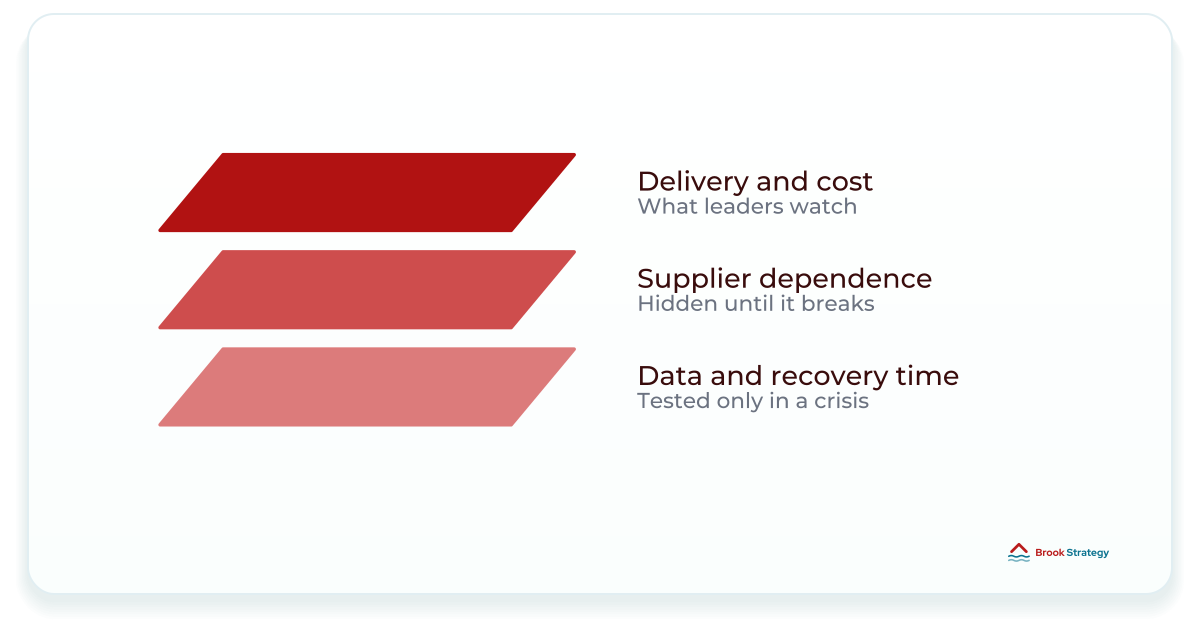
The Five Pillars of the Framework
Five pillars cover what a supply chain strategy has to decide. They map loosely to the planning, sourcing and delivery processes in the SCOR Digital Standard from ASCM, which also includes an orchestrate process for strategy, technology, contracts and risk. I keep the number low so leaders can remember them.
| Pillar | Decision it covers | Example measures |
|---|---|---|
| 1. Sourcing | Which suppliers, on which terms, with how much dependence | Spend under contract, share with a single source |
| 2. Network and capacity | Where work is done and how much capacity you hold | Capacity used, cost to serve by region |
| 3. Inventory and service | How much you keep and what you promise customers | Inventory days, on-time delivery |
| 4. Risk and resilience | What can fail and what protection is worth paying for | Revenue at risk, recovery time |
| 5. Data and technology | What you can see and how fast | Forecast error, data freshness |
Sourcing
Start with a map of your critical suppliers and what each one supports. For software and financial services firms, include cloud providers, payment processors, data vendors and outsourced service teams. Sort suppliers by spend and by risk, and decide for each group whether you want partnership, competition or simple rules.
Network and Capacity
Look at where work is done, whether that is a warehouse, a data center or a support team, and compare it with where customers are. A location that made sense three years ago may now add cost and delay. Capacity should follow the plan: too little stops growth, and too much ties up cash.
Inventory and Service
Inventory is the buffer between what you can predict and what happens. Set service levels by customer type, since not every customer needs the same promise. In services, the buffer may be spare capacity or a bench of contractors instead of stock on a shelf.
Risk and Resilience
List the events that would stop delivery, estimate how often each could happen and what an hour of downtime costs. Compare that with the price of a backup supplier, extra stock or a second location. Resilience spend should follow the revenue it protects. The method is the same one behind many of the cases in my supply chain strategy examples.
Data and Technology
Decide what you need to see: supplier status, inventory by location, order progress and demand signals. Then choose the simplest tool that provides it. If you are weighing platforms, my ranking of supply chain management software compares the main options and how they charge.
Roles: Who Owns What
A framework without owners is a poster. Assign one accountable person per pillar and keep the number of roles small. The matrix below shows a setup that works for mid-sized firms. Adjust the titles to match your own organization.
| Pillar | Accountable | Consulted | Informed |
|---|---|---|---|
| Sourcing | Head of procurement | Finance, legal | Operations |
| Network and capacity | Head of operations | Sales, finance | Leadership team |
| Inventory and service | Head of planning or customer operations | Sales, support | Finance |
| Risk and resilience | Chief operating officer or risk lead | Procurement, compliance | Board |
| Data and technology | Head of IT or analytics | All pillar owners | Leadership team |
Three rules make the roles work. Each owner has decision rights over the budget and the timeline for their pillar. One executive owns the whole and settles conflicts between pillars. And the pillar owners meet as a group, because trade-offs between pillars, such as inventory against resilience, cannot be solved by one person.
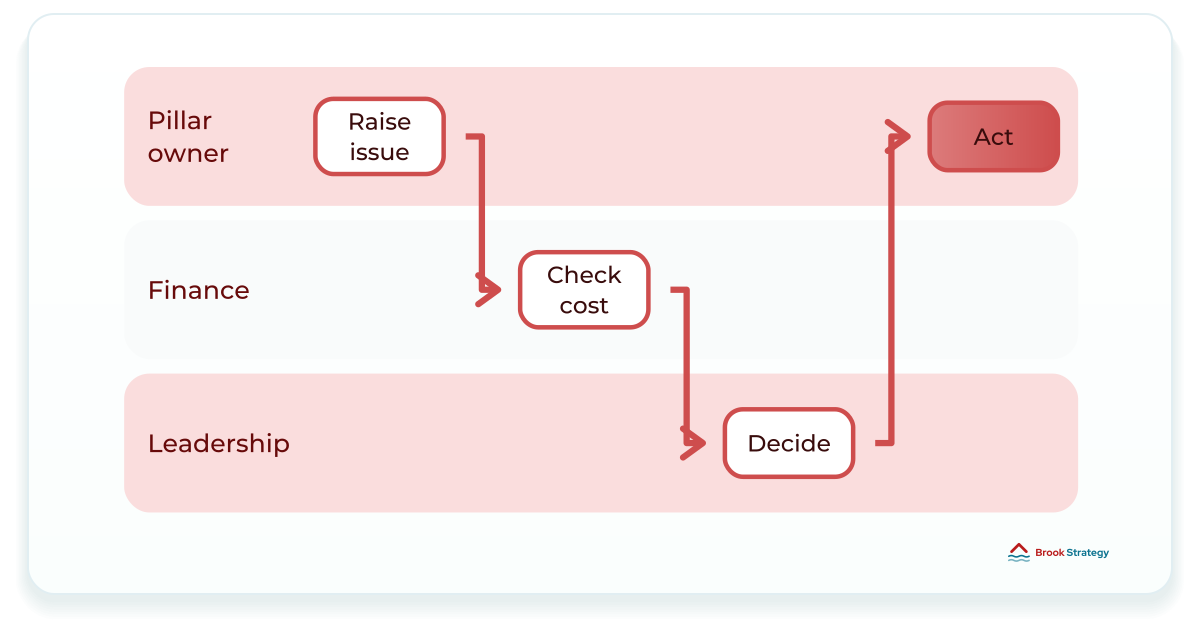
I have seen the missing role more than once: nobody owns data. The planning team blames IT, IT blames the vendors, and the numbers stay wrong. Give it an owner, and make that owner part of the monthly meeting.
Rhythm: When You Look at the Numbers
A rhythm turns the framework into a habit. I use three cycles, each with a different question and a different group of people.
| Cycle | Who attends | Question | Length |
|---|---|---|---|
| Monthly operating review | Pillar owners | Are the measures on target, and what is blocked? | 45 minutes |
| Quarterly risk and supplier review | Owners, finance, compliance | What changed in your suppliers and risks? | 90 minutes |
| Annual strategy refresh | Leadership team | Does the strategy still match the growth plan? | Half a day |
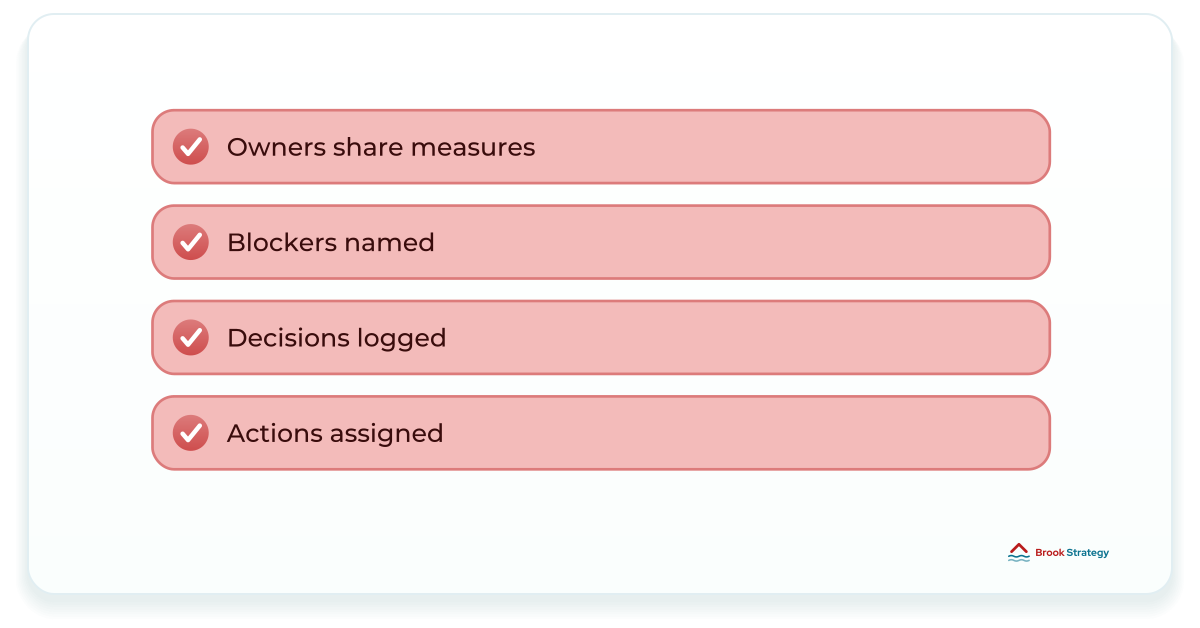
Keep the monthly meeting short and numerical. Each owner shares the measures, one decision needed and one risk. If there is nothing to decide, end early. The quarterly meeting is where supplier changes, new risks and contract renewals get attention. The annual refresh ties the strategy back to the growth plan.
A Scorecard That Fits on One Page
Give each pillar two or three measures, a baseline, a target and an owner. Keep the whole scorecard to one page, because a longer one is not read. The example below shows the shape. The numbers are placeholders you replace with your own baselines.
| Pillar | Measure | Baseline | Target |
|---|---|---|---|
| Sourcing | Share of critical spend with a single source | Your current share | Lower by an agreed amount |
| Network and capacity | Cost to serve by region | Last year's figure | Flat while volume grows |
| Inventory and service | On-time delivery | Last quarter | Set per customer type |
| Risk and resilience | Recovery time for critical suppliers | Tested time | Shorter than the cost of downtime justifies |
| Data and technology | Forecast error | Current error | Lower each quarter |
Choose measures you can already pull. A measure that needs a new system before it exists will not be tracked in the first quarter. If a measure is hard to define, write down the definition in one line, and keep it fixed so trends mean something.
Where the Framework Goes Wrong
The same problems come up in most projects. Teams build a long supplier list and never rank it, so every supplier looks equally important. Pillar owners are named but have no authority over spend. The monthly meeting turns into a status report, with no decisions. And the annual refresh is skipped because the year was busy, so the strategy drifts away from the growth plan.
The fixes are plain. Rank suppliers by spend and by risk, and ignore the bottom group until the top is under control. Give owners a budget. Ask each owner to bring one decision to every meeting. And put the annual refresh in the calendar a year ahead, with the leadership team already invited.
Adapting the Framework for SaaS and Financial Services
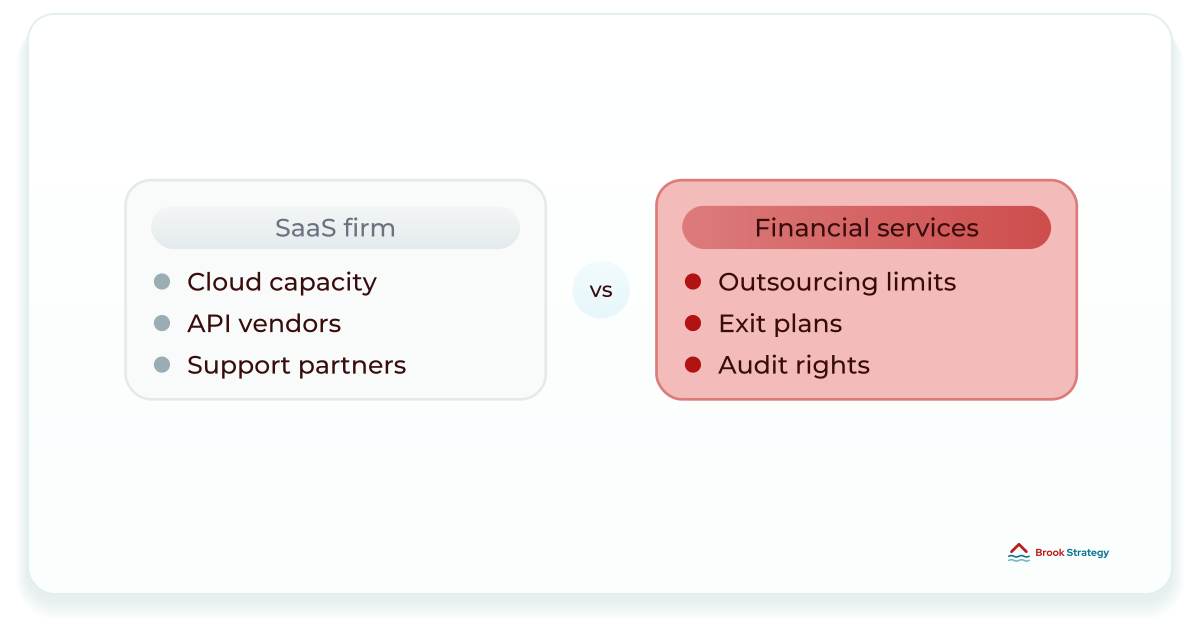
If you sell software, your supply chain is mostly cloud capacity, third-party services, data and people. The pillars still apply, but the vocabulary changes. Inventory becomes spare capacity and queue length. Network becomes regions and data centers. Resilience means recovery plans and provider concentration. A single cloud provider carrying all your workloads is the same kind of exposure as a single factory.
In financial services, regulators set limits on outsourcing and operational resilience, and these differ by country and product. Add your compliance team to the quarterly review, and check current rules with your advisers before you change a critical supplier. The framework gives you the structure, and your compliance function decides what is allowed.
Setting Up the Framework in Eight Weeks
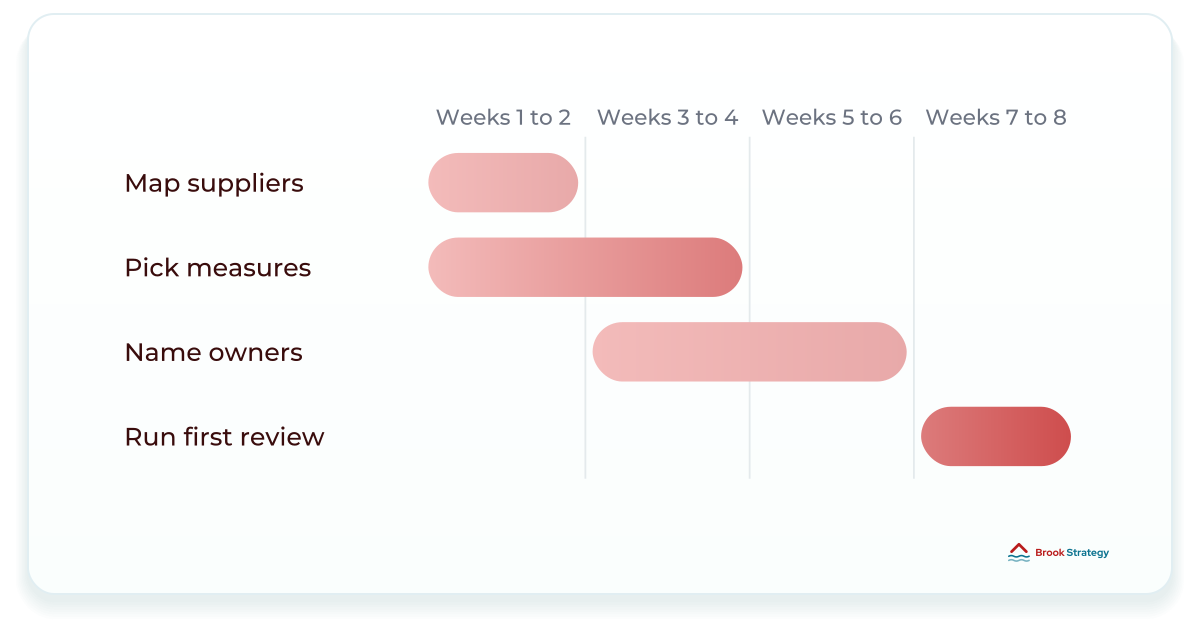
You can have a working version in two months if you take it in order. In weeks one and two, build the supplier map and pick the five pillar owners. In weeks three and four, gather baseline measures for each pillar, even if the data is rough. In weeks five and six, run a diagnosis workshop to find the top three weak points, and choose initiatives with owners and dates. Weeks seven and eight are for setting the calendar and holding the first monthly review.
The usual delay is data. Teams wait for perfect numbers, and the project stalls. Use what you have, label its quality and improve it as you go. A rough number that people trust is more useful than a precise one that arrives in six months.
Picking a Place to Begin
You may not need all five pillars at full depth in the first quarter. Choose your entry point by what hurts most today:
- If a supplier failure would stop delivery, begin with sourcing and risk.
- If costs rise with every new region, begin with network and capacity.
- If customers complain about delays or stock-outs, begin with inventory and service.
- If nobody trusts the numbers, begin with data and technology.
Whichever you pick, set the owner and the rhythm first. If you are new to the topic, my supply chain strategy guide explains the basics behind each pillar. If you would like help choosing, a short call is usually enough to settle it.
Questions About the Supply Chain Strategy Framework
What Are the Pillars of a Supply Chain Strategy?
I use five: sourcing, network and capacity, inventory and service levels, risk and resilience, and data and technology. Together they cover what you buy, where you make and hold it, how much you keep, what can go wrong and how you see it. Each pillar has its own owner and measures.
Who Should Own the Supply Chain Strategy?
One executive, often the chief operating officer or the head of supply chain, owns the whole. Each pillar then has a named lead. For software and financial services firms, where there may be no supply chain function, the owner is often the head of operations or finance.
How Often Should the Strategy Be Reviewed?
Run a monthly operating review, a quarterly risk and supplier review and an annual strategy refresh. Add an unscheduled review after a major disruption, a new market launch or the loss of a key supplier.
What Is the Difference Between a Framework and a Strategy?
A framework is the structure you use to think and decide. The strategy is what you decide with it, in your own business. The framework stays similar across companies, while the strategy is specific to yours.
Do I Need Supply Chain Software to Use This Framework?
Not to start. A shared spreadsheet is enough for a supplier map, a risk list and a review calendar. Software matters once volume, number of suppliers or number of locations make manual tracking unreliable. I compare the main options in my ranking of supply chain management software.
How Do I Measure Supply Chain Strategy Performance?
Pick two or three measures per pillar and set a baseline and a target for each. Common choices are on-time delivery, inventory days, cost to serve, supplier lead time and share of spend with a single source. Keep the list short enough to discuss in one meeting.
How Long Does It Take to Build the Framework?
A first version takes six to eight weeks for most mid-sized firms. The supplier map and the diagnosis take the longest. The roles and rhythm can be set in a single workshop once the first two are done.
Sources
Note: This article is general information, not legal, financial or tax advice. Figures and examples are estimates based on typical projects, so check current details with your providers and advisers before you decide.
Was this article helpful?
Thank you for letting us know.
Russell Tennant
Russell leads the Brook editorial team and works with our consultants to turn real client engagements into practical guides on roadmaps, go-to-market planning, growth and competitive strategy. Before joining Brook, he spent 11 years in strategy and product marketing roles at software and financial services companies. He has since edited more than 300 articles on strategy practice and drawn on roadmaps and growth plans from over 100 client projects. He is based in Denver, Colorado.