Key Takeaways
- A social media roadmap has six phases over about twelve months, with detail only for the first 90 days.
- Every phase ends in a decision gate: continue, change or stop, based on one agreed measure.
- Start with one or two channels and add the next only when the first one runs on a routine.
- Review monthly, rewrite quarterly, and give the whole plan one named owner.
Most social media plans fail in week five. The launch energy is gone, the content calendar has gaps and nobody can say whether the work is paying off. A roadmap fixes that by deciding in advance what you will have by when, and what you will do if you do not have it.
This is the roadmap I hand to teams who already know what social media should do for them. If you are still choosing goals and audiences, start with social media strategy consulting to settle those first. Then come back and put the plan on a calendar.
Six Phases in Brief
Read the table first. Each phase has one milestone, one thing you check before moving on and a rough length. The lengths assume a team of one to three people working part time.
| Phase | Timeline | Milestone | Decision gate |
|---|---|---|---|
| 1. Audit and goals | Weeks 1 to 2 | Baseline numbers and two business goals written down | Does every goal link to revenue, pipeline or retention? |
| 2. Audience and message | Weeks 3 to 4 | One primary audience, three content themes | Can you describe the buyer in two sentences? |
| 3. Channel selection | Weeks 5 to 6 | One or two channels chosen, with the reason for each | Is your buyer active there, and can you produce for it weekly? |
| 4. Workflow and tools | Weeks 7 to 8 | Production routine, approvals and reporting set up | Can a post go from idea to live in under five working days? |
| 5. Pilot | Weeks 9 to 16 | Eight weeks of publishing against a written scorecard | Continue, change or stop, per channel |
| 6. Scale | Months 5 to 12 | Second channel, paid support or new formats added on schedule | Quarterly rewrite of the roadmap |
Notice that publishing starts in week nine. That surprises people. The first eight weeks feel slow, but they are what stops you from posting for three months and learning nothing.
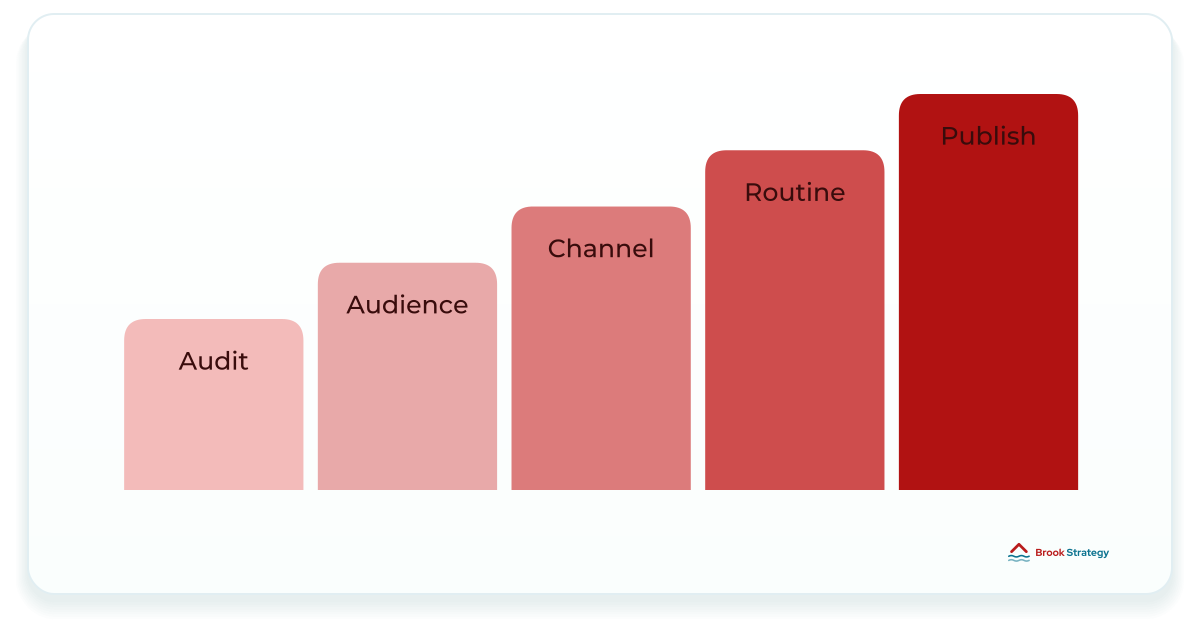
Weeks 1 to 2: Audit What You Have and Fix Two Goals
List every account your company owns, including the dormant ones, and note followers, posting frequency and the last time anyone logged in. You will usually find at least one orphaned profile. Then pull twelve months of whatever numbers exist: reach, clicks, leads attributed to social. Where tracking is missing, write that down too. A gap in the baseline is a finding.
Now set two goals, no more. Good ones sound like "generate 40 qualified demo requests a quarter from LinkedIn" or "lift branded search by a measurable margin." Weak ones sound like "increase engagement." The test I use: could the finance lead check this goal without asking you what it means?
Weeks 3 to 4: Choose the Audience and Three Content Themes
Pick one primary audience. A SaaS company selling to finance teams may also reach recruits, investors and partners on social, but the roadmap serves the buyer first. Talk to five customers and two recent lost deals. Ask where they learn about vendors and who they trust. Their answers will shape the plan more than any persona template.
From those conversations, write three content themes. A theme is a problem you can speak about with authority for a year, such as "how finance teams cut close time" or "what a pricing change does to renewals." Three themes give you variety without drift. Themes that read like your product feature list are a sign you skipped the interviews.
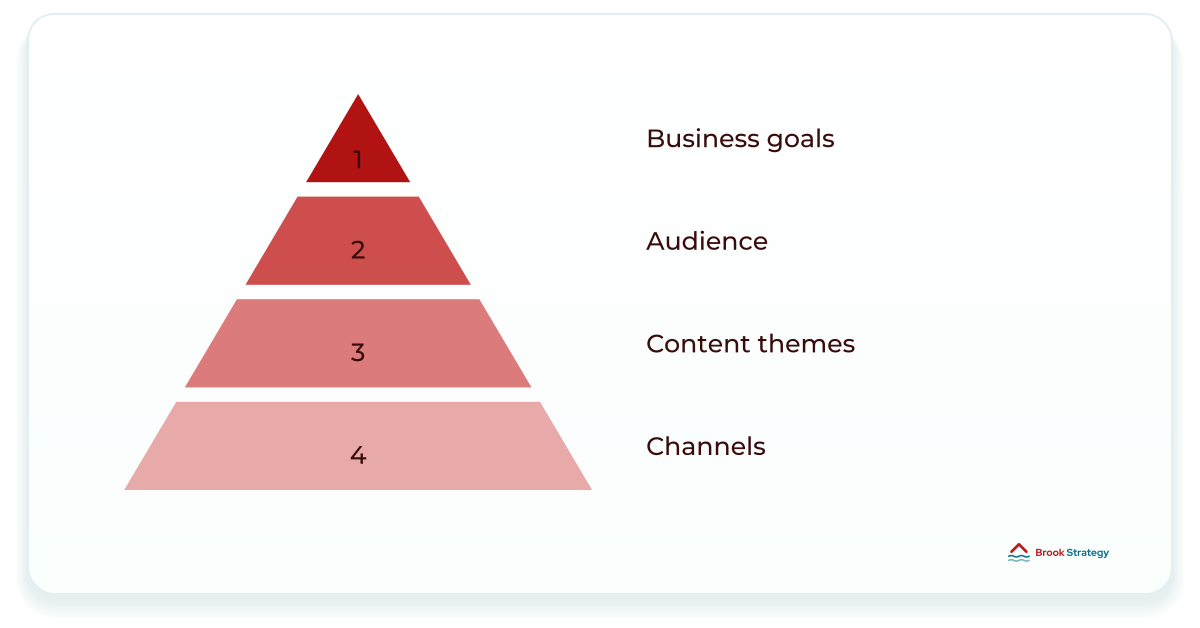
This is also the phase where a broader digital strategy pays off, because your social themes should match what the website, email and sales team already say.
Weeks 5 to 6: Pick One or Two Channels and Say Why
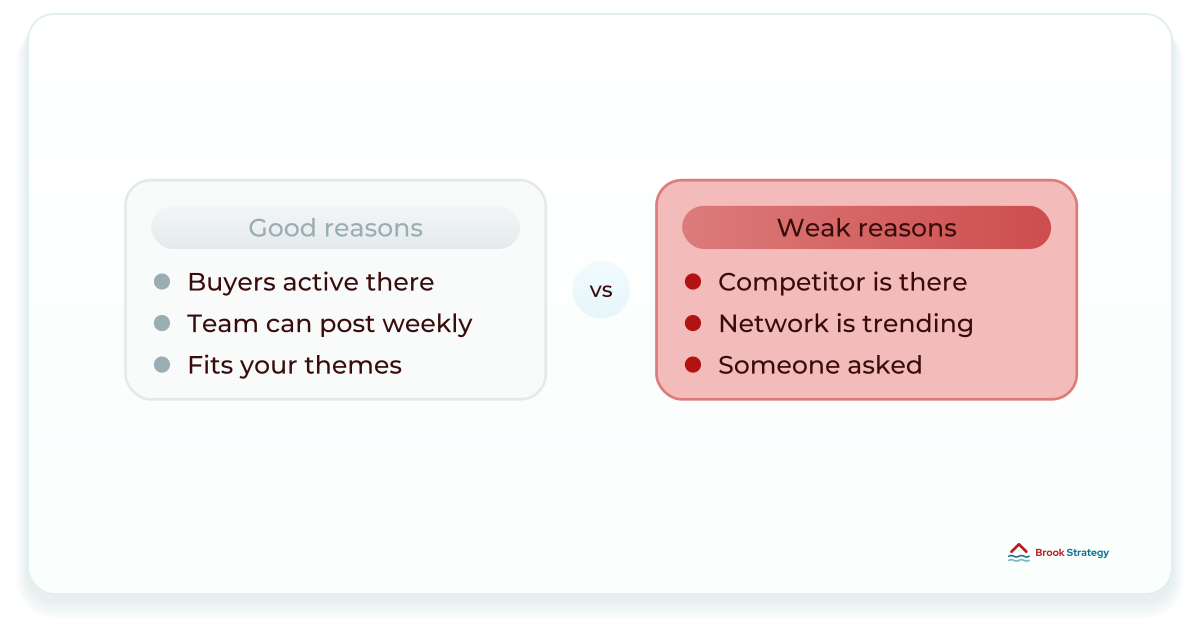
Write one sentence per channel explaining why it earns a place. "Our buyers are VPs of finance, and they read LinkedIn" is a reason. "Everyone is on it" is not. Check the channel against three limits: your buyer is active there, you can produce native content weekly and you can measure something meaningful.
I will push back on one habit here. Teams add a channel because a competitor posted there. Copying a competitor tells you what they tried, not what worked. If you are weighing tools to support the channels you chose, my ranking of social media management tools weighs up the main options.
Weeks 7 to 8: Build the Routine Before You Publish
Set up the boring parts now: a shared calendar, a template for each post type, a named approver and a place where raw ideas collect. Decide how long approval may take. In financial services this step carries real weight, because compliance review can add days. Agree the review path with the compliance owner now, not on the day a post is late.
Also build the reporting view. One page, updated weekly, showing the scorecard measures and nothing else. If it takes more than twenty minutes to refresh, it will be skipped by week twelve.
A Quick Test of Your Workflow
Take one idea and push it through the whole process, from draft to scheduled post. Time each handoff. If the total is over five working days, remove a step. The usual culprits are unclear owners and approvals that wait in someone's inbox.
Weeks 9 to 16: Run the Pilot Against a Scorecard
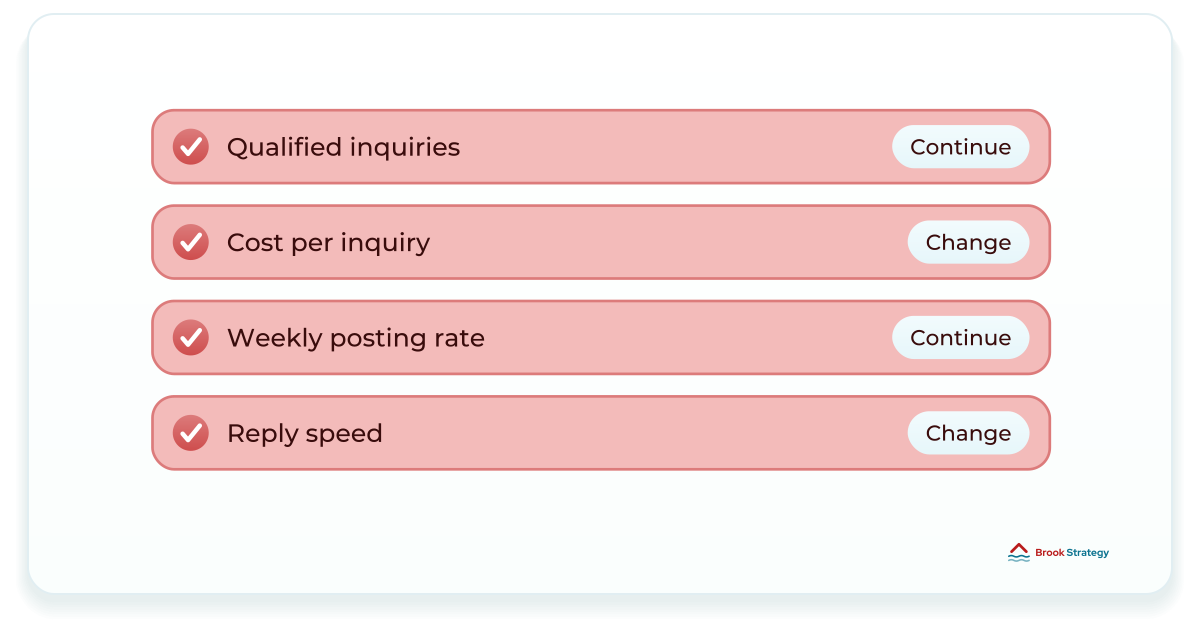
Publish for eight weeks on the chosen channels with the routine you built. Write the scorecard before you start, with a target for each measure. For a B2B pilot I typically track posting consistency, reach among the target audience, clicks to a useful page and the number of conversations that mention a post. Add leads or pipeline where your CRM can connect them.
Hold a fifteen-minute check every week and a longer review at week four and week eight. At each one answer a single question: continue, change or stop? Changing might mean a new format. Stopping a channel after eight honest weeks is a good result, because you just saved the next year's effort.
Months 5 to 12: Scale in Planned Steps
Scaling means adding one thing at a time on a date you set in advance. The order that works for most teams I advise is a second channel in month five, paid promotion of the best organic posts in month seven and a new format, such as short video or a recurring live session, in month nine. Each addition gets its own mini pilot of four to six weeks.
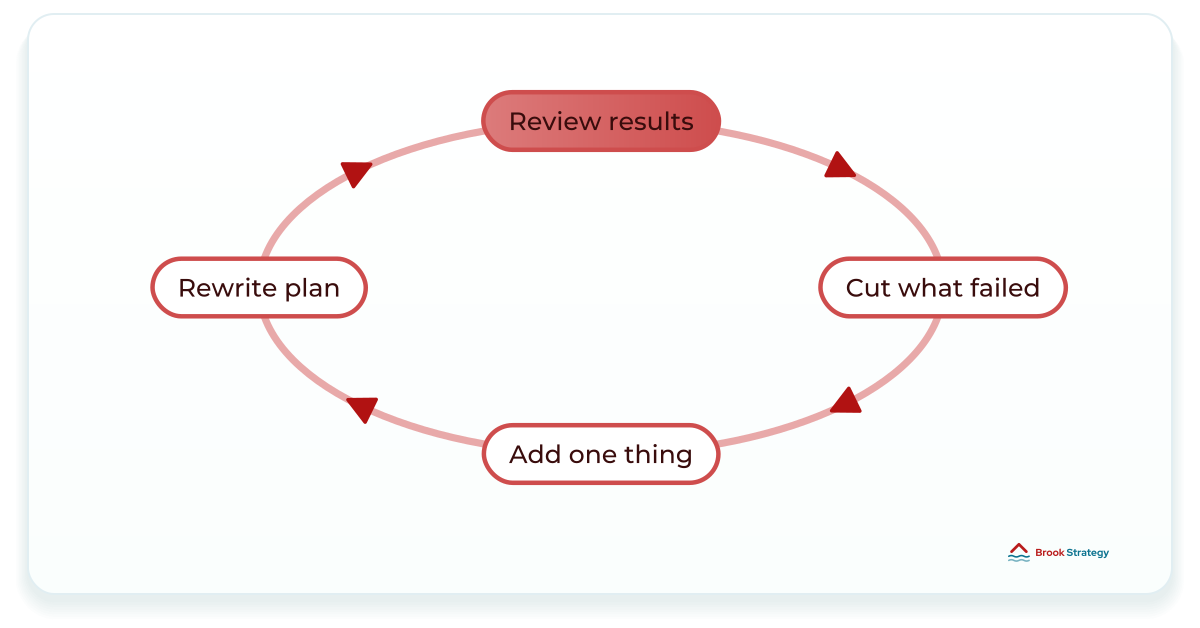
At the end of each quarter, rewrite the next three months. Move what worked up, drop what did not and check the goals against the business. A quarterly rewrite takes half a day and keeps the roadmap honest. The social media strategy checklist is a handy way to run that review.
Who Does What Over the Year
The owner changes less than you might expect, but the workload does. In the first eight weeks it is mostly planning and interviews. During the pilot it is production. During scale it is management, so someone will need to hand off writing or design. Plan that hire or contractor in month four, not month eight.
Where Timelines Slip and How Long Each Slip Costs
Roadmaps rarely run to the day. These are the delays I see most often and what they usually add.
| Cause | Typical delay | How to prevent it |
|---|---|---|
| Goals disputed by leadership | 2 to 4 weeks | Get the two goals signed off in the audit meeting |
| Compliance review of the first posts | 1 to 3 weeks | Agree approval rules and pre-approved themes in phase 4 |
| No one has time to interview customers | 2 weeks | Book five calls in week one |
| Tracking not connected to the CRM | 3 to 6 weeks | Fix attribution during the audit |
| Owner leaves or changes role | 4 to 8 weeks | Keep the plan and scorecard in a shared document |
These ranges come from my own client work, so treat them as a guide. The pattern holds: most delays are people and approvals, rarely the content itself. See the social media strategy best practices for habits that keep those delays small.
How to Fit the Roadmap to Your Situation
The six phases stay the same, but the weight changes with your context. Use these rules to adjust.
- With under five hours a week, run one channel and stretch the pilot to twelve weeks.
- In a regulated sector, move the compliance conversation to week one and pre-approve your three themes.
- With an existing audience, shorten phase 1 and spend the time on the interviews in phase 2.
- With a sales team that wants leads fast, put a simple lead path in the pilot, such as one link and one offer.
If you are unsure which of these describes you, a short call will settle it faster than another week of planning.
Questions About a Social Media Strategy Roadmap
How Long Should a Social Media Strategy Roadmap Cover?
Twelve months is the useful limit, with detail for the first 90 days and loose themes after that. Platforms change their algorithms and formats often enough that a detailed plan for month nine is mostly fiction. Plan the first quarter in weeks, the second in months and the rest in goals.
What Is the Difference Between a Social Media Strategy and a Roadmap?
The strategy says what you want social media to do for the business, who you speak to and where. The roadmap puts that strategy in order over time, with milestones, owners and decision points. You need the strategy first, because a roadmap built on vague goals only schedules vague work.
How Many Channels Should I Start With?
Start with one or two. In my client work, teams that launch on four platforms at once usually end up with thin content everywhere and no data they can trust. Pick the channels where your buyers already spend time, prove a routine there, then add the next one at a planned milestone.
How Often Should I Update the Roadmap?
Review it monthly and rewrite it quarterly. The monthly review checks results against the milestone and decides whether to continue, change or stop. The quarterly rewrite moves the next three months forward and adjusts goals when the business changed.
Who Should Own the Roadmap?
One named person, even when several people contribute. That person owns the dates, runs the monthly review and has the authority to cut a channel that does not perform. Shared ownership usually means missed milestones that nobody notices.
What Should I Measure at Each Milestone?
Measure what the milestone was meant to prove. Early on that is consistency, such as posts published on schedule and time spent per post. Later it is audience quality and business impact, such as qualified leads, demo requests or pipeline touched by social. Follower counts alone rarely justify a decision.
Can a Small Team Run This Roadmap?
Yes, and a small team often follows it better. The twelve-week core needs about five to eight hours a week for one person, plus a monthly hour from whoever owns the budget. If you have less time than that, cut channels before you cut review time.
Note: This article is general information, not legal, financial or tax advice. Figures and examples are estimates based on typical projects, so check current details with your providers and advisers before you decide.
Was this article helpful?
Thank you for letting us know.
Russell Tennant
Russell leads the Brook editorial team and works with our consultants to turn real client engagements into practical guides on roadmaps, go-to-market planning, growth and competitive strategy. Before joining Brook, he spent 11 years in strategy and product marketing roles at software and financial services companies. He has since edited more than 300 articles on strategy practice and drawn on roadmaps and growth plans from over 100 client projects. He is based in Denver, Colorado.