Key Takeaways
- Start with one business goal and one primary audience before you choose any channel.
- Fewer channels, run on a routine, beat many channels run on enthusiasm.
- Write down your review rhythm and your approval path before the first post goes out.
- Judge posts by conversations and pipeline, with reach as supporting context.
I have reviewed a lot of social media programs for SaaS and financial services teams. The ones that work share a short list of habits. The ones that stall share a different list. None of the habits are clever, which is why they get skipped.
Below are the eight I come back to most, each with a do and a don't. If you want help applying them to your own situation, my social media strategy consulting service starts with the same questions.
The Eight Practices in One Table
| Practice | Do this | Avoid this |
|---|---|---|
| 1. Set one goal | Tie social to pipeline, retention or hiring | Chasing follower counts |
| 2. Know the buyer | Interview customers and lost deals | Guessing from a persona template |
| 3. Limit channels | Run one or two well | Opening every platform at once |
| 4. Choose themes | Own three problems you can speak on | Posting product feature lists |
| 5. Build a routine | Fixed calendar, owner and approval path | Posting when someone has time |
| 6. Join conversations | Reply and comment daily | Broadcasting only |
| 7. Measure what matters | Track conversations and leads | Reporting vanity numbers |
| 8. Review and adjust | Monthly check, quarterly rewrite | Annual plans nobody revisits |
The Practices, One at a Time
1. Set One Goal Tied to the Business
Social media can support sales, hiring, customer retention or brand reach, but a single account cannot do all four well. Pick the one that matters most this year and write it as a number with a date, such as qualified demo requests per quarter. Secondary goals can ride along, but they never override the first.
In my client work, the clearest sign of a weak program is that nobody can say what a good month looks like. Fixing that one point has improved more programs than any change to content.
- Do this: write the goal, the measure and the date on one line.
- Avoid this: setting a goal that only the social team can interpret.
2. Learn Who You Are Talking To
Talk to five current customers and two people who chose a competitor. Ask what they read, who they follow and what made them trust a vendor. You will hear specifics that no survey of followers can give you.
For financial services buyers the answers often surprise teams. Many prefer independent commentary and peer posts to vendor posts, which changes what your account should publish.
- Do this: note the exact words buyers use for their problems and reuse them.
- Avoid this: writing for an imagined audience that you have never spoken to.
3. Run Fewer Channels Better
Every channel needs its own formats, tone and posting rhythm. A team of two cannot give four platforms what each needs, so all four end up average. Choose the one where your buyer already looks for vendor insight, usually LinkedIn for B2B, and make it excellent.
Add a second channel only when the first has a routine and a scorecard. If you are planning that order, the social media strategy roadmap shows when to add each one.
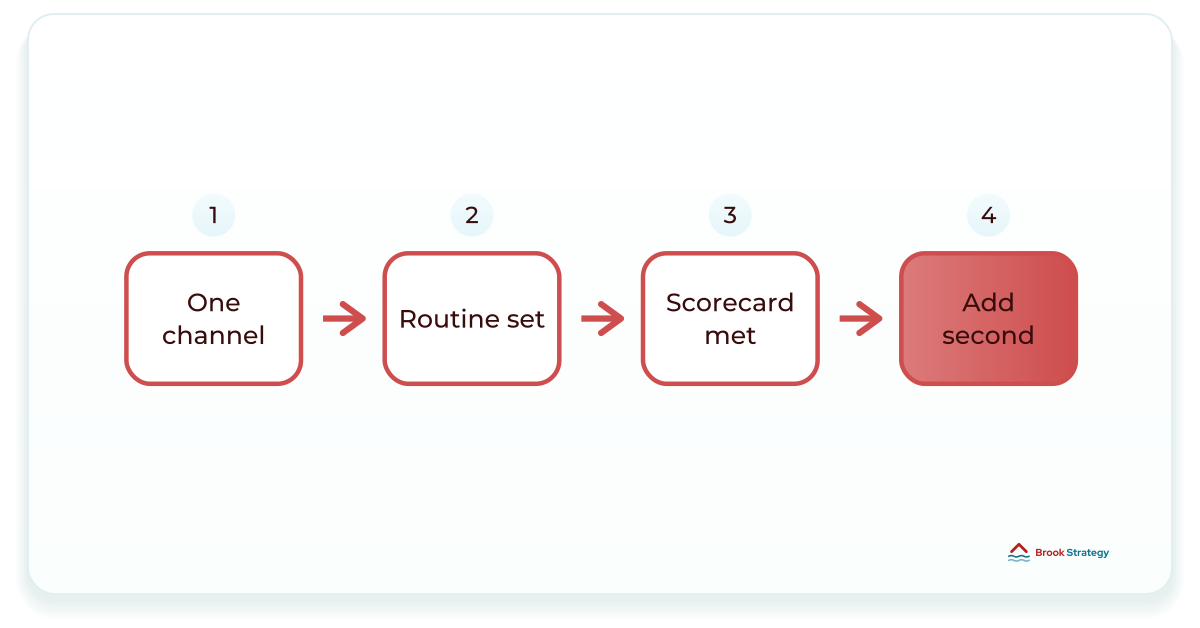
- Do this: write one sentence on why each channel earns its place.
- Avoid this: copying a competitor's channel mix.
4. Own Three Content Themes
A theme is a problem you can discuss with real authority for a year. Three is enough to avoid repetition and few enough to build recognition. When someone asks what your account is about, the answer should come quickly.
Test each theme by asking whether a competitor could post the same content with a different logo. If so, add your own data, your own mistakes or a view you can defend.
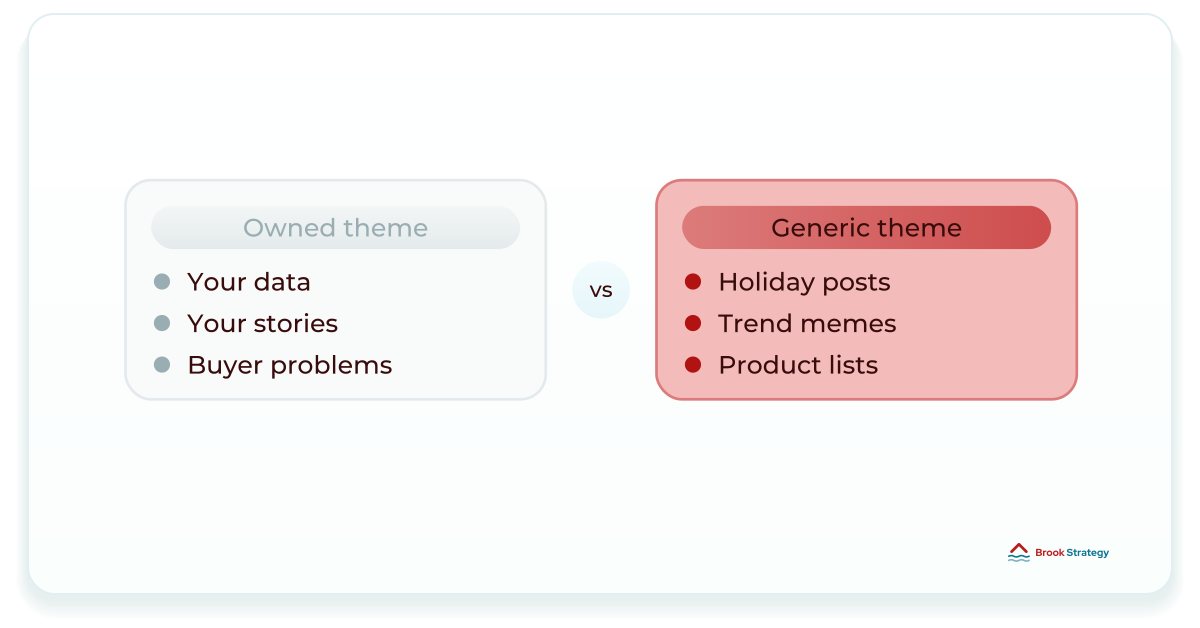
- Do this: include your own numbers, client patterns or opinions in each post.
- Avoid this: reposting industry news with no point of view.
5. Build a Routine Before You Need One
Create a shared calendar, a named owner and an approval path with a time limit. In regulated sectors, bring the compliance reviewer in early and agree which kinds of post need review and which are pre-approved. A late approval is the most common reason a good plan misses its dates.
Batch the work. Writing four posts in one sitting is faster and sounds more consistent than writing one each morning. The social media management tools I compare elsewhere help with scheduling, but the routine comes first.
- Do this: time the path from idea to live post and trim it to five working days.
- Avoid this: relying on one person's memory and motivation.
6. Take Part in Conversations
Posting is half the job. Spend fifteen minutes a day replying to comments, commenting on customers' posts and answering questions. Algorithms reward replies, and buyers notice who answers.
Assign this to a named person with a short list of accounts to follow closely, such as customers, partners and a few analysts. It is a modest time cost with a good return on trust.
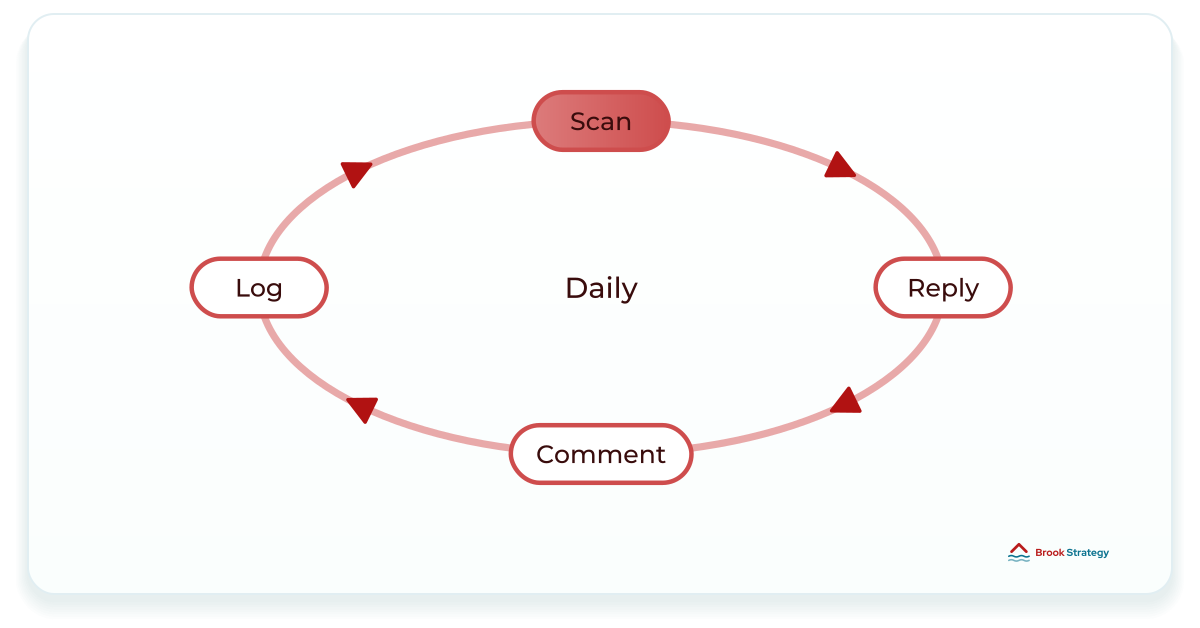
- Do this: reply within one working day and keep answers specific.
- Avoid this: using automated replies that read like automation.
7. Measure What Leads to Revenue
Reach and likes are easy to collect and easy to misread. Add measures that sit closer to money: conversations started, demo requests, clicks to pricing or case pages and pipeline where social appeared in the buyer's path. Keep the vanity measures as context.
Add a field to your lead form asking how people heard about you. It is imperfect, but it often reveals social influence that tracking misses.
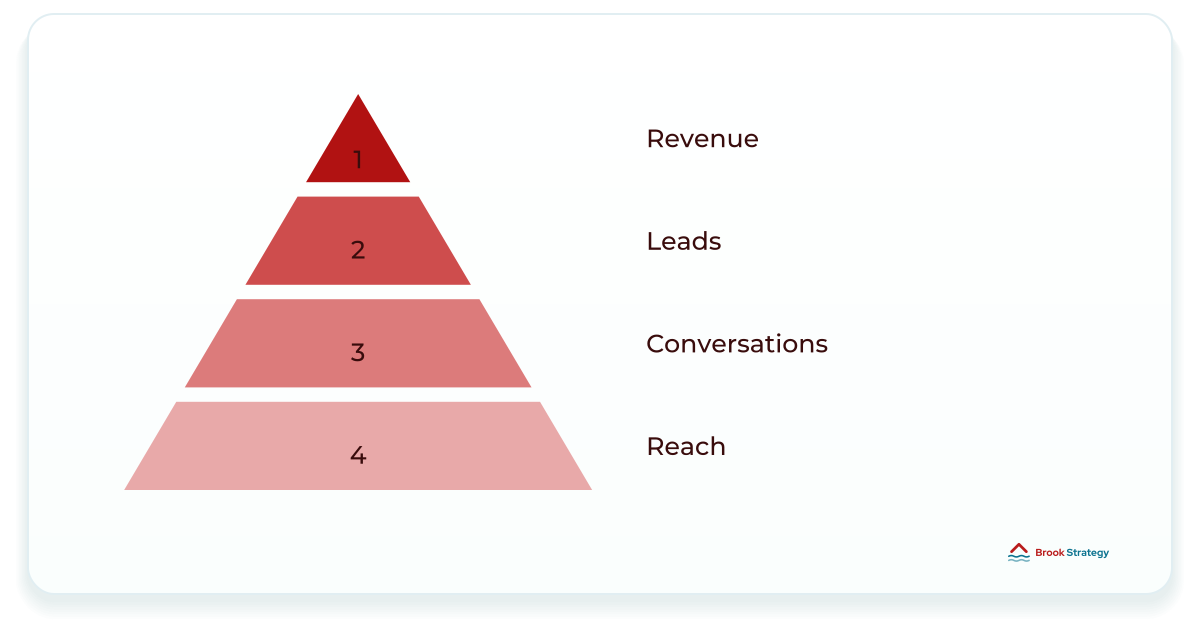
- Do this: report three numbers each month and explain what changed.
- Avoid this: sending a twenty-page analytics export.
8. Review Monthly and Rewrite Quarterly
A plan that nobody revisits turns into a calendar. Hold a 30-minute review each month with one decision at the end: continue, change or stop. Every quarter, rewrite the next three months using what you learned.
The social media strategy checklist works well as the agenda for the quarterly rewrite, because it catches the items teams forget.
- Do this: end every review with a written decision and an owner.
- Avoid this: treating the plan as finished once it is approved.
Making These Habits Work With a Small Team
Most of the teams I advise have one to three people on social media, often alongside other work. For them the eight habits compress into a weekly rhythm. On Monday, check last week's numbers for fifteen minutes and note one learning. Mid-week, write and schedule the next batch of posts. Daily, spend ten minutes on replies and conversations. Once a month, run the review and write the decision down.
That routine totals about five to six hours a week and covers every practice above. When time runs short, cut the number of posts before you cut the review. A smaller number of good posts with an honest review improves over time. A larger number with no review stays the same.
Resist the temptation to fill gaps with generic content. Posts that could come from any company in your market rarely earn replies and train your audience to scroll past you.
Where Good Programs Still Go Wrong
Even teams that follow these habits slip in a few predictable ways. The three I see most are leadership asking for a viral post, a rushed channel launch to match a competitor and a reporting habit that rewards activity over outcome. Each one pulls effort away from the goal.
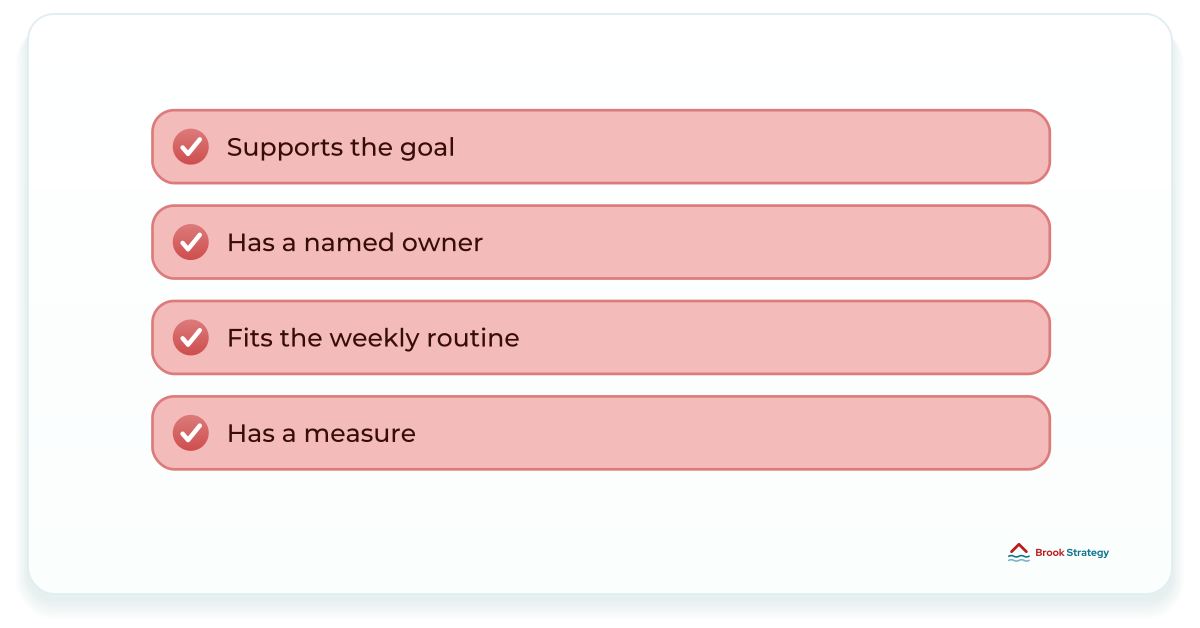
The fix for all three is the same: point back to the written goal. "Does this move our demo request target?" settles more debates than any best-practice list.
Extra Care for Regulated Industries
If you work in financial services or another regulated sector, three practices need an added layer. First, agree with your compliance team which claims are never allowed, which need approval and which are pre-cleared. A short, written list saves days of back and forth. Second, keep an archive of every published post and every reply, since many firms must retain communications. Third, train the people who reply to comments, because a casual answer about a product can create an obligation you did not intend.
None of this needs to slow your account down. Most teams that set up the review path in advance publish at the same pace as unregulated competitors. The ones who skip it end up with a backlog of posts waiting for sign-off, which breaks the routine from practice five.
A Simple Monthly Review Template
Use the same four questions every month so the review stays short. What did we publish, compared with the plan? Which three posts drew the best response, and what do they have in common? What did the numbers say about the goal, and who can act on that? What is the one change we will test next month? Write the answers in a single document and keep every month in the same file. After a year, that file is the most useful strategy document you own.
Choosing Which Habit to Fix First
You do not need to fix all eight at once. Rate yourself honestly on each and start with the weakest link, since that is where effort pays back fastest. As a rough order, I fix goals first, then the routine, then measurement.
| If this sounds like you | Start with |
|---|---|
| We post often but cannot say if it works | Practices 1 and 7 |
| We have gaps and late posts | Practice 5 |
| We have followers but few leads | Practices 2 and 4 |
| We are on many channels and tired | Practice 3 |
Questions About Social Media Strategy Best Practices
What Is the Most Important Social Media Strategy Best Practice?
Tie the work to one business goal you can check. Every other habit, from posting schedules to formats, is easier to judge once you know what the account is for. A page that exists to feed demo requests runs differently from one built to support recruiting.
How Often Should a Business Post on Social Media?
As often as you can keep up with at a standard you are proud of, which for most B2B teams is two to four posts a week on the main channel. Consistency over six months beats a burst of daily posts followed by silence. Check the numbers after eight weeks and adjust.
Should I Be on Every Platform?
No. Pick the one or two where your buyers already spend professional time and do them well. Adding a channel is a decision with a cost in hours, so add one only when the first runs on a routine and has a scorecard.
Is Paid Social Part of a Strategy?
It can be. Paid is useful once you know which organic posts attract the right people, because you can then promote those. Paying to boost posts that have not proven themselves mostly buys reach among people who do not matter.
How Do I Handle Negative Comments?
Reply quickly, in a calm and specific way, and move detailed cases to a private channel. Write a short response guide before you need it, including who can approve a reply in a regulated business. Deleting comments tends to cause a bigger problem than the original one.
How Do I Prove Social Media Is Working?
Agree the measures before you publish. Reach and clicks show interest, while conversations, demo requests and influenced pipeline show impact. Ask new customers and leads how they found you, and add that answer to your CRM.
How Often Should I Review My Strategy?
Look at the numbers monthly and rewrite the plan quarterly. A yearly review is too slow for platforms that change formats several times a year. Keep the review short and finish it with a decision.
Note: This article is general information, not legal, financial or tax advice. Figures and examples are estimates based on typical projects, so check current details with your providers and advisers before you decide.
Was this article helpful?
Thank you for letting us know.
Russell Tennant
Russell leads the Brook editorial team and works with our consultants to turn real client engagements into practical guides on roadmaps, go-to-market planning, growth and competitive strategy. Before joining Brook, he spent 11 years in strategy and product marketing roles at software and financial services companies. He has since edited more than 300 articles on strategy practice and drawn on roadmaps and growth plans from over 100 client projects. He is based in Denver, Colorado.