Key Takeaways
- Plan the roadmap in four phases over twelve months: foundations, pilot, scale and optimize.
- Each phase needs an exit criterion you can check, so progress is measured by evidence and not by dates.
- Fix the biggest leak first, usually customer clarity or qualification, before adding reps or spend.
- Plan the next 90 days in detail and review the rest every quarter.
A strategy that is not sequenced tends to fail in the same way: everything starts at once, nothing finishes and the team is tired by March. A roadmap fixes that by putting the work in an order, with a clear sign for when each stage is done.
The version below is one I have used and adapted in sales strategy consulting engagements. Copy the structure, then change the content to match your own numbers.
The Twelve-Month Plan in One Table
| Phase | Months | Main work | Exit criterion |
|---|---|---|---|
| 1. Foundations | 1 to 2 | Deal review, target profile, value statement, stage definitions | Written profile and stages that reps have reviewed |
| 2. Pilot | 3 to 5 | Run the new approach with a small group of reps or one segment | Pilot win rate and cycle beat the baseline for two months |
| 3. Scale | 6 to 9 | Roll out to the full team, train, adjust compensation, set up tools | Full team on the new process, data complete in the CRM |
| 4. Optimize | 10 to 12 | Tune by segment, add a second channel or segment, plan the next year | Forecast within an agreed margin for two quarters |
Phase 1: Foundations in the First Two Months
Start with evidence, not workshops. Pull twelve to eighteen months of closed deals, sort them by segment and size, and find where you win quickly and where you burn time. Interview a handful of recent buyers and two or three reps who consistently close.
The outputs are small and specific: a target customer profile, a value statement in buyer language, four to six stages with exit rules and a baseline for win rate, cycle and deal size. The profile and stages build on the layers described in my sales strategy framework. If you want the terms explained from scratch, the sales strategy guide is the place to start.
Exit Criterion
Two reps who did not write the documents can explain the target profile and the stage rules from memory. If they cannot, the work is not finished.
Phase 2: Pilot With a Small Group
Resist the urge to switch the whole team at once. Pick two to four reps, or one segment, and run the new approach for about three months. Everyone else continues as before, which gives you a comparison.
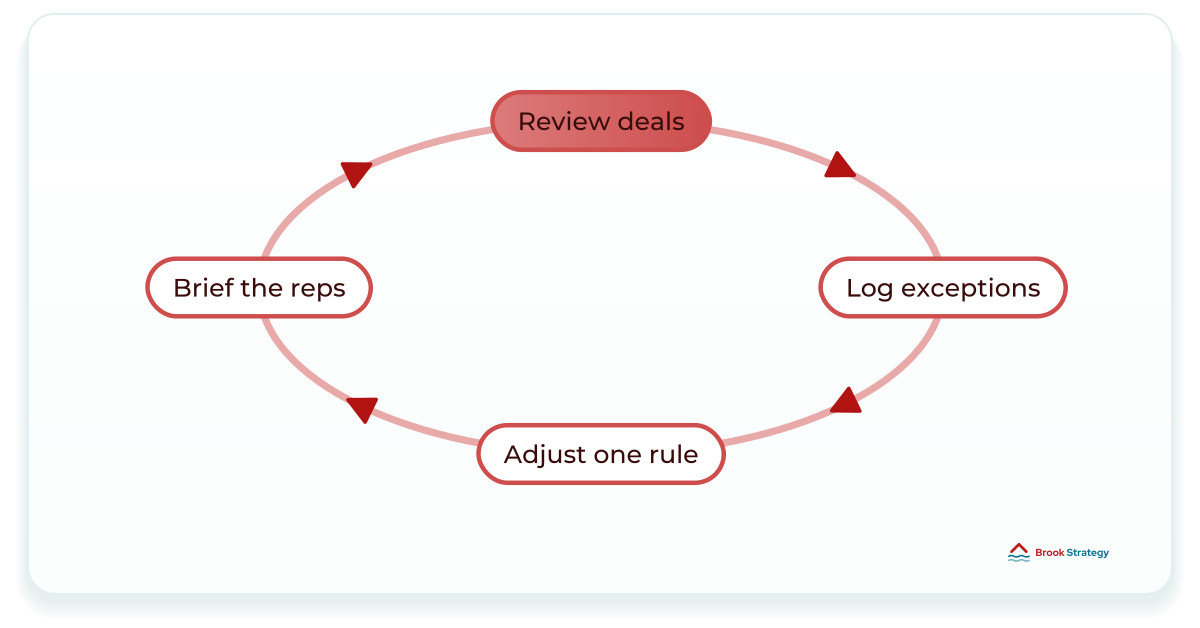
During the pilot, hold a weekly twenty-minute review. Look at deals that moved, deals that stalled and any rule a rep wanted to break. A pattern of requested exceptions shows where the process does not match reality.
Exit Criterion
The pilot group beats the baseline on win rate or cycle length for two consecutive months, with enough deals to mean something. Ten deals is thin; thirty is better.
Phase 3: Scale to the Whole Team
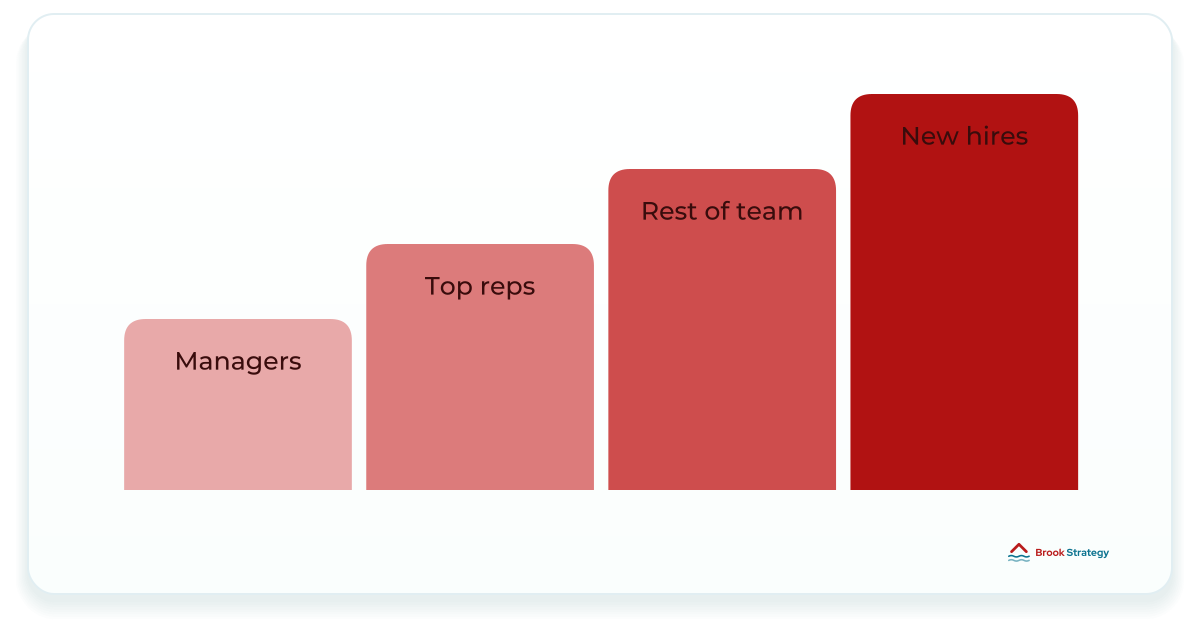
Now the work shifts from design to adoption. Train the rest of the team using pilot reps as coaches, because peers are more convincing than managers. Update the CRM fields and stages so reporting matches the process, and review whether quotas and commissions reward the behavior you want.
Tools come in here, not earlier. If a CRM, sequencing tool or forecasting add-on is part of the plan, my ranking of sales tools covers the main categories. Buy for the process you now have, and keep the number of tools low, since each one adds data entry for reps.
Exit Criterion
All reps use the same stages, and 90 percent of open deals have complete data. Your forecast is built from the CRM and not from a spreadsheet kept on the side.
Phase 4: Optimize and Plan the Next Year
With a stable process, you can tune. Break win rate and cycle down by segment, source and rep, and look for the biggest gap. Add a second segment or channel only if the first one runs well without constant attention.
This is also the time to write next year's roadmap while you still remember what slowed you down. If the plan involves entering a new product line or region, a separate piece of go-to-market work usually pays off, since the questions differ from tuning an existing motion.
Exit Criterion
Forecast accuracy stays within a margin agreed with finance for two quarters in a row, and the next year's roadmap is approved.
The First 90 Days, Week by Week
The next quarter deserves more detail than the rest of the year. A rough weekly outline keeps phase 1 and the start of the pilot from drifting, and it shows early whether the year is realistic.
| Weeks | Work | Result |
|---|---|---|
| 1 to 2 | Export deals, clean the data, set baseline numbers | Baseline for win rate, cycle and deal size |
| 3 to 4 | Interview five buyers and three reps, sort deals by segment | Draft target profile and reasons for winning |
| 5 to 6 | Write the value statement and the stage rules, review with reps | Version 1 of both documents |
| 7 to 8 | Set up CRM stages, choose pilot group, brief managers | Pilot ready to start |
| 9 to 12 | Run the pilot, hold weekly reviews, log exceptions | First four weeks of pilot data |
If weeks 1 and 2 take longer than planned, the cause is nearly always messy CRM data. Do not wait for perfect data. A baseline from the cleanest 70 percent of deals is better than a delay of a month.
What Each Phase Costs in Time and Money
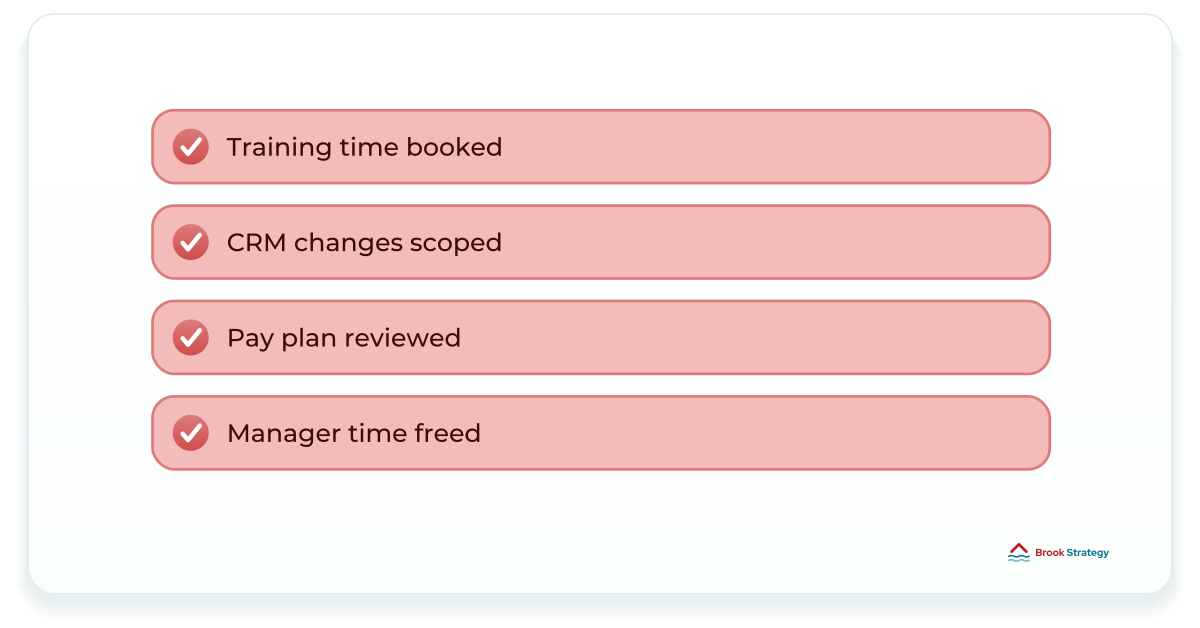
Phases differ in how they use people and cash. Foundations cost mostly time from the head of sales and a few reps, perhaps a fifth of their week for two months. The pilot costs the time of the pilot group in extra reviews, plus any tool trial. Scale is the expensive one: training, CRM changes and possibly new hires. Optimize returns to a light load.
Plan for scale to take the largest share of the budget, and resist adding headcount before the pilot proves the process. Hiring reps into a process that is still being written means training them twice.
Who Owns Each Phase
Every phase needs one name next to it. Shared ownership works on paper and fails in the first busy month.
| Phase | Owner | Needs input from |
|---|---|---|
| Foundations | Head of sales | Marketing, finance, two top reps |
| Pilot | Sales manager of the pilot group | Head of sales, sales operations |
| Scale | Sales operations or enablement lead | All managers, IT for the CRM |
| Optimize | Head of sales | Finance, customer success |
Where Roadmaps Slip, and What to Do About It
Almost every roadmap I see slips somewhere, and the delay is rarely the work itself. It tends to be a dependency nobody listed: a CRM change waiting on IT, a compensation change waiting on finance, a key manager out on leave during the pilot.
Add a short risks line to each phase naming the one or two dependencies most likely to hold it up, and ask the owner to confirm them before the phase starts. When a phase slips anyway, move later dates by the same amount and tell the team why.
Signals That Tell You the Roadmap Is Working
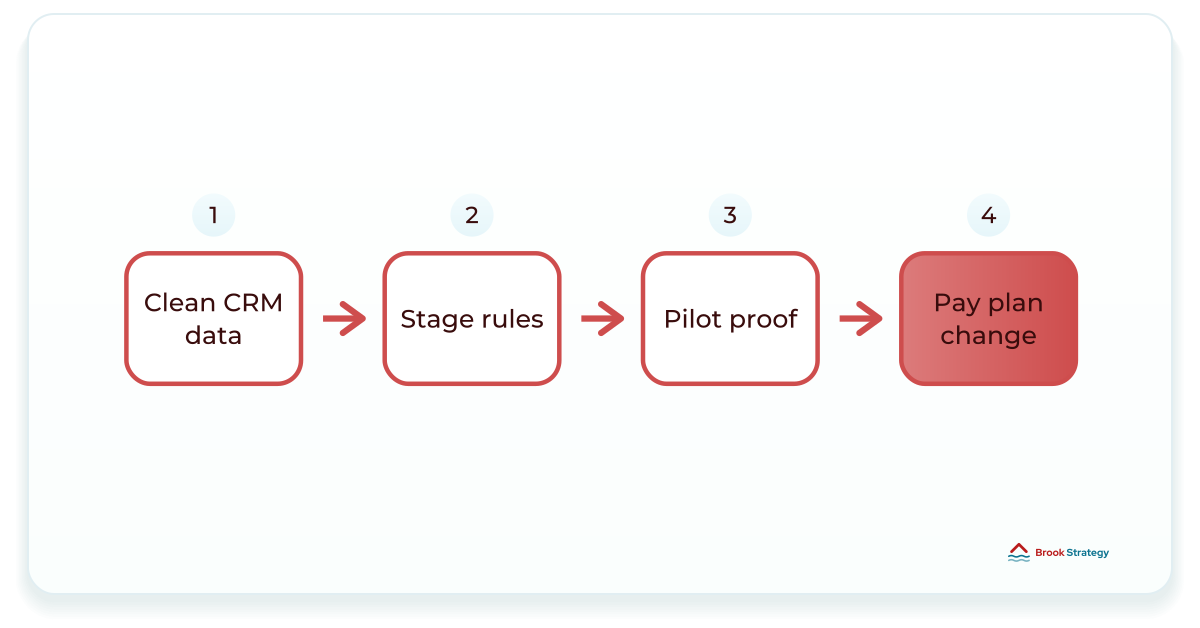
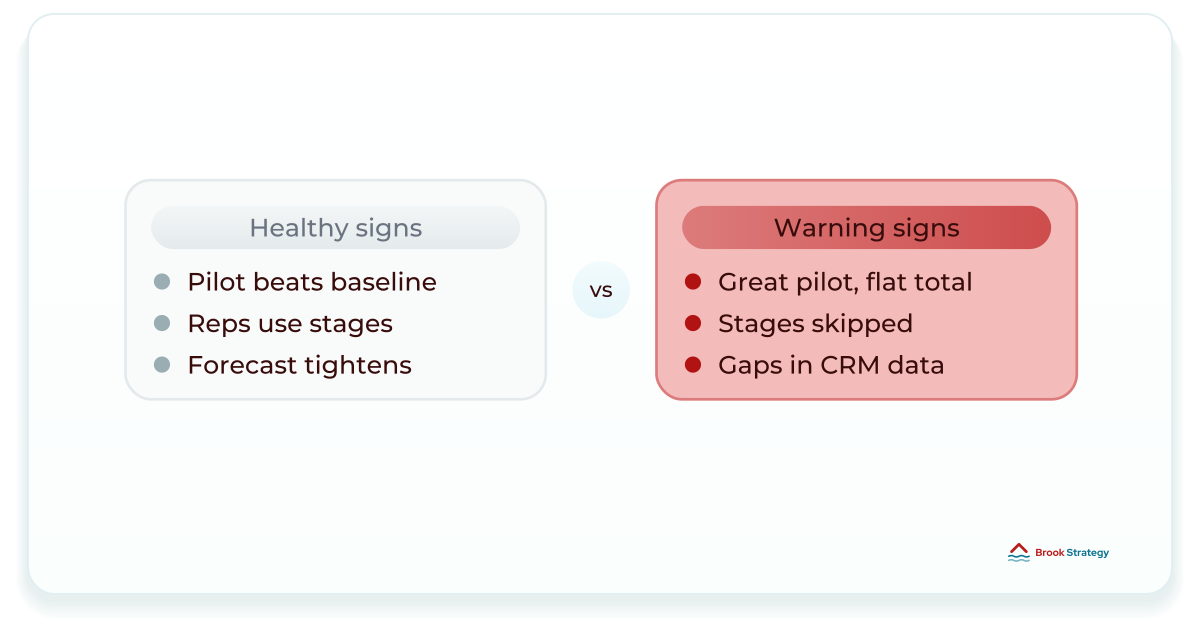
Results lag the work, so you need earlier signs. In the pilot, watch whether reps use the new stage rules without reminders, whether the share of deals with complete data rises each week and whether deals leave the early stages faster. Win rate comes later, often after one full sales cycle.
A useful habit is a monthly one-page review with three parts: what moved, what did not and what changes next month. Keep it to ten minutes. In my experience, teams that keep this review going through the scale phase hold on to the gains, and teams that drop it drift back to old habits within two quarters.
Also watch for the opposite signal. If the pilot looks great but you cannot explain why, be careful. Luck, a seasonal bump or an unusually strong rep can all look like process gains, so check the result against deals outside the pilot before you roll it out.
Finally, keep one page of decisions you have postponed on purpose, such as a new region or a second product. Writing them down stops them from creeping into the current phase, and gives you a ready list when the next roadmap starts.
Adapting the Roadmap to a Small Team
If you have fewer than five reps, merge the pilot and scale phases and run the new process with everyone after a one-month trial on a subset of deals. Twelve months compresses to about eight. A shorter version of the same ideas lives in my guide to sales strategy for small business.
How to Choose Your Starting Phase
Not every company begins at phase 1. Use these checks to place yourself.
- No written target profile or stage rules: start at phase 1.
- Written rules exist but only some reps follow them: start at the pilot or scale phase.
- Everyone follows the process but results vary by segment: go to optimize.
- Results are fine and a new market is the next step: plan it as its own roadmap.
If you are unsure which row describes you, a short outside review of your last quarter of deals often settles it in a week.
Questions About Building a Sales Strategy Roadmap
What Is a Sales Strategy Roadmap?
A sales strategy roadmap puts your strategy on a calendar. It lists the phases of work, what each phase should produce, who owns it and what has to be true before the next phase starts. It turns a document of intentions into a sequence a team can run.
How Long Should a Sales Strategy Roadmap Cover?
Twelve months is the most useful span for most teams, split into four phases, with the next 90 days planned in detail. Beyond a year, too many things change for dates to mean much.
How Is a Roadmap Different from a Sales Plan?
A sales plan holds targets and quotas. A roadmap holds the order of initiatives that make those targets reachable, such as fixing qualification before hiring reps. You need both, and the roadmap should come second.
What Should Come First on the Roadmap?
Whatever fixes your biggest leak. In my client work that is usually target-customer clarity or qualification, because adding reps or leads to a weak front end only multiplies waste.
Who Should Approve the Roadmap?
The head of sales owns it, and finance and marketing sign off on the parts that need their budget or people. A short review with two or three reps before approval catches practical problems early.
How Often Should I Update the Roadmap?
Review it monthly and rewrite the next phase at each quarter end. Do not rewrite everything every month, or the team stops believing in dates.
What If a Phase Runs Late?
Check the exit criteria, not the calendar. If the work is half done, extend the phase and move later dates by the same amount. If the work stalled because the goal was wrong, replace the goal and say so openly.
Note: This article is general information, not legal, financial or tax advice. Figures and examples are estimates based on typical projects, so check current details with your providers and advisers before you decide.
Was this article helpful?
Thank you for letting us know.
Russell Tennant
Russell leads the Brook editorial team and works with our consultants to turn real client engagements into practical guides on roadmaps, go-to-market planning, growth and competitive strategy. Before joining Brook, he spent 11 years in strategy and product marketing roles at software and financial services companies. He has since edited more than 300 articles on strategy practice and drawn on roadmaps and growth plans from over 100 client projects. He is based in Denver, Colorado.