Key Takeaways
- A small business wins on focus: one customer type, one pitch and one main channel.
- Most small deals are lost to silence, so a fixed follow-up habit pays back fast.
- Five numbers in a spreadsheet beat a CRM you do not have time to maintain.
- Fix unclear pricing and messaging before you spend more on finding leads.
A small business has no sales operations team, no enablement budget and often no one whose only job is selling. The owner, a manager and a couple of staff sell between other tasks. That changes what a good strategy looks like: it has to be short, cheap and easy to keep up in a busy week.
These are the seven moves I recommend most in sales strategy consulting work with small teams. Each has a do this and an avoid this, and none needs special software.
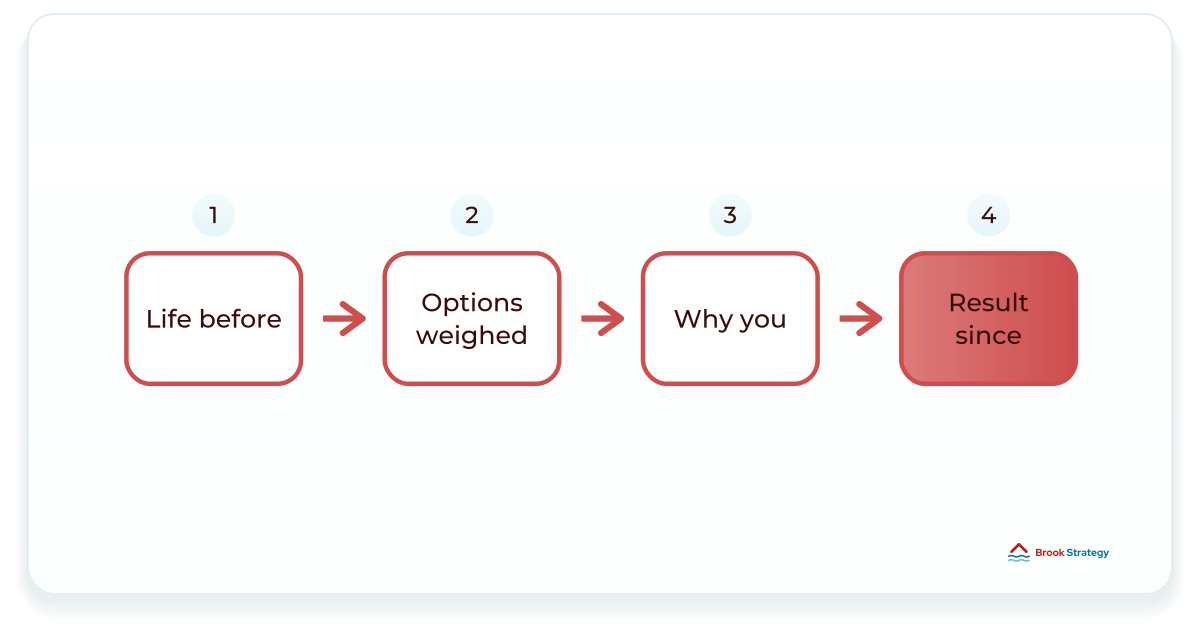
Seven Simple Wins and What to Avoid
Start at the top and work down. The order matters, because the later moves depend on the earlier ones.
| Move | Time to set up | Cost |
|---|---|---|
| 1. One customer type | An afternoon | Free |
| 2. Customer interviews | One week | Free |
| 3. Three-line pitch | An hour | Free |
| 4. One main channel | Ongoing, weekly | Varies |
| 5. Follow-up habit | One hour | Free |
| 6. Five numbers | An hour | Free |
| 7. Clear pricing | A few days | Free |
1. Name One Customer Type and Say No to the Rest
Do this: Pick the customer type that has bought from you most easily, and write it in two sentences: who they are and what problem pushed them to buy. Check your last ten wins for the pattern.
Avoid this: Taking every inquiry because revenue feels scarce. Mismatched customers eat hours, ask for discounts and rarely refer anyone.
2. Ask Past Customers for the Reason They Chose You
Do this: Call or email five recent buyers and ask what made them pick you over the alternatives. Their answers become your pitch, and they are usually shorter and plainer than the ones on your website.
Avoid this: Guessing your strengths from inside the business. Owners tend to name what they find hard, and buyers name what felt easy.
3. Write a Three-Line Pitch Everyone Uses
Do this: Line one names the problem, line two the result you deliver, line three the proof, such as a named type of customer and a number. Put it on the website, in emails and in the voice of every person who sells.
Avoid this: Letting each person improvise. Inconsistent messages make you look like three different companies.
4. Pick One Main Channel and Do It Weekly
Do this: Choose the channel where your customers already look for help: referrals, local search, LinkedIn, a trade show or outbound email. Set a weekly quota of actions and keep it for 90 days before judging.
Avoid this: Trying five channels for two weeks each. Most channels need months before the data means anything.
5. Make a Simple Follow-Up Habit
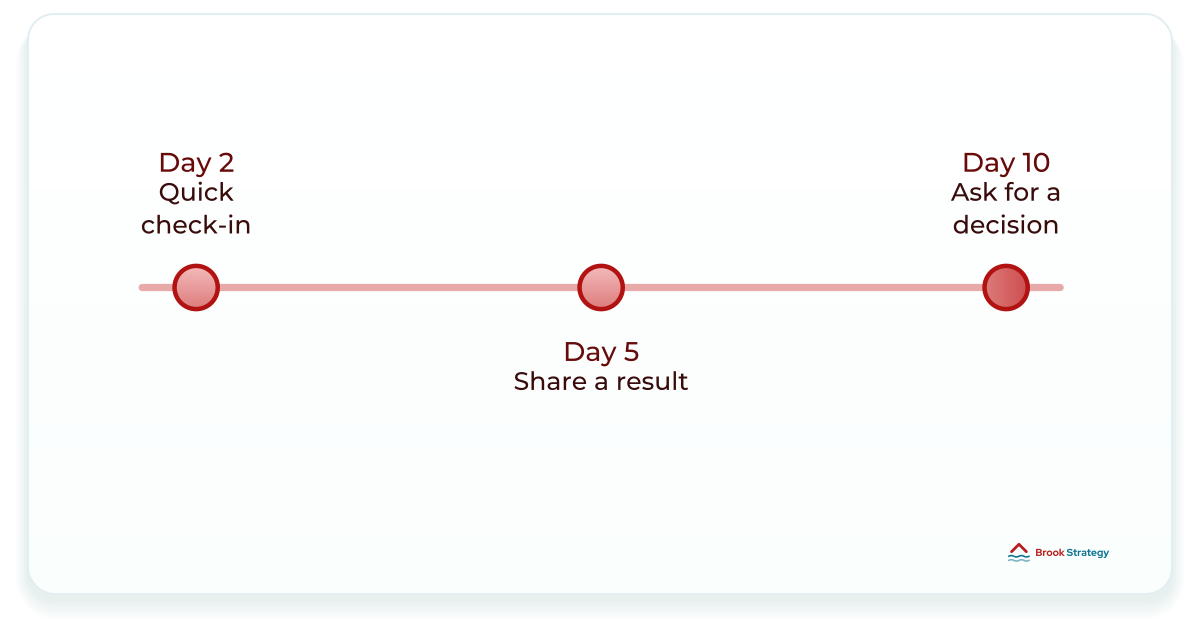
Do this: Most small deals are lost to silence, not rejection. After every quote, set a reminder for two, five and ten days later with a different note each time: a question, a useful example and a direct ask.
Avoid this: Waiting for the customer to come back. They are busy and will often forget you before they say no.
6. Track Five Numbers in a Spreadsheet
Do this: Leads per week, meetings booked, quotes sent, deals won and average deal size. A shared sheet is fine until you have more than a few hundred contacts. Look at it every Friday for ten minutes.
Avoid this: Buying a complex CRM before the process exists. You end up paying for features nobody has time to learn.
7. Fix Your Pricing Page Before Adding Leads
Do this: If prospects ask for a quote every time, your pricing may be unclear. Show a starting price or a clear package list so the right buyers can say yes themselves and the wrong ones leave early.
Avoid this: Hiding all prices to keep options open. Buyers often assume the worst and move on.
Why Focus Beats Reach for a Small Team
Large competitors can afford to spread across segments and channels. You cannot, and you do not need to. A customer type you understand well produces a sharper pitch, quicker qualification and better referrals, and those three things compound.
If you are choosing between two segments, pick the one with the shorter sales cycle and the more repeatable need. A plumber with a steady maintenance base can often build reliable revenue faster than one chasing large one-off projects. The same logic applies to agencies, software firms and local service businesses.
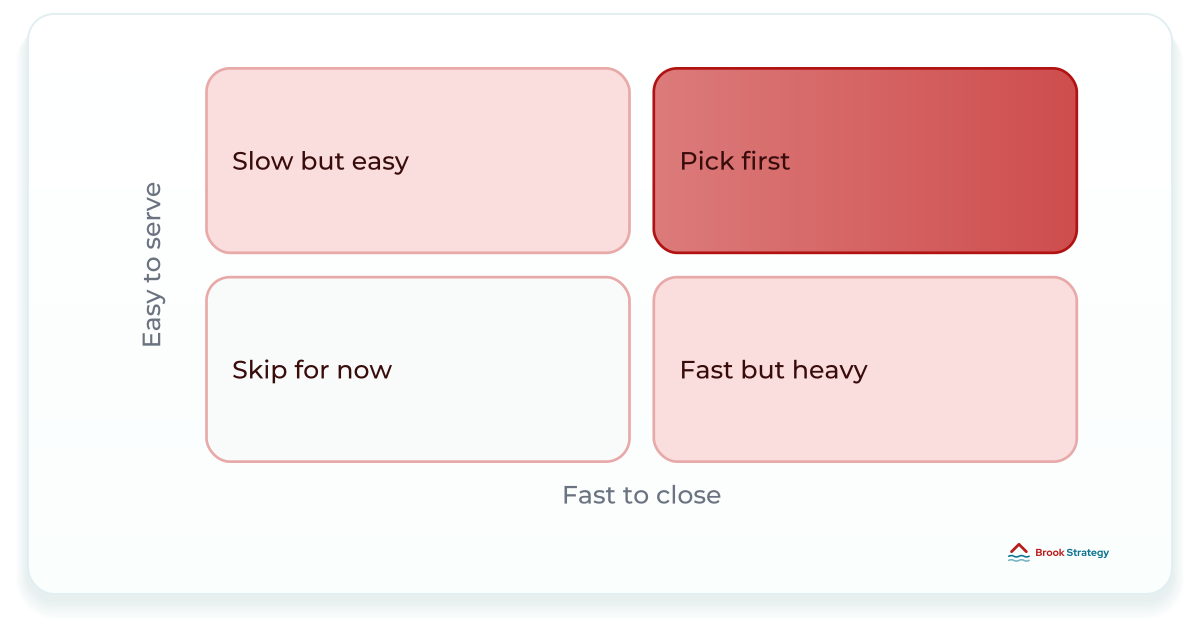
A Weekly Rhythm for a Team That Also Does the Work
Most small teams do not fail at sales for lack of ideas. They fail because selling gets pushed behind delivery every busy week. A fixed rhythm protects it.
- Monday, 30 minutes: pick the week's outreach targets and send the first batch.
- Wednesday, 20 minutes: follow up on open quotes and replies.
- Friday, 10 minutes: update the five numbers and note one thing to change.
That is about an hour a week and a fraction of the time most owners lose to unplanned sales chatter. If this feels too light, add volume only after a month of steady results.
A Small Example: A Four-Person Design Studio
Picture a four-person design studio that took any project that came in. Revenue was fine in good months and thin in slow ones, and the owner spent evenings writing proposals that rarely closed. A quick look at past work showed that most of the profitable projects came from regional healthcare practices and came by referral.
The studio made three changes. It named healthcare practices as its customer type, wrote a three-line pitch around patient-facing websites that book more appointments, and set one weekly habit: ask two past clients for an introduction. It also put a starting price on its website. Proposal requests dropped, and the ones that remained were mostly good fits.
Nothing here needed software or a budget. What changed was the choice of customer and the consistency of the habit, which is exactly where small teams have the edge.
Where to Spend Money, and Where Not Yet
Cash is tight in a small business, so spend where a result is easy to trace. A website that states your customer type, price and next step is usually the best first investment, because every channel sends people to it. Next comes a simple CRM or shared sheet once you pass about fifty active contacts.
Hold off on paid advertising until your pitch converts when you talk to people directly. Ads multiply whatever message you have. If the message is vague, you pay to confirm it. Also hold off on large events and expensive tools until you know which channel brings your best customers.
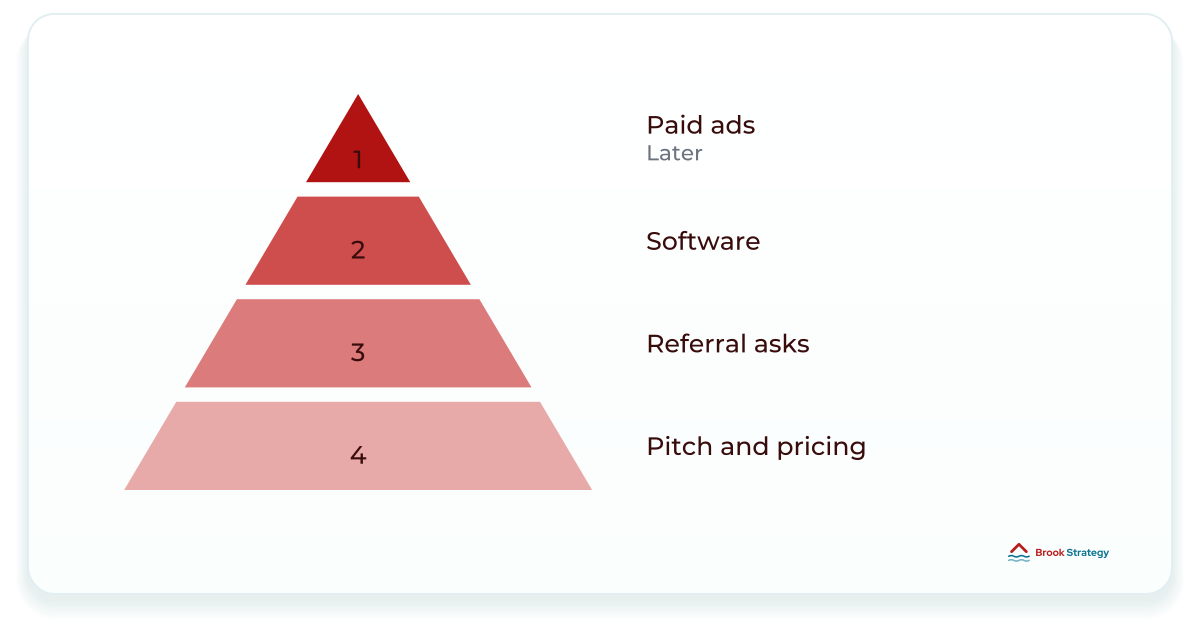
A useful check is the payback test. For any spend, write down how many extra customers it must bring to pay for itself. If the number seems unlikely, wait.
When the Owner Is the Only Seller
Many small businesses depend on one person who sells, delivers and handles the books. That person has a particular risk: sales activity stops when delivery gets busy, and a gap of a month in outreach shows up as a gap in revenue two or three months later.
The fix is to protect a small block of selling time the way you would protect a client meeting. Put it in the calendar, treat it as fixed and move delivery around it. If you have a team member who is good with people, hand them the first-touch conversations and keep your own time for closing.
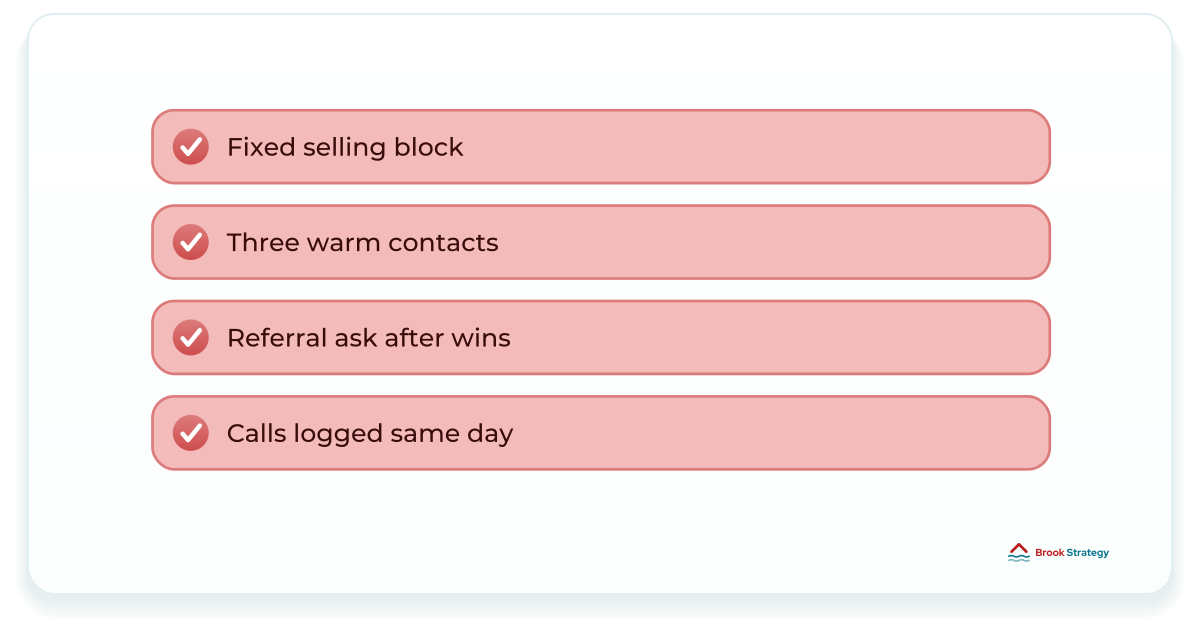
It also helps to keep a short list of three to five warm contacts at all times: people who have shown interest but are not ready to buy. A monthly message with something useful, such as a short result from a recent project, keeps you in mind without being pushy.
Last, ask for referrals on purpose. Right after a project goes well, ask the customer who else they know with the same problem. Most small businesses get a large share of new work this way, and almost none of them ask in a planned manner.
When to Move From Habits to a Real Plan
The seven moves carry you a long way. Signs that you need more structure include more than three people selling, deals that regularly stall for the same reason and an owner who is still the only closer after a year. At that point, the layers in my sales strategy framework give you a way to formalize what is working.
For a first-time owner who wants the vocabulary explained, the sales strategy guide covers the basics. When you are ready to plan a full year, the sales strategy roadmap sequences the work. The wider planning questions for a growing business sit under small business strategy consulting.
Picking a Place to Begin This Month
You do not need all seven at once. Match your biggest symptom to the move that addresses it.
| What you notice | Start with |
|---|---|
| Lots of inquiries, few buyers | Move 1 and move 7 |
| Prospects say they will think about it | Move 3 and move 5 |
| Revenue swings month to month | Move 4 and move 6 |
| You cannot say why customers pick you | Move 2 |
When the habits work and you want to choose software, I keep a ranked list of sales tools with free and paid options.
Questions About Sales Strategy for Small Business
What Is the Best Sales Strategy for a Small Business?
The best one is narrow: one customer type, one clear offer and one main channel, run consistently for a full quarter. Small teams win by focus, because they cannot outspend larger competitors on reach.
Do I Need a Sales Team to Have a Sales Strategy?
No. A solo owner who sells needs a strategy even more, since time is the scarcest resource. The same questions apply: who to sell to, what to say, where to find them and how to follow up.
How Much Should a Small Business Spend on Sales?
It varies a lot by industry and margin, so I avoid quoting a fixed share. Start by working out what a new customer is worth over a year, and what you can afford to pay to win one while still earning a profit.
Should I Hire a Salesperson or an Outside Consultant First?
If you have no written process and have never tracked results, a short consulting engagement usually comes first, because a new hire needs a process to follow. If your process works and you lack hands, hire.
How Long Before a New Sales Approach Shows Results?
Expect leading signs such as more meetings in four to six weeks, and revenue after one full sales cycle. A business that closes deals in two weeks will see results sooner than one with a three-month cycle.
Which Tools Does a Small Business Need?
A shared spreadsheet or a simple CRM, an email tool and a calendar link cover most needs. Add more only when a specific problem costs you deals. My list of sales tools shows options by size and budget.
Is Cold Outreach Worth It for a Small Business?
It can be, when your target customer is easy to identify and your offer fits in two sentences. Keep volume low, personalize each message and measure replies, not sends.
Note: This article is general information, not legal, financial or tax advice. Figures and examples are estimates based on typical projects, so check current details with your providers and advisers before you decide.
Was this article helpful?
Thank you for letting us know.
Russell Tennant
Russell leads the Brook editorial team and works with our consultants to turn real client engagements into practical guides on roadmaps, go-to-market planning, growth and competitive strategy. Before joining Brook, he spent 11 years in strategy and product marketing roles at software and financial services companies. He has since edited more than 300 articles on strategy practice and drawn on roadmaps and growth plans from over 100 client projects. He is based in Denver, Colorado.