Key Takeaways
- The roadmap has four phases: foundation, selection, testing, and scaling with a reset.
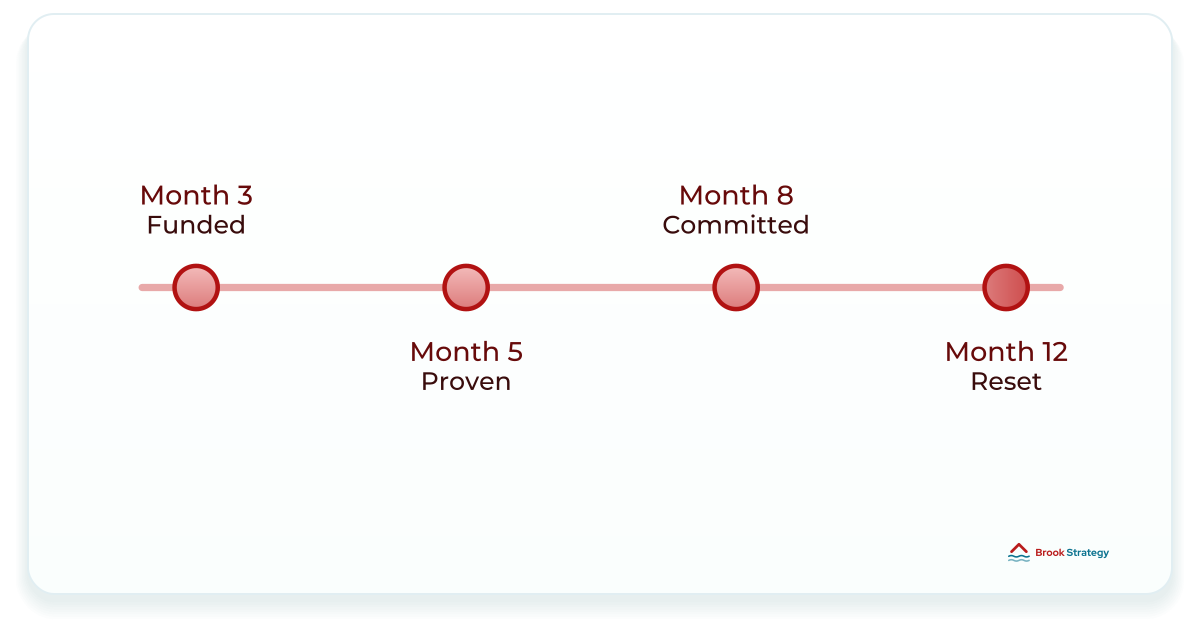
- Two stage gates, around months five and eight, decide whether each bet continues.
- A fixed meeting rhythm of monthly check-ins and quarterly reviews keeps the plan moving.
- Release budget in stages, and move the date of a milestone before you lower the evidence bar.
An innovation strategy roadmap puts dates on the choices in your strategy. It shows which bets start when, what evidence each must produce by which date and when leaders meet to decide. Without it, innovation work slips behind urgent tasks and the first review never happens.
The roadmap below covers twelve months in four phases, with milestones you can copy. It assumes you already have a list of ideas and a sponsor. For help building one around your own company, innovation strategy consulting is built for this, and if you have no scored ideas yet, start with the innovation strategy framework and come back.
The 12-Month Roadmap at a Glance
The table gives the phases, the milestones and the decision at the end of each. Timelines are typical for a mid-sized company and move with your size.
| Phase | Months | Main milestones | Decision at the end |
|---|---|---|---|
| 1. Foundation | 1 to 2 | Sponsor named, arenas agreed, idea list built, scoring method set | Approve the arenas and the scoring rules |
| 2. Selection | 3 | Ideas scored, portfolio chosen, stage budgets set | Fund three to five bets |
| 3. Testing | 4 to 8 | First-stage tests run, evidence reviewed at two gates | Go, change or stop each bet |
| 4. Scaling and reset | 9 to 12 | Winning bets handed to the core business, new bets added, scorecard published | Plan the next year |
Phase 1: Foundation (Months 1 to 2)
Start by naming the sponsor. This is the executive who protects the budget and makes final decisions at gates. Without a sponsor, the roadmap has no authority. Agree the arenas, meaning the two or three areas where you will search for growth, and write down the areas you will leave alone.
In parallel, build the idea list. Interview ten to fifteen people across sales, support, product and leadership, and add a small number of customer calls. Choose the scoring method in these weeks as well, and test it on five ideas. The milestone is a one-page agreement signed by the sponsor.
Phase 2: Selection (Month 3)
Score every idea with the same method and bring the top ten to a decision workshop of about three hours. Leaders see the scores, the assumptions behind them and the cheapest test for each idea. The workshop ends with a portfolio of three to five bets.
Set a small first-stage budget and a named owner for every bet. The milestone is a written portfolio with owners, budgets, first experiments and the evidence that will unlock the next stage. This is also the moment to choose your tracking tool. My ranking of innovation strategy tools compares free and paid options for this job.
Phase 3: Testing (Months 4 to 8)
This phase is where most of the learning happens. Each bet runs small experiments: customer interviews, prototypes, pilot offers or landing pages. The first gate falls around the end of month five, and it asks whether the problem is real and large enough. The second gate comes near month eight and asks whether customers will pay or commit.
Hold a monthly check-in of thirty minutes with the sponsor. Each bet owner reports on three things: what they tested, what they learned and what they will test next. Stop rules agreed in Phase 2 apply here without exceptions. Real examples of how companies handled this are in my innovation strategy examples.
| Gate | Question | Typical evidence | Possible outcomes |
|---|---|---|---|
| Gate 1 (about month 5) | Is the problem real and big enough? | Interviews with 15 to 20 target customers, a sized market | Go, change focus or stop |
| Gate 2 (about month 8) | Will customers pay or commit? | Pilot sign-ups, letters of intent or paid pilots | Scale, test again or stop |
The evidence in the table is an example. Set the exact numbers with your sponsor and finance lead in Phase 2, and keep them fixed for the year.
Phase 4: Scaling and Reset (Months 9 to 12)
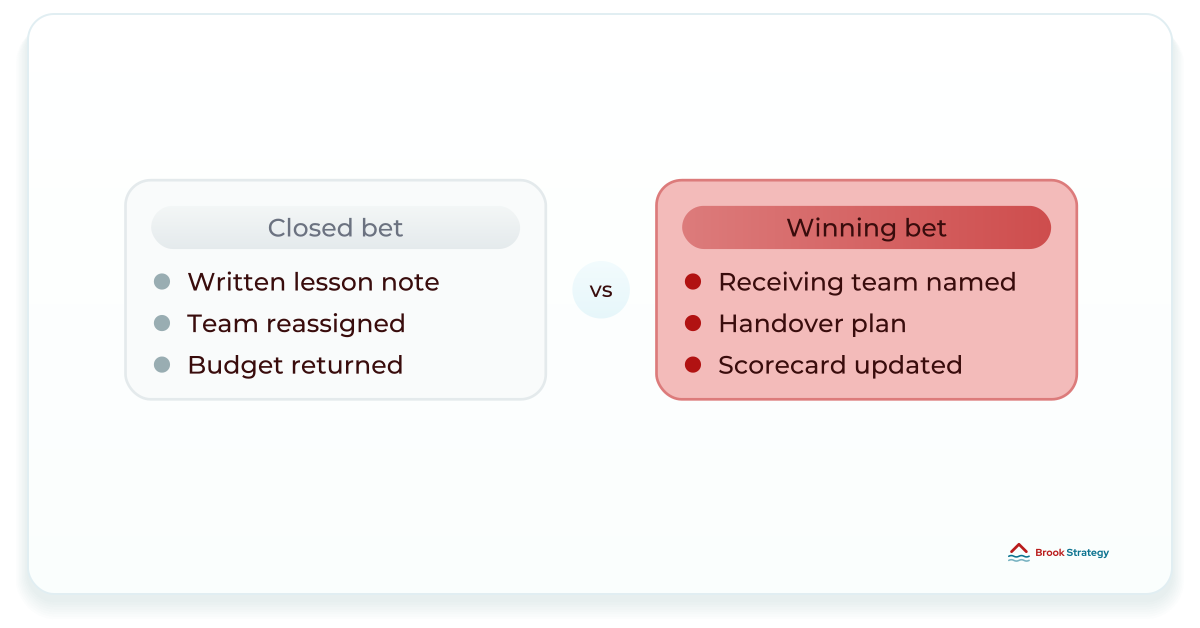
Bets that pass the second gate move out of the innovation portfolio and into the core business. This is where many roadmaps fail. Name the receiving team, agree the handover and move the budget with the bet. A pilot without a home in the core business tends to fade after the demo.
Bets that fail are closed with a written note on what was learned. Replace them with new bets from the scored list, and publish a scorecard to the leadership team: tests run, evidence found, money used and revenue from new offers. Use those numbers to plan the next year.
The Meeting Calendar That Keeps It Moving
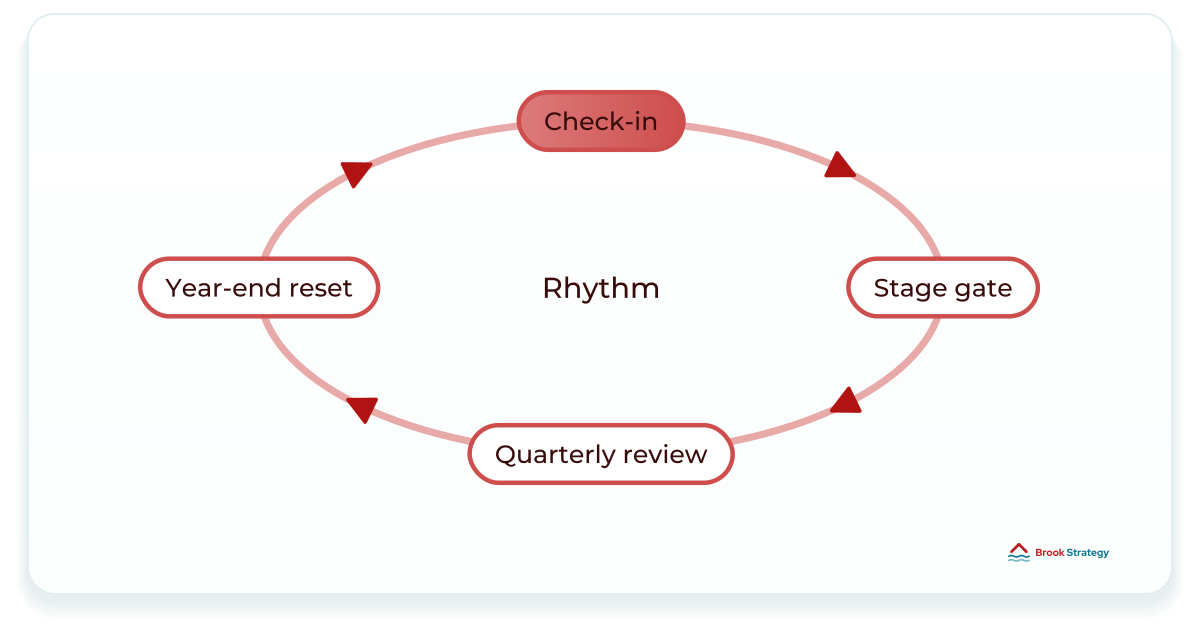
A roadmap lives or dies on its rhythm. These are the meetings I put on the calendar on day one.
| Meeting | How often | Who attends | Purpose |
|---|---|---|---|
| Bet check-in | Monthly, 30 minutes | Sponsor and bet owners | Progress, blockers and next tests |
| Stage gate | At each gate | Sponsor, finance partner, bet owner | Go, change or stop decision |
| Portfolio review | Quarterly, 2 hours | Leadership team | Rebalance bets and budget |
| Year-end reset | Once a year, half a day | Leadership team | Set arenas and budget for next year |
A Sample Year for a Mid-Sized Company
To make the phases concrete, here is a sample year for a software company with about 300 staff. The dates and bets are illustrative, not a client record. In January, the CEO becomes sponsor and the leadership team agrees two arenas. By the end of February, the portfolio owner has interviewed twelve people and listed thirty-five ideas.
In March, scoring cuts the list to eight, and a three-hour workshop picks four bets. April to June is testing: a pricing pilot with twenty customers, a partner programme with three resellers, interviews for a new customer segment and a prototype of a reporting add-on. The first gate in June stops the segment idea, because interviews show the problem is not painful enough, and it changes the add-on, which customers liked but wanted in a different format.
The second gate in September sends the pricing option to the core business and asks the partner programme for another quarter of proof. In the last quarter, the team hands over the pricing bet to the product and finance leads, adds two new bets from the scored list and presents a scorecard to the board. Nothing in the year was dramatic, and that is the idea: steady evidence, decided on schedule.
The Risks Most Likely to Hit Each Phase
Every phase has a typical failure. Knowing it in advance lets you plan around it.
| Phase | Typical risk | How to reduce it |
|---|---|---|
| Foundation | The sponsor is too busy to make decisions | Get calendar time for gates before you start |
| Selection | Leaders push pet ideas past the scoring | Publish the scores and the assumptions to everyone |
| Testing | Tests grow into full projects | Cap each test at a fixed budget and time |
| Scaling | No team wants to take over a winning bet | Name the receiving team in Phase 2 |
How to Phase the Budget
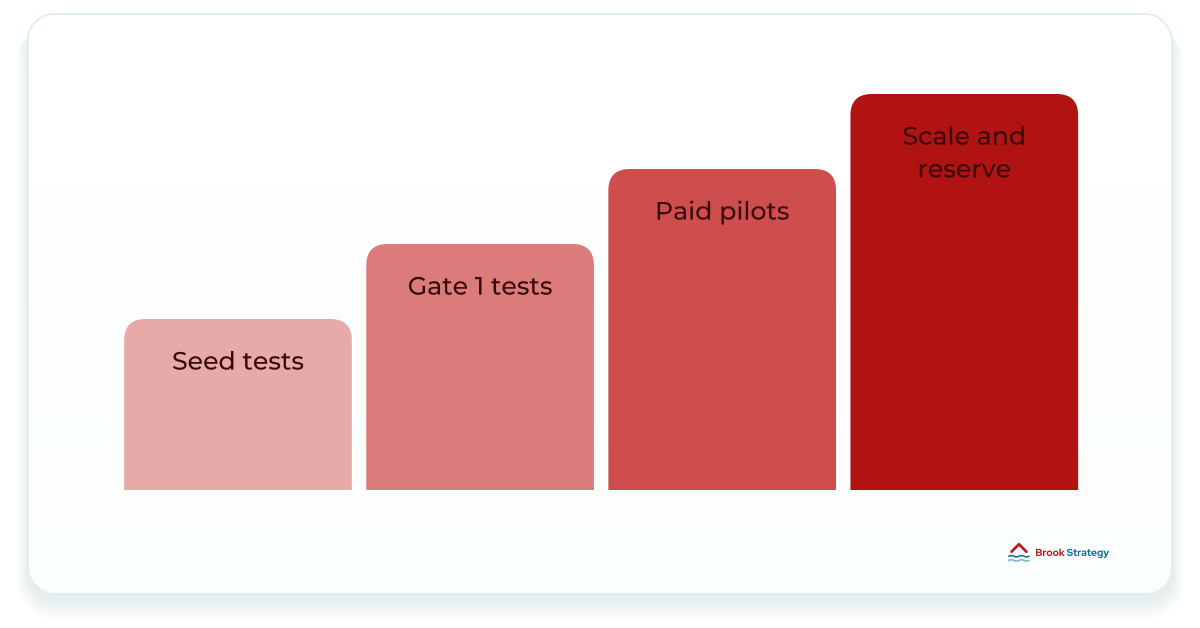
Release money in line with evidence. A common pattern is to give each bet a small first-stage budget, a larger second-stage budget if it passes the first gate and a growth budget only after the second. The share of your total innovation budget that goes into each stage will depend on your size and risk appetite, so agree it with your finance lead.
Keep a reserve for the bets that surprise you. Setting aside part of the budget for later in the year lets you back a bet that moves faster than planned instead of waiting for the next cycle.
What to Do When the Timeline Slips
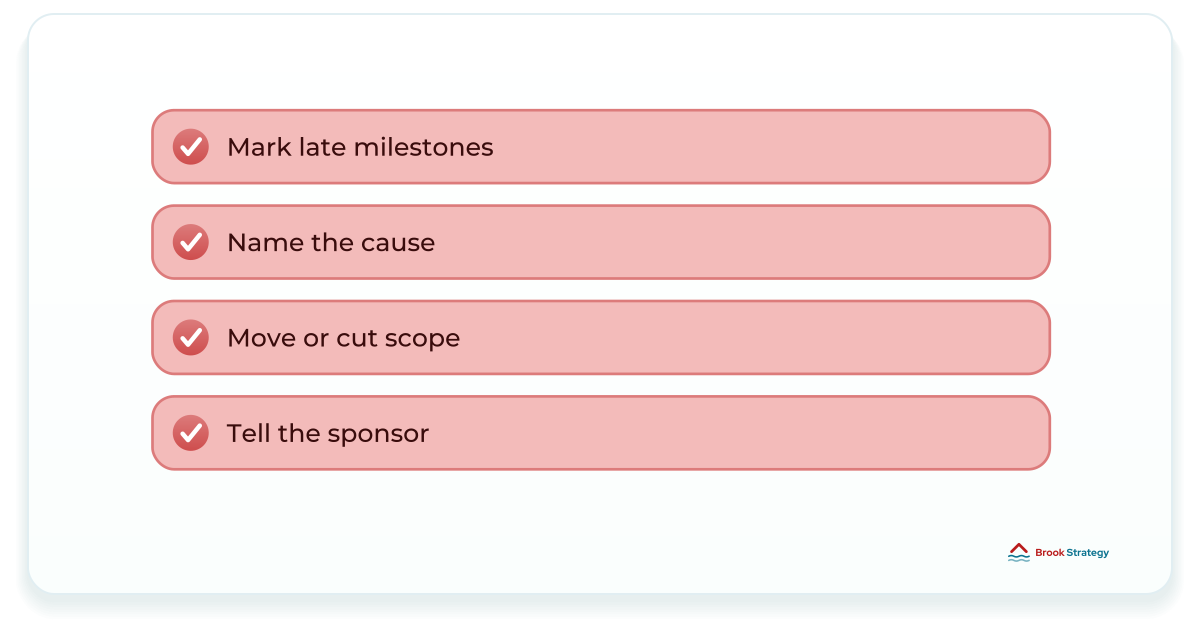
Roadmaps slip, and a slipped roadmap is not a failed one. A customer pilot may take longer to schedule, or a sponsor may be travelling during a gate. Move the date, but do not move the evidence bar, because lowering it is how weak bets survive. If a gate keeps slipping, ask whether the bet is really a priority.
I suggest you review the roadmap at each quarterly review and mark each milestone as done, late or dropped. Showing late and dropped items openly builds more trust with leaders than a plan that always looks green.
How to Adapt the Roadmap to Your Company
Use these questions to adjust the timeline:
- How many people must approve a decision? More approvers mean longer phases.
- How fast can you reach real customers for interviews and pilots?
- Is your sponsor free for monthly check-ins and gates?
- How long is your normal budget cycle, and when does the next one open?
A small company can often compress the first two phases into six weeks. A regulated company, such as a bank, may need an extra month in Phase 3 for compliance reviews. Either way, keep the four phases and the decision at the end of each.
Before you publish the roadmap, read it once as a skeptical executive. Can you see who decides at each gate, what evidence they will ask for and what happens to the money if a bet stops? If any of those answers is vague, fix it now. A roadmap that survives that reading usually survives the year, and one that does not tends to be dropped at the first busy quarter.
Questions About the Innovation Strategy Roadmap
What Is an Innovation Strategy Roadmap?
It is a dated plan for carrying out your innovation strategy. It shows which bets start when, what evidence each must produce, when leaders decide and how the portfolio is reviewed. It turns a strategy document into a schedule people can follow.
How Long Should an Innovation Roadmap Cover?
Twelve months works for most companies, because it fits a budget cycle and gives enough time for two stage gates. Add a rough view of the following year, and update it at each quarterly review.
What Milestones Should I Include?
Include the sponsor and arenas agreed, the portfolio chosen, each stage gate, the handover of winning bets and the year-end reset. Add the tool or tracker you will use and the first scorecard date.
How Is an Innovation Roadmap Different from a Product Roadmap?
A product roadmap lists features and releases for one product. An innovation roadmap covers a portfolio of bets, many of which are not products yet, and it is organised around evidence and decisions, not features.
Who Should Own the Innovation Roadmap?
A portfolio owner who reports to an executive sponsor. The sponsor makes gate decisions, and the portfolio owner runs the calendar, the scoring and the reviews. In small companies, one person may hold both roles.
What If a Bet Passes a Gate but No Team Wants It?
Treat that as a finding, not a detail. Find out why the core business does not want it: the wrong customer, the wrong margin or a conflict with current sales. Either fix the cause, change the bet or stop it.
How Often Should I Update the Roadmap?
Check it monthly in the bet check-in and revise it formally every quarter. Mark each milestone as done, late or dropped, and record the reason for any change.
Note: This article is general information, not legal, financial or tax advice. Figures and examples are estimates based on typical projects, so check current details with your providers and advisers before you decide.
Was this article helpful?
Thank you for letting us know.
Russell Tennant
Russell leads the Brook editorial team and works with our consultants to turn real client engagements into practical guides on roadmaps, go-to-market planning, growth and competitive strategy. Before joining Brook, he spent 11 years in strategy and product marketing roles at software and financial services companies. He has since edited more than 300 articles on strategy practice and drawn on roadmaps and growth plans from over 100 client projects. He is based in Denver, Colorado.