Key Takeaways
- Most brand strategy mistakes are decisions left unmade: who you serve, what you promise and what you refuse to say.
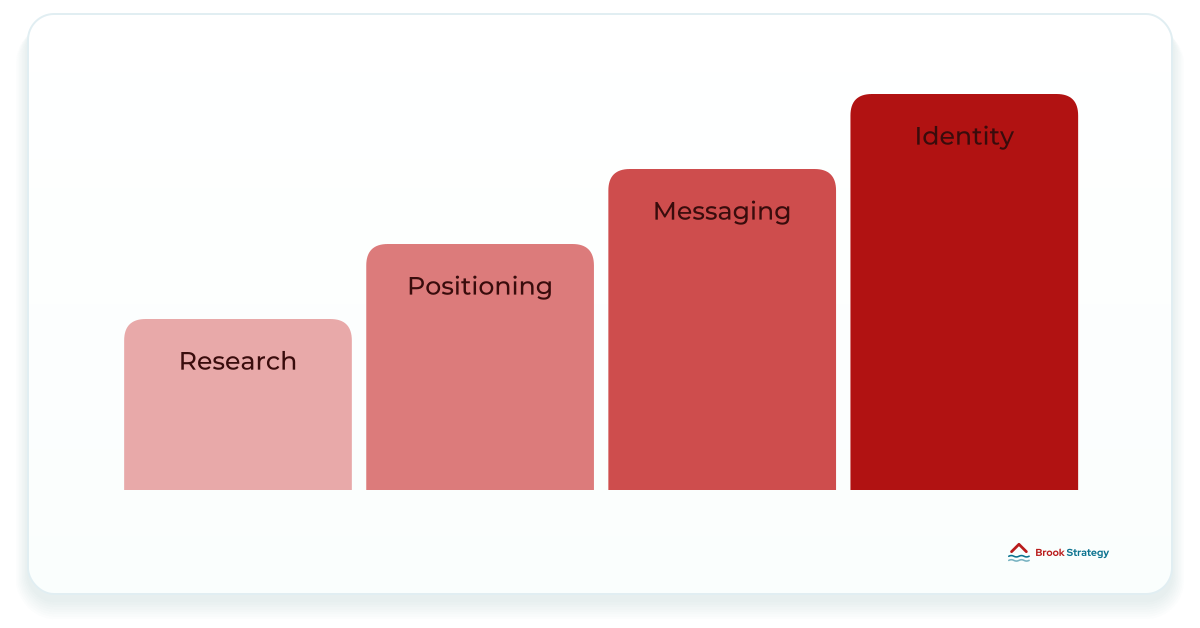
- Fix positioning and messaging first. Visual identity, naming and campaigns only work on top of them.
- Ten to fifteen buyer interviews catch more errors than any internal workshop.
- A brand strategy that fits on one page gets used. A forty-slide deck gets filed.
Brand strategy goes wrong in quiet ways. Nobody ships a broken brand strategy on purpose, but a vague promise, a messy message or a deck nobody reads can hold back a sales team for years. If you want an outside view on yours, brand strategy consulting is built for exactly that.
I've reviewed brand work for software and financial services teams for years, and the same eleven mistakes keep coming back. Below you find each one with a real pattern, the first fix and what to avoid while fixing it. Work from the top, because the early mistakes make the later ones worse.
Which Brand Mistakes Cost the Most
Not every mistake is equally expensive. Some cost you a weekend of rewriting, others cost a year of pipeline. The table ranks the eleven by how much damage they do and how fast you can repair them.
| Mistake | Damage | Time to fix | Fix first if |
|---|---|---|---|
| 1. No clear audience | High | 2 to 3 weeks | Sales chases every lead |
| 2. Positioning copied from rivals | High | 3 to 5 weeks | Buyers can't tell you apart |
| 3. Skipped customer research | High | 1 to 2 weeks | Messaging came from a workshop |
| 4. Strategy that is only a slogan | Medium | 2 weeks | The tagline changes every year |
| 5. Too many messages | Medium | 1 to 2 weeks | Every page says something new |
| 6. Brand left to marketing | High | Ongoing | Sales and product ignore it |
| 7. Visuals before strategy | Medium | 4 to 8 weeks | A rebrand is planned |
| 8. Inconsistent execution | Medium | 3 to 6 weeks | Channels sound different |
| 9. No brand metrics | Medium | 1 week | Nobody can say if it works |
| 10. Never updated | Medium | Yearly | The market has changed |
| 11. Over-engineered deliverables | Low | 1 week | Nobody reads the guide |
11 Brand Strategy Mistakes and How to Fix Them
1. Writing a Brand for Everyone
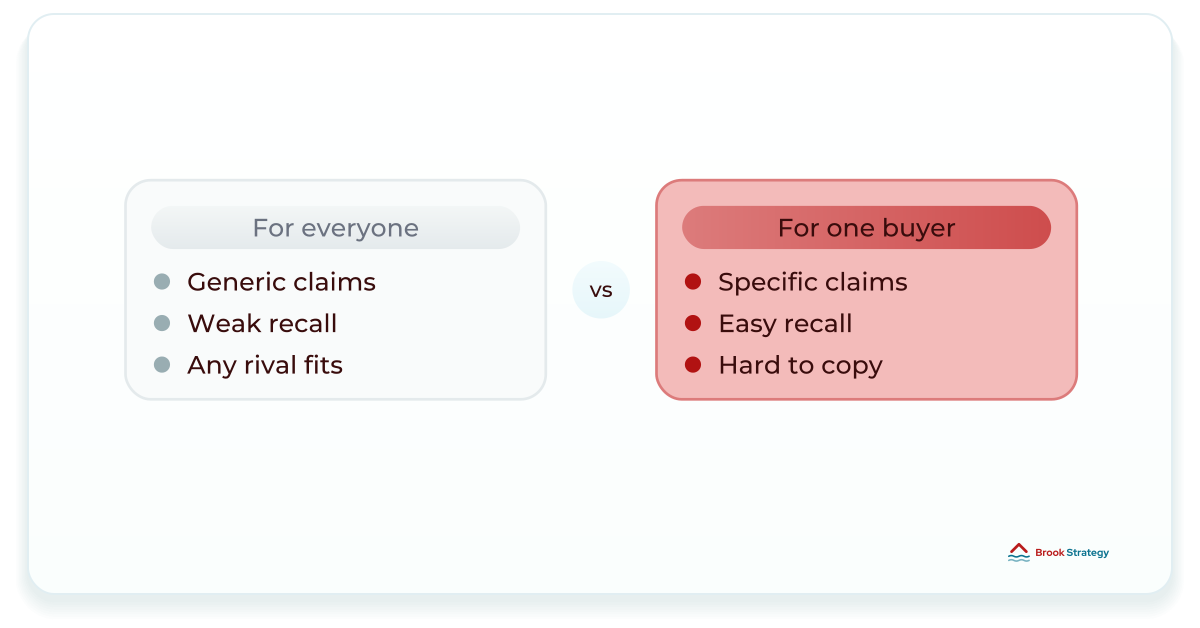
A B2B software company I reviewed described its customer as "any business that wants to grow". Sales then chased everything from five-person agencies to listed enterprises, and the pitch changed in every call. A brand that speaks to everyone is remembered by no one, and the cost shows up as long sales cycles and discounting.
Do this: Name one primary customer in a sentence a stranger could check: role, company size, trigger event. Avoid this: Adding a second and third audience to keep every stakeholder happy.
2. Copying Your Competitors' Positioning
Open the websites of five rivals in your category. If the headlines could swap places, you have this mistake. Fintech teams do it a lot: "secure, simple, scalable" sits on every homepage, so buyers pick on price.
Do this: Write down what a buyer gets from you that no rival can claim honestly, then build the promise around it. Avoid this: Choosing words because the market leader uses them.
3. Skipping Customer Research
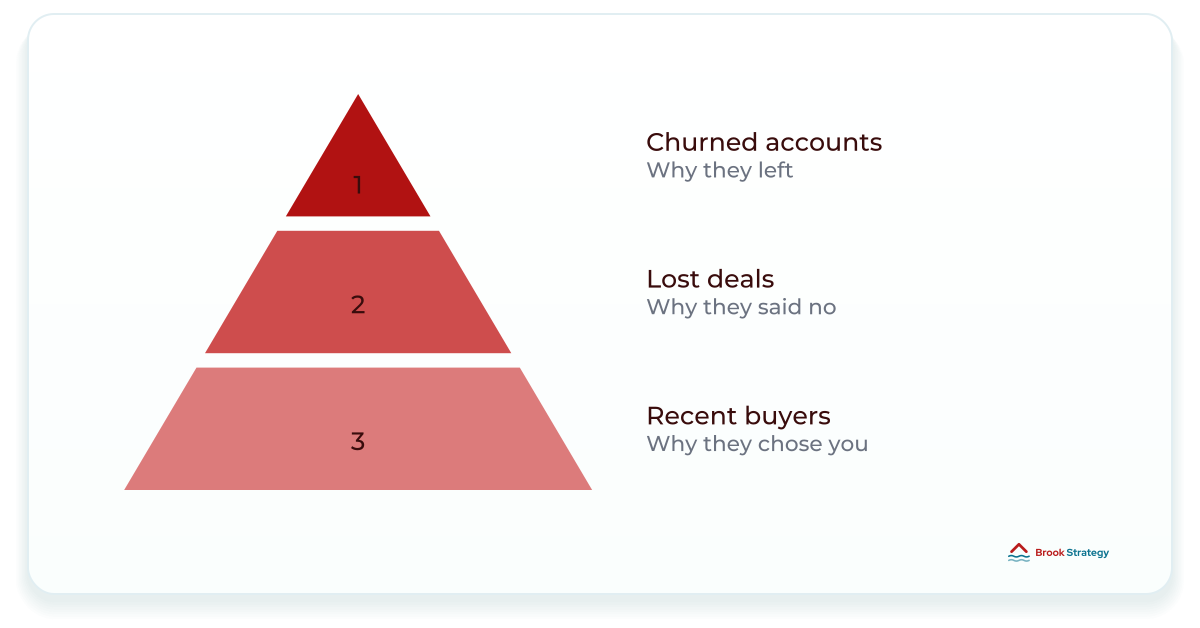
Internal workshops feel productive. They also reproduce what the room already believes. In my client work, the gap between how a leadership team describes its value and how recent buyers describe it is often wide, and buyers rarely use the leadership team's words.
Do this: Interview ten to fifteen recent buyers, three lost deals and two churned accounts, and write down the exact phrases they use. Avoid this: Sending a survey and treating the average as insight.
4. Treating the Tagline as the Strategy
A tagline is the smallest piece of a brand strategy. When a company changes it every year, the strategy underneath is missing, because nothing was decided that a tagline could express. Taglines change when the leadership changes. Strategies should outlast that.
Do this: Write the strategy first as four short answers: who you serve, what they need, why you win and what you won't do. Avoid this: Starting a naming or tagline sprint before those four answers exist.
5. Saying Too Many Things at Once
Teams fear that one message leaves value on the table, so they add a second, then a fifth. The result is a homepage where every section makes a different claim, and a buyer leaves without a single thing to repeat. Rumelt's description of bad strategy fits here: a long list of goals with no choice between them (see McKinsey on the perils of bad strategy).
Do this: Pick one main message and two proof points, and test whether a new hire can repeat them after a week. Avoid this: Approving a message because it has something for every department.
6. Leaving Brand to the Marketing Team
I once saw a polished positioning document live only in marketing's shared drive. Sales used a three-year-old deck, and product named features in a third style. A brand is what customers experience across all contact points. If only one team owns it, the others go their own way.
Do this: Make one revenue leader the owner, and run a short brand session for sales and product at launch. Avoid this: Announcing the strategy by email and hoping people read it.
7. Designing Before Deciding
A new logo is easy to approve because everyone can see it. A positioning choice is harder, because it says no to something. Visual work done before the strategy has to be redone, usually at the price of a second agency round.
Do this: Hold the identity brief until positioning is signed off, then brief designers with the strategy in hand. Avoid this: Judging an identity by whether you like it, instead of whether it supports the promise.
8. Inconsistent Execution Across Channels
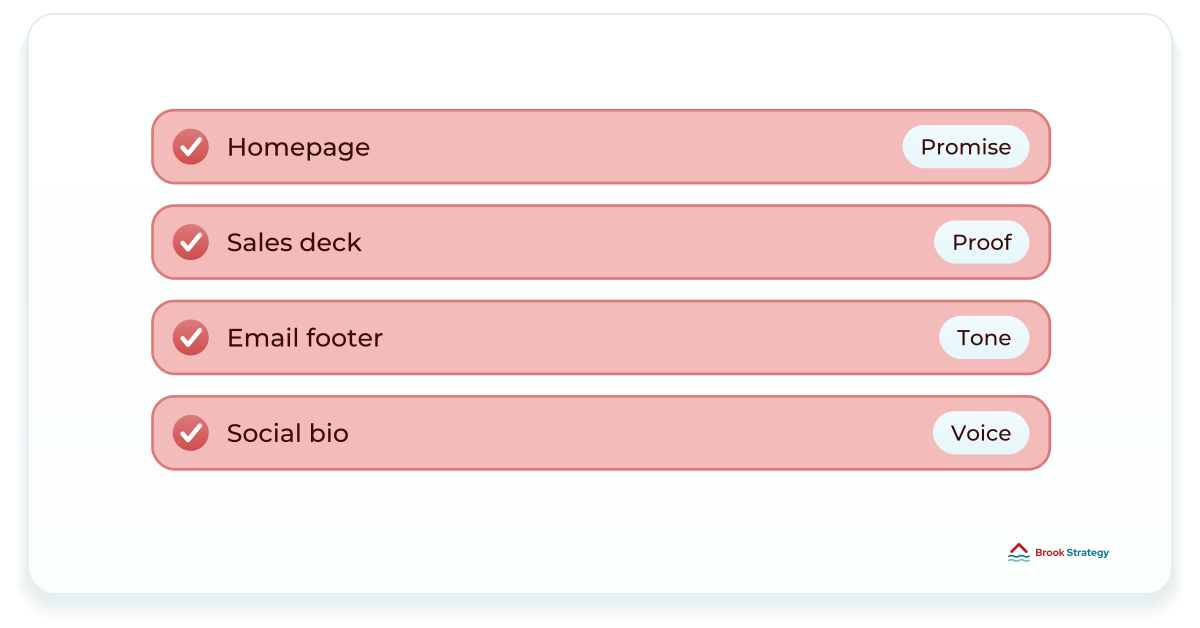
Your homepage promises one thing, your outbound emails another and your support replies a third. Buyers read this as a company that doesn't know itself. Consistency does not mean identical copy. It means the same promise, the same tone and the same proof, repeated.
Do this: Write a one-page voice guide with five sample sentences, and audit three channels against it every quarter. Avoid this: Building a seventy-page brand book nobody opens.
9. Having No Way to Measure the Brand
Brand work gets cut first in a budget review because nobody can show what it did. You can't track everything, but you can track a few signals: win rate against named competitors, branded search volume, share of inbound leads that mention you by name and how buyers describe you in their own words.
Do this: Pick three measures, record a baseline before launch and review them every quarter. Avoid this: Waiting for a perfect brand tracker before you measure anything.
10. Never Updating the Strategy
Markets move. A promise that fit three years ago can be a commodity today because rivals caught up. Reviewing the strategy once a year takes a day and catches drift before it turns into a rebrand.
Do this: Put an annual positioning check in the calendar and compare buyer language against it. Avoid this: Treating the document as finished the day it is approved.
11. Over-Engineering the Deliverables
Long decks feel like value for money. In practice the one-page version gets used and the deck gets filed. The best brand strategy documents I've delivered are short enough to print and pin up.
Do this: Keep the core strategy to one page, with detail in an appendix for specialists. Avoid this: Judging the work by page count.
Which Mistake to Repair First
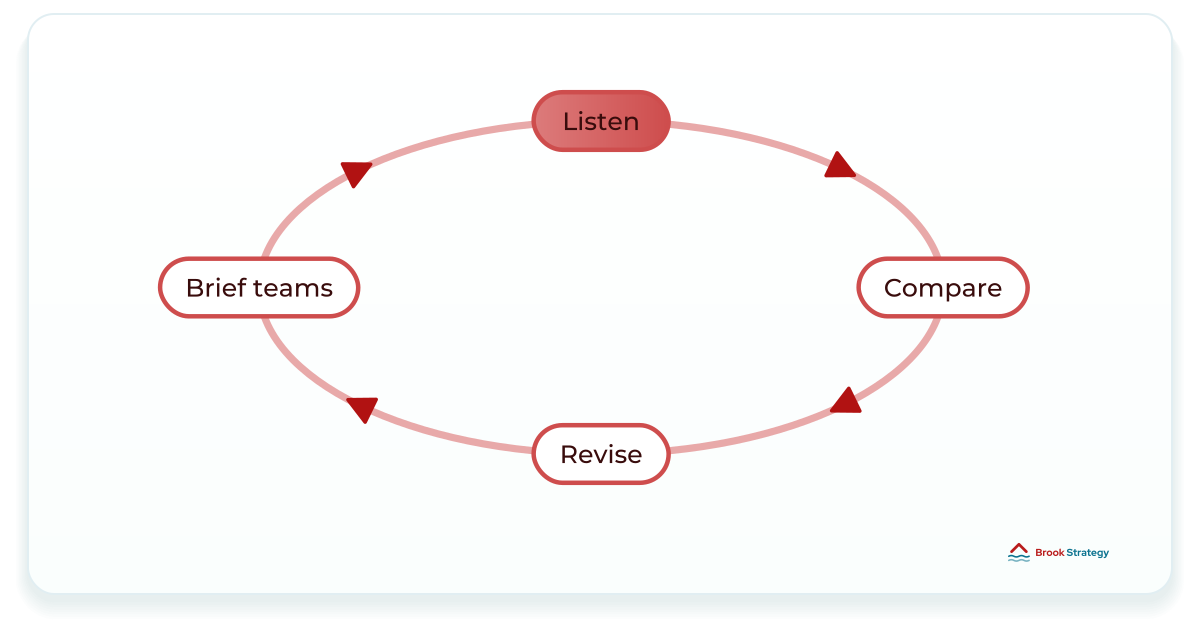
If you recognize five or six of these, don't fix them all at once. The mistakes depend on each other, so the order matters. Start with audience, research and positioning, because every later fix builds on them. The sequence I use with clients looks like this:
- Decide who you serve and who you don't.
- Interview buyers and write down their language.
- Rewrite the promise and its two proof points.
- Brief sales, product and support, then audit the channels.
- Add three measures, and only then touch the visual identity.
The steps map to the phases in my brand strategy framework, which shows the pillars in the order you build them. If you want the dates and owners for each step, my brand strategy roadmap lays out a timeline you can copy.
Run a Quick Self-Check
You can check most of the eleven in an afternoon. Ask each question and note the honest answer:
| Question | A good answer sounds like |
|---|---|
| Who is the primary customer? | One role, one company size, one trigger |
| What do buyers say about you? | Close to your own promise, in their words |
| Could a rival sign your homepage? | No, it names something only you can claim |
| Do sales and product use it? | Yes, in decks, demos and release notes |
| How do you know it works? | Three named measures with a baseline |
| When was it last reviewed? | Within the last twelve months |
A weak answer to the first or second question means the cheap work is still ahead of you. A weak answer to the last two usually means the strategy exists but nobody runs it. For a printable version of this audit, the brand strategy checklist covers each step in order.
How to Decide Whether to Fix It Yourself
Most of the repairs above are within reach of a capable internal team. Interviews, a one-page strategy and a quarterly audit don't need a large budget. Outside help pays off in three situations, and in my experience they are easy to recognize:
- Leaders disagree on who the customer is and the debate has run for months.
- Sales and marketing describe the company differently and neither will move.
- A launch, funding round or market entry is close and the story is not ready.
In those cases, an outside view saves time because it has no stake in the old story. Even then, keep the decision with your own leaders. A consultant can run the interviews, frame the options and push for a choice, but the people who live with the brand should make it.
Questions About Brand Strategy Mistakes
What Is the Most Common Brand Strategy Mistake?
Skipping the customer research is the one I see most often. Teams write a positioning statement from internal opinions, then wonder why buyers don't repeat it. Ten to fifteen short interviews with recent buyers, lost deals and churned accounts usually show the gap within a week.
How Do I Know If My Brand Strategy Is Working?
Check three things: whether buyers describe you in words close to your positioning, whether your sales team uses the same pitch in every call and whether your win rate or branded search is moving in the right direction. If none of the three has shifted after two or three quarters, the strategy needs a review.
How Long Does It Take to Fix a Weak Brand Strategy?
A focused fix of positioning and messaging often takes six to ten weeks, including interviews and a decision session. Rolling the new strategy through your website, sales material and product copy takes longer. Plan one to two quarters before you judge results.
Should I Rebrand If My Brand Strategy Is Weak?
Usually not first. A new logo and name cost far more than fixing positioning, and they don't repair a vague promise. Fix who you serve and what you stand for, then decide whether the visual identity still fits. Many companies keep their current identity after the strategy work.
How Many People Should Be Involved in Brand Strategy Decisions?
Keep the decision group small: the leader who owns revenue, the head of marketing, a product lead and one person who talks to customers every week. Gather input from many people, but let four or five decide. Large committees produce the safest, blandest answer.
Can a Small Company Have a Brand Strategy?
Yes, and it is cheaper to set early. A small company needs a clear customer, a clear promise and three or four rules for how it sounds and looks. That fits on one page and takes a few weeks, not months.
When Should I Get Outside Help with Brand Strategy?
Bring in help when leaders disagree about who the customer is, when sales and marketing describe the company differently or when a launch is coming and the story isn't ready. An outside view helps most where internal opinions have hardened.
Sources
Note: This article is general information, not legal, financial or tax advice. Figures and examples are estimates based on typical projects, so check current details with your providers and advisers before you decide.
Was this article helpful?
Thank you for letting us know.
Russell Tennant
Russell leads the Brook editorial team and works with our consultants to turn real client engagements into practical guides on roadmaps, go-to-market planning, growth and competitive strategy. Before joining Brook, he spent 11 years in strategy and product marketing roles at software and financial services companies. He has since edited more than 300 articles on strategy practice and drawn on roadmaps and growth plans from over 100 client projects. He is based in Denver, Colorado.