Key Takeaways
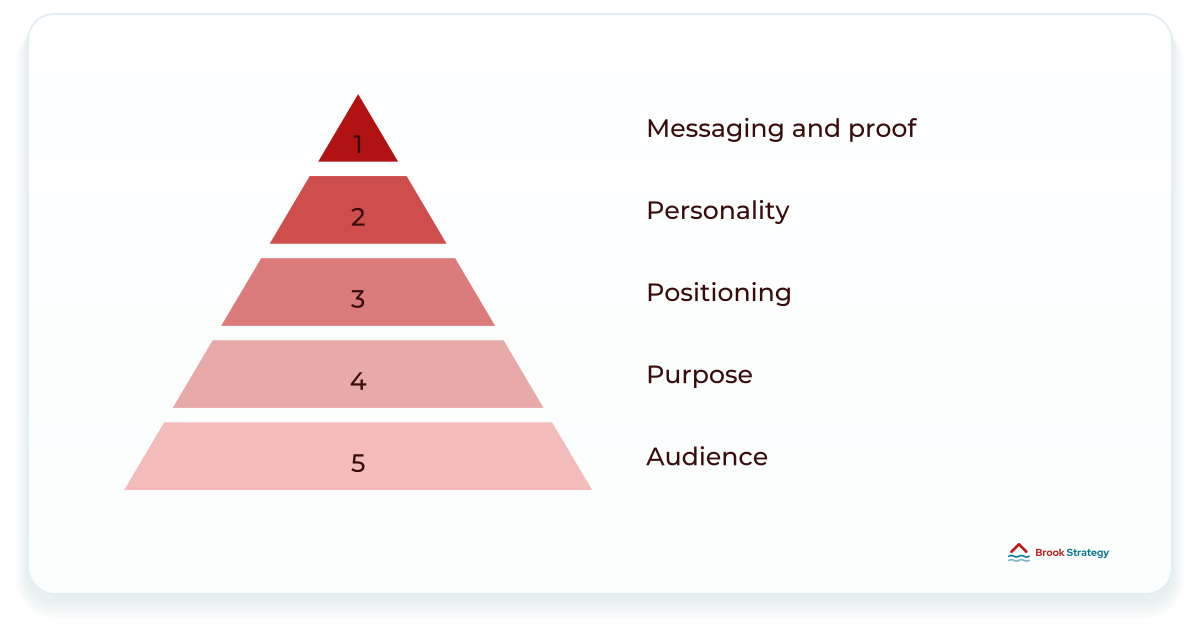
- A brand strategy framework rests on six pillars: audience, purpose, positioning, personality, messaging and proof.
- Positioning is the pillar that decides the others, so settle it first and test it with real buyers.
- Write each pillar so a new hire could apply it without asking you.
- Test each pillar against a decision, such as a sales call or a landing page, before you call it done.
A brand strategy framework is a fixed set of questions that you answer in order. The order matters, because later answers depend on earlier ones. If you are building one for your company, a brand strategy consulting project follows much the same structure, with research behind each answer.
I use the six pillars below with clients in software and financial services. Each section explains the pillar, shows a short example and gives you a test. The formula for positioning comes after the overview, since it is the part most teams struggle with.
The Six Pillars and How They Connect
The pillars build on each other. Audience and purpose set the ground, positioning picks a place in the market, and personality, messaging and proof make that place visible and believable.
| Pillar | Question it answers | Output | Test |
|---|---|---|---|
| Audience | Who do you serve first? | One primary buyer profile | Your last 20 wins fit it |
| Purpose | Why does the company exist? | A short belief statement | It guides a hard trade-off |
| Positioning | Why choose you over the alternatives? | A positioning statement | Buyers repeat it in their words |
| Personality | How do you sound and act? | Three traits with examples | Two writers match the tone |
| Messaging | What do you say, in what order? | Promise and three proof messages | Sales and web say the same thing |
| Proof | Why should anyone believe you? | Evidence bank | Each claim has a source |
Pillar One: Choose Who You Serve First
Most companies say they serve everyone in their category. A framework asks you to rank. Pick the buyer who values what you do most, who is easiest to reach and who brings the most revenue, and write that profile first. Others can still buy, but they are not the audience you write for.
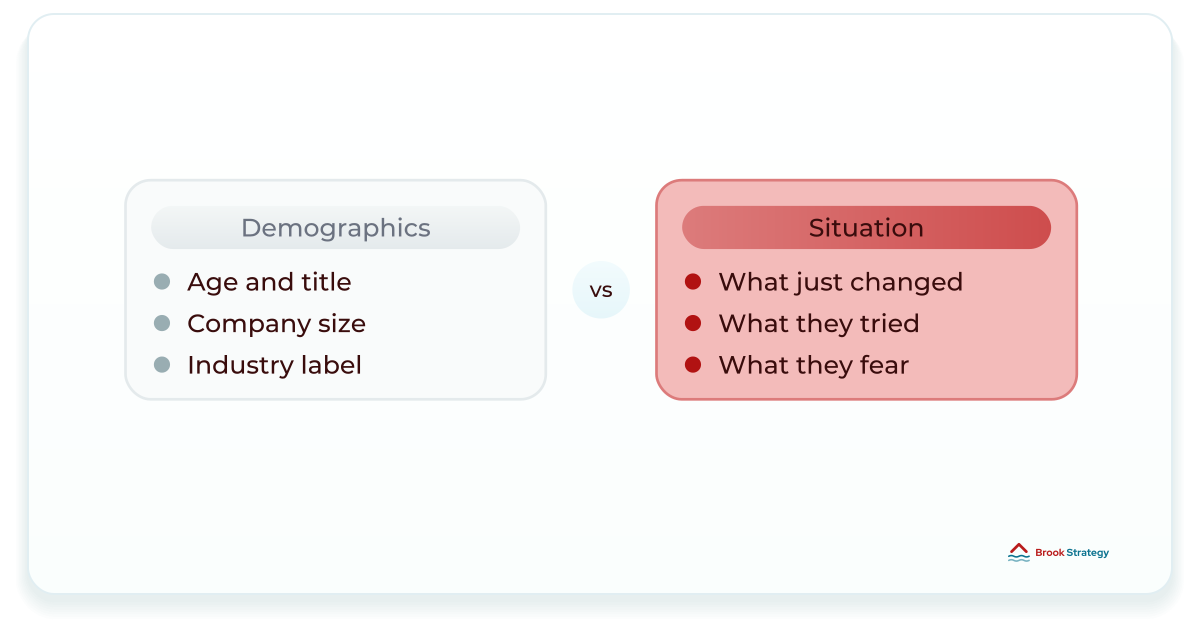
Describe the buyer by the situation that makes them look for help. A finance leader at a regional lender who has just lost two staff to a competitor is a more useful profile than mid-market banking decision maker. Check it against your CRM: if half your wins fall outside the profile, it is wrong.
Pillar Two: State Why the Company Exists
Purpose is easy to write badly. A useful one is a belief that changes what you do, such as small software teams deserve planning that fits a week, not a quarter. It should rule some options out. If your purpose could sit on any competitor's website, it will not guide a single decision.
Pillar Three: Write the Positioning With a Formula
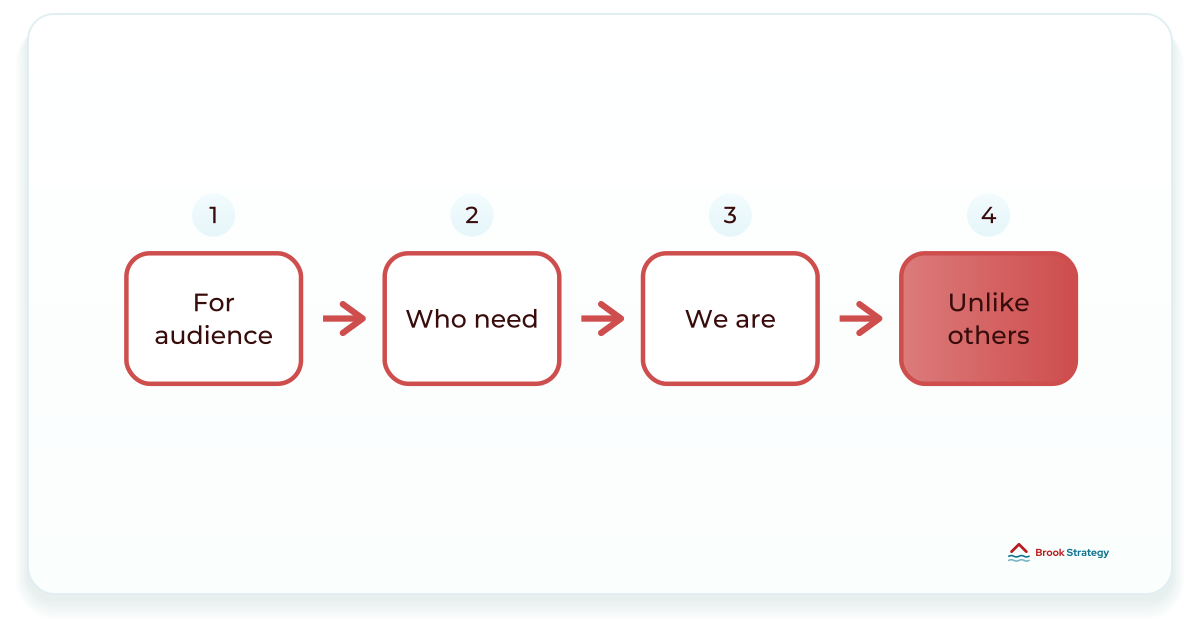
Positioning is the pillar that decides most of the rest, so I give it a formula. Fill in each blank with evidence from interviews, not with what you wish were true:
For [primary buyer] who [situation or problem], [brand] is the [category] that [main benefit]. Unlike [main alternative], it [reason to believe].
Here is a worked example for an imaginary company: for revenue leaders at B2B software firms who struggle to agree on a launch plan, Northline is the strategy partner that turns scattered inputs into one approved roadmap. Unlike generic planning templates, it builds the plan from stakeholder interviews and tests it with customers. Each blank carries a claim you can check, which is why the statement is useful.
Test the statement with five buyers. Read it aloud and ask them to say it back in their own words. If they cannot, or if they describe something different, adjust the wording before you build on it. The brand strategy checklist includes this test as one of its checks.
Pillar Four: Give the Brand a Personality That People Can Copy
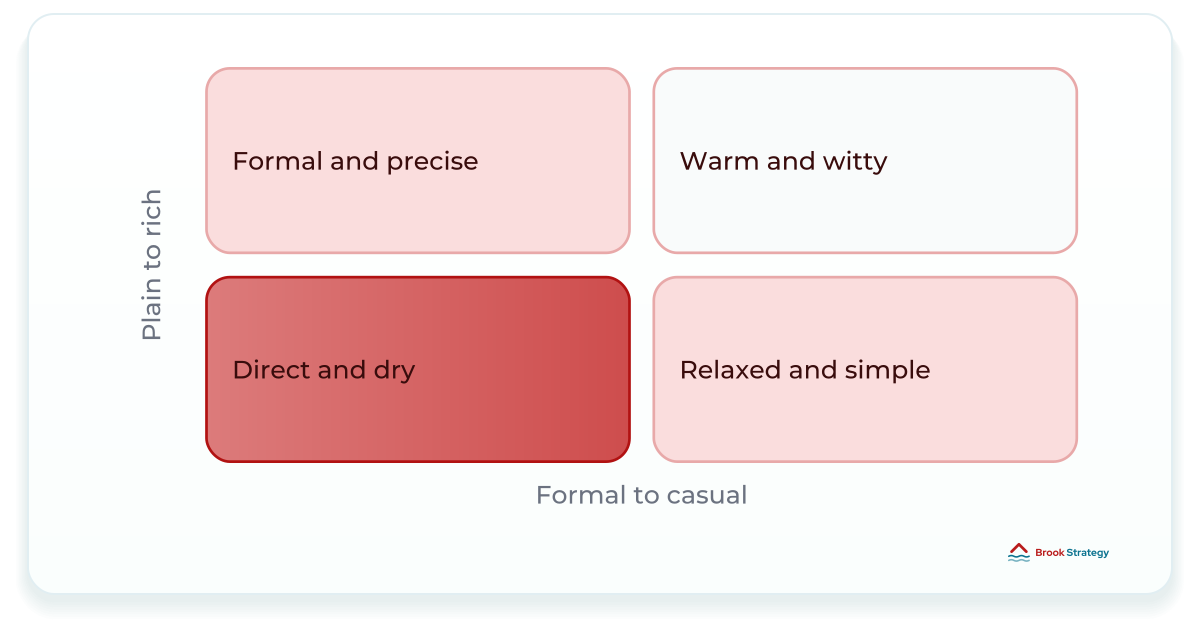
Choose three traits and describe each with a do and a don't. Direct might mean short sentences and clear recommendations, and avoid hedging and jargon. A writer or designer new to the brand should be able to read the traits and produce something that fits.
Add three samples: a headline, a support reply and a sales email. Samples teach more than adjectives do. Two writers working from the same page should produce text that sounds like one company, and you can use that as the test.
Pillar Five: Build a Message Hierarchy
Messaging turns positioning into words for each channel. Start with one promise, the sentence you want buyers to remember. Under it, place three proof messages, each answering a worry or question buyers raised during research. Under those, keep the facts and stories that support them.
| Level | Length | Where it appears |
|---|---|---|
| Promise | One sentence | Homepage headline, sales opener, ad copy |
| Proof messages | Three short paragraphs | Landing pages, pitch decks, emails |
| Supporting facts | Bullets and stories | Case material, FAQs, sales follow-ups |
A hierarchy keeps long documents consistent. Anyone can start from the promise and move down until they reach the level of detail their channel needs, and the message stays recognizable. Review the hierarchy every six months, because new products and new objections change what buyers need to hear first.
Pillar Six: Collect the Proof
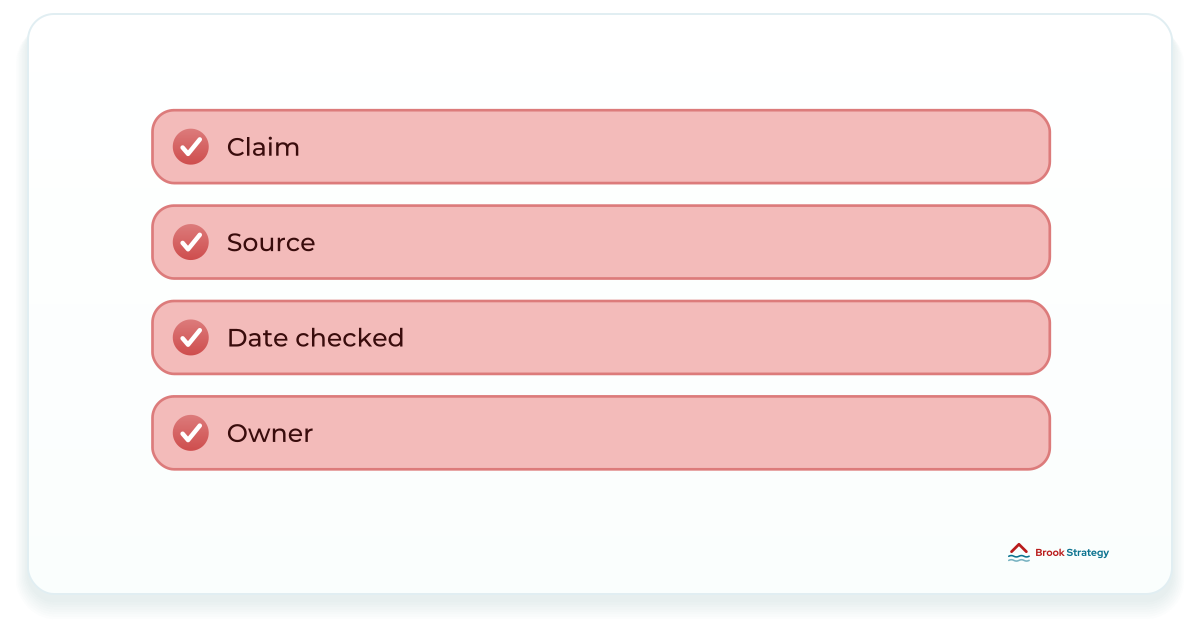
Claims need evidence. Build a bank of customer outcomes, ratings, credentials and examples, each with a source and a date. A claim like we shorten planning cycles needs a client story or a number you can defend, and it needs permission to use it.
Review the bank twice a year. Old figures damage trust faster than having none, and buyers check. If a proof point is more than two years old, replace it or label its date clearly.
All Six Pillars Filled In for One Company
Seeing the pillars together helps you judge the level of detail to aim for. This example continues the imaginary company from the positioning section. Short answers are fine, as long as each one is specific enough to disagree with.
| Pillar | Northline's answer |
|---|---|
| Audience | Revenue leaders at B2B software firms with 50 to 300 staff and several competing priorities |
| Purpose | Plans should be agreed by the people who must carry them out, so every plan starts with their interviews |
| Positioning | The strategy partner that turns scattered inputs into one approved roadmap |
| Personality | Direct, curious and practical, with short sentences and a clear recommendation in every message |
| Messaging | Promise: one roadmap your leaders sign. Proof messages: interview-led, customer-tested, owner-assigned |
| Proof | Client sign-off times, interview counts and two named case stories with permission |
Notice how the purpose rules something out. Northline would decline a request to write a plan from a leadership workshop alone, because its belief says the people who carry out the plan must be heard. That refusal is how a purpose earns its place in the framework.
Notice also that the personality row asks for a recommendation in every message. That single rule changes a lot of writing. Emails stop ending with let me know your thoughts and start ending with a proposed next step, which is exactly how a direct brand behaves.
Where Each Pillar Usually Goes Wrong
Every pillar has a typical failure. Knowing it in advance helps you catch it during review, when a fix costs an afternoon rather than a rebrand.
- Audience: the profile describes a market segment instead of a situation, so nobody can tell who to exclude.
- Purpose: the statement is a slogan about making the world better and guides no decision.
- Positioning: the category is so broad that every competitor fits inside it.
- Personality: the traits are adjectives such as innovative and trusted, with no examples.
- Messaging: five promises compete for the headline, and the page says all of them weakly.
- Proof: claims rely on a single old case story or on figures nobody can trace.
Run this list at the end of the work and ask a colleague outside the project to find one failure in each pillar. They usually find several, and fixing them takes far less time than you expect.
Roll the Framework Out Across the Company
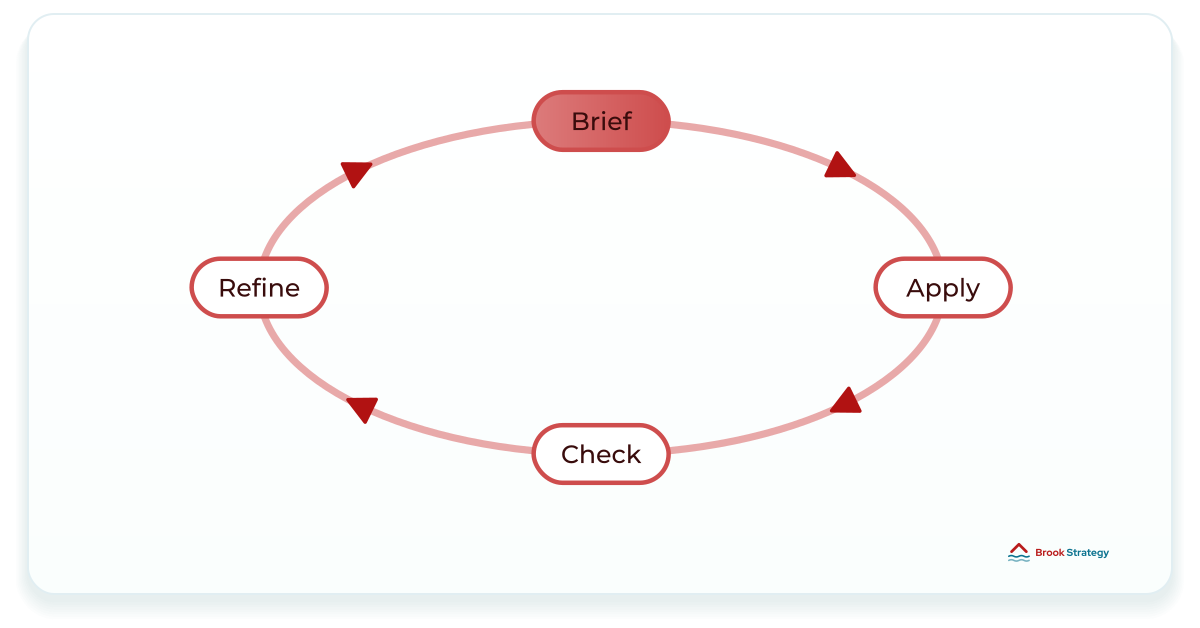
A framework in a slide deck changes nothing. Turn it into a four-page document and walk each team through it, using their own material. Sales gets a one-page pitch version, marketing updates the website and product reviews its naming and onboarding text. Ask each team to bring one example of something they will change, and check it a month later.
For the order and timing of this work, see my brand strategy roadmap. If something goes wrong along the way, my list of brand strategy mistakes shows the errors I see most.
How to Choose and Adapt a Framework
Many frameworks exist, from archetype models to purpose-first approaches. I prefer the six-pillar version because each pillar produces something a team can use and test. Pick whichever you like, but check that it forces a choice about audience and positioning, since those two decide most outcomes.
- Does the framework require research, or only workshops?
- Does each pillar produce a document someone can apply?
- Can you test each pillar with real buyers?
- Is there room to adapt it for a product brand or a new market?
If you answer no to the first or third question, the framework will record opinions. An outside team can run the research and the pillar work together, which also gives you a neutral voice when leaders disagree.
Questions About the Brand Strategy Framework
What Is a Brand Strategy Framework?
It is a structure that forces you to answer the same core questions in the same order: who you serve, what you stand for, how you differ and how you say it. A framework keeps the work consistent, so different people can review the result and compare it with the market.
How Many Pillars Should a Brand Strategy Have?
I use six: audience, purpose, positioning, personality, messaging and proof. You can add more, but every extra pillar dilutes attention. If a pillar does not change a decision your team makes, drop it.
How Is a Brand Framework Different from a Style Guide?
A framework defines the thinking: who you are for and why you are different. A style guide defines the look and wording that follow from it: logo use, colors, fonts and tone examples. Write the framework first, because the guide only makes sense with it.
How Long Does It Take to Build a Brand Strategy Framework?
Six to ten weeks is typical for a company with a few audiences, mostly because interviews take scheduling. A small team with a clear product can finish in three or four weeks. Rushing the research is the shortcut I would avoid.
Do I Need Customer Research to Use the Framework?
Yes. Without it, the framework records your opinions, which your buyers may not share. Even five interviews with customers and three with lost prospects change what teams write in the positioning pillar.
Can I Use the Framework for a Product Brand as Well as a Company Brand?
Yes. Run the pillars once for the company and once for each product that has its own audience. Keep product positioning consistent with the company one, so buyers who meet both do not feel they met two businesses.
How Do I Know If My Brand Strategy Is Working?
Check signals tied to the pillars: win rate and sales cycle length for positioning, branded search for awareness and how often prospects repeat your wording back on calls. Compare them with a baseline taken before the rollout.
Note: This article is general information, not legal, financial or tax advice. Figures and examples are estimates based on typical projects, so check current details with your providers and advisers before you decide.
Was this article helpful?
Thank you for letting us know.
Russell Tennant
Russell leads the Brook editorial team and works with our consultants to turn real client engagements into practical guides on roadmaps, go-to-market planning, growth and competitive strategy. Before joining Brook, he spent 11 years in strategy and product marketing roles at software and financial services companies. He has since edited more than 300 articles on strategy practice and drawn on roadmaps and growth plans from over 100 client projects. He is based in Denver, Colorado.