Key Takeaways
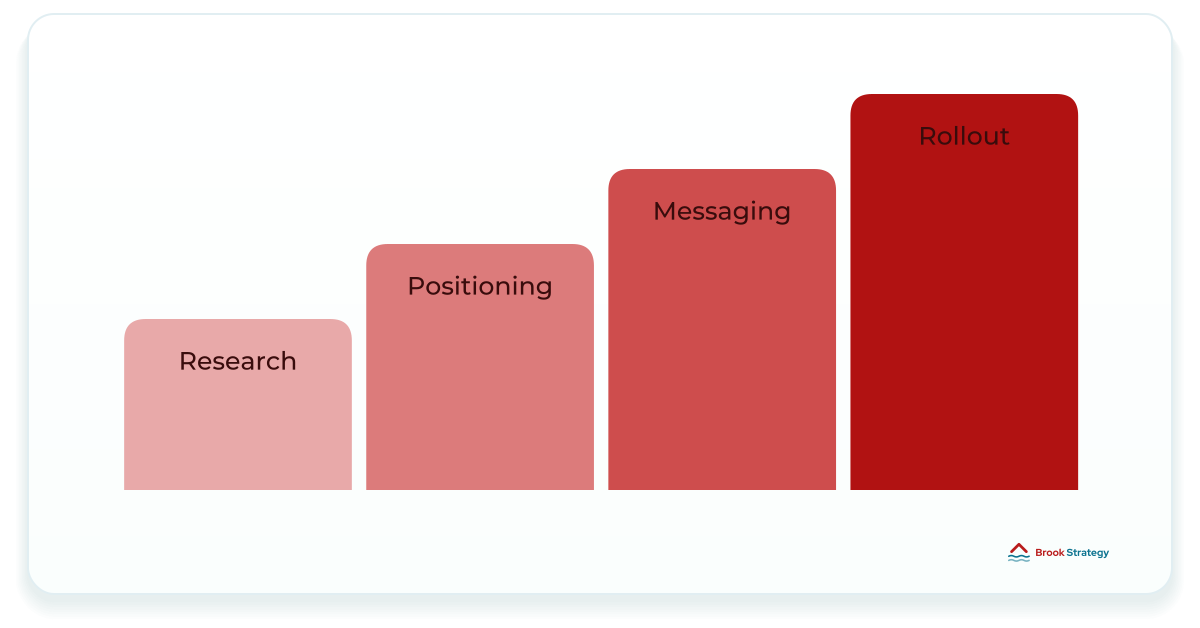
- Eleven checks cover four stages: research, positioning, messaging and rollout.
- A check only counts as done when a written output exists that someone else can use.
- Positioning is the check that matters most, and it needs testing with real buyers.
- Score yourself, close the gaps in order and repeat the audit every quarter.
Most brand audits go wrong because people grade their feelings. This checklist grades documents instead: for every point, you either have a written output or you do not. If you want a team to run the audit with you, brand strategy consulting can supply the interviews and facilitation.
The eleven points are grouped by stage. Within each group, you will find the checks, why they matter and how to prove you passed. Use the scoring table near the end to decide where to start.
Stage One: Research Checks (Points 1 to 3)
Research is the part teams skip and later regret. Without it, every later answer reflects internal opinion.
1. Customer Interviews Completed
You should have notes from at least ten conversations with customers and a few with lost prospects. The output is a findings summary with themes and quotes. If it lives only in someone's memory, it does not exist for the next person who needs it.
2. Competitor Messaging Reviewed
Collect how three to five competitors describe themselves on their homepage, deck and ads. Mark the phrases that repeat across all of them, because those are words you cannot own. The output is a one-page comparison with the gaps highlighted.
3. Internal Views Gathered
Talk to sales, product and leadership about what the brand should mean. Differences between these groups are valuable, since they predict where messages will drift later. The output is a list of agreements and open questions for the positioning stage.
Stage Two: Positioning Checks (Points 4 to 6)
Positioning is where you choose. The brand strategy framework explains the pillars behind these checks, and the three below confirm you have made the choices.
4. One Primary Audience Named
Name the buyer you serve first and write the situation that makes them look for you. The output is a profile that matches your last twenty wins. If many wins fall outside it, revise the profile until it reflects reality.
5. Positioning Statement Written and Tested
Write the statement in the form: for this buyer, who has this problem, you are the category that delivers this benefit, unlike the main alternative, because of this reason. Then read it to five buyers and ask them to repeat it in their words. The output is the statement plus the notes from those tests.
6. Purpose and Values Linked to Decisions
A purpose statement passes when you can name a decision it changed. Write the belief and one example of a project, client or feature it led you to decline. The output is the statement plus the example, and without the example it is only a slogan.
Stage Three: Messaging Checks (Points 7 to 9)
Messaging makes the positioning usable by everyone who writes or speaks for the company.
7. Promise and Proof Points Defined
You need one promise and three proof messages, each tied to something buyers worried about during research. The output is a one-page hierarchy. Check that each proof message has evidence behind it, such as a customer result or a rating, and that permission to use the evidence is recorded.
8. Voice Guidance With Samples
Choose three traits and give each a do and a don't, then add three writing samples: a headline, a support reply and a sales email. The output is a short voice page. Test it by giving two writers the same task and checking that their drafts sound alike.
9. Objection Answers Written
List the five objections sales hears most and write one clear answer for each. Buyers raise the same worries repeatedly, and consistent answers shorten sales conversations. The output is an objection sheet that sales has reviewed and agrees with.
Stage Four: Rollout Checks (Points 10 and 11)
10. Rollout Plan With Owners
List the assets that carry the brand, rank them by how early buyers see them and give each an owner and a date. The homepage, sales deck and main campaign pages usually come first. The brand strategy roadmap shows how to time this across 14 weeks. The output is a tracker that the team reviews weekly.
11. Baseline and Review Date Set
Record win rate, sales cycle length and branded search before the rollout, and book a review for a quarter later. Without a baseline, you cannot show that the strategy worked, and budgets for brand work are the first to be questioned. The output is a baseline sheet and a calendar entry.
How to Score and Prioritize Your Gaps
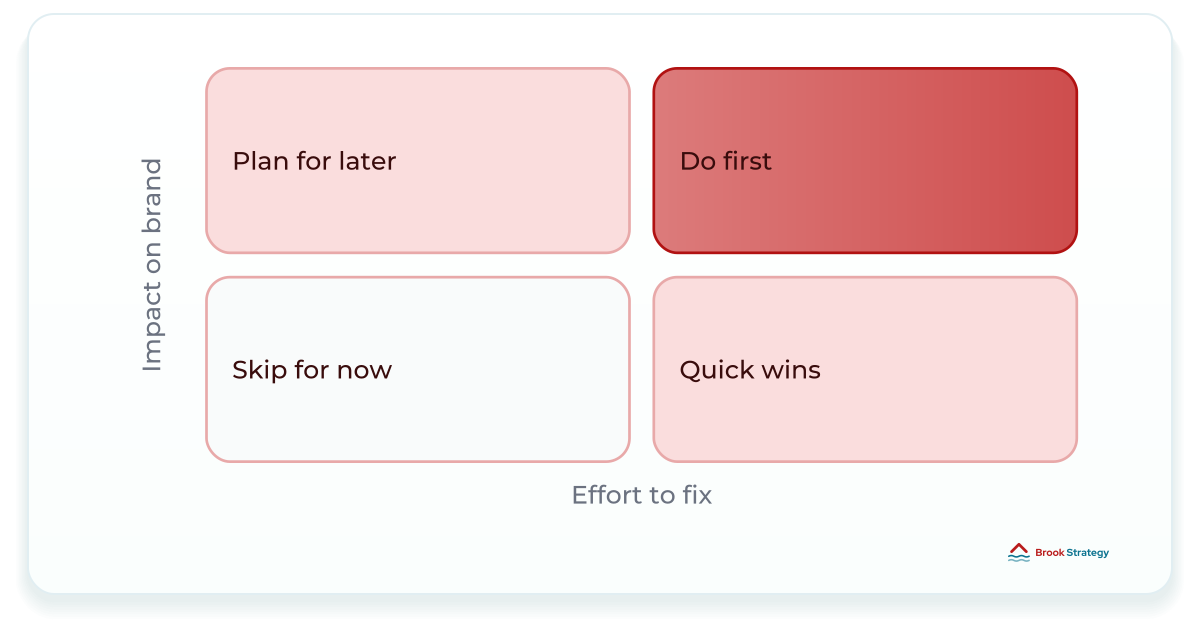
Mark each point as done (two), partial (one) or missing (zero), then add them up. The maximum is 22. The table shows what each range suggests, and the order of fixes matters as much as the total.
| Score | Reading | Where to start |
|---|---|---|
| 19 to 22 | Strong foundation | Check proof dates and review in a quarter |
| 13 to 18 | Solid base with gaps | Fix points 5 and 7 first, then rollout |
| 7 to 12 | Brand relies on habit | Run interviews, then write and test positioning |
| 0 to 6 | No working strategy | Start at point 1 and move in order |
Whatever your score, fix point five before anything that follows it. Messaging and rollout built on an untested position can simply spread a weak idea faster. I have watched teams polish voice guides for months while the positioning behind them was still a guess.
A Scored Example From a Software Company
Here is how an audit might look for a 120-person software company that has grown through referrals. The marketing lead ran the session with sales and product, and everyone brought documents rather than opinions. The result shows a typical pattern: strong rollout habits, weak research and untested positioning.
| Point | Status | Evidence found |
|---|---|---|
| 1. Customer interviews | Missing | Only survey scores, no conversations |
| 4. Primary audience | Partial | Profile exists but half of wins fall outside it |
| 5. Positioning tested | Missing | Statement approved by leaders, never shown to buyers |
| 7. Promise and proof | Partial | Three claims, one with a current source |
| 10. Rollout plan | Done | Tracker with owners and dates |
The team scored 11 of 22 and fixed things in order. First came eight customer interviews, which took three weeks, then a test of the positioning with five buyers, who described the product in ways leadership had not expected. Messaging was rewritten from those quotes. Only then did the team touch the website, which saved them from rebuilding it twice.
Their biggest surprise was how many gaps sat upstream of the visible work. The homepage had been redesigned the year before, yet buyers still struggled to explain what the company did. The design was fine. The positioning behind it had never been checked, and no amount of polish would have fixed that.
Common Ways Teams Fail the Checklist
A few patterns repeat. Teams count a workshop as research, although nobody outside the company spoke. They write a positioning statement and call it tested, because the leadership team liked it. They finish the guide and skip the baseline, so a year later nobody can say whether the work paid off.
- Counting internal opinion as customer research.
- Treating leadership approval as a test with buyers.
- Writing a guide that nobody reads, because it is thirty pages long.
- Rolling out everywhere at once and finishing nothing.
- Skipping the baseline and the review date.
My article on brand strategy mistakes goes deeper into each of these, with fixes you can apply before they cost a quarter.
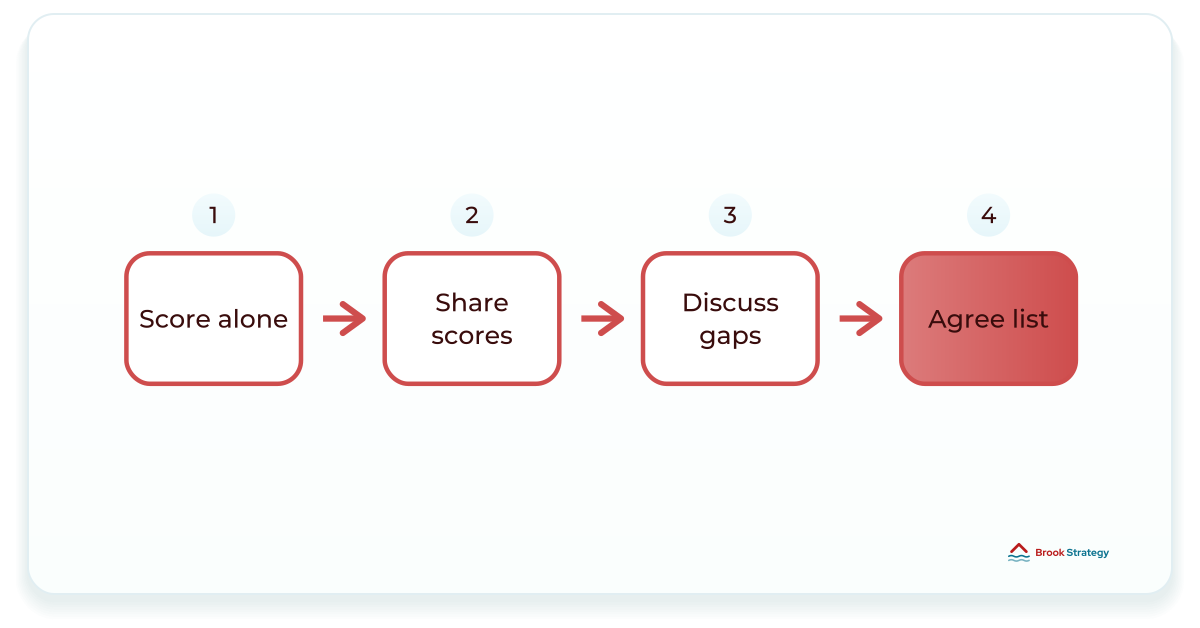
If you run the audit with a group, ask people to score alone first and compare afterward. Group scoring pulls everyone toward the loudest voice, while separate scores show real disagreement. A point that one person marks done and another marks missing usually means the output exists somewhere but nobody can find it, which is a gap in itself. Store every output in one shared folder with a clear name, so the next audit takes minutes to prepare instead of days.
How to Keep the Checklist Alive
Brands drift as teams change, so run the audit every quarter. Keep it short: 45 minutes, the same people and one shared sheet. Review the points that changed and any assets launched since the last session. New products, new markets and new hires all justify an extra pass.
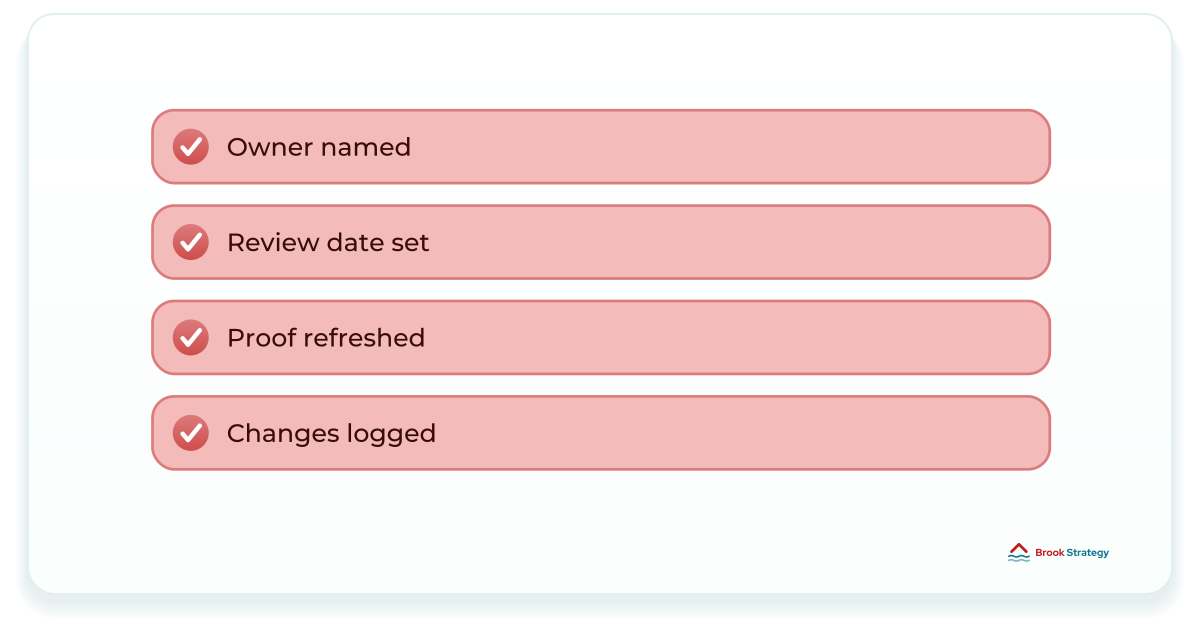
Assign an owner for the whole brand, ideally a person in marketing with a direct line to the sponsor. Their job is not to approve every sentence. It is to keep the documents current and to answer questions, so teams do not invent their own answers.
How to Decide Whether to Run the Audit Alone
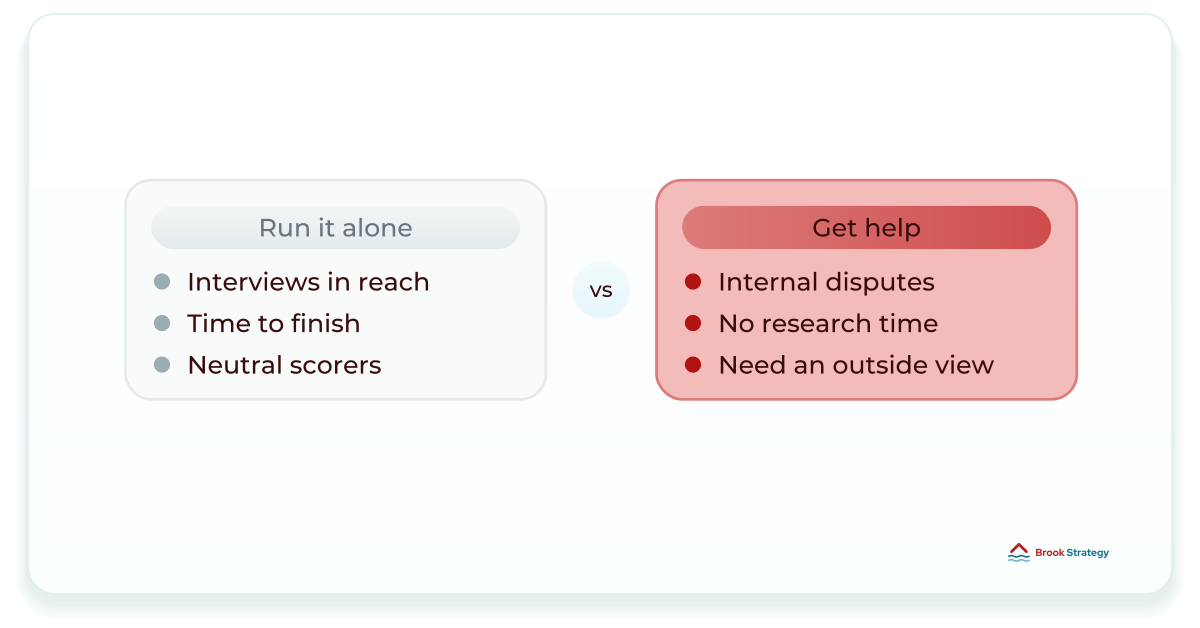
You can run this audit yourself if you have time for interviews and a team willing to be honest about gaps. Outside help makes more sense when leaders are split, when sales and marketing disagree about the brand or when earlier work did not change results.
- Can someone outside the company interview your customers?
- Will leaders accept findings that contradict their view?
- Is there time to finish the rollout within a quarter?
- Does someone own the documents after the project ends?
If most answers are no, a short scoping call can settle what to outsource and what to keep in-house.
Questions About the Brand Strategy Checklist
What Should a Brand Strategy Checklist Cover?
It should cover research, positioning, messaging and rollout. Within those, the eleven points here check that you know your buyers, have chosen one position, can say it consistently and have a plan to apply it. If a point has no written output, count it as missing.
How Do I Use This Checklist with My Team?
Hold a 60-minute session and go through the points together. For each one, ask for the document that proves it exists. Mark it done, partial or missing, then assign an owner and a date to every gap. Repeat the session a quarter later.
Is This Checklist for a New Brand or an Existing One?
Both. A new brand works through the points in order. An existing brand uses the list as an audit and focuses on the gaps. Established companies often find that research and proof are the weakest areas, because those were never written down.
How Long Does It Take to Complete All Eleven Points?
A first pass with existing material takes a few days. Closing the gaps usually takes six to ten weeks, mainly because customer interviews depend on other people's availability. Rollout continues for another quarter.
What Is the Most Important Point on the List?
Point five, the positioning statement. It decides most of what follows, and weak positioning cannot be rescued by better design or copy. If you only have time to do one thing properly, do that one and test it with real buyers.
Do Small Companies Need All Eleven Points?
Yes, in lighter form. A small team can interview five customers instead of twenty and write a one-page guide instead of a long one. Each point still needs an output, even if it is a paragraph.
When Should I Bring in a Brand Strategy Consultant?
When leaders disagree and need a neutral voice, when you lack time for research or when previous brand work did not change results. A consultant can run interviews objectively and bring comparisons from other companies.
Note: This article is general information, not legal, financial or tax advice. Figures and examples are estimates based on typical projects, so check current details with your providers and advisers before you decide.
Was this article helpful?
Thank you for letting us know.
Russell Tennant
Russell leads the Brook editorial team and works with our consultants to turn real client engagements into practical guides on roadmaps, go-to-market planning, growth and competitive strategy. Before joining Brook, he spent 11 years in strategy and product marketing roles at software and financial services companies. He has since edited more than 300 articles on strategy practice and drawn on roadmaps and growth plans from over 100 client projects. He is based in Denver, Colorado.