Key Takeaways
- A 12-month ecommerce roadmap works best in four phases: foundation, fix the leaks, grow with discipline and then scale what proved itself.
- Each phase needs an exit gate, which is one or two numbers that must be true before you start the next.
- Baymard's research puts average cart abandonment at 70.22%, so checkout fixes belong in the first 90 days.
- Plan around your peak season first and freeze large changes six to eight weeks before it.
A strategy says what you will do. A roadmap says in what order, by when and how you will know a step is finished. When I help a store with its ecommerce strategy, I draw the roadmap after the choices are made, and I keep it short enough to fit on one page. A plan that needs a binder never gets used.
The roadmap below has four phases over twelve months. It assumes you already have a store with some sales. If you are still deciding what the strategy itself should say, start with the ecommerce strategy framework, and come back here to schedule it.
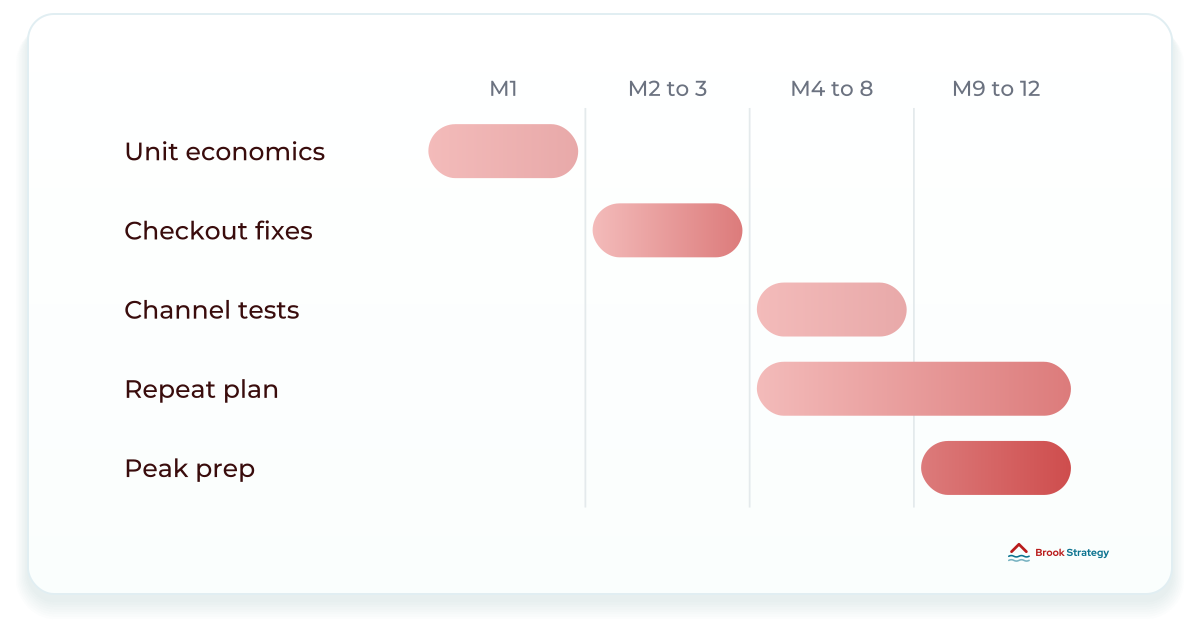
The Year at a Glance
| Phase | Months | Main work | Exit gate |
|---|---|---|---|
| 1. Foundation | 1 | Margin per order, tracking audit, customer interviews | Margin known for top 20 products and tracking verified |
| 2. Fix the leaks | 2 to 3 | Checkout fixes, shipping cost display, product page basics | Top three checkout fixes live and measured |
| 3. Grow with discipline | 4 to 8 | Channel tests with cost ceilings, email and repeat purchase plan | Two channels under the cost ceiling for eight weeks |
| 4. Scale what worked | 9 to 12 | Range expansion, new market or marketplace, peak readiness | Peak plan signed off and next-year targets set |
Month 1: Get the Numbers Right
Begin with the data you will rely on. Calculate contribution margin per order and for your top 20 products, with returns, shipping you pay and payment fees included. Then check tracking by comparing orders and revenue in your analytics against your payment processor. If the two differ by more than a few percent, find out why before you act on any report.
Add a small round of customer interviews, five to eight conversations with repeat buyers. Ask what they used before, why they chose you and what nearly stopped them. Those answers shape the rest of the year, and they take about a week.
In my client work, this phase often surfaces a surprise. A product line that looked like the growth engine turned out to earn little after returns. Better to learn it in month one than in month seven.
Months 2 and 3: Fix the Leaks Before You Pour More In
Baymard's review of 50 studies puts average cart abandonment at 70.22%. Browsing accounts for part of it, but among fixable reasons, extra costs such as shipping and tax lead at 40%, slow delivery follows at 20% and distrust of the site with card details at 19%. Baymard also reports that the average US checkout shows 23.48 form elements, against an ideal of 12 to 14.
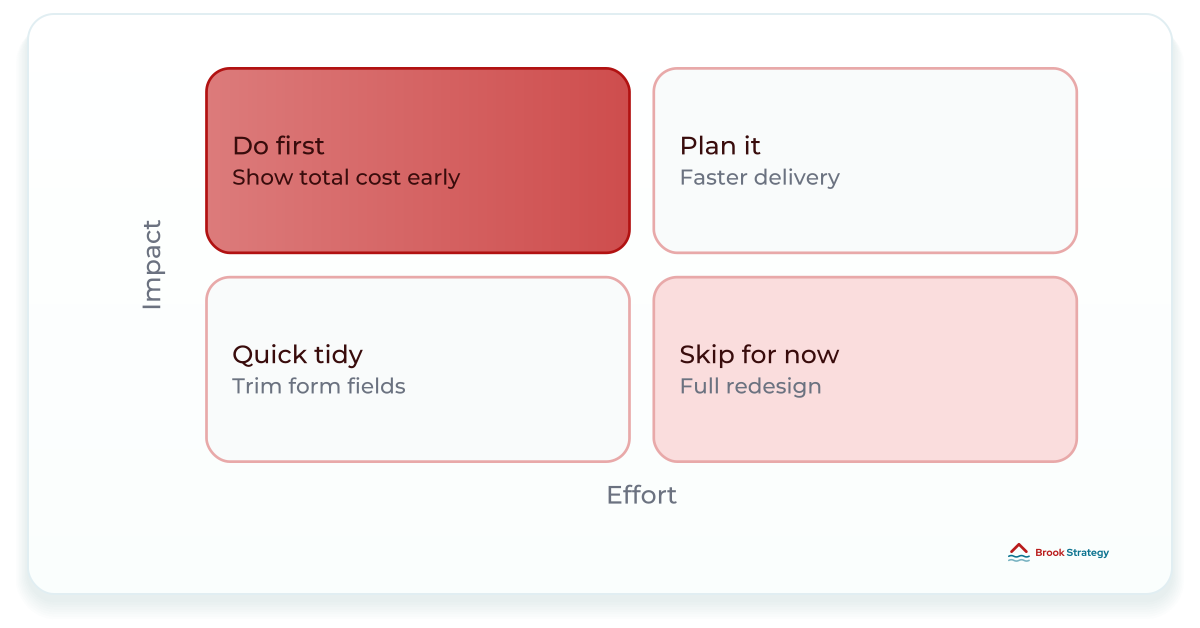
Turn that into the work for these two months: show total cost earlier, state delivery dates, add guest checkout and cut form fields. Make one change at a time on your busiest pages and record the result. Fixing conversion before you add traffic means every later ad dollar works harder.
Months 4 to 8: Add Channels Under a Cost Ceiling
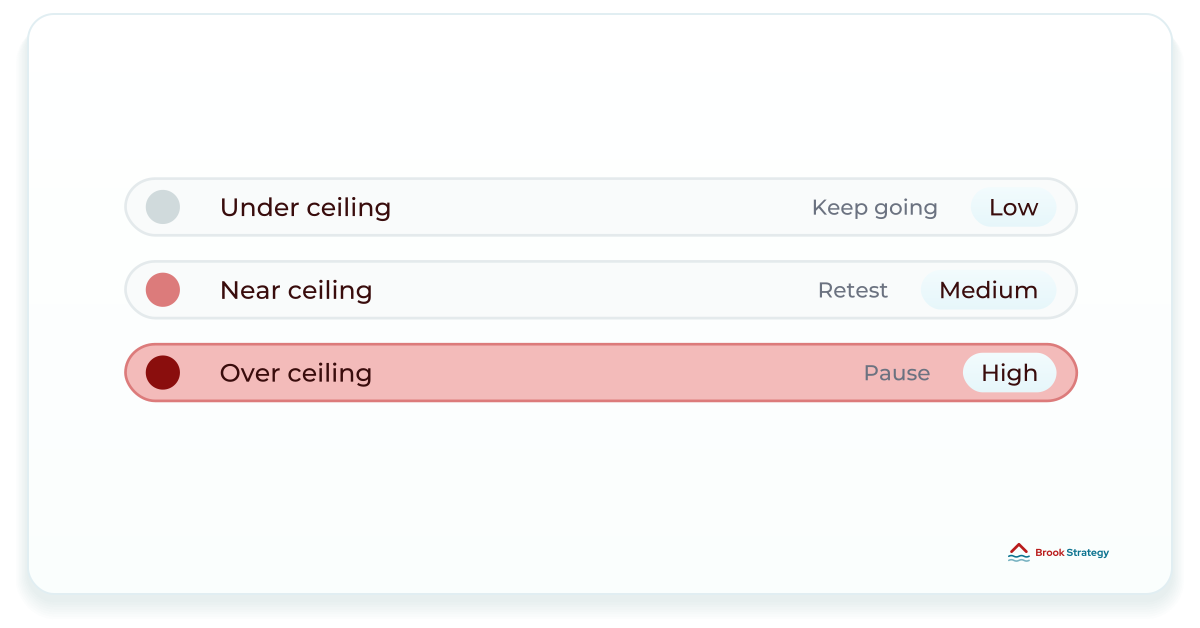
Now you test growth. Set the most you will pay for a new customer, using the margin you calculated in month one. Then pick two channels and run each for at least eight weeks with a weekly review. Search, email and creators are common first choices, and your customer interviews will point to the right ones.
Give each test a stop rule. For example, pause a channel when cost per customer stays above the ceiling for six weeks. Without a rule, teams keep paying for a channel because the last month looked a little better.
Use this phase to start the repeat-purchase plan too. List the products that run out, schedule a reminder email before the likely reorder date and track the share of orders from returning customers. If you need software for email, support or inventory, my ranking of ecommerce tools shows pricing and review scores.
| Test | Run for | Keep if | Stop if |
|---|---|---|---|
| Paid search on hero products | 8 weeks | Cost per customer stays under the ceiling | Cost exceeds the ceiling for 6 weeks |
| Reorder reminder emails | 12 weeks | Repeat rate rises on tagged products | No change after two full reorder cycles |
| Creator or affiliate links | 8 weeks | Margin positive after commission | Returns or discounts erase the margin |
Months 9 to 12: Scale What Worked and Prepare for Peak
By month nine you have data on which channels and products earn margin. Put the money there. This is also the right time to consider range expansion, a marketplace or a new market, because you can judge them against a known baseline. If you are looking at examples of how other brands made these calls, my article on ecommerce strategy examples collects seven of them.
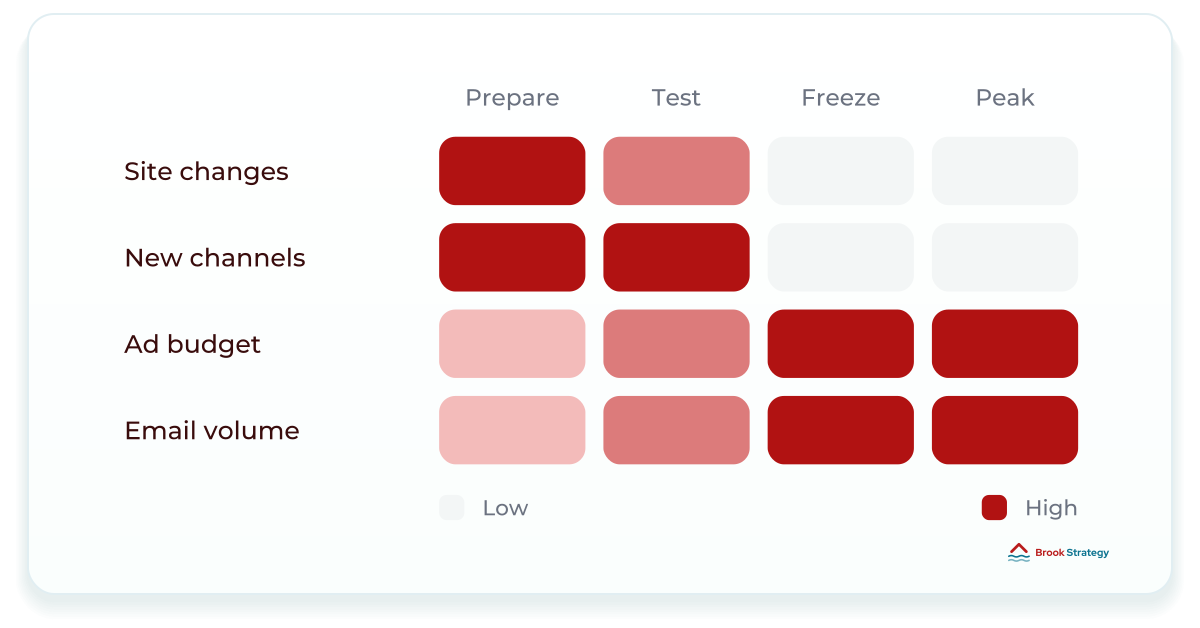
Peak season belongs in this phase for most stores. Work backward from your biggest sales period. Freeze large site changes six to eight weeks before it, finish load and checkout testing earlier, and confirm stock and shipping capacity with suppliers. Put those dates on the roadmap in the first week so that nobody schedules a platform change into the freeze.
Close the year by writing down what you learned. Which tests failed, and why? Those notes make next year's roadmap better than any template.
What Has to Happen Before Each Phase Can Start
Phases depend on each other in ways a simple timeline hides. The checkout work in phase 2 needs the tracking you verified in phase 1, or you will not know whether a change helped. The channel tests in phase 3 need a cost ceiling from the margin work, or every channel will look fine. And the scale-up in phase 4 needs stock and supplier terms agreed early, since lead times of several weeks are common in physical goods.
When I draw a roadmap, I mark these links with a simple note beside each initiative: what it needs and what it unlocks. If something upstream slips, the downstream work moves with it, and nobody is surprised in the review. This small habit prevents the most common failure I see, which is a team starting a channel test with no baseline and then arguing about the result.
Who Owns What on the Roadmap
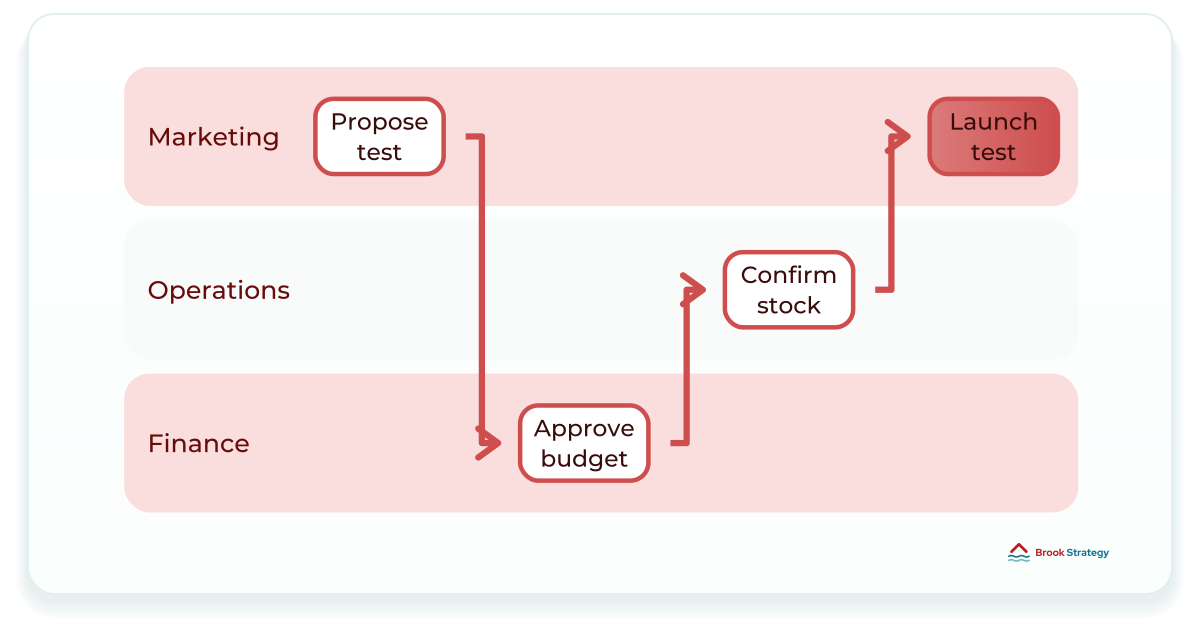
A roadmap with no names on it is a wish list. Give every initiative one owner who answers for the result, and agree who must be consulted before a change goes live. In a small team, one person often owns three or four items, and that is fine as long as the load is visible.
| Area | Typical owner | Reviews with | Checks every |
|---|---|---|---|
| Margin and pricing | Founder or finance lead | Head of ecommerce | Month |
| Checkout and conversion | Head of ecommerce | Developer or agency | Week |
| Acquisition channels | Marketing lead | Finance lead | Week |
| Repeat purchase | CRM or email owner | Merchandiser | Month |
| Stock and shipping | Operations lead | Marketing lead | Week |
Hold one short review each month with the owners in the same room. Walk through the five numbers that matter, which are margin per order, cost per new customer, conversion at the weakest checkout step, repeat rate and on-time delivery. Decide what moves, what stops and what waits. I keep these meetings to 45 minutes, because a longer meeting usually means the data was not ready.
Budget deserves the same discipline. A split I often start with is to hold back about a fifth of the planned spend for tests that the data suggests mid-year, instead of allocating the whole year in January. In my client work, the held-back money tends to go to the channel that surprised everyone.
What Pushes a Roadmap Off Course
Most roadmaps slip for a handful of reasons. Plan for them in advance, and you can reduce the damage.
| Risk | How it shows up | What I do about it |
|---|---|---|
| Too many initiatives | Six projects open and none shipped | Limit the team to two or three and park the rest in writing |
| Bad data | Reports disagree with the payment processor | Fix tracking in phase 1 and recheck each quarter |
| Supplier or stock delays | Hero products out of stock during a campaign | Tie campaign dates to confirmed stock |
| Shipping cost changes | Margin per order falls without a price change | Review shipping costs monthly and adjust thresholds |
| Platform change in the wrong season | Migration lands near peak | Keep large changes out of the freeze window |
How to Check Your Roadmap Before You Start
Run the draft through four questions:
- Does every phase have an exit gate with a number in it?
- Are there no more than three initiatives running at once?
- Is each initiative owned by a named person?
- Do the dates account for your peak season and for supplier lead times?
When all four are yes, you have a roadmap that can survive contact with a real quarter.
Questions About the Ecommerce Strategy Roadmap
How Long Should an Ecommerce Strategy Roadmap Cover?
Twelve months is the horizon I use, with detail for the first 90 days and a looser outline for the rest. Online retail changes fast, so a plan with exact dates for month ten is mostly fiction. Revisit the later phases at the end of each quarter, once you have fresh data.
What Should Come First on the Roadmap?
Fix the foundation: contribution margin per order, tracking you can trust and the biggest leak in checkout. These steps are cheap and they decide whether later spending pays back. New channels and new products come after.
How Many Initiatives Can a Small Team Run at the Same Time?
Two or three. A team of two or three people that tries to run six initiatives finishes none of them well. List everything you could do, rank it by margin impact and effort, then put the top few on the roadmap and park the rest in writing.
How Do I Decide When to Move to the Next Phase?
Use an exit gate for each phase: one or two numbers that must be true before you start the next. For example, a foundation phase might end when margin per order is known for your top 20 products and tracking matches your payment processor within a few percent. Gates keep the plan honest and prevent drifting on opinion.
Should the Roadmap Include a Replatform?
Only if the current platform blocks a specific goal you can name, such as a market you cannot sell in or a checkout flow you cannot change. Replatforming is slow and expensive, and many stores do it hoping it will fix a problem that is really about pricing or traffic. Put it in a later phase and attach a business case to it.
How Do I Handle Peak Season on the Roadmap?
Plan backward from your peak. Freeze large changes six to eight weeks before it, schedule load and checkout testing earlier, and book stock and shipping capacity in advance. Put the freeze dates on the roadmap so that nobody starts a big project in the wrong window.
Who Should Own the Roadmap?
One named person, usually the head of ecommerce or the founder. Each initiative also needs its own owner. A roadmap that belongs to everyone is not read by anyone, and decisions drift back to whoever speaks loudest.
Sources
Note: This article is general information, not legal, financial or tax advice. Figures and examples are estimates based on typical projects, so check current details with your providers and advisers before you decide.
Was this article helpful?
Thank you for letting us know.
Russell Tennant
Russell leads the Brook editorial team and works with our consultants to turn real client engagements into practical guides on roadmaps, go-to-market planning, growth and competitive strategy. Before joining Brook, he spent 11 years in strategy and product marketing roles at software and financial services companies. He has since edited more than 300 articles on strategy practice and drawn on roadmaps and growth plans from over 100 client projects. He is based in Denver, Colorado.