Key Takeaways
- Chewy reported that Autoship customers generated 83.3% of its fiscal 2025 net sales, which shows what a reorder built into the product can do.
- Nike's reversal toward wholesale shows that a stronger direct channel can still weaken total reach.
- Glossier moved into Sephora after seeing shoppers search for it there, so follow demand signals before you choose a channel.
- Each strategy fits its product and customer, so copy the logic and test it against your own margin per order.
Ecommerce strategy articles tend to list tactics. These examples are about decisions: what a company chose to do, what it gave up and what the public record says about the result. I picked seven where I could find reliable figures, and I flag the places where I could not. If you want help applying them, my ecommerce strategy consulting work starts with the same question for every client: which of these choices fits your numbers.
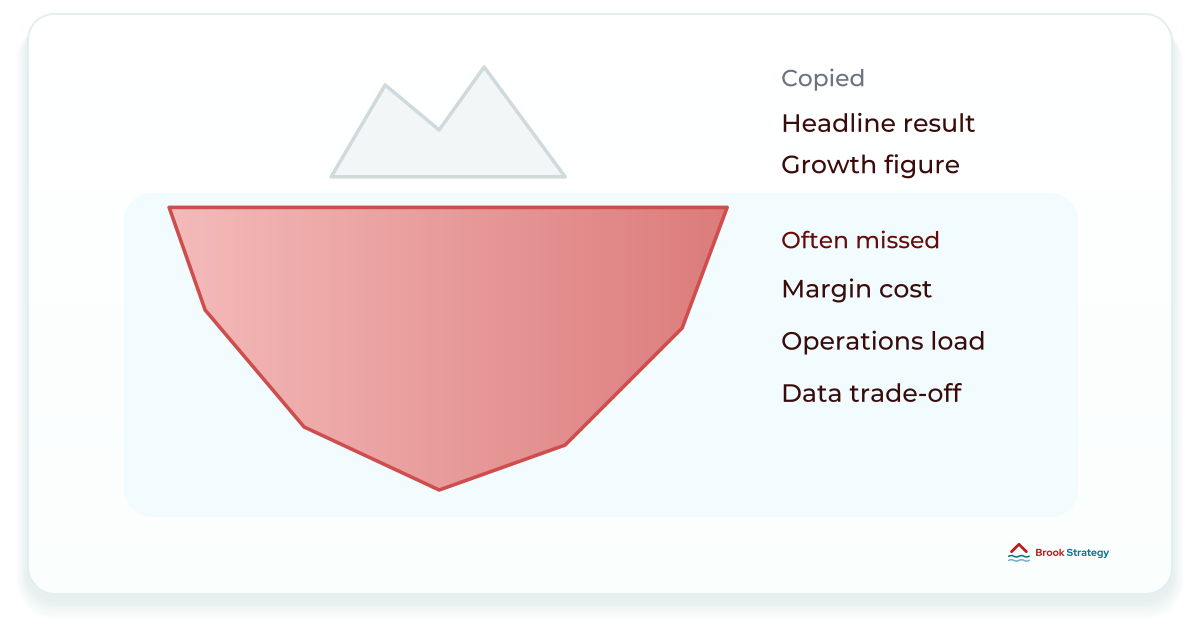
Treat each one as a hypothesis to test. A move that made sense for a company with millions of customers may not make sense for you, and the sections below say where the logic transfers.
The Seven Examples at a Glance
| Example | Strategic choice | Best test for |
|---|---|---|
| 1. Chewy Builds Reorders Into the Product | Build reorders into the product | Stores that sell consumables |
| 2. Patagonia Owns the Resale Customer | Own the resale customer | Brands with durable products |
| 3. Nike Rebalances Direct Sales and Wholesale | Balance direct and wholesale | Brands leaning on their own store |
| 4. Glossier Adds Retail to a Direct Model | Add retail after proving demand | Brands with searched-for names |
| 5. Warby Parker Moves From Home Try-On to Stores | Retire a costly free offer | Stores with free shipping offers |
| 6. Gymshark Grows Through Community First | Grow through community first | Brands with passionate early fans |
| 7. Zappos Treats Service as the Strategy | Compete on service | Stores facing price competition |
Chewy Builds Reorders Into the Product
Chewy sells pet food and supplies that run out on a schedule, so it built its strategy around the reorder. In fiscal 2025 the company reported that Autoship customers generated $10.5 billion, or 83.3% of its $12.6 billion in net sales, up from 79.2% a year earlier. The figure counts all purchases by Autoship customers, including some made outside the program, but the pattern is clear: the store is built around repeat buyers.
For your store, the takeaway is to look for items your customers use up. If you sell consumables, refills or anything with a natural replacement date, a scheduled reorder with a small incentive can do more for margin than another acquisition channel. If you sell items that are bought once, this example does not transfer directly, and you need a different reason for the second purchase.
How a First Order Becomes a Standing Order
- List the products your customers use up and how long a unit lasts.
- Offer a scheduled reorder at checkout with a modest incentive.
- Send a reminder before each shipment so the customer stays in control.
- Make skipping, delaying and cancelling easy, which builds trust.
- Track repeat rate and margin by subscriber and by product.
Software That Supports Scheduled Reorders
Subscription apps such as Recharge connect to the main store platforms and handle billing and skips. Email tools like Klaviyo can send the reminder before each shipment.
Patagonia Owns the Resale Customer
Patagonia runs Worn Wear, its own platform where customers trade in used items for credit and buy authenticated used ones. According to a 2020 Modern Retail report, the program had grown for about four years, the company called it a record year and it promoted used items on the main store next to new ones. Patagonia chose to build the platform itself so it could own the resale experience and its link to the brand mission.
The strategic point is control of the customer. Resale happens whether you take part or not, and a brand that runs it keeps the relationship and the credit that brings people back to the store. The same report notes that handling single used items is harder than shipping new stock, so the model needs real operations behind it. Revenue was not disclosed, so treat this as a case for the logic and not for the numbers.
How a Used Item Turns into a New Customer
- Decide whether your products hold value and can be authenticated.
- Offer store credit for returns of used items in good condition.
- Inspect, repair and photograph each item.
- List used items next to the new version on the product page.
- Measure how many resale buyers go on to buy new.
Platforms for Branded Resale
Trove powers branded resale sites for several outdoor and apparel brands. Smaller stores can start with a manual process and a simple listing page before they buy a platform.
Nike Rebalances Direct Sales and Wholesale
Nike pushed hard on its own digital channels, and then reversed course. In its fiscal 2025 second-quarter results, revenue fell 8% to $12.4 billion, with Nike Direct down 13% and wholesale down 3%. CEO Elliott Hill said prioritizing digital sales had hurt the health of its marketplaces, and that he planned to build an integrated marketplace across direct and wholesale and rebuild relationships with partners such as Dick's Sporting Goods, Foot Locker and JD Sports.
I include Nike because it shows a risk that smaller brands often miss. A direct channel has the best margin, but a brand that pulls back from partners can lose reach and shelf presence that the direct channel did not replace. Before you shift volume to your own store, check what share of your new customers first met you through a partner or marketplace.
What Happened When Direct Sales Took Priority
- Map where your customers first discover you, by channel.
- Calculate the margin of each channel after fees and returns.
- Test a change in one product line before you move the whole range.
- Agree clear roles with partners so channels do not compete on price.
- Review the mix every quarter against reach and margin.
Tools for Channel Analysis
Your store analytics and a first-purchase survey show where customers first heard of you. A simple spreadsheet of margin by channel is enough for most brands.
Glossier Adds Retail to a Direct Model
Glossier built its name online, then announced on July 26, 2022 that it would sell in Sephora stores in the US and Canada, on Sephora's website and in its app, starting in early 2023. Glossier's CEO called it a new chapter in its omnichannel strategy, and the company said searches about whether Glossier was sold at Sephora had risen by up to 200% year over year. Its own stores were set to continue expanding.
The move came from watching where demand showed up. Shoppers were already looking for the brand at a retailer that did not stock it. If you see people searching for your product by name on a marketplace or retailer site, that is a signal worth testing before you spend on awareness. Set the terms carefully, since wholesale lowers margin per unit and gives up some of the customer data.
How a Direct Brand Reaches Shoppers Who Search Elsewhere
- Check search data for your brand name next to retailer names.
- Estimate margin per unit in wholesale against direct.
- Choose a retailer whose shoppers match your customer profile.
- Keep your full range and your best offers on your own store.
- Compare new customer cost and repeat rate across channels after six months.
Where to Look for Demand Signals
Search console data and your site search show what shoppers ask for by name. Retail partners can often share sell-through data if you ask in the contract.
Warby Parker Moves From Home Try-On to Stores
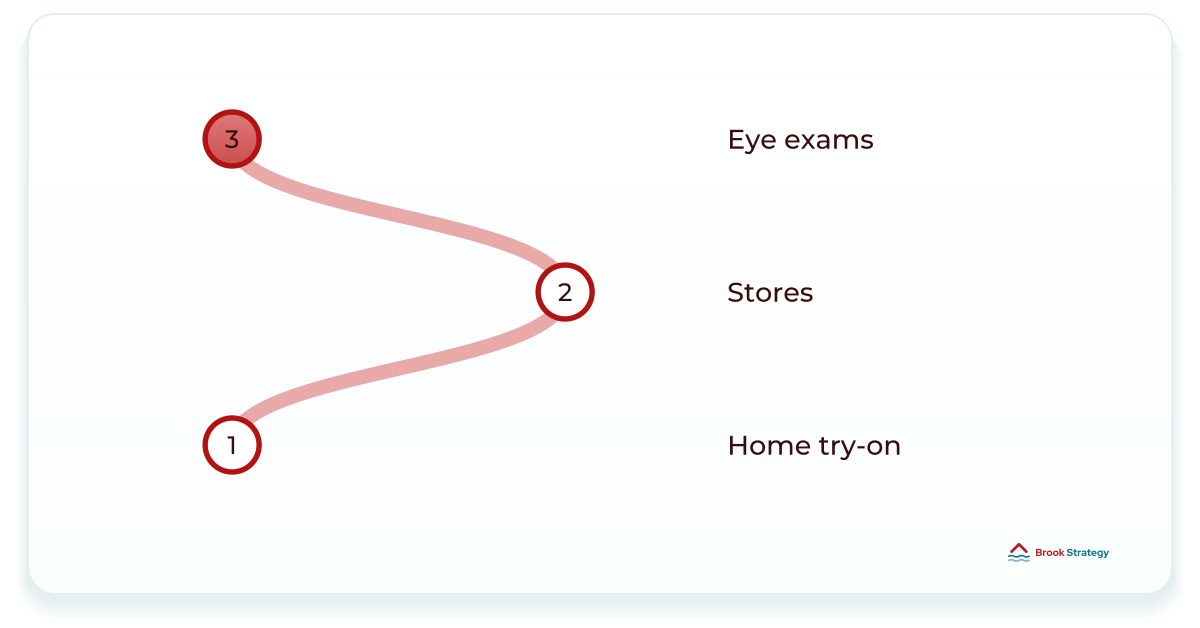
Warby Parker became known for home try-on, where customers received up to five frames for free. The company is now ending the program and shifting toward store visits and a virtual try-on tool. It reports 300 stores with 45 more planned for the year, and its eye exam business grew 44% year over year in the quarter and makes up 6% of revenue. Roughly 75% of glasses are bought at the same location where the exam takes place.
The example shows that a strategy that made a brand can later become a cost to be reconsidered. Free shipping both ways on five frames is expensive, and stores bring in exams, which lead to purchases. Review your own free offers once a year and ask whether they still earn their cost at your current size.
What Changes When Stores Outsell the Shipping Box
- List every free service you offer and what each costs per order.
- Compare conversion and return rates for customers who used it.
- Test a lighter version, such as fewer items or a paid return label.
- Look for a service that brings customers into a higher value channel.
- Set a yearly review date for each offer.
Tools for Offer Review
Your returns data and order reports show what each free offer costs. A cohort report in your analytics tool shows whether those customers return.
Gymshark Grows Through Community First
Gymshark was founded in 2012 by Ben Francis and Lewis Morgan, and in 2013 it began making its own apparel. At the 2013 BodyPower show it sold out of stock on the first day. By 2020 it was paying 125 influencers, and in August 2020 General Atlantic bought a 21% stake for £275 million at a valuation of £1.25 billion. Its first permanent store opened on Regent Street in London in October 2022.
What stands out is the order: community first, retail much later. A brand that begins with people who already care about the product can lean on creators and customers for reach, which keeps early acquisition cost low. If you copy this, expect it to depend on a product people want to be seen with, and treat the influencer count as one input and not a guarantee.
How Early Fans Became the Sales Channel
- Identify the customers who already talk about your product.
- Give creators and fans early access and a reason to share.
- Collect and feature customer content on your own store.
- Add a physical or pop-up presence once demand is proven.
- Track new customers from creator links against paid ads.
Tools for Community and Creator Work
Creator platforms and affiliate tools such as Impact track sales from each link. A simple discount code per creator is the cheapest way to start.
Zappos Treats Service as the Strategy
Zappos started in 1999 as ShoeSite.com and was bought by Amazon in 2009 for a reported $1.2 billion at closing. Its public approach put open, honest communication with customers at the core, and it encouraged staff to engage customers on social media to show a human face. It even sold its service playbook to other businesses through Zappos Insights, which launched in 2008.
I use Zappos to make a point about price. A store that competes only on price is always one competitor away from losing the sale, while a store known for service gives shoppers another reason to return. Service does cost money, so check which part of it customers value and pay for that part first. I could not verify Zappos's current return terms for this article, so look them up before you compare your own policy.
How Service Became the Reason to Buy
- Ask recent customers what made them buy from you again.
- Find the two service moments that matter most, such as delivery and returns.
- Set a clear standard for each one and share it with the team.
- Review every complaint for a pattern, then fix the cause.
- Track repeat purchase rate next to service scores.
Support and Feedback Tools
Helpdesk tools such as Gorgias handle ecommerce support inside your store data. A short post-purchase survey in your email tool gives you the feedback.
What the Examples Have in Common
Looking across the seven, three patterns show up. First, each company tied its strategy to a fact about its customer: they use up the product, they search by name, they care about a community or they want service. Second, each move cost something, such as margin in wholesale or operations in resale. Third, several of the companies reversed or adjusted a move later, which tells you a strategy is a working hypothesis and not a permanent answer.
| Pattern | Seen at | Question for your store |
|---|---|---|
| Strategy follows a customer fact | Chewy, Glossier, Gymshark | What do my customers do that a competitor ignores? |
| Every move has a cost | Patagonia, Nike, Glossier | What does this cost me in margin, operations or data? |
| Strategies get revised | Nike, Warby Parker | When will I review this decision? |
If you want the order of decisions behind these patterns, my ecommerce strategy framework covers it, and the ecommerce strategy roadmap puts dates on it. For software behind any of these moves, see my review of ecommerce tools.
How to Choose the Example to Test First
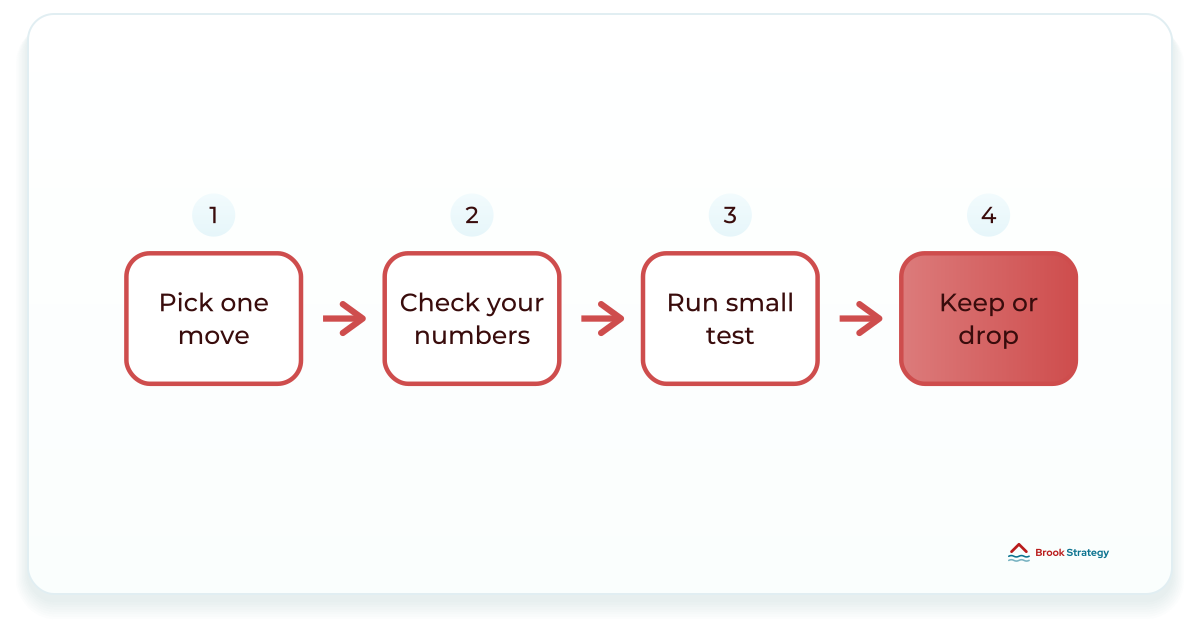
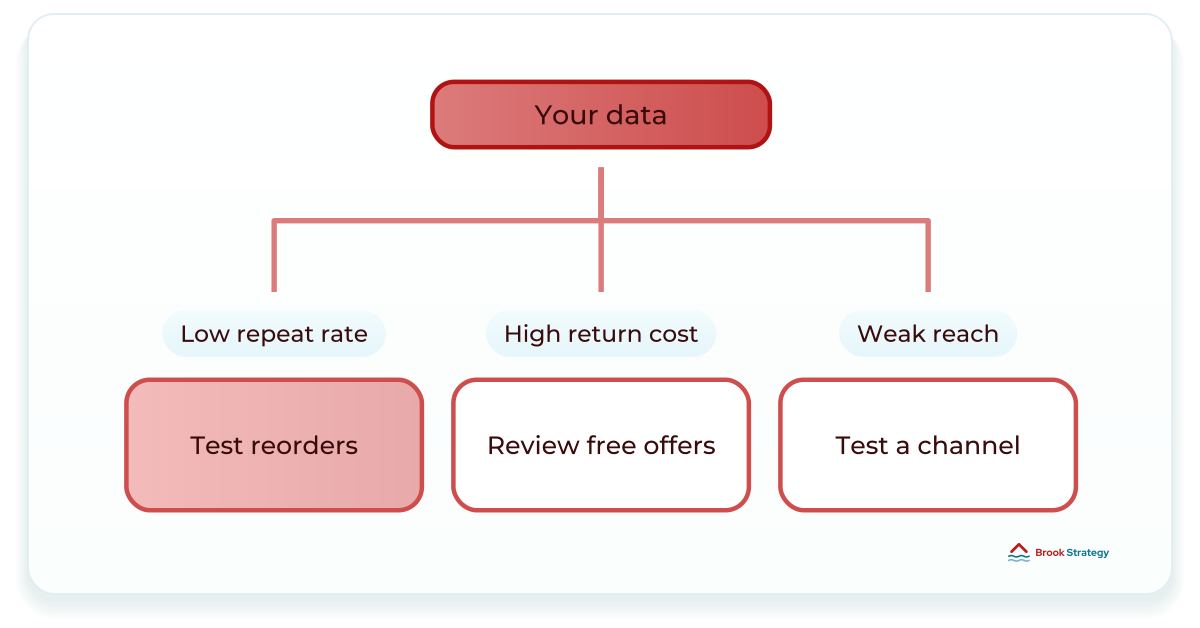
Pick one move and test it for a quarter. Use these checks to decide which:
- Your data shows a clear gap, such as low repeat rate or high return cost.
- The test can run on one product line or one segment.
- You can measure the result in margin, not only in revenue.
- You can stop the test without damaging customer trust.
Most stores I work with start with the reorder or the free-offer review, since both can be tested with the data they already have.
Questions About Ecommerce Strategy Examples
What Do the Best Ecommerce Strategies Have in Common?
They make a clear choice and accept the cost of it. Chewy chose reorders, Patagonia chose control of resale and Gymshark chose community before retail. In each case the strategy fits the product and the customer, and a different business would need a different choice.
Can a Small Store Copy These Examples?
Copy the logic and not the scale. A small store can offer scheduled reorders, run a manual resale or trade-in program, or build a small group of creators. What does not transfer is the budget or the data volume of a company with millions of customers.
Is Direct-to-Consumer Still Worth Pursuing?
Yes, for the margin and the customer data, but the Nike and Glossier examples show that direct is a channel and not a full strategy. Check where your customers first find you before you move volume away from partners and marketplaces.
How Do I Know Which Example Fits My Business?
Match the example to your biggest gap. If your customers buy once and disappear, look at the Chewy and Zappos examples. If you are stuck on reach, look at Gymshark and Glossier. If your free offers are costing you margin, look at Warby Parker.
Are These Figures Current?
They were taken from public reports when I wrote this article, and each one is linked in the sources. Company numbers change every quarter, so check the original report before you quote a figure in a plan or a presentation.
Should I Follow a Competitor's Ecommerce Strategy?
Study it, but do not copy it. A competitor's choices reflect its margins, supply chain and history. Use the example to understand which decision they made, then check whether the same decision pays off with your numbers.
Where Should I Start If I Want to Build My Own Strategy?
Start with contribution margin per order and who your repeat buyers are. Those two facts tell you which of these moves can work for you. My ecommerce strategy framework walks through the order of decisions, and the roadmap turns it into a timeline.
Sources
- Subscription Insider: Chewy's Autoship Customer Sales in Fiscal 2025
- Modern Retail: Patagonia Is Investing in Its Worn Wear Resale Platform
- Retail Dive: Nike Sales Fall as It Rebuilds Wholesale Partnerships
- Retail Dive: Glossier's First Wholesale Deal With Sephora
- eMarketer: Warby Parker Ends Home Try-On
- Wikipedia: Gymshark
- Wikipedia: Zappos
Note: This article is general information, not legal, financial or tax advice. Figures and examples are estimates based on typical projects, so check current details with your providers and advisers before you decide.
Was this article helpful?
Thank you for letting us know.
Russell Tennant
Russell leads the Brook editorial team and works with our consultants to turn real client engagements into practical guides on roadmaps, go-to-market planning, growth and competitive strategy. Before joining Brook, he spent 11 years in strategy and product marketing roles at software and financial services companies. He has since edited more than 300 articles on strategy practice and drawn on roadmaps and growth plans from over 100 client projects. He is based in Denver, Colorado.