Key Takeaways
- A data strategy roadmap has five phases: align, assess, prioritize, build and run, each ending with a decision.
- Plan 12 months in detail and review the plan every quarter, because the business will change underneath it.
- Limit yourself to three to five major initiatives at a time and give each one a business owner.
- Fix one visible problem in the first 90 days so the program earns trust early.
Most data strategies fail at the handoff between the slide deck and the calendar. Everyone agrees on the vision, then nobody knows who does what in March. A roadmap fixes that, and it is the main deliverable I produce in data strategy consulting work.
Below is the five-phase structure I reuse across client projects. Copy it, rename the phases if you like and adjust the timing to your size. Each phase has a purpose, a set of outputs and a gate, which is the decision that lets you move on.
The Five Phases in Short
| Phase | Typical length | Main outputs | Gate to pass |
|---|---|---|---|
| 1. Align | 2 to 3 weeks | Business questions, goals, sponsor | Leaders agree on the top decisions data must support |
| 2. Assess | 3 to 5 weeks | Source map, quality findings, gaps | Findings accepted by the data owners |
| 3. Prioritize | 2 to 3 weeks | Ranked initiatives, sequence, budget range | Funding and owners confirmed |
| 4. Build | 3 to 9 months | Metrics, pipelines, governance, reports | Each release adopted by its target team |
| 5. Run | Ongoing | Monitoring, quarterly review, backlog | Measures hit targets or the plan changes |
The lengths assume a company of 100 to 1,000 people. Smaller firms compress phases one to three into a month. Larger ones may run phase four as several parallel streams. The gates matter more than the dates, because skipping one is how roadmaps drift.
Phase 1: Align on the Questions Data Must Answer
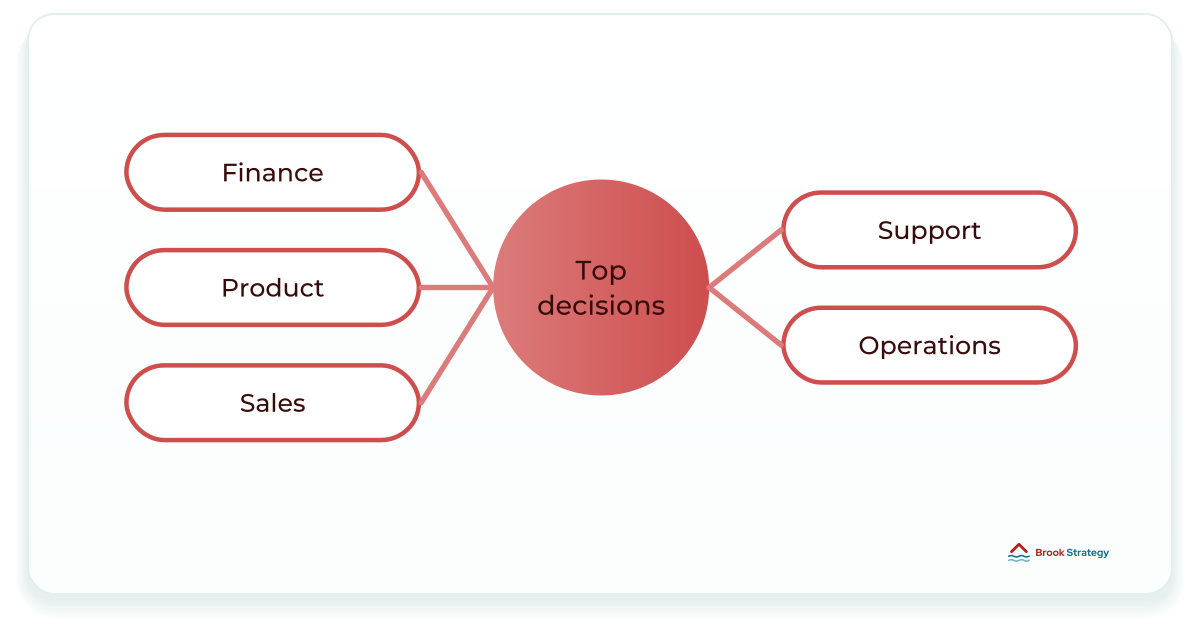
Start with decisions, not systems. Interview six to ten leaders and ask each one the same three questions: which decisions do you make every quarter, which numbers do you wish you had for them and which numbers do you not trust today? Collect the answers into a single list.
I ran this phase for a mid-sized software vendor where finance, product and sales each listed "customer count" as a top need. They meant three different things. The disagreement took one workshop to surface and saved months of building the wrong report. That is the real output of alignment: shared language before shared infrastructure.
What You Produce
- A one-page list of the ten decisions that most need better data.
- A named executive sponsor with budget authority.
- Three to five goals with a measure each, such as "close the books in six working days".
- A short list of the people who will own each area.
Phase 2: Assess What You Have
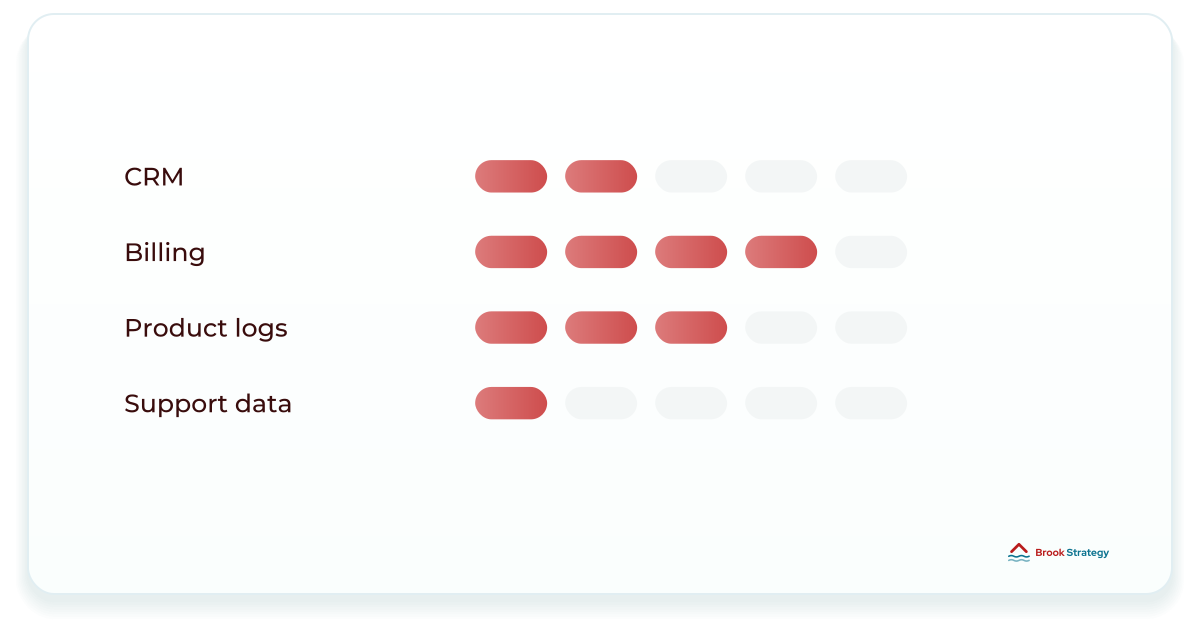
Map every source that feeds your top decisions: where it lives, who owns it, how often it updates and how reliable it is. Score quality on a simple scale for completeness, accuracy, timeliness and consistency. You are looking for the gaps that block the decisions from phase one, not a full inventory of every table.
Gartner surveyed 566 data and analytics leaders and found only 44% rated their teams effective at providing value to their organizations. Those were self-ratings, so I read the figure as a sign of how many teams feel disconnected from business outcomes. An assessment is where you find out why. My guide to a data strategy assessment lists the checks I run and a scoring sheet you can copy.
Phase 3: Prioritize and Sequence
Turn the gaps into initiatives and score each on four things: business value, effort, data readiness and risk. A one-to-five scale is enough. Multiply value by readiness, divide by effort and sort. The ranking is a conversation starter, not a verdict, but it forces leaders to explain why a favorite project sits lower than expected.
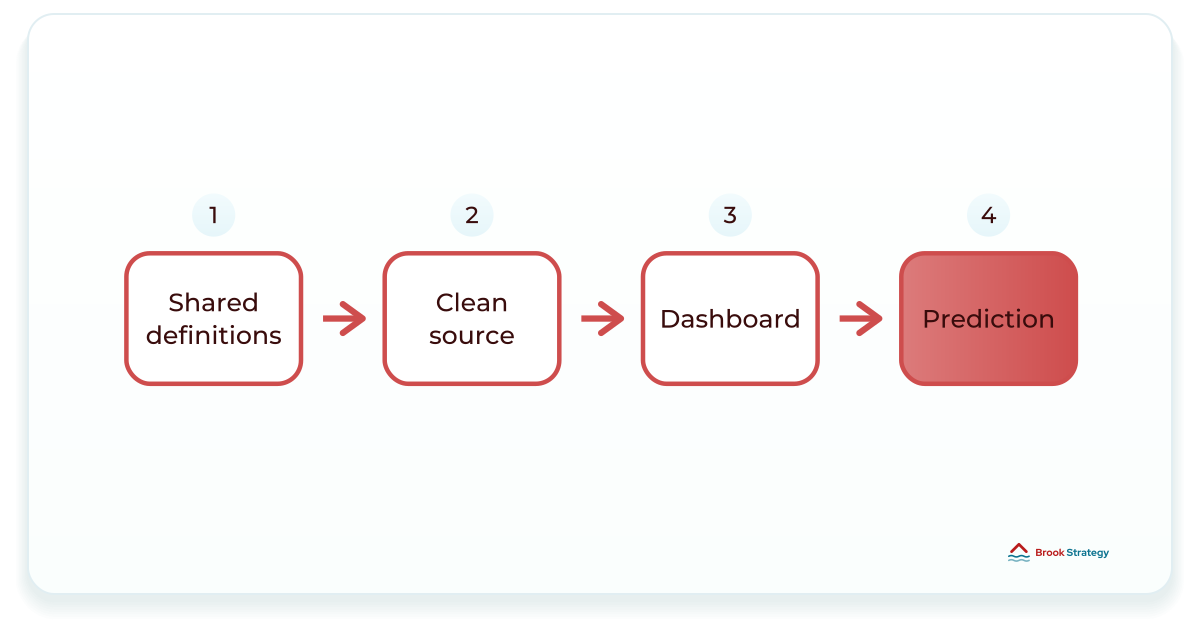
Then sequence by dependency. A churn dashboard needs agreed customer definitions, and a forecasting model needs clean history. Put foundations before the work that sits on top, even when the foundation is less exciting. Keep the first release small enough to deliver in 90 days.
| Initiative example | Value | Effort | Readiness | Phase |
|---|---|---|---|---|
| Single customer definition | 4 | 2 | 5 | First 90 days |
| Revenue reporting from one source | 5 | 3 | 4 | First 90 days |
| Warehouse for product and billing data | 4 | 4 | 3 | Months 4 to 9 |
| Churn prediction | 5 | 4 | 2 | After the warehouse |
Phase 4: Build in Small, Adopted Releases
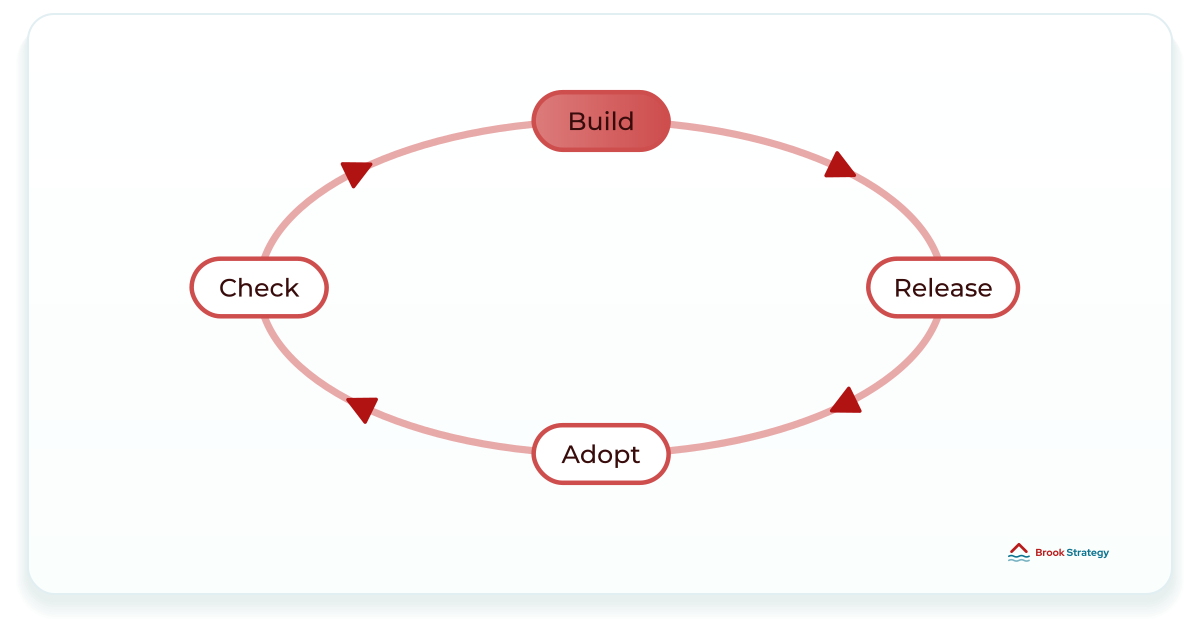
Ship in releases of four to eight weeks. Each release should answer one business question for one team and end with an adoption check: are they using it, and did the decision change? A release that nobody opens is not finished, however well it works technically.
Budget for the delays. In my client work, the usual culprits are access approvals, source owners who are too busy to review definitions and a second round of requirements after the first demo. Add 20 to 30% slack to any date that depends on another team. My article on data strategy implementation goes deeper on the causes and how to plan around them.
Roles Worth Naming Early
Name a roadmap owner, a data owner for each major source, a product-minded lead for each release and a small group of business users who test early. Four or five named people are enough for most mid-sized programs, and a missing name is the quickest way to spot a stalled item.
Phase 5: Run, Measure and Reprioritize
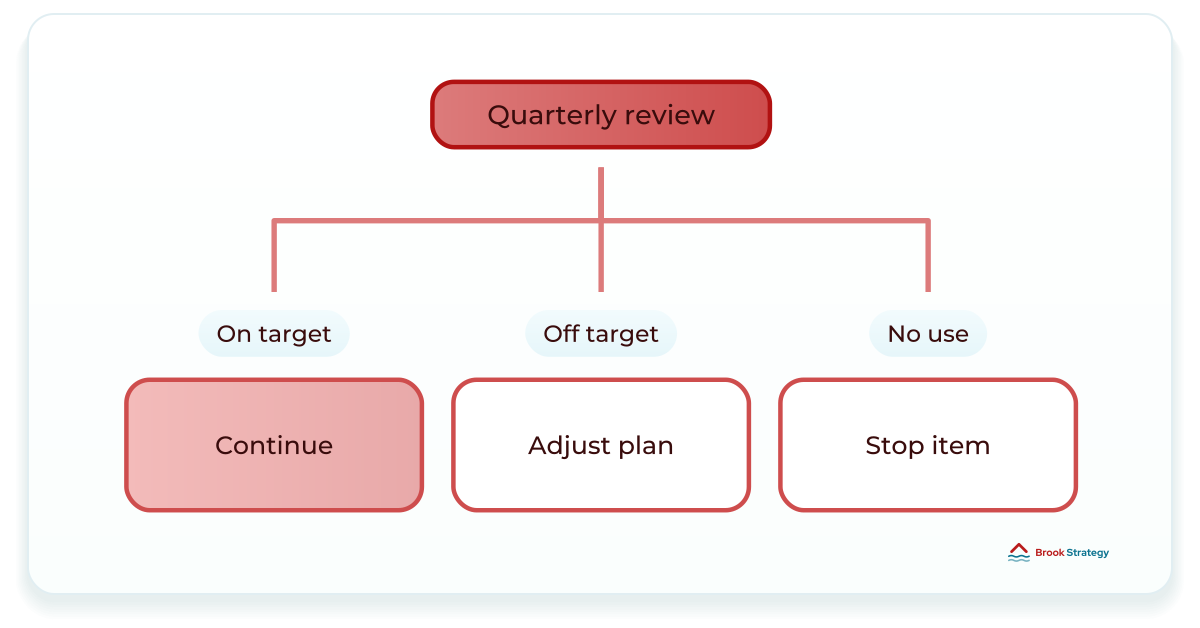
After the first releases, switch to a quarterly rhythm. Review what shipped, what slipped and what changed in the business, then move initiatives up or down. Track a short list of measures that show whether the program is working. Gartner's 2024 survey of 504 data and analytics leaders found that only 22% of organizations had defined, tracked and communicated business impact metrics for most of their use cases, so a simple, visible scorecard puts you ahead. I list seven worth tracking in data strategy KPIs.
If you are a smaller company and a five-phase program feels heavy, collapse it. The plan in data strategy for small business shows how to run the same logic with one person and a spreadsheet.
A Copyable Roadmap Template
Use one page with these columns: initiative, business question, owner, phase, start, end, dependency, measure and status. Keep one row per initiative, sort by phase and color only the status column. If the page needs more than two screens, you are carrying too many initiatives at once.
| Column | What goes in it | Example |
|---|---|---|
| Business question | The decision the work supports | Which customers are likely to cancel? |
| Owner | One person in the business | VP Customer Success |
| Dependency | What must exist first | Single customer definition |
| Measure | How you will know it worked | Save rate on flagged accounts |
Roadmap Mistakes I See Again and Again
The first is the wish list. A roadmap with twenty initiatives and no ranking tells your teams that everything is a priority, which means nothing is. Cut the list until every item has an owner who has agreed to the date. If an owner shrugs, the item is not ready.
The second is the technology-first roadmap. It starts with "implement a warehouse" and ends up with a warehouse that holds data nobody asked for. Write each initiative as a business question, such as "know which customers are likely to cancel", and let the tool follow the question.
The third is the missing dependency. A forecasting model on your roadmap in month three cannot work if customer definitions are not agreed until month six. Draw the dependencies on the one-page template, and look at every arrow that crosses a quarter boundary. Those are where delays start.
The fourth is a roadmap that nobody outside the data team has seen. Share it with the leaders you interviewed in phase one, ask them to confirm that their top decision appears, and keep a visible changelog. People support a plan they can find themselves in.
The last is skipping the stop rule. Decide up front what would make you pause an initiative: a missed gate twice, a sponsor leaving or a business question that has gone away. A stop rule feels pessimistic, yet it protects the budget and saves face for the people running the work.
Sizing the Effort Honestly
When leaders ask how much effort the plan needs, I answer in people and weeks, not in tool prices. A mid-sized company running three initiatives usually needs a part-time sponsor, one owner per initiative, a data engineer or analyst on each build and a few hours a month from every source owner. Count those hours before you commit, since the hidden cost of a roadmap is almost always the time of people who already have full-time jobs.
Communicating the Roadmap So People Use It
A roadmap only works if the people who carry it out can see it. Publish a one-page version where your teams already look, such as the intranet or the shared drive, and send a short note after every quarterly review that says what moved. Keep the language plain: name the business question, not the technology.
Present it first to the leaders you interviewed, then to the data owners and finally to the wider teams who will use the results. Each audience asks a different question. Leaders want to know what they get and when. Owners want to know what is expected of them. Users want to know what changes in their week. Prepare one sentence for each before the meeting.
Invite challenge. When someone says their top decision is missing, add it to the backlog with a rank and an explanation. People accept a lower rank far more readily than silence.
Where You Should Begin
Pick the phase that matches what you have. If leaders disagree on what the data is for, start at phase one. If you have goals but no view of your sources, start at phase two. If you already know the gaps, jump to prioritizing and make the ranking visible. Either way, write down the next gate and its date today.
Bring in outside help when you cannot get leaders in one room, when internal teams are too close to the data to judge it or when you need a roadmap quickly for a budget cycle. Keep the engagement scoped to one deliverable and one decision date.
Questions About Building a Data Strategy Roadmap
How Long Should a Data Strategy Roadmap Cover?
Plan in detail for 12 months and sketch the next 12 to 24. Anything further out changes too often to be worth detailing. Review the full roadmap every quarter and update the phases that have moved.
Who Should Own the Data Strategy Roadmap?
One named executive, usually the head of data, analytics or operations, owns the roadmap. Each initiative inside it needs its own owner from the business team that benefits. A roadmap owned by IT alone tends to drift from business goals.
What Is the Difference Between a Data Strategy and a Data Roadmap?
The strategy states the goals, principles and priorities. The roadmap turns them into phases, owners, dates and dependencies. You need the strategy first, or the roadmap becomes a list of projects without a reason.
How Many Initiatives Should a Roadmap Include?
Most teams can carry three to five major initiatives at once. If your first draft has fifteen, rank them and move the lower ones to a later phase. A long list signals that priorities have not been decided.
What Should the First 90 Days Include?
Agree on the business questions, name data owners, define the five to ten key metrics and fix one visible problem, such as a report everyone distrusts. Early wins build the support you need for the slower infrastructure work.
Do We Need to Buy New Tools to Follow a Roadmap?
Often not at the start. Many early phases are about definitions, ownership and cleanup in tools you already have. Buy new technology when the roadmap shows a specific gap that your current stack cannot close.
How Do I Keep a Roadmap from Going Stale?
Set a quarterly review with fixed questions: what shipped, what slipped, what changed in the business and what moves up or down. Publish the updated version to everyone who contributed.
Sources
- CX Today, Gartner survey on data and analytics team effectiveness
- BigDATAwire, Gartner CDAO Agenda Survey
Note: This article is general information, not legal, financial or tax advice. Figures and examples are estimates based on typical projects, so check current details with your providers and advisers before you decide.
Was this article helpful?
Thank you for letting us know.
Russell Tennant
Russell leads the Brook editorial team and works with our consultants to turn real client engagements into practical guides on roadmaps, go-to-market planning, growth and competitive strategy. Before joining Brook, he spent 11 years in strategy and product marketing roles at software and financial services companies. He has since edited more than 300 articles on strategy practice and drawn on roadmaps and growth plans from over 100 client projects. He is based in Denver, Colorado.