Key Takeaways
- Most implementation delays come from decisions and people, not technology.
- Release in four to eight week slices, each ending with an adoption check.
- Add 20 to 30% slack to every date that depends on another team.
- Name an accountable leader, a data owner per source and an escalation path before work starts.
A data strategy only pays off when someone carries it out. The gap between the plan and the result is where budgets leak: dates slip, scope grows and sponsors lose patience. If you have built your plan, perhaps through data strategy consulting or an internal effort, this article is about the next stretch.
I use six steps and list, for each one, the delay I see most often and what prevents it. The pattern comes from my client work over several years, not from a single study, so adjust the numbers to your size.
Six Steps and Their Typical Delays
| Step | Typical duration | Most common delay | Prevention |
|---|---|---|---|
| 1. Set up ownership | 2 to 4 weeks | Sponsor too busy to decide | Fixed decision date and a deputy |
| 2. Lock definitions | 3 to 6 weeks | Leaders disagree on terms | One working session with a tie-break rule |
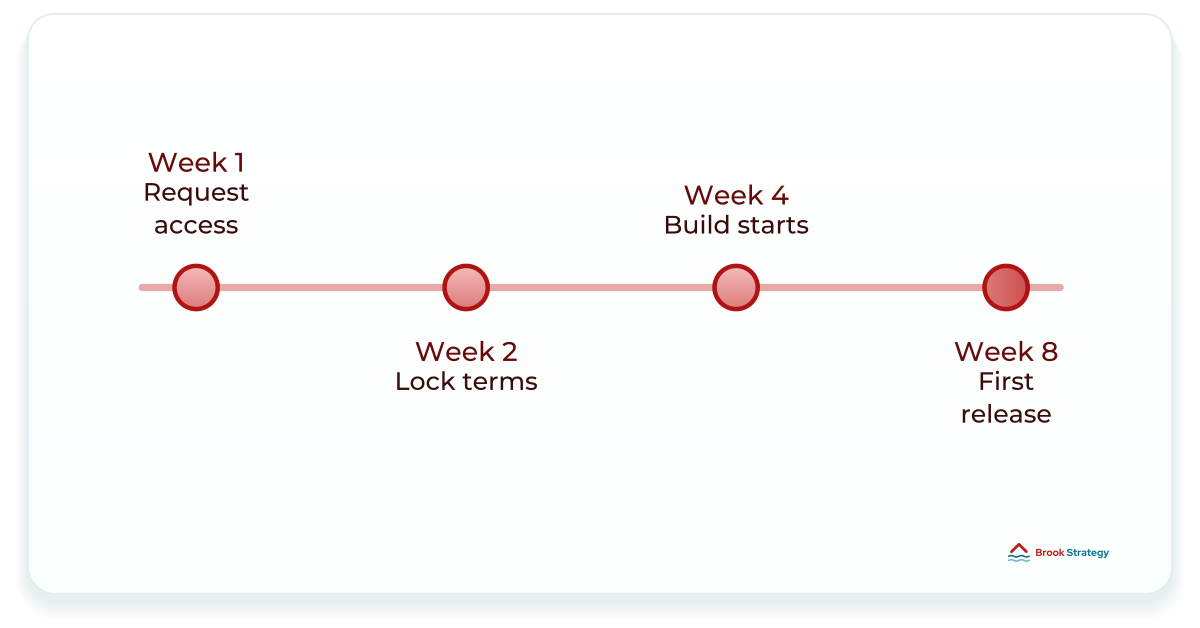
| 3. Get access | 2 to 8 weeks | Approvals queue behind other work | Request access in week one |
| 4. Build the first release | 4 to 8 weeks | Scope grows after the demo | Written scope with a change process |
| 5. Drive adoption | 2 to 4 weeks per release | Users stay with old spreadsheets | Retire the old report on a date |
| 6. Review and adjust | Quarterly | Reviews skipped when busy | Calendar dates set a year ahead |
The durations assume a mid-sized company and run partly in parallel. Steps two and three can start together, and the first release can begin once its definitions are signed off. Plan from your data strategy roadmap and use this list as the checklist for the build phase.
Step 1: Set Up Ownership Before You Build
Name an accountable leader, a data owner for each source and a small group of business users who will test early. Write down who decides what, and what happens when two people disagree. The escalation path matters more than the org chart.
The delay: the sponsor agrees in principle and then has no time for decisions. I have seen a whole build wait three weeks for one sign-off on a customer definition. Prevent it by booking a standing 30-minute decision slot every week for the first two months, with a named deputy who can decide in the sponsor's absence.
Step 2: Lock the Definitions
Take the ten to fifteen terms your reports use and write one definition for each: customer, active user, recurring revenue, churn, lead, qualified lead. Hold a single working session with the leaders affected and settle the conflicts in the room. Where they cannot agree, decide a tie-break rule, such as "finance's definition wins for board reporting".
The delay: definitions reopen after the first demo, because someone sees their number change. Prevent it by showing the effect of each definition on a few real numbers before signing off, so nobody is surprised later. Record the decision, the date and the reason, and keep the page where everyone can find it.
Step 3: Get Access Early
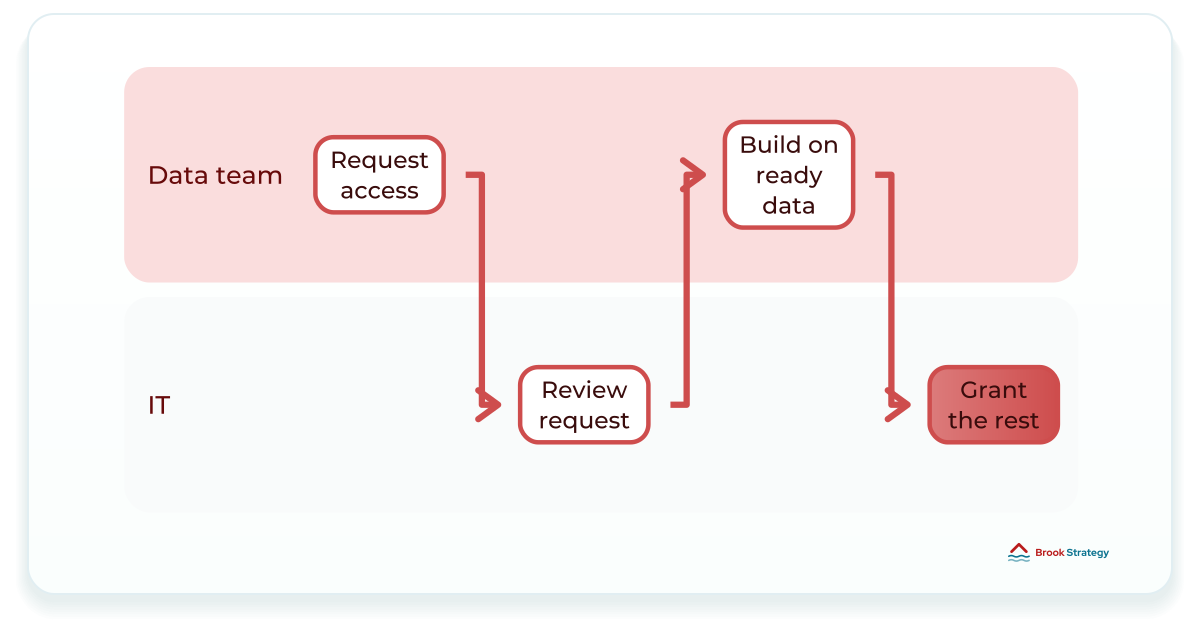
Data access is the quiet killer of timelines. Requests go to a security team, a vendor or a system administrator with a backlog, and each one takes longer than the build work it unlocks. List every source you need in week one, file every request that day and track them on one sheet.
If a source is slow, build the first release on the sources you have and add the rest later. Teams in regulated sectors often face additional review for sensitive fields, so involve compliance early and keep the legal questions with your own counsel.
Step 4: Build the First Release Small
Pick one business question for one team and deliver it in four to eight weeks. Write the scope on one page: the question, the sources, the measures, the audience and what is explicitly out. Show an early version after two weeks, so changes happen while they are cheap.
The delay: after the demo, new requests appear, and each seems reasonable. Prevent it with a change log. Anything new goes into the next release unless the sponsor swaps it for something already in scope. This keeps the first release on time and teaches stakeholders how the process works. My overview of data strategy assessment shows how to find gaps that belong in later releases.
Step 5: Drive Adoption, Not Just Delivery
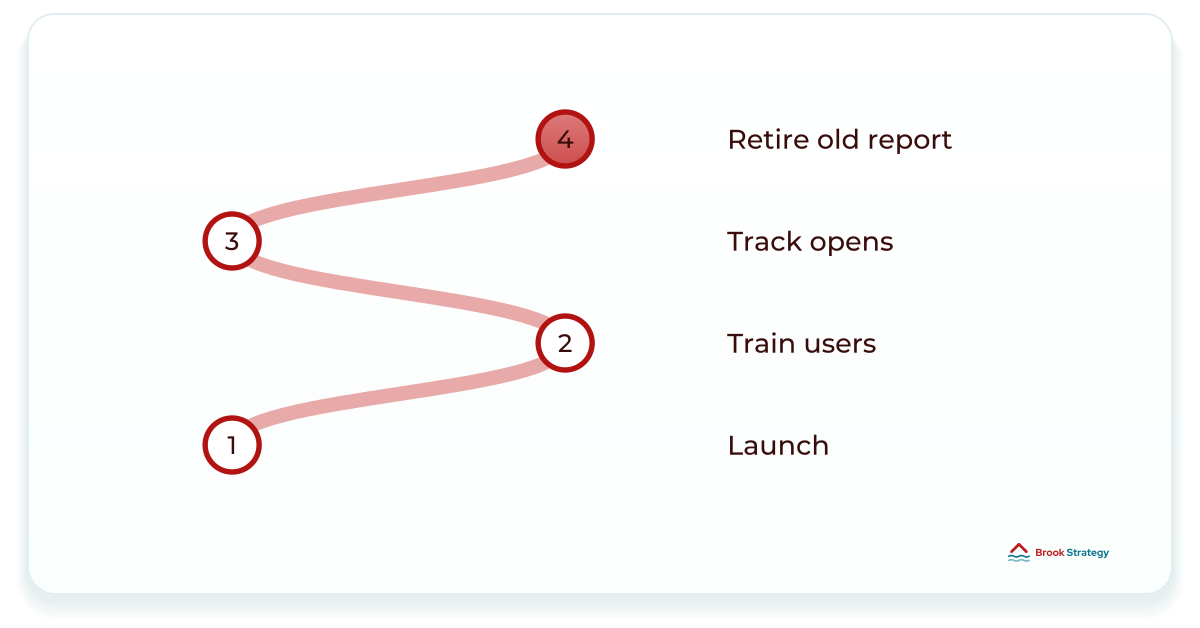
A release is finished when the target team uses it to make decisions. Plan short training, put the new report into the existing weekly meeting and retire the old spreadsheet on a stated date. Without a retirement date, two versions of the truth run side by side for months.
Track usage in the first four weeks: who opened it, how often and what they asked for next. A report that nobody opens in week three is a signal to talk to the team, not to build more. One simple practice is to ask each team lead to name one decision that changed because of the new numbers.
Step 6: Review and Adjust Every Quarter
Hold a quarterly review with fixed questions: what shipped, what slipped and why, what changed in the business and what moves up or down. Gartner surveyed 504 data and analytics leaders and found that only 22% of organizations had defined, tracked and communicated business impact metrics for most of their use cases. A short scorecard, such as the one in data strategy KPIs, puts you ahead of most.
Publish the review to everyone who contributed. It builds trust and shows which delays repeat. If the same step slips three quarters in a row, change the step, not the date.
If You Are a Smaller Team
You can run the same six steps in a quarter with fewer people. Combine steps one and two into a single meeting, skip formal escalation and treat the weekly scorecard as your adoption check. The practical version is in data strategy for small business.
A Delay Story: Six Weeks Lost to One Field
A subscription software company asked me to review a stalled build. The first release, a revenue and churn report, was ten weeks old and still in testing. The technology was fine. The pipelines ran, the dashboard loaded and the numbers matched finance's totals to the dollar.
The hold-up was a single field, the cancellation date. Customer success recorded it when a customer asked to cancel. Finance recorded it when the last paid period ended. The two dates were often a month apart, so the churn rate differed depending on who ran the report. Each team had assumed the other would adjust. Nobody had the authority to choose, and the sponsor was traveling.
We solved it in one meeting. We wrote down both definitions, named the finance date as the official one for reporting and kept the customer success date as a separate "cancel requested" measure that the team used for save campaigns. The report went live the following week. The delay was six weeks, and the fix took forty minutes.
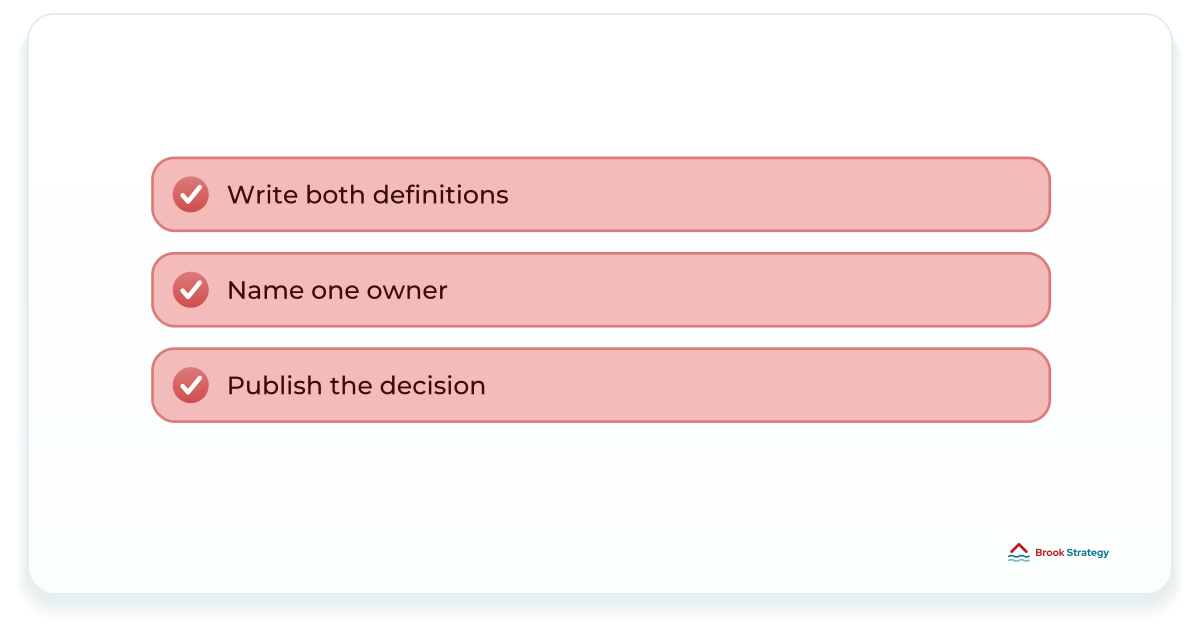
I use this story because almost every delay I see has the same shape. The work waits for a decision that someone is able to make but nobody has been asked to. The remedy is boring. Keep a visible list of open decisions with an owner and a date on each one, and review it at every weekly check-in.
A Weekly Check-In That Catches Delays Early
Keep it to 20 minutes with five fixed questions: what shipped this week, what is due next week, which decisions are open and who owns them, which access requests are waiting and what is the biggest risk to the next date. Anything stuck for more than a week goes to the sponsor with a recommended answer. Sponsors resolve a stuck item far faster when they are given a proposal to approve rather than a problem to solve.
Budgeting Time and Money for the Build
Teams budget for software and forget people. For a first release, expect most of the effort to come from the business side: a few hours per week from the data owners, a few from the sponsor and time from the users who test. If those hours are not freed up, the build waits for them.
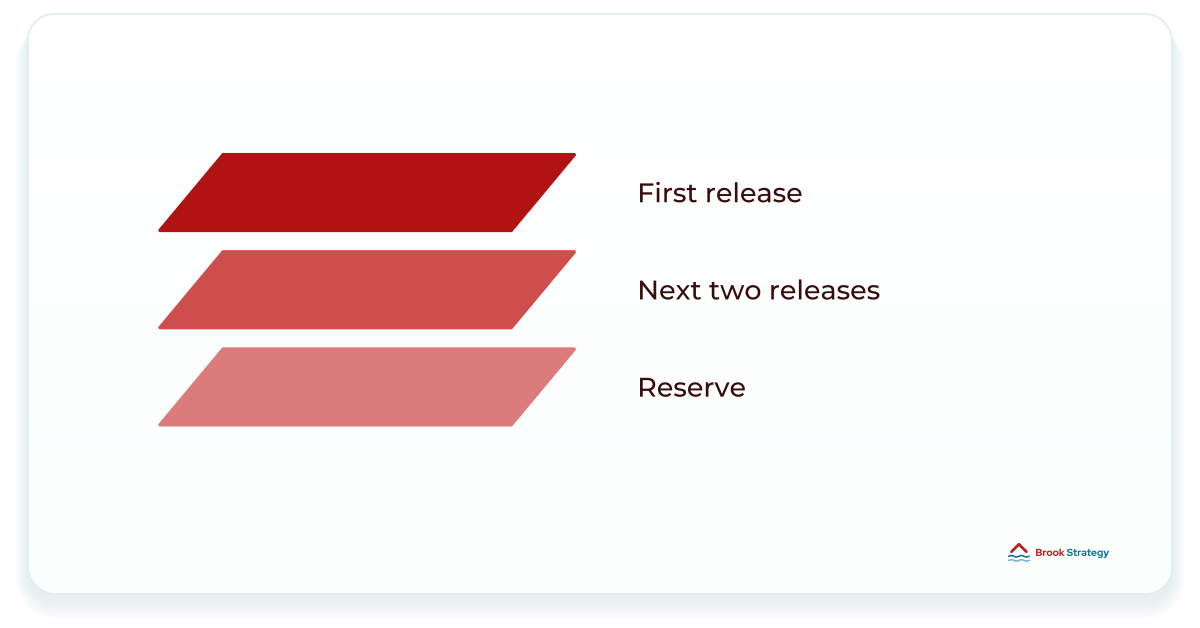
Split the budget into the first release, the next two releases and a reserve of about a quarter of the total for the surprises that always appear. Release the reserve only with the sponsor's agreement and a reason in writing. That small rule keeps scope growth visible and makes it easy to explain, at the end, where the money went.
One last practical point: write the next review date and the name of the person who will hold it into the final page of whatever you produce. Plans that carry a date and a name get reviewed, and plans without them tend to be forgotten within a month. It takes ten seconds and is among the cheapest ways to keep the work alive, and it gives your sponsor an easy way to ask for an update when the quarter ends.
Deciding Where to Begin
Look at your last stalled project and find which step it stalled on. Fix that step first. If you have no history, begin with ownership and definitions, because they unlock everything after. Write down the single biggest risk to your next date and name the person who will manage it.
Consider outside support when your team is stretched, when decisions keep stalling or when you need a neutral facilitator for definition disputes. A short engagement focused on the first release and the adoption check gives you a template for the rest.
Questions About Data Strategy Implementation
Why Do Data Strategy Implementations Run Late?
The usual causes are unclear ownership, access approvals, definitions that nobody agreed on and teams that are too busy to review early versions. Technology problems are rarer than people expect. Most delays come from waiting for a decision or a person.
How Long Does Implementing a Data Strategy Take?
A first visible release should land within 90 days. Foundations such as shared definitions, ownership and core pipelines usually take six to twelve months for a mid-sized company. The work does not end, because the strategy evolves with the business.
Who Should Lead the Implementation?
A single accountable leader with authority across teams, supported by a small group of data owners from the business. A technical lead alone rarely has the standing to settle disputes about definitions or priorities.
How Much Should We Budget for Slack?
Add 20 to 30% to any date that depends on another team or a third party. If a step needs an approval, add the usual approval time on top. Teams that plan for zero slack end up with missed dates and lost trust.
Should We Implement Everything at Once?
No. Release in small slices, each answering one business question for one team. Smaller releases show value early, expose problems while they are cheap to fix and make it easier to change course.
What If the Business Changes Direction Mid-Implementation?
Review the plan quarterly and treat changes as normal. Pause or drop initiatives whose business question has gone away, and move up the ones tied to the new priority. Record the reason for each change.
How Do We Know the Implementation Is Working?
Check adoption and decisions, not only delivery. Are the target teams using the new reports, did a decision change because of them and has time spent on manual reporting fallen? A shipped report that nobody opens has not succeeded.
Sources
Note: This article is general information, not legal, financial or tax advice. Figures and examples are estimates based on typical projects, so check current details with your providers and advisers before you decide.
Was this article helpful?
Thank you for letting us know.
Russell Tennant
Russell leads the Brook editorial team and works with our consultants to turn real client engagements into practical guides on roadmaps, go-to-market planning, growth and competitive strategy. Before joining Brook, he spent 11 years in strategy and product marketing roles at software and financial services companies. He has since edited more than 300 articles on strategy practice and drawn on roadmaps and growth plans from over 100 client projects. He is based in Denver, Colorado.