Key Takeaways
- The framework has seven steps: promise, journey, evidence, moments, target, owners and measurement.
- Pick three to five moments to fix first and write down what you will leave alone.
- Every moment needs one owner with a budget and a metric.
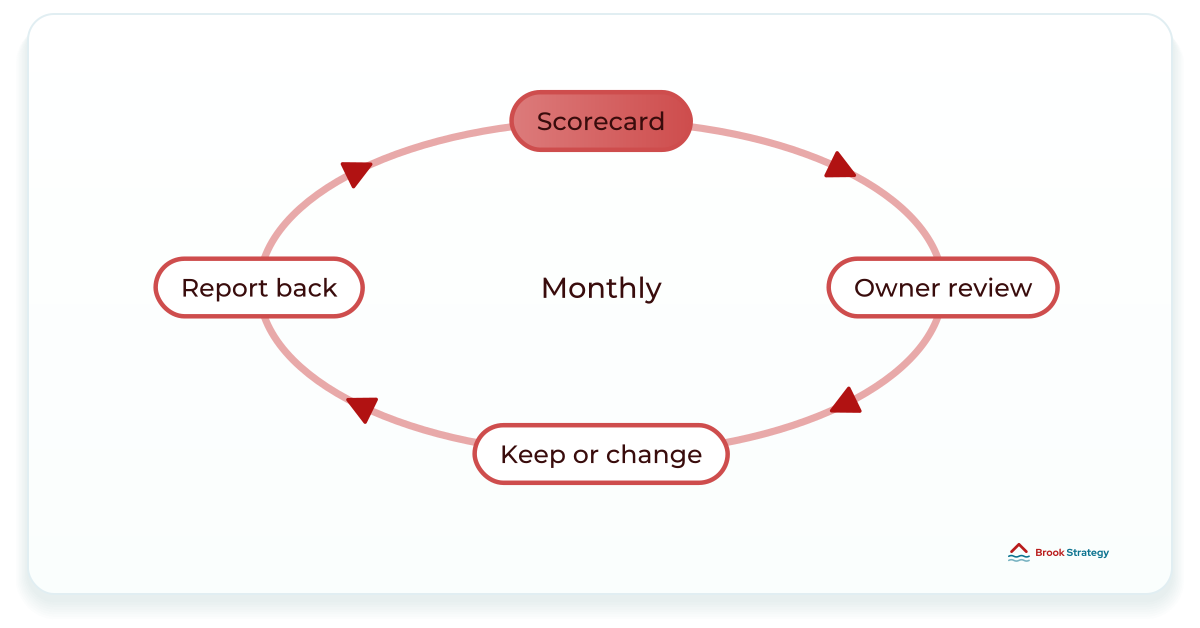
- Review a scorecard of no more than eight numbers every month and make a keep, change or stop decision.
A customer experience strategy framework gives you an order of work. Without one, teams start with a survey, a new tool or a redesign of the website, and each effort pulls in its own direction. With one, you decide who the customer is, which moments matter and who owns each fix before anything is built.
The model below has seven steps. I use it with clients who need a clear plan within a quarter, and it has worked for a software company with one product and for a bank with several lines of business. If you want a partner to run it with you, my team’s customer experience strategy consulting follows the same sequence.
The Seven Steps at a Glance
Read the table first, then jump to the step you are working on. Each step ends with a decision you can write down.
| Step | What you do | Decision it produces |
|---|---|---|
| 1. Set the promise | Define target customers and the experience you promise | One sentence every team can repeat |
| 2. Map the journey | Draw the steps from first need to renewal | Agreed list of stages and touchpoints |
| 3. Gather evidence | Combine surveys, tickets, calls and behaviour data | A fact base with known gaps |
| 4. Choose the moments | Rank moments by customer pain and business value | Three to five moments to fix first |
| 5. Design the target | Describe what each chosen moment should feel like | A written standard per moment |
| 6. Assign owners | Give each moment a leader, budget and metric | One named owner per moment |
| 7. Measure and adjust | Review a small scorecard every month | Keep, change or stop decisions |
Step 1: Set the Promise
Start with who you serve and what you promise them. Pick the customers who matter most to your business, not every buyer you have ever had. A software company might choose mid-sized finance teams. A bank might choose small business owners.
Then write one sentence that describes the experience. “Every request answered by a person within an hour” is a promise. “Delight the customer” is not. If you cannot test it, your teams cannot use it.
Step 2: Map the Journey
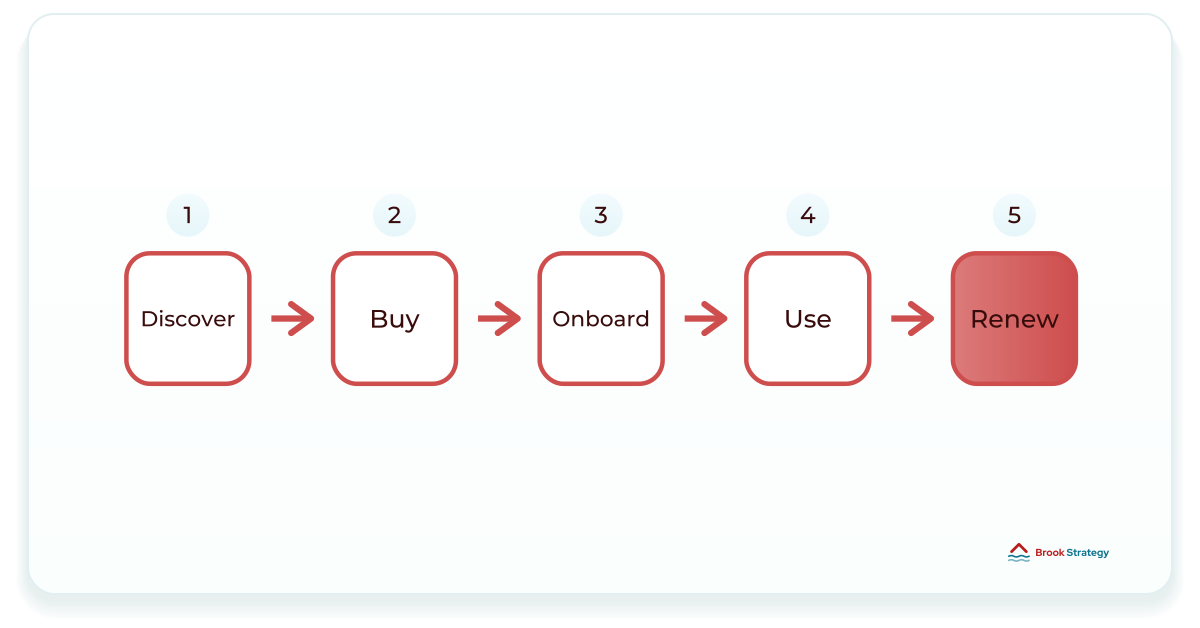
List the stages a customer moves through: discover, evaluate, buy, start, use, get help, renew and recommend. Under each stage, write the touchpoints where the customer meets your company, such as the website, a sales call, an invoice or a support chat.
Draw it with your front-line staff in the room. They know where customers get stuck, and they will correct a map built from a conference room. Keep it to one page. A journey map that needs a wall to display is rarely used again.
Step 3: Gather Evidence
Collect what you already have before you ask for anything new. Support tickets, call recordings, reviews, cancellation reasons and product usage tell you a lot. Add a short survey and ten customer interviews to fill gaps.
Put the findings on the journey map. Mark each stage with the main complaint, the main compliment and the number of customers affected. Where you have no data, say so. An honest gap is more useful than a guess. A customer experience software platform can collect and organise this feedback once you run the program at volume.
Step 4: Choose the Moments That Matter
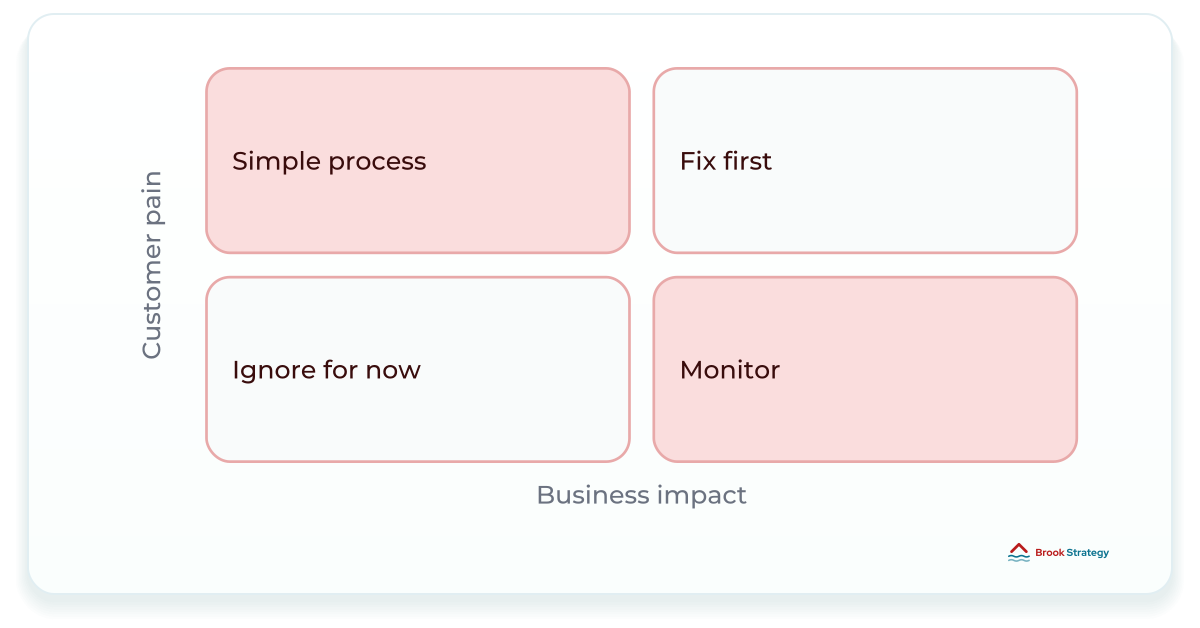
You cannot fix everything. Score each stage on two things: how much it hurts the customer and how much it affects revenue or cost. A confusing invoice may hurt a lot and cost little. A slow onboarding may hurt a lot and cost you renewals.
Pick three to five moments. Leaders often resist this, because every stage feels important, but an overloaded plan changes nothing. Write down what you will leave alone, so the decision is visible.
| Moment | Customer pain | Business impact | Priority |
|---|---|---|---|
| Onboarding | High | High, drives renewal | Fix first |
| Billing questions | Medium | Medium, drives support cost | Fix second |
| First sales call | Low | Medium | Monitor |
| Account closure | High | Low | Fix with a simple process |
The numbers in this example are illustrative, so replace them with scores from your own evidence.
Step 5: Design the Target Experience
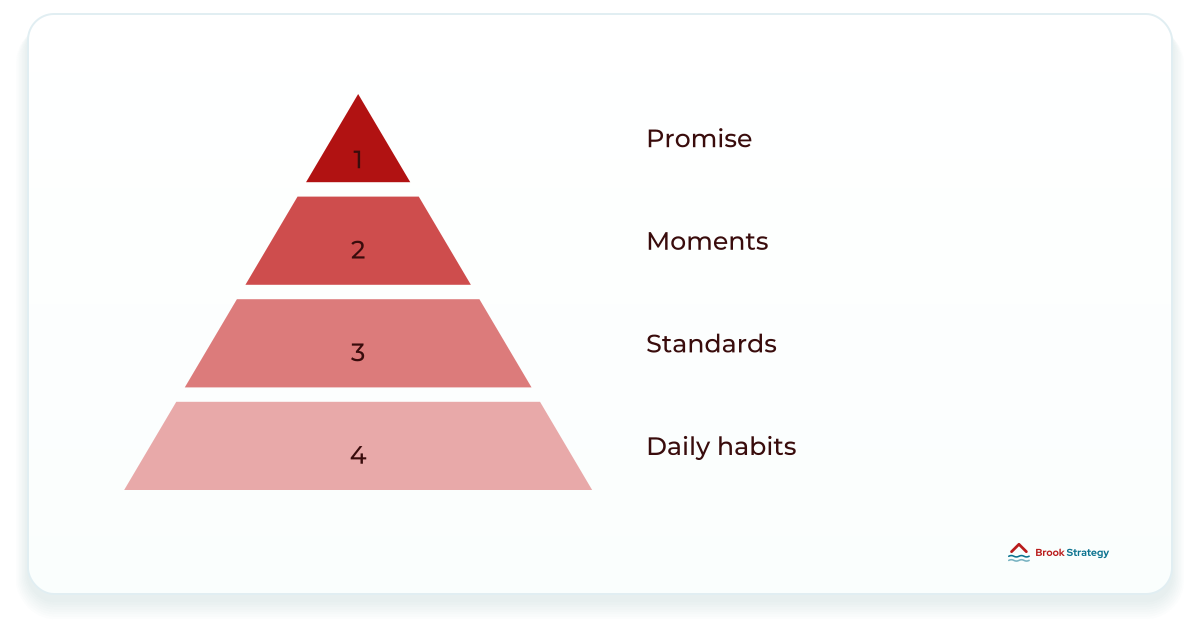
For each chosen moment, write what it should feel like in plain language and the measurable standard behind it. For onboarding, that might be “a new customer completes the first useful task on day one, with no call needed.” Attach a number: a share of new customers, a time or a score.
Involve the people who deliver the moment. They will tell you what is realistic, and they will own the standard once it is agreed. If a fix needs another team or a new system, note it here so the cost shows up in the plan.
Step 6: Assign Owners
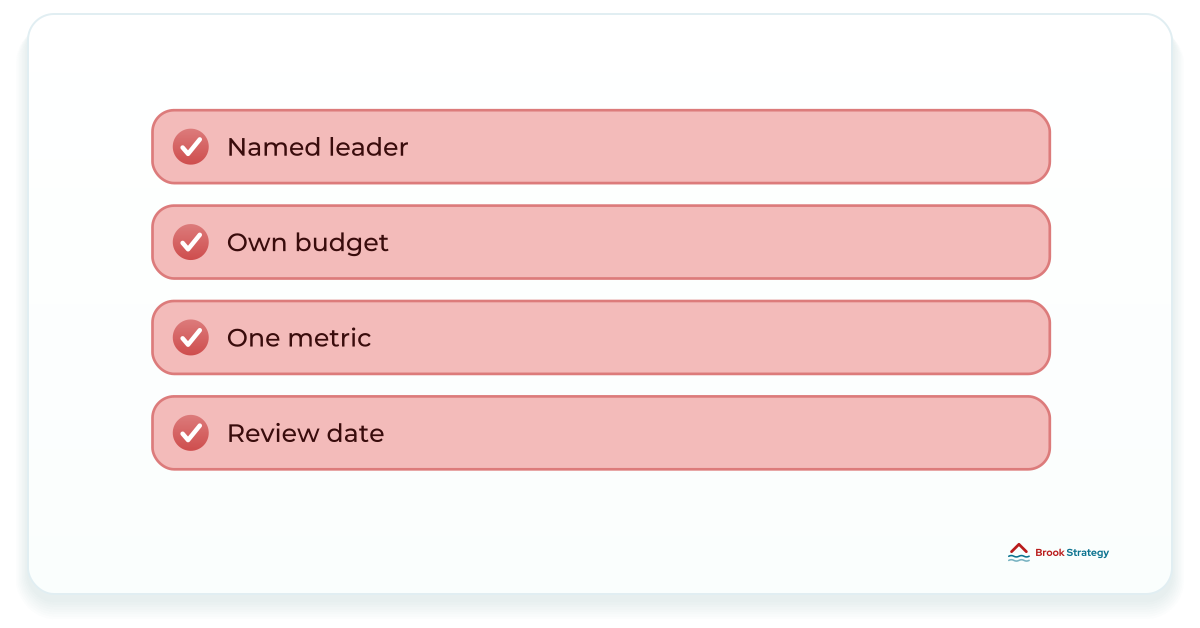
Every chosen moment needs one owner with the authority to change it. A shared owner is a missing owner. Give the owner a budget, a metric and a monthly slot in the leadership meeting.
Many strategies fail here. The experience crosses teams, but budgets do not. If the support lead owns onboarding but the product team controls the first-run screen, agree in writing who can change what. My customer experience strategy examples show how companies such as Zappos and Disney handled ownership.
Step 7: Measure and Adjust
Build a scorecard with no more than eight numbers. A typical set has satisfaction after key interactions, customer effort for the chosen moments, net promoter score, retention or repeat purchase, support contacts per customer and the share of issues solved on first contact.
Review it monthly with the owners. At each review, make one of three decisions for every moment: keep going, change the approach or stop. Without that decision, the scorecard is a report nobody acts on.
A Simple Formula for Ranking Moments
When the list of moments is long, I use a simple scoring rule to bring order. It is my own working formula, not an industry standard, so adjust it to your context:
Priority score = (customer pain × customers affected × revenue at stake) ÷ effort to fix
Score each factor from 1 to 5. A moment with high pain, many customers and real revenue at stake, which is also cheap to fix, goes to the top. A moment that is expensive to fix and affects few customers goes to the bottom. The result is not a prediction. It is a way to make your team explain its reasoning.
A Worked Example: A Mid-Sized Software Company
Picture a software company with about 400 customers and a renewal rate that has slipped. Step 1 gives the promise: “a new customer reaches a working setup in their first week.” Step 2 maps six stages, and Step 3 shows that 60 percent of support tickets in the first month are about the same three setup tasks. These numbers are invented for illustration, but the pattern is one I see often.
In Step 4, onboarding scores highest on pain and on revenue, so it becomes the first priority, with billing questions second. Step 5 sets the standard: 80 percent of new accounts finish the three setup tasks within seven days. Step 6 names the head of customer success as the owner, with a product manager assigned to change the first-run screens. Step 7 puts the setup completion rate and first-month tickets on the scorecard.
After a quarter, the team checks the numbers. If completion has risen and tickets have fallen, the moment is kept and a new one is added. If not, the owner changes the approach, for example by adding a guided setup call, and the review repeats. The sequence matters more than the tools, and each step ends with a decision.
How Long Each Step Takes
A small company can run all seven steps in about eight weeks. A larger one needs a quarter or more, mainly for the evidence step and for agreeing on owners. The table gives a realistic range.
| Step | Small company | Larger company |
|---|---|---|
| 1. Set the promise | 1 week | 2 to 3 weeks |
| 2. Map the journey | 1 week | 2 to 3 weeks |
| 3. Gather evidence | 2 weeks | 4 to 6 weeks |
| 4. Choose the moments | 1 week | 2 weeks |
| 5. Design the target | 1 week | 2 to 3 weeks |
| 6. Assign owners | 1 week | 2 to 4 weeks |
| 7. Measure and adjust | Monthly | Monthly |
Where the Framework Usually Breaks
The first break is Step 4. Teams list ten moments instead of three, and the plan loses force. The second is Step 6, where nobody wants to own a moment that spans departments. The third is Step 7: the scorecard exists, but nobody makes a stop decision.
If your company has run a program before without results, look at those three points first. They explain most of the failures I see.
How to Start This Quarter
You do not need a large budget to begin. Take these actions over the next two weeks:
- Write your promise in one sentence and test it with three employees.
- Draw the journey on one page with your front-line team.
- Pull the last three months of tickets, reviews and cancellation reasons.
- Pick the first three moments and name an owner for each.
Once the first scorecard is running, look at which tools you need. My ranking of customer experience software compares nine platforms, and a short call can help you decide whether you need one yet.
Questions About the Customer Experience Strategy Framework
What Is a Customer Experience Strategy Framework?
It is a step-by-step model for deciding what experience you promise, which moments to improve first, who owns each one and how you measure progress. It turns many good ideas into an ordered plan.
How Many Steps Should a Customer Experience Framework Have?
There is no fixed number. I use seven because it covers promise, journey, evidence, priorities, design, ownership and measurement without extra layers. More steps often mean more documents and less change.
What Is the Difference Between a Framework and a Customer Journey Map?
A journey map is one tool inside the framework. It shows the stages and touchpoints. The framework also covers the promise, the priorities, the owners and the review process that turn the map into action.
Who Should Lead the Program in My Company?
Choose a leader with authority across product, sales and support, such as a chief customer officer, a COO or a head of customer experience. A committee without a lead tends to stall. The leader also chairs the monthly scorecard review.
How Do I Get Leaders to Agree on the Priority Moments?
Show the evidence on one page, score the moments with the same method and ask each leader to name what they would stop doing to fund a priority. A decision workshop of two to three hours is usually enough when the facts are in front of everyone.
Which Metrics Should I Use in the Scorecard?
Use a small set: satisfaction after key interactions, customer effort, net promoter score, retention or repeat purchase, support contacts per customer and first-contact resolution. Pick the ones that match your chosen moments, and keep the total under eight.
How Is This Different from a CX Transformation Program?
A transformation program changes systems, structure and culture over years. The framework here is the plan that decides where to start. Many companies run the framework first and then scale into a larger program once the early wins are clear.
Note: This article is general information, not legal, financial or tax advice. Figures and examples are estimates based on typical projects, so check current details with your providers and advisers before you decide.
Was this article helpful?
Thank you for letting us know.
Russell Tennant
Russell leads the Brook editorial team and works with our consultants to turn real client engagements into practical guides on roadmaps, go-to-market planning, growth and competitive strategy. Before joining Brook, he spent 11 years in strategy and product marketing roles at software and financial services companies. He has since edited more than 300 articles on strategy practice and drawn on roadmaps and growth plans from over 100 client projects. He is based in Denver, Colorado.