Key Takeaways
- Corporate strategy decides which businesses to own and how to split money and talent between them.
- Five principles do most of the work: diagnose, choose scope, allocate, set decision rights and review.
- Capital allocation is where strategy meets reality, and it is the item most companies change too little.
- Every principle needs a practice: a decision, a number and an owner.
Business strategy tells a single unit how to win. Corporate strategy asks a different question: given the units you own, where should the company put its money, people and attention? Leadership teams that skip the question end up with a budget that copies last year. If you want an outside view, corporate strategy consulting covers the same ground.
The framework below pairs five principles with five practices. The principles are the ideas worth remembering, and the practices are the work you do on Monday. I've used the structure with software and financial services leadership teams, and it fits a ten-person strategy group or a leadership team of four.
Principles and Practices on One Page
Each principle has a practice, an output and an owner. The table is the whole framework, and the sections below explain each row.
| Principle | Practice | Output | Owner |
|---|---|---|---|
| 1. Diagnose before you decide | Portfolio review with shared measures | One-page portfolio view | CFO and head of strategy |
| 2. Choose scope on purpose | Where-to-play criteria and a screen | List of businesses to grow, hold, fix or exit | CEO |
| 3. Fund the choice | Capital and talent reallocation | Budget shifts with dates | CEO and CFO |
| 4. Set who decides what | Decision rights and operating model | Decision map | CEO and unit leaders |
| 5. Review and adjust | Quarterly scorecard | Updated plan | Leadership team |
Principle 1: Diagnose Before You Decide
Richard Rumelt describes good strategy as a kernel of three parts: a diagnosis that names the critical challenge, a guiding policy for dealing with it and a set of coherent actions (McKinsey on the perils of bad strategy). At company level, the diagnosis is a portfolio review: every business measured on the same things.
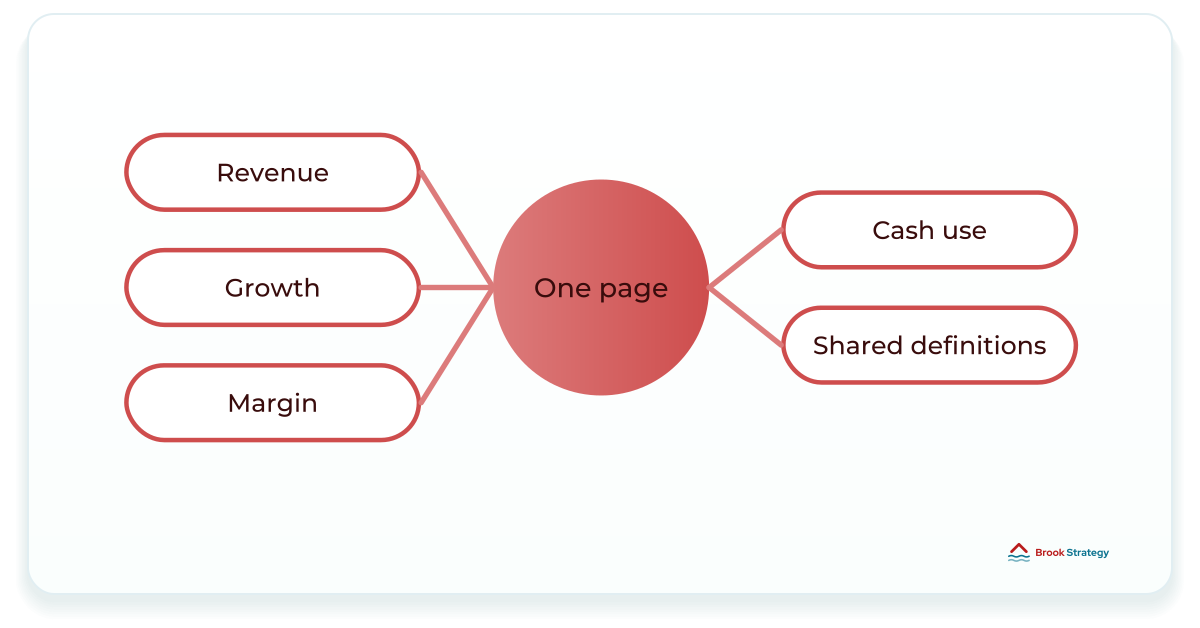
In practice: build one page that shows each unit's revenue, growth, margin, cash use and strategic fit. Use the same definitions across all units, and have finance sign off on them. The first time you do this, arguments about definitions will take longer than the analysis. That is normal, and settling them is part of the value.
Add the human side with a short round of executive interviews. Ask each leader where the company is strongest, where it is stuck and what they would stop doing. In my client work, the answers often differ more than leaders expect, and the spread is worth showing to the group.
Principle 2: Choose Scope on Purpose
Scope is the decision about which businesses and markets the company will be in. Companies tend to drift into scope by opportunity: a customer asks, a team builds, and two years later there is a product line nobody chose. A framework forces the choice into the open.
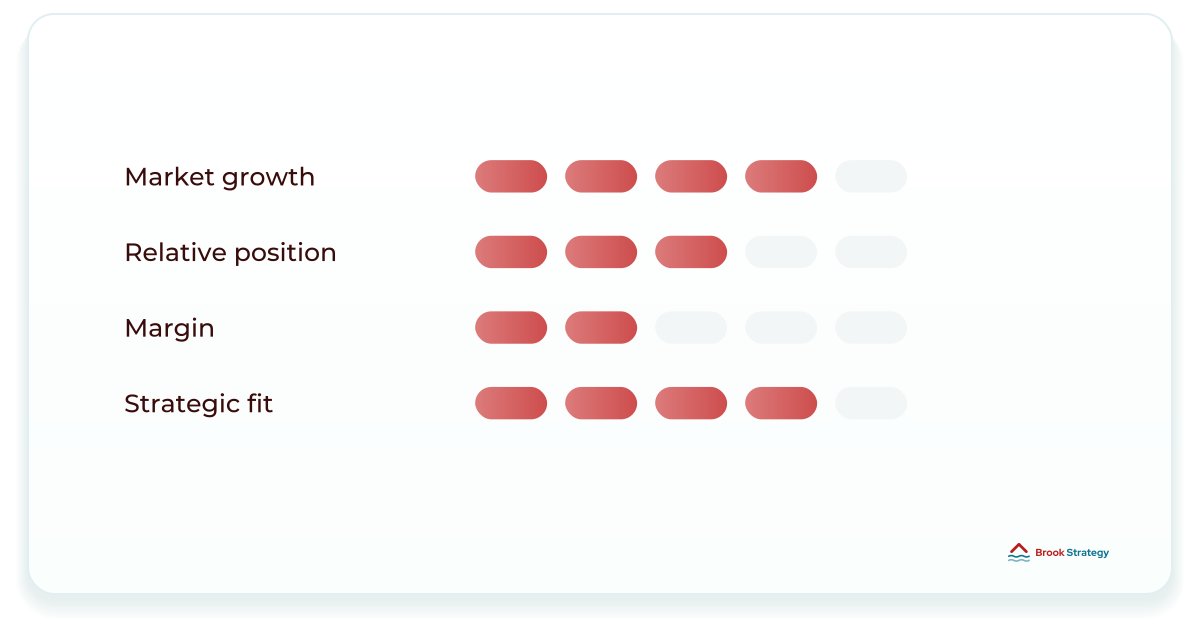
In practice: write four to six criteria for what belongs in the portfolio, such as market growth, margin potential, fit with your customer relationships and whether the company has a right to win. Score each unit and sort it into one of four groups: grow, maintain, fix or exit. Add a build, buy or partner view for any area you want to enter.
| Group | Signal | Typical action |
|---|---|---|
| Grow | Strong market, strong position | More capital and talent |
| Maintain | Mature, steady cash | Protect margin, limit new spend |
| Fix | Good market, weak position | Time-boxed fix with a stop rule |
| Exit | Weak market, weak position | Sell, merge or wind down |
When the portfolio is mapped, the shared measures go into your annual process. For the best-practice version of that process, see my notes on corporate strategy best practices.
Keep the scoring honest by asking someone outside the unit to challenge each score. Unit leaders tend to rate their own market growth generously and their own weaknesses lightly, and a quick second opinion from finance or a peer leader corrects most of it. Record the reason next to each score, so next year's review starts from evidence, not memory.
Principle 3: Fund the Choice
Strategy without a budget is a statement. McKinsey's analysis of capital allocation across multi-business companies found that allocations stayed essentially fixed for roughly one-third of business units, and that the top third of reallocators moved about 56% of capital between units over fifteen years and earned about 30% higher annual shareholder returns than the bottom third (McKinsey on resource allocation). The same study notes that the effect shows over long periods, so judge it over years, not quarters.
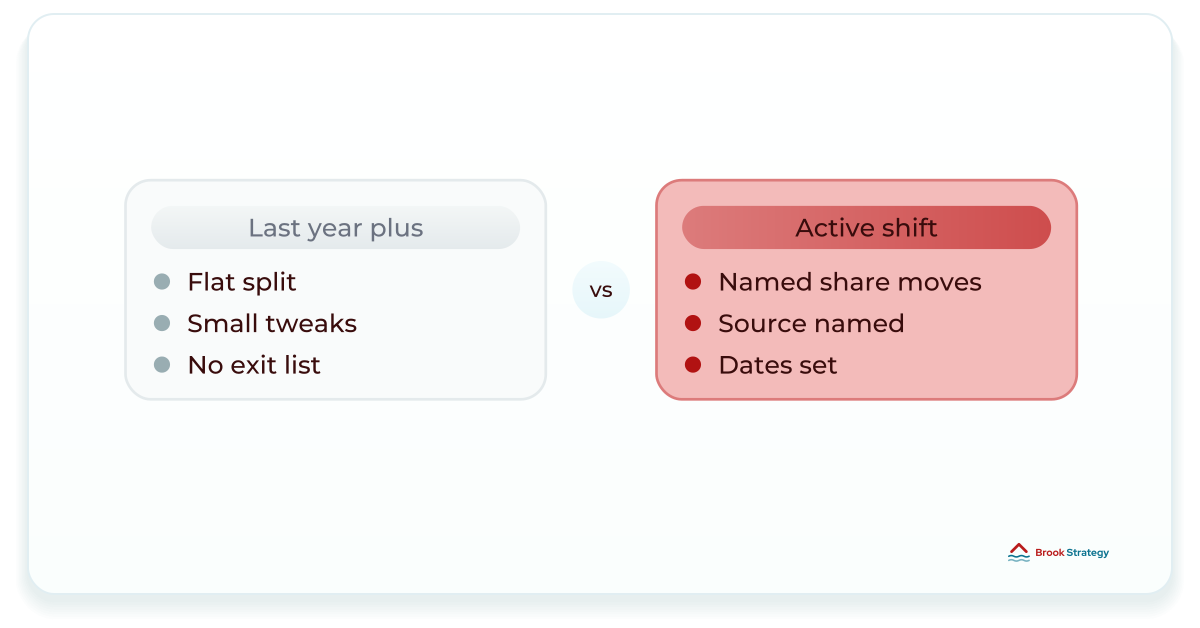
In practice: set a target for the share of budget you are willing to move each year, and name where it comes from. Some companies pick a small percentage of assets to review for disposal every year, or give the CEO discretion over a slice of capital. You don't need a large number. You need a habit, because a first shift of even a modest share teaches the organization that budgets can move.
Talent follows the same logic. If your best product manager and your best engineers sit in a mature unit, the company has chosen to grow slowly, whatever the strategy deck says. Check the people plan against the portfolio groups.
Principle 4: Set Who Decides What
A good portfolio plan still fails when nobody knows who decides. Does a unit leader launch a new product alone, or does the CEO approve it? Who may spend above a given amount? Who can stop a project?
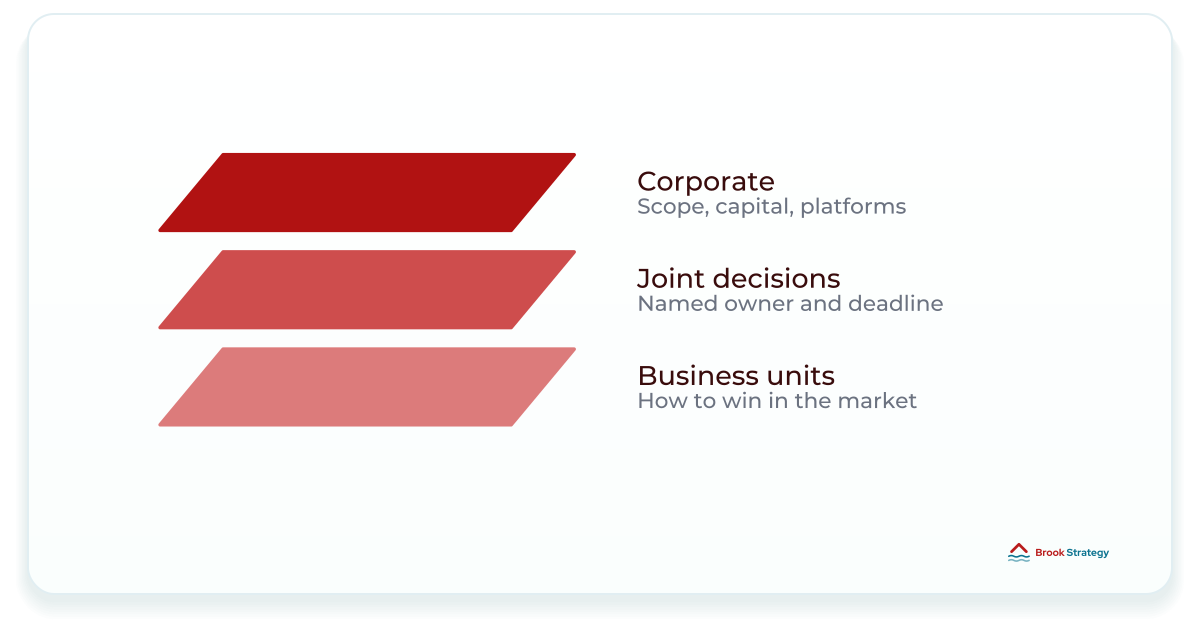
In practice: draw a decision map with three levels. Corporate decides scope, capital and shared platforms. Units decide how to win in their market within agreed limits. Joint decisions, such as shared customers or pricing across units, get a named owner and a deadline. One page is enough, and the act of writing it settles many disputes before they begin.
Do not build the operating model before you know the portfolio. Structure should follow strategy, and teams that redraw the organization chart first often have to redo it six months later.
Principle 5: Review and Adjust
A corporate plan gets stale if nobody looks at it. Build a quarterly scorecard with a few measures per unit: growth, margin, return on the capital allocated and progress on the main milestone. Show the portfolio page next to it, so leaders see movement.
In practice: hold a half-day leadership review each quarter, and redo the portfolio diagnosis once a year before the budget cycle. Ask the same questions each time: which units moved, which assumptions changed and should money move? When the answer is yes, move it that quarter. If you are choosing software to support this reporting, my overview of corporate strategy tools compares the options.
A Worked Example With Three Units
Picture a software company with a mature core platform, a fast-growing payments module and an older analytics product. Before the review, each unit asked for a budget increase and finance split the pool in line with last year. The portfolio page told a different story. Payments was growing fastest at a healthy margin, the core platform funded the company, and analytics used a fifth of engineering time for a small share of revenue.
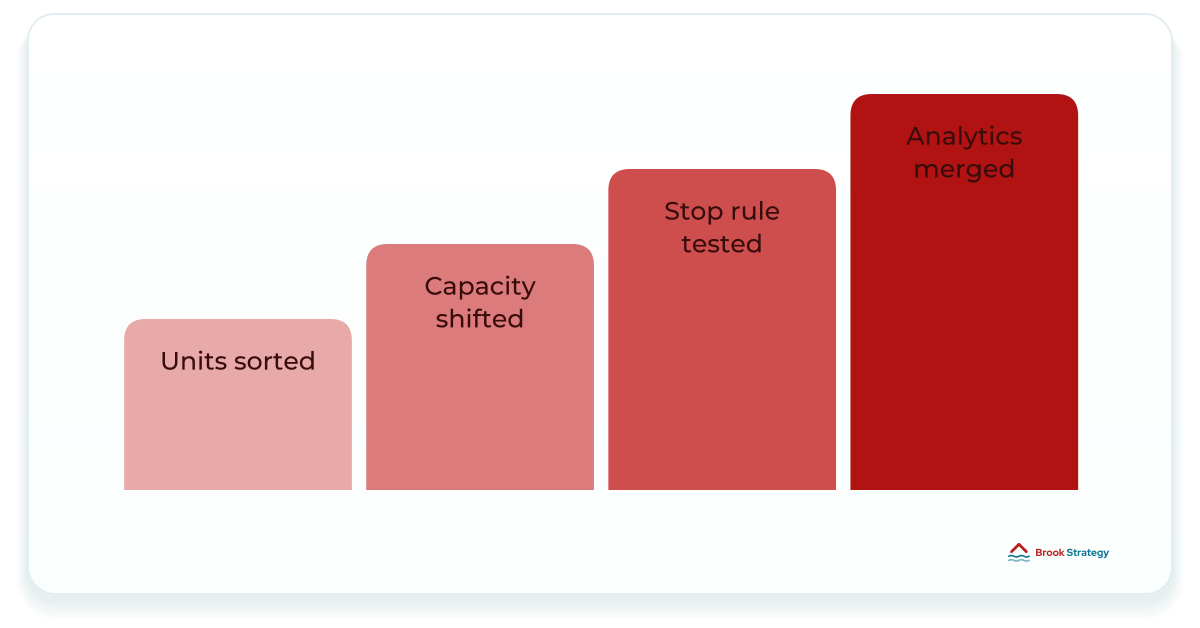
Leaders sorted the units: payments to grow, the platform to maintain, analytics to fix with a six-month stop rule. They agreed to move a defined slice of engineering capacity from analytics to payments, with named dates. A decision map made clear that the payments lead could add roles within a set budget without CEO approval.
Two quarters later, analytics had not met its stop rule and was merged into the core platform as a feature set. The numbers in this example are illustrative, but the sequence is real: a shared page, a sorted portfolio, a funded shift and a stop rule that ended an argument.
A Short Checklist Before Your Decision Session
- Every unit uses the same definitions for growth, margin and cash use.
- Finance has approved the portfolio page.
- Executives have been interviewed and the spread of views is on one slide.
- Where-to-play criteria are written and scored for every unit.
- A target for budget and talent shifts is named, with its source.
- A decision map and quarterly review dates are in draft.
Where the Framework Goes Wrong
Teams hit predictable problems. The table matches each symptom to its likely cause so you can spot them early.
| Symptom | Likely cause | Fix |
|---|---|---|
| Budgets look like last year | No reallocation target | Name a share to move and its source |
| Every unit is "grow" | Criteria too loose | Force a ranking and cap the grow group |
| Portfolio page disputed | Definitions not agreed | Finance signs off the measures |
| Decisions reopened | No decision map | Write who decides what |
| Plan not read after approval | No review rhythm | Fixed quarterly meeting |
How to Decide Where to Start
If your units are measured differently and nobody trusts the numbers, begin with principle one. If you have clean numbers and leaders keep arguing about scope, begin with principle two. If strategy is clear and money doesn't follow it, go straight to principle three. You don't need a perfect sequence, but you do need the first cycle to finish.
Allow eight to twelve weeks for a first full cycle with a small group. Many leadership teams ask an outside facilitator to run the interviews and the decision session, since neutral questions help when leaders have personal stakes. The decisions themselves stay with the leadership team.
Questions About the Corporate Strategy Framework
What Is a Corporate Strategy Framework?
A corporate strategy framework is a structured way for a leadership team to decide which businesses the company should own, how much to invest in each and what the whole is worth beyond the parts. It turns scattered unit plans into one set of company-level choices.
How Is a Corporate Strategy Framework Different from a Business Strategy Framework?
A business strategy framework helps one unit win against its competitors. A corporate framework sits above it and asks where the company should compete at all, how to split capital and talent and which units belong together. A single-product company mostly needs the first. A multi-unit company needs both.
How Many Business Units Does a Company Need Before Corporate Strategy Matters?
There is no fixed number. It starts to matter as soon as two or more products or markets compete for the same budget, people and attention. A software company with a core product and a new module already faces corporate choices.
What Are the Main Parts of a Corporate Strategy?
Most include a scope decision on which businesses to be in, a resource allocation decision on how to split capital and talent, a portfolio decision on what to buy, build, partner or exit and an operating model that sets who decides what. Targets and a review rhythm turn these into a working plan.
How Often Should Corporate Strategy Be Reviewed?
Review progress quarterly and revisit the full strategy annually. Capital allocation is the item to check most often, because research from McKinsey found that many companies leave allocations almost unchanged year to year, even when opportunities shift.
Who Owns Corporate Strategy?
The CEO owns it, with the CFO and the head of strategy as close partners. Business-unit leaders contribute options and own execution. The board reviews and challenges, but doesn't write the plan.
Can a Mid-Size Company Use a Corporate Framework Without a Strategy Department?
Yes. A small group of three or four leaders can run the framework with a part-time analyst. Keep the outputs short: a portfolio page, a list of choices with numbers and a scorecard. Outside facilitation helps in the first cycle.
Sources
- McKinsey Quarterly: The Perils of Bad Strategy (Richard Rumelt)
- McKinsey: How to Put Your Money Where Your Strategy Is
Note: This article is general information, not legal, financial or tax advice. Figures and examples are estimates based on typical projects, so check current details with your providers and advisers before you decide.
Was this article helpful?
Thank you for letting us know.
Russell Tennant
Russell leads the Brook editorial team and works with our consultants to turn real client engagements into practical guides on roadmaps, go-to-market planning, growth and competitive strategy. Before joining Brook, he spent 11 years in strategy and product marketing roles at software and financial services companies. He has since edited more than 300 articles on strategy practice and drawn on roadmaps and growth plans from over 100 client projects. He is based in Denver, Colorado.