Key Takeaways
- A twelve-week roadmap has six phases: goals, audit, research, topic plan, production setup and launch with a first review.
- Every phase should end with one decision and one named owner, or it will slip.
- Research and the audit take about half the time, and they decide how good the rest of the plan can be.
- Start with a small first quarter and review results at set points instead of changing the plan weekly.
Most content plans fail in the gap between a good idea and a repeatable process. The ideas are fine, but nobody decided who writes, when it ships or how anyone will know it worked. A roadmap closes that gap by putting phases, owners and decision points on one page.
Below is the roadmap I use as a starting point for content strategy consulting projects. Copy the phases, change the dates to fit your team and keep the decision at the end of each phase, because that is the part people skip.
The Roadmap at a Glance
The table shows six phases over twelve weeks. Weeks overlap a little, since research can start while the audit wraps up.
| Phase | Weeks | Main output | Decision at the end |
|---|---|---|---|
| 1. Goals and baseline | 1 to 2 | Goals, owner, current numbers | What content must achieve this year |
| 2. Content audit | 2 to 4 | Scored inventory of existing pages | Keep, refresh, merge or remove |
| 3. Audience and market research | 3 to 5 | Buyer questions, competitor gaps | Which audiences and themes come first |
| 4. Topic plan | 5 to 7 | Ranked topic clusters and formats | Which clusters get the first quarter |
| 5. Production setup | 6 to 9 | Calendar, briefs, workflow, tools | Who writes, edits and approves |
| 6. Launch and review | 9 to 12 | First pieces live, first report | What to double down on or drop |
Phase 1: Set Goals and a Baseline
Start with the business and leave the blog for later. Write down the two or three outcomes content must support this year, such as more qualified demo requests, shorter sales cycles or lower paid acquisition cost. Then record where you stand today: organic sessions, leads from content, rankings for your core terms and the number of pages live.
The baseline is easy to skip and painful to miss. Without it, you can’t say after a quarter whether anything improved, and the first budget review turns into an argument about opinions. Name one owner for the roadmap in this phase too.
Decision at the end: agree the goals with the executive sponsor in writing. Five minutes of sign-off here prevents weeks of rework later.
Phase 2: Audit What You Already Have
List every page and score it for traffic, conversions, relevance and quality. A spreadsheet export from your CMS and analytics is enough for most sites. Mark each page keep, refresh, merge or remove, and note the reason in a few words.
On a site with about 300 posts, I usually find that a small share brings most of the traffic, while a large share brings none and competes with better pages. Merging those weaker pages into stronger ones often lifts rankings before you publish anything new. If you want a quick review of tools that speed this up, my ranking of content strategy tools covers the main options.
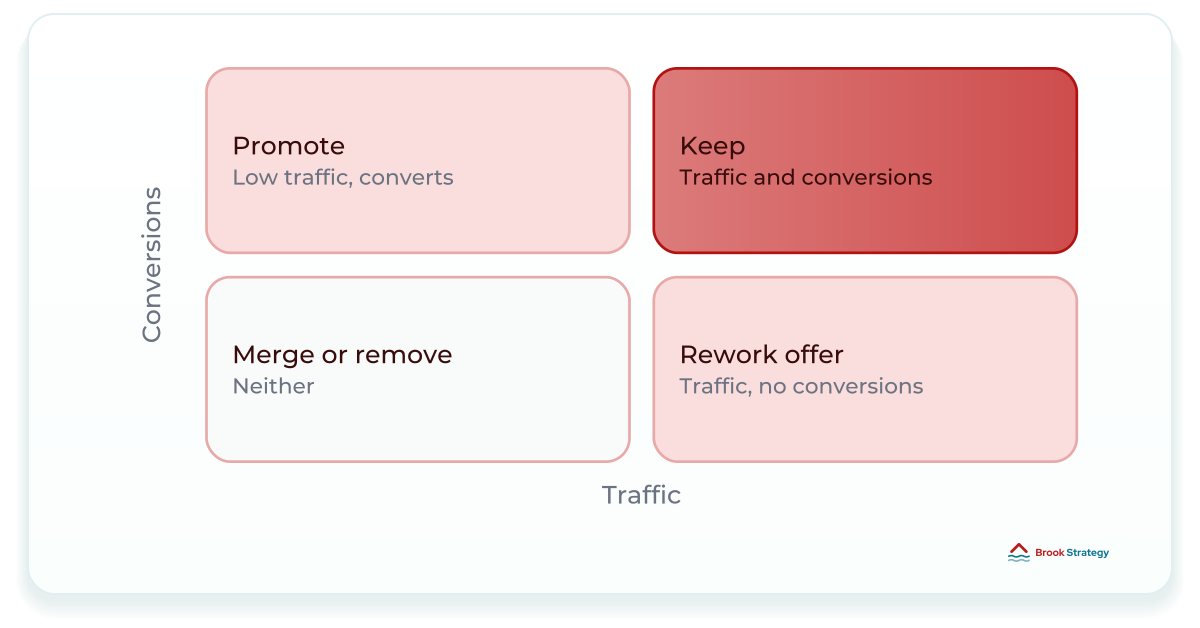
Decision at the end: approve the keep, refresh, merge and remove lists. Removing pages feels risky, so redirect them properly and document each choice.
Phase 3: Research Your Audience and Market
Talk to people. Five to eight interviews with customers and your sales team will teach you more than any keyword list. Ask what they searched for before they found you, which questions came up on calls and what almost stopped them from buying. Write the answers down in their own words.
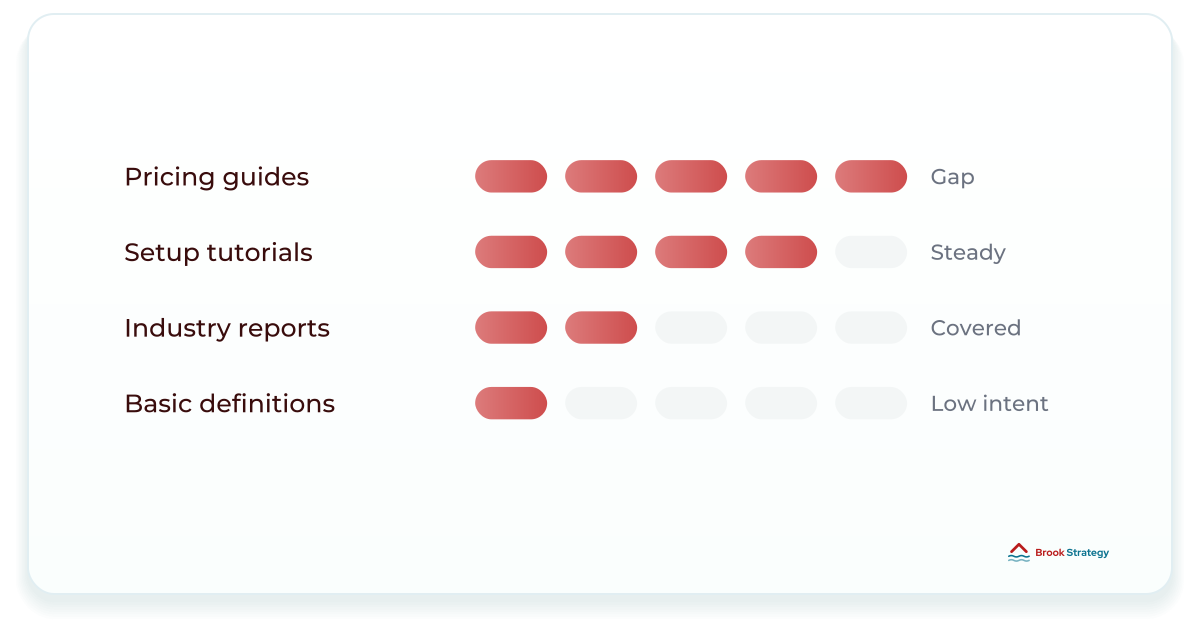
Then add search data and competitor pages. Look for topics where buyers ask a clear question and the current results answer it badly. Those gaps are your opportunities, and they are usually more specific than the generic subjects on your first list.
Questions to ask in an interview
- What did you search for before you found us?
- Which question did you most want answered before you decided?
- What nearly made you choose someone else?
- Which sources do you trust when you research a purchase like this?
Decision at the end: choose the audiences and themes for the first quarter. With limited capacity, pick one primary buyer group and serve it well.
Phase 4: Build the Topic Plan
Turn research into clusters. A cluster is one main page on a core topic, plus supporting pages that answer related questions and link back to it. Score each cluster for buyer demand, how hard it is to rank and how close it sits to a purchase, then rank them.
Choose a format for each topic as well. A comparison suits a buyer who is choosing, a checklist suits someone ready to act and a framework suits an early-stage reader. Mixing formats makes the plan feel useful and not repetitive. Once clusters are ranked, a content strategy checklist helps you confirm nothing is missing before you commit.
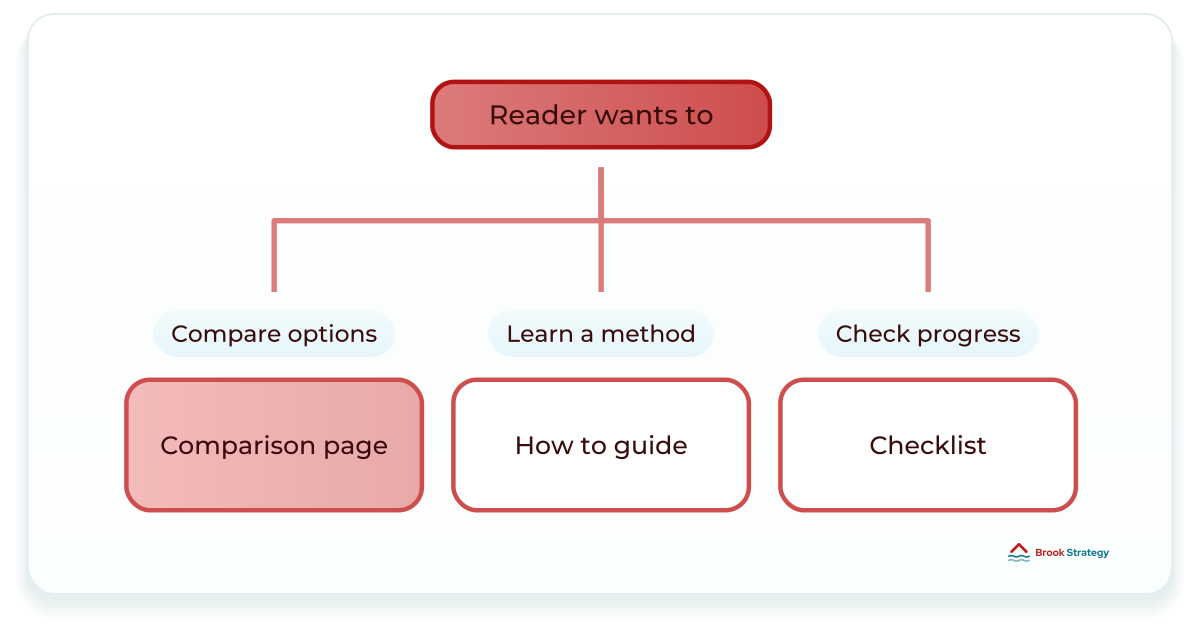
Decision at the end: approve the clusters for the first quarter and the order of publication.
Phase 5: Set Up Production
Now make the plan runnable. Build the editorial calendar with a named writer, editor and publish date for each piece. Write a brief template that covers the goal, reader, angle, key questions, sources and internal links, and use it for every assignment.
Agree the review path too: who checks facts, who approves and how long each step may take. In my client work, the biggest cause of delay is an approval step with no deadline, so give each one a time limit. Choose your tools last, once you know what the process needs.
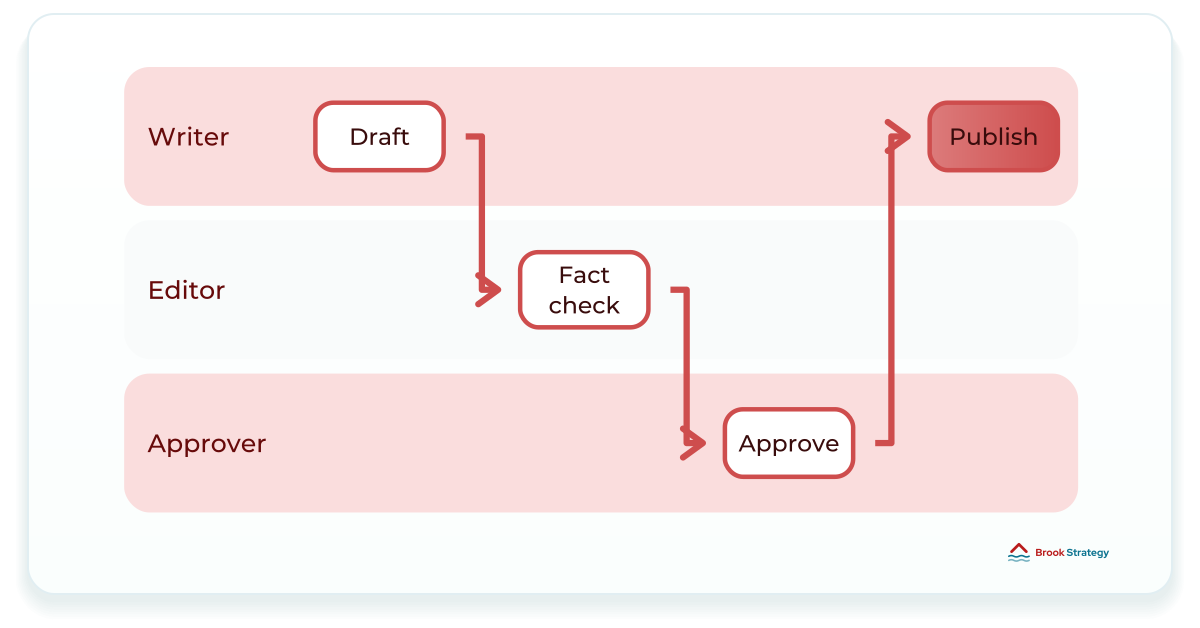
Decision at the end: confirm owners, review times and tools. If a role has no name next to it, the calendar isn’t ready.
Phase 6: Launch and Review
Publish the first pieces and refresh the best pages from your audit. Keep a simple weekly check: shipped on time, quality passed review, links added. After about four weeks of live content, produce the first report from your baseline numbers.
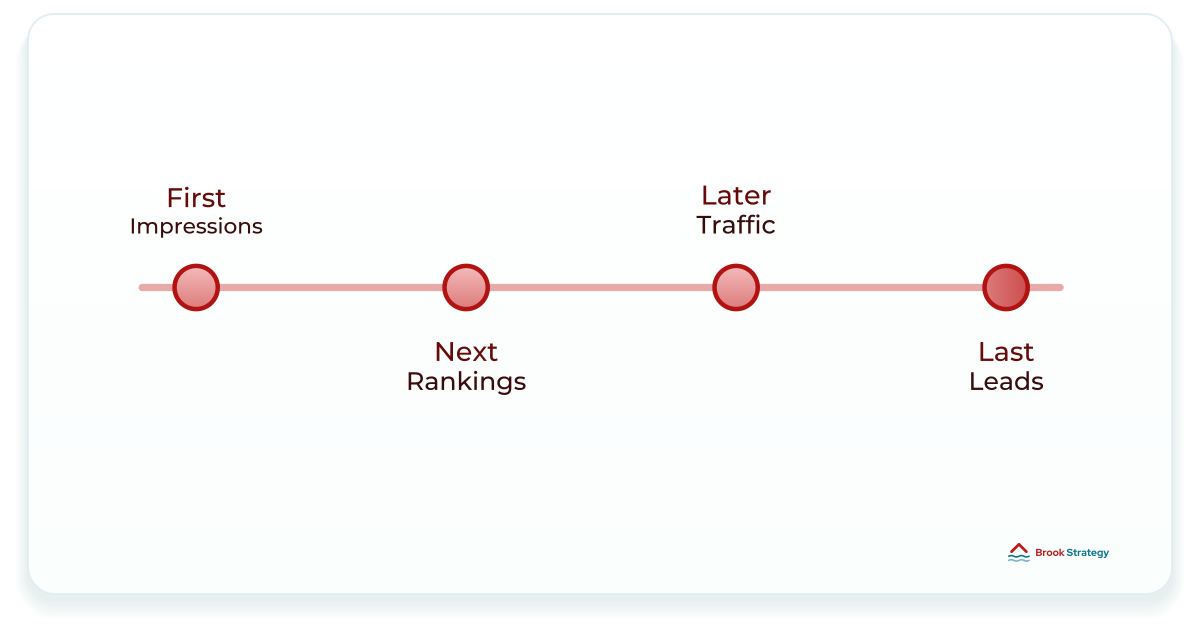
Look at leading signals first, such as impressions, rankings for target topics and engagement on key pages, because leads and pipeline lag. The numbers to track are covered in my guide to content strategy KPIs. Resist the urge to rewrite the plan after two weeks of data, and review at the planned point instead.
Decision at the end: choose what to double down on, what to fix and what to drop for the next quarter.
A Short Example of the First Quarter
A software company I worked with had 120 posts, one writer and a goal of more trial sign-ups from search. Weeks one to four covered the baseline and audit, which led to merging 31 posts into 9 stronger ones. Weeks five to eight produced a ranked plan of four clusters, and weeks nine to twelve shipped the first two comparison pages and refreshed the ten best older posts.
The first report showed rankings up on the refreshed pages and no change in leads yet, which matched what the plan predicted. The team resisted a rewrite, and sign-ups from content grew in the following quarter.
Notice that the example held back on new content in the first month. Most of the early wins came from decisions about existing pages, which is why the audit comes before the topic plan.
Keep the example in proportion. Your numbers will differ, and a larger site will need more time for the audit. The pattern holds, though: decisions about existing content come first, new publishing follows, and results are judged at the review you planned.
What Slows a Content Roadmap Down
Three problems cause most of the delays I see. The first is an unclear owner, so every phase waits for someone to make a call. The second is research that never ends, where the team keeps adding interviews and keyword sets instead of choosing. The third is a production process designed before the topic plan, which means the calendar has to be rebuilt.
Realistic sequencing includes slack. Holidays, product launches and staff changes will eat a week or two, so I plan fourteen weeks when a client says twelve, and I tell them so.
| Problem | Early sign | Fix |
|---|---|---|
| No single owner | Decisions wait for meetings | Name one owner and give them decision rights |
| Endless research | A third round of interviews is proposed | Set a date to choose and decide with what you have |
| Plan too large | Calendar has more pieces than writers can handle | Cut to capacity and keep a backlog |
| No review deadlines | Drafts sit in approval for weeks | Set a time limit for every step |
How to Adapt the Roadmap to Your Team
A team of one can run the same phases in about eight weeks by combining the audit and research and using a smaller topic plan. A larger team with several regions should add a phase for governance, deciding who owns voice and approvals across markets. The structure holds, and only the lengths change.
- Name the owner and the executive sponsor in week one.
- Record baseline numbers before you publish anything new.
- End each phase with a written decision.
- Cap the first quarter at what the team can produce with quality.
If you would rather have someone run the first twelve weeks with you, that is exactly what a short engagement covers.
Questions About Your Content Strategy Roadmap
How Long Does a Content Strategy Roadmap Take?
Plan on about twelve weeks from kickoff to the first review of results. A small site with one buyer group can move faster, and a large site with several products and regions often needs sixteen weeks. The planning phases take roughly six weeks, and the rest is production and measurement.
Who Should Own the Content Strategy Roadmap?
One person, ideally the head of content or marketing, should own the roadmap and its dates. Writers, product, sales and an executive sponsor all contribute, but without a single owner the plan drifts. I put the owner’s name at the top of the document.
Do I Need a Content Audit Before the Roadmap?
Yes, if you already have more than a few dozen pages. The audit tells you what to keep, refresh, merge or remove, and that decision often saves more time than any new article. With a brand new site you can skip it and start from research.
How Many Articles Should the First Quarter Include?
Fewer than you expect. In most first-quarter plans I see, eight to fifteen well-researched pieces, plus refreshes of your best existing pages, do more than thirty rushed posts. Set the number from your team’s real capacity, then raise it once the process runs smoothly.
What Should I Measure at the First Review?
Look at leading signals first: pages published on schedule, impressions and rankings for target topics, and engagement on key pages. Leads and pipeline from content usually take longer, so compare them against your baseline after two or three quarters.
When Should I Change the Roadmap?
Change it at planned review points, not every time someone has a new idea. A monthly check on production and a quarterly review of topics and results is enough. Between reviews, add new ideas to a backlog so they get scored before they displace planned work.
Can I Use the Same Roadmap for Several Products or Markets?
Use one shared structure with separate topic plans. The phases, owners and review rhythm stay the same, while each product or market gets its own buyer research and topic list. Trying to merge them into one list usually hides the gaps in the smaller ones.
Note: This article is general information, not legal, financial or tax advice. Figures and examples are estimates based on typical projects, so check current details with your providers and advisers before you decide.
Was this article helpful?
Thank you for letting us know.
Russell Tennant
Russell leads the Brook editorial team and works with our consultants to turn real client engagements into practical guides on roadmaps, go-to-market planning, growth and competitive strategy. Before joining Brook, he spent 11 years in strategy and product marketing roles at software and financial services companies. He has since edited more than 300 articles on strategy practice and drawn on roadmaps and growth plans from over 100 client projects. He is based in Denver, Colorado.