Key Takeaways
- Cutting services and focusing on the best-margin work is the highest-return move I see.
- Limit dependence on any single client, and track it every quarter.
- Test price rises on new customers first to limit the risk.
- One page per quarter beats a long annual plan for a small team.
Small business owners do not need a theory of strategy. They need examples of owners who made a choice, tracked it and kept what worked. After years of small business strategy consulting, I keep coming back to the same dozen moves, and none of them requires a big budget.
Below are twelve of them, anonymized from my client work. Each shows what changed, the typical result and the steps to copy it. Results are ranges from my projects, so check them against your own numbers.
The Twelve Examples at a Glance
| Example | Theme | Typical result |
|---|---|---|
| 1. Cut the Service List in Half | Focus | Higher margin |
| 2. Reduce Dependence on the Biggest Client | Risk | Safer revenue |
| 3. Interview Ten Best Customers | Customers | Clearer message |
| 4. Raise Prices for New Customers First | Pricing | Better revenue per client |
| 5. Rank Services by Margin per Hour | Margins | Hours go to the best work |
| 6. Hire After the Process Is Written Down | Hiring | Faster onboarding |
| 7. Double Down on the Best Lead Source | Channels | Lower cost per lead |
| 8. One-Page Quarterly Plan | Planning | Less planning time |
| 9. Systemize the Weekly Rhythm | Operations | Owner time returned |
| 10. Referral Partnership With a Complementary Firm | Partnerships | Warm leads |
| 11. Match Capacity to the Seasonal Curve | Capacity | Fewer crunch months |
| 12. Annual Strategy Day With Outside Input | Review | Sharper choices |
Twelve Small Business Strategy Moves You Can Copy
Cut the Service List in Half
A 12-person marketing agency sold 14 services and was good at four. The owner ranked every service by margin and by how often clients came back. The bottom seven were dropped or handed to partners. Revenue dipped for one quarter, then rose as the team stopped context-switching, and average project margin improved.
The hardest conversation was with a long-time client who used one of the dropped services. The agency referred them to a partner and kept the relationship on the core work.
How to Run the Cut
- List every service with revenue, hours and margin.
- Add how often clients rebuy it.
- Rank by margin and repeat business.
- Drop or refer the bottom third.
- Tell clients early and offer a referral.
What You Will Need
A spreadsheet is enough. Pull hours from your time tracker and margins from your accounting tool.
Reduce Dependence on the Biggest Client
A local software consultancy took 55 percent of its revenue from one customer. After that client delayed a renewal by three months, the owner set a cap: no client above 30 percent. Over the next year, she built a pipeline of mid-sized accounts, and the largest client dropped to about a third of the total.
It meant turning down a larger scope from the big client at one point. She said it felt wrong at the time and obvious a year later.
How to Set a Client Cap
- Calculate revenue share by client.
- Set a cap you can live with.
- Plan how many new accounts you need to reach it.
- Assign weekly time to prospecting.
- Review the share every quarter.
Where the Data Is
Your accounting export grouped by customer. A simple chart makes the risk visible to the whole team.
Interview Ten Best Customers
A bookkeeping firm could not explain why clients chose it. The owner interviewed ten of the best ones for 20 minutes each. Nine mentioned the same thing: answers within a day. That sentence went onto the website and into every proposal, and inbound enquiries began to mention it by name.
The firm had assumed that price was the draw. The interviews showed that clients would have paid more for the speed.
How to Run the Interviews
- Pick ten customers who stay and refer.
- Ask why they chose you and what they nearly chose instead.
- Ask what they would miss if you disappeared.
- Find the phrase that repeats.
- Use it in your next proposal and on your site.
Equipment for the Calls
A phone and a notes document. Offer a small thank-you, and keep each call short.
Raise Prices for New Customers First
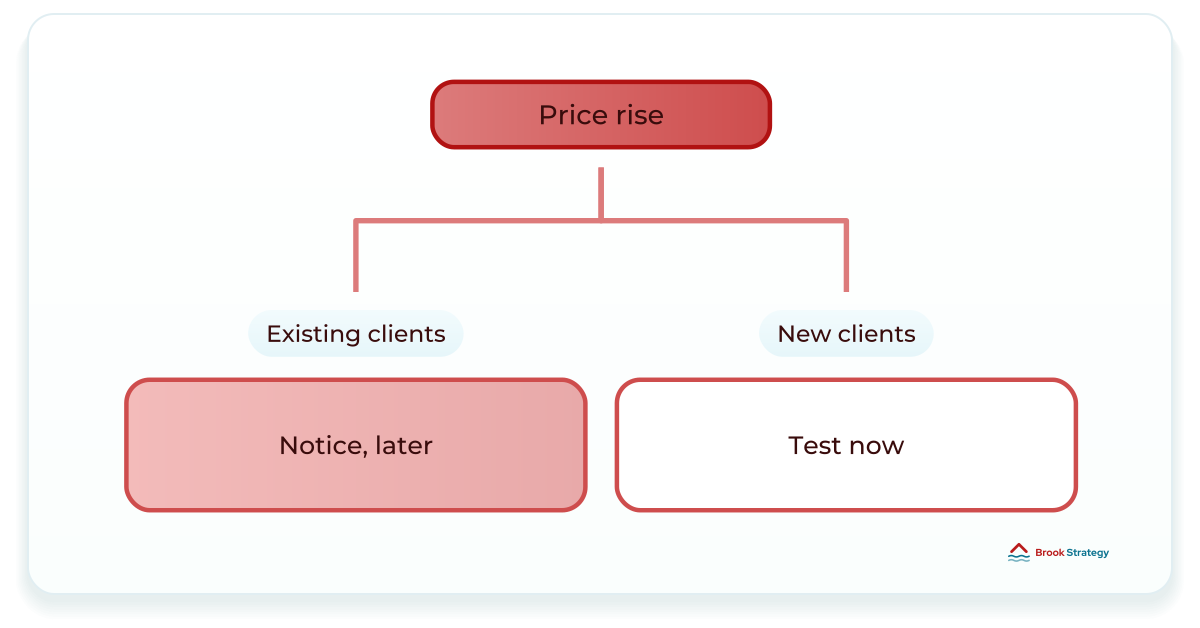
A home services company worried that higher prices would cost it jobs. The owner raised quotes by 8 percent for new customers only, and tracked the win rate for two months. It barely moved. A second step of the same size followed, with existing customers given notice of the change a quarter ahead.
Most price fears in small businesses go untested for years. Testing on new customers limits the risk and gives you a number to decide with.
How to Test the New Price
- Pick a modest increase, such as 5 to 10 percent.
- Apply it to new quotes only.
- Track win rate for two months.
- Compare against the previous period.
- Notify existing customers at least a quarter ahead.
Tools for Quoting
Your quoting tool and a simple win-rate sheet. See my guide on small business tools for quoting and CRM options.
Rank Services by Margin per Hour
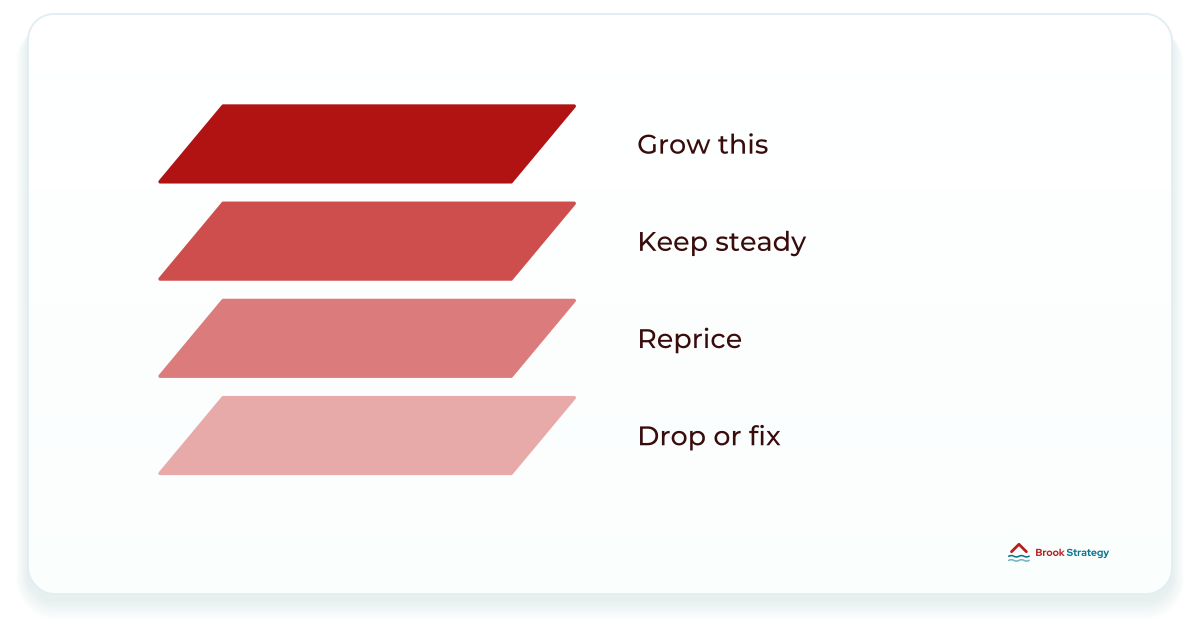
A design studio billed project fees and never looked at hours. When the owner added time tracking for a month, she found that website work earned three times the margin per hour of logo work. She stopped promoting logos and priced them as an entry offer.
The numbers changed the owner's view of her own business. Her favorite work was her least profitable.
How to Rank the Services
- Track hours on every project for four weeks.
- Divide margin by hours per service.
- Rank the services.
- Move marketing effort to the top two.
- Reprice or retire the bottom one.
Data to Pull
A time tracker and your invoice data. The calculation takes an hour once the data is in.
Hire After the Process Is Written Down
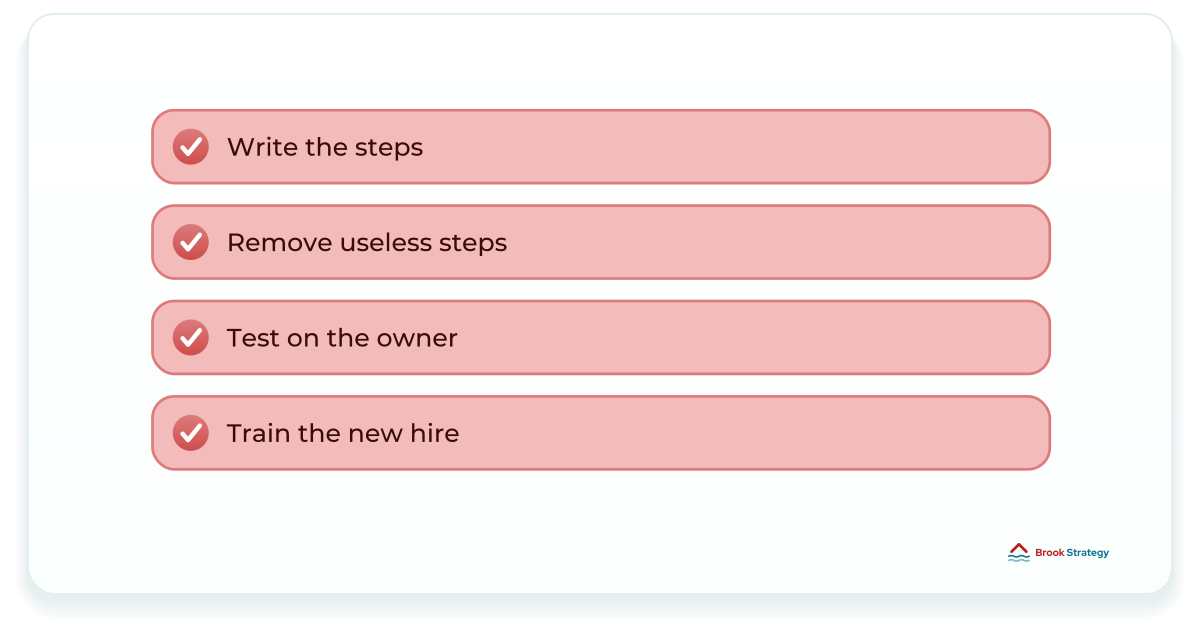
A small logistics firm hired a coordinator and spent three months explaining tasks again and again. For the next hire, the owner first wrote the five core workflows as checklists. The second hire reached full speed about a month sooner than the first.
Writing the checklists also exposed two steps nobody needed. They were removed before the new person started.
How to Prepare the Hire
- List the five tasks the new person will own.
- Write each as a short checklist.
- Remove steps nobody can justify.
- Test the checklists with a current employee.
- Use them in the first two weeks of onboarding.
Where to Keep Them
A shared document folder. Screen recordings help for tasks that are hard to describe.
Double Down on the Best Lead Source
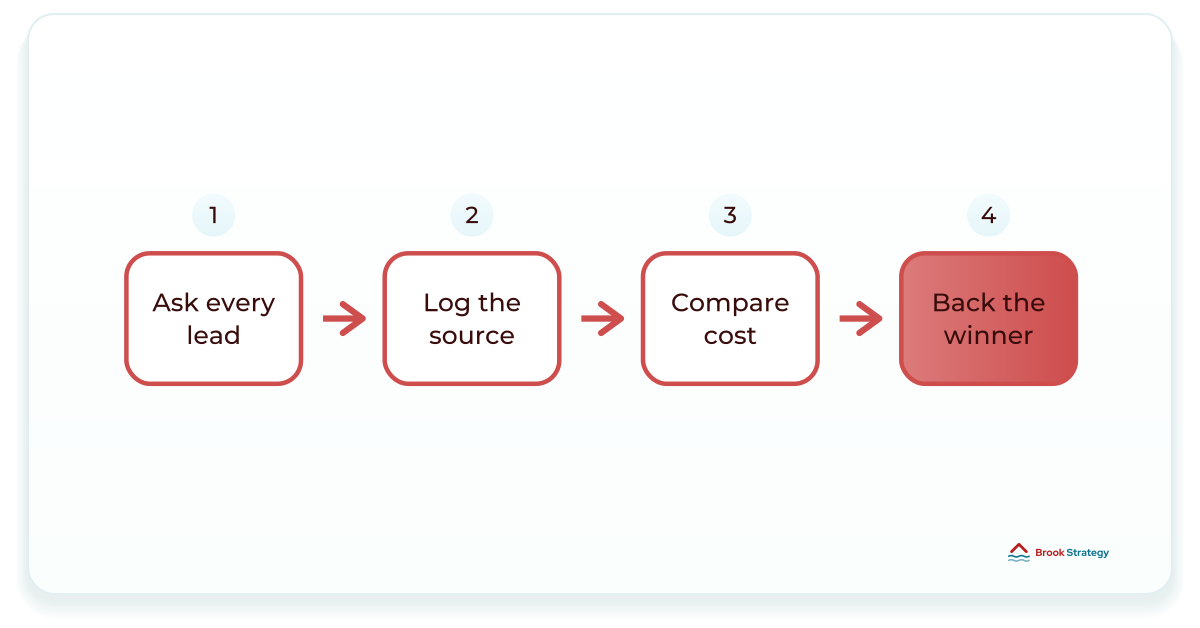
A dental practice used six lead sources and tracked none of them. After three months of asking every new patient how they found the practice, one source, local referrals from nearby clinics, brought half of the new patients. The owner moved most of the ad budget into a referral program.
The tracking question cost nothing. It only required that reception asked it every time and wrote down the answer.
How to Find Your Best Source
- Add a how-did-you-find-us question to every intake.
- Record the answer in one place.
- Review after 90 days.
- Move budget toward the top source.
- Keep a small test budget for new ideas.
Simple Tracking
A form field in your booking system or a simple paper log. A CRM works if you already have one.
One-Page Quarterly Plan
An owner of a 20-person engineering firm used to write a 15-page annual plan that nobody opened. She switched to one page per quarter: three goals, who owns each and one number each. Meetings got shorter, and the team could recite the goals without looking.
The constraint of one page forced real trade-offs. Several nice-to-have projects were dropped in the first session.
How to Build the Page
- Pick three goals for the quarter.
- Assign one owner to each.
- Add one measurable result per goal.
- Share the page with the whole team.
- Review it in a monthly 30-minute meeting.
Where It Lives
A shared document. Print it, and put it where the team meets.
Systemize the Weekly Rhythm
A restaurant group owner worked 70-hour weeks and answered every question himself. He introduced a fixed weekly rhythm: Monday numbers review, Wednesday supplier check, Friday staffing plan. Each meeting had a named lead and a one-page template. His hours dropped to a manageable level within two months.
Questions did not disappear, but they went to the meeting instead of his phone. Staff learned the schedule and saved their questions for it.
How to Set the Rhythm
- List the recurring decisions you make each week.
- Assign each to a fixed meeting and a lead.
- Create a one-page template for each.
- Run the rhythm for eight weeks.
- Adjust the days and leads based on what breaks.
Templates and Calendar
A shared calendar and templates. Keep the meetings short and the templates simple.
Referral Partnership With a Complementary Firm
An accounting practice partnered with a local law firm that served the same kind of owner-managed business. Each firm introduced the other to new clients, with a simple one-page agreement and no fee. In the first year, the partnership brought roughly a fifth of new clients.
The agreement was short, but the follow-up was constant. Both firms sent a thank-you and a status note after every referral.
How to Start the Partnership
- List firms that serve your customers at a different stage.
- Pick two with a reputation you trust.
- Meet and agree what a good referral looks like.
- Write a one-page agreement.
- Report back on every introduction.
Tracking Referrals
Your CRM or a shared sheet to track referrals in both directions.
Match Capacity to the Seasonal Curve
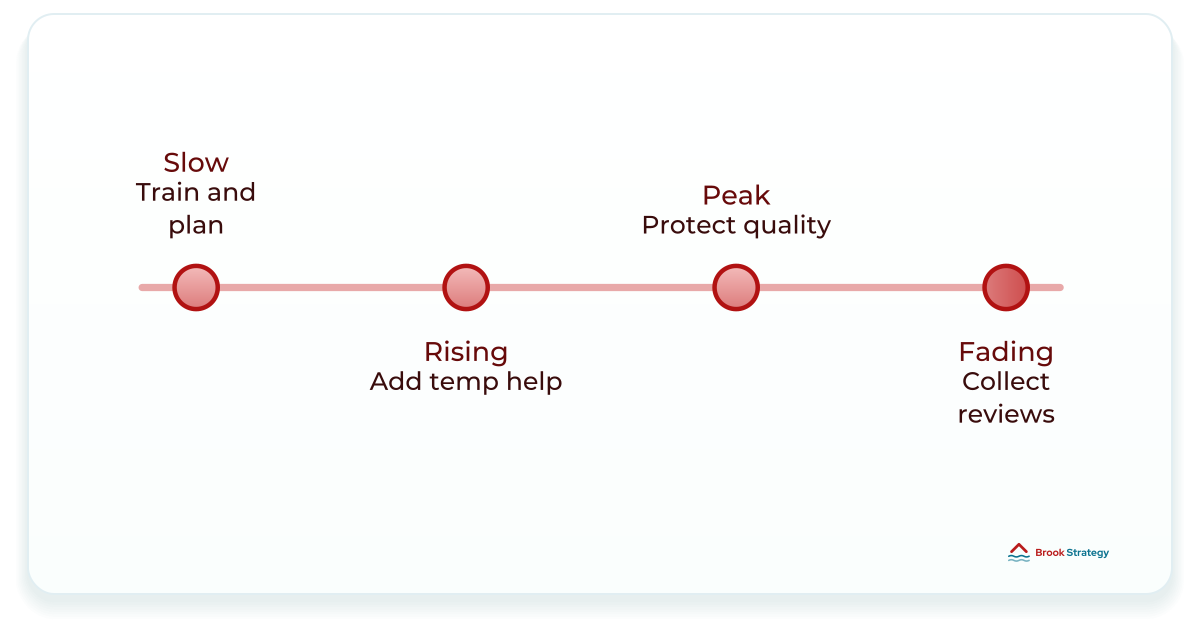
A landscaping company that struggled every spring plotted three years of demand by month. The curve made the answer obvious: hire seasonal staff in March, push maintenance contracts in the quiet months. Crunch weeks fell, and customers noticed the reliability.
The chart took an afternoon to build. It had been available for years in the invoice history.
How to Plan Around Demand
- Export monthly revenue for three years.
- Plot demand against staff hours.
- Mark the months where demand exceeds capacity.
- Plan hires or subcontractors ahead of them.
- Create offers for the quiet months.
Where to Chart It
Spreadsheet charts do the job. Your accounting software holds the data you need.
Annual Strategy Day With Outside Input
A 30-person firm held a one-day strategy session each year with one outside adviser and three customers on a short panel. The customers explained what they valued and what annoyed them. The firm left with two priorities, a decision to drop a product and a calendar for the year.
Hearing customers in the room changed the tone. Staff who usually argued about opinions had facts to work from.
How to Run the Day
- Book the day at least two months ahead.
- Invite three customers for one hour.
- Share the numbers a week before.
- Decide two priorities and one stop.
- Write and share the plan within 48 hours.
Setting Up the Day
A room, a projector and a facilitator who is not the owner. A short consulting engagement can cover preparation, and my small business strategy consulting page shows what that includes.
How to Pick the Moves That Fit Your Business
Twelve is too many to try at once. In my experience, one move per quarter is the right pace for a small team, and the order matters. Start with the move that protects your cash, then the one that raises margin, then the one that builds growth. Check your shortlist against these points:
- You can start it using data you already have.
- One person can own it.
- You will see a result within a quarter.
- It removes work, or at least does not add much.
If you need software to track any of it, my ranking of small business tools covers accounting, CRM and planning options by price. If you would like an outside view on the order, a short call helps you decide.
Questions About Small Business Strategy Examples
What Is an Example of a Small Business Strategy?
Dropping the weakest services and putting the freed time into the best ones is the example I see most. It costs little, needs only your own numbers and often raises margin within a quarter.
How Often Should a Small Business Review Its Strategy?
A short check every month and a half-day reset each quarter works for most teams. A yearly strategy day adds outside input and a chance to stop things.
Does a Small Business Need a Written Strategy?
Yes, one page is enough. Writing it down forces choices and gives your team something to follow. A plan in your head cannot be shared or checked.
How Do I Choose Between Growth and Profit?
Look at your cash and capacity first. If you are stretched, improve margin before you add volume. If you have spare capacity and healthy cash, invest in growth that uses it.
How Do I Know If My Strategy Is Working?
Pick three measures at the start, such as margin per hour, win rate and revenue share of the largest client. If they move in the right direction over two quarters, the plan is working.
How Much Does It Cost to Get Strategy Help?
It depends on scope. A focused review costs much less than a full plan. Ask for a fixed quote after a short call, so you know the price before you commit.
What Is the Most Common Small Business Strategy Mistake?
Trying to serve everyone. Owners say yes to every request, then spread thin. A clear list of who you serve and what you refuse protects both margin and your time.
Note: This article is general information, not legal, financial or tax advice. Figures and examples are estimates based on typical projects, so check current details with your providers and advisers before you decide.
Was this article helpful?
Thank you for letting us know.
Russell Tennant
Russell leads the Brook editorial team and works with our consultants to turn real client engagements into practical guides on roadmaps, go-to-market planning, growth and competitive strategy. Before joining Brook, he spent 11 years in strategy and product marketing roles at software and financial services companies. He has since edited more than 300 articles on strategy practice and drawn on roadmaps and growth plans from over 100 client projects. He is based in Denver, Colorado.