Key Takeaways
- Plan the first quarter in detail, the second in outline and keep the rest as directions.
- Give every bet an owner, a budget, three to five checkable milestones and a stop rule.
- Review monthly against a short scorecard and update the roadmap formally each quarter.
- A slipped milestone is data. Two slips on the same bet mean it is time to check the stop rule.
A growth strategy only matters once it has dates on it. Without a roadmap, the chosen bets drift behind daily work, and by the second quarter nobody can say what was promised. If you want a roadmap built around your own numbers, growth strategy consulting produces one as part of the plan.
Below is the twelve-month structure I use with clients, with realistic timings and the points where plans usually slip. Copy the layout, replace the example bets with yours and keep the rhythm.
The Twelve-Month Layout
The roadmap has four quarters, but each quarter has a different job. The first sets up the bets, the second tests them, the third scales what works and the fourth resets the plan for the next year. The table gives the shape.
| Quarter | Main job | Key milestones | Decision at the end |
|---|---|---|---|
| Q1 | Set up the bets | Baseline agreed, owners named, first tests live | Keep, adjust or stop each test |
| Q2 | Test and learn | Early results read, budgets moved, second wave planned | Which bets earn more money |
| Q3 | Scale what works | Winning bets expanded, weak ones closed | What to scale and what to retire |
| Q4 | Reset for next year | Annual diagnosis, new shortlist, budget request | Next year's bets and targets |
Notice how little is scheduled beyond the first quarter. That is on purpose. Results from the first tests change what the third quarter should look like, and a roadmap that pretends otherwise gets ignored. The framework that produces the bets is in my growth strategy framework, so start there if you haven't chosen yours.
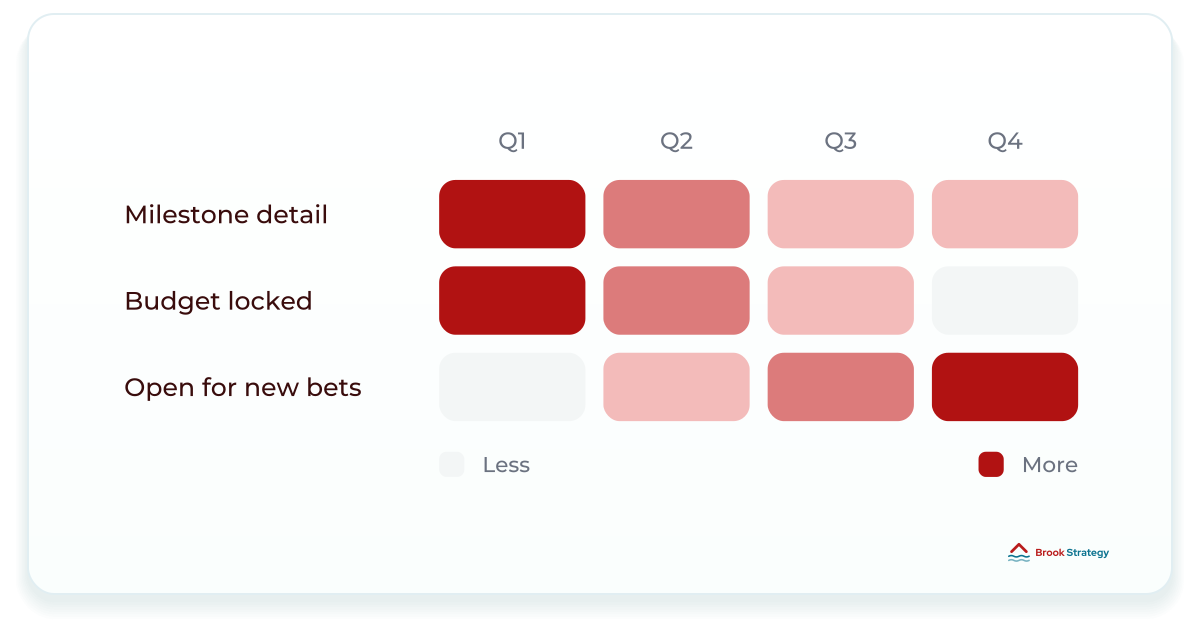
Quarter 1: Foundations and First Tests
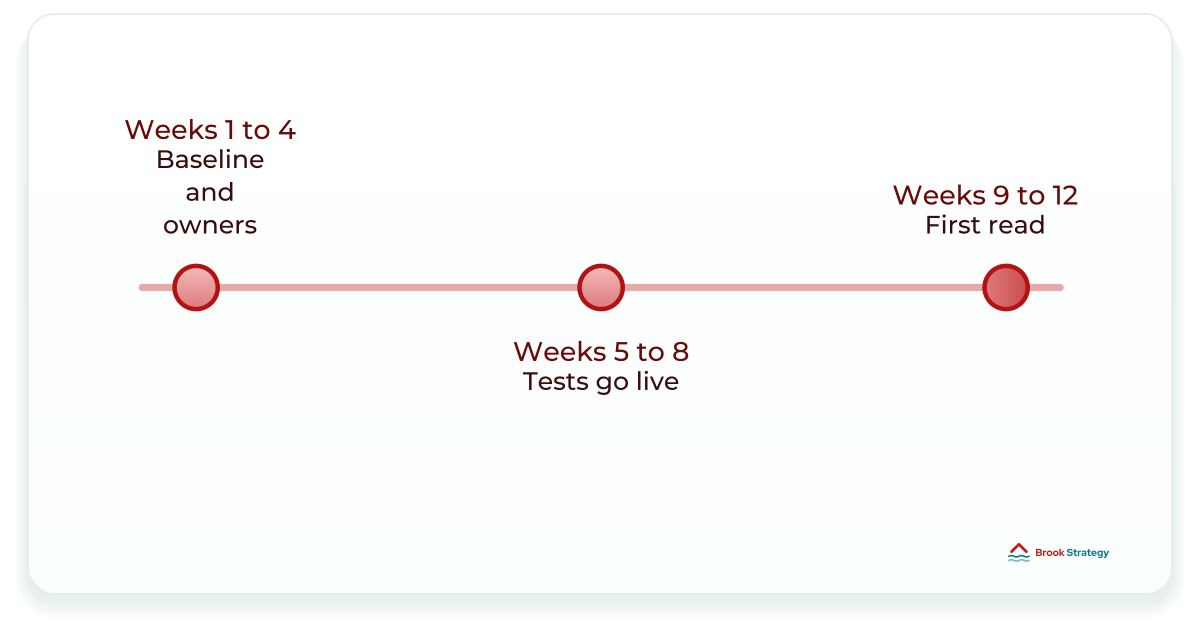
In the first four weeks, lock the baseline. Agree the revenue numbers, name the owner of each bet and write the scorecard. This is dull work, and it is the work that makes every later review useful. If the baseline moves during the year, you can't tell whether a bet worked.
Weeks five to twelve are for starting the first tests. Keep them small. A pricing test on new customers, a referral program with ten customers or a trial of one outbound channel is enough. The aim of the first quarter is a readable signal, not scale.
The most common slip here is a late start. Owners spend six weeks on preparation and then run two weeks of test. Put the start date of each test in the roadmap and treat it as fixed.
Also decide in this quarter how you will tell a good signal from a lucky one. Write down, before the test starts, the result that would make you scale and the result that would make you stop. Deciding after the data arrives invites everyone to read the numbers in their own favor.
Quarter 2: Read the Signal and Move Money
By the start of the second quarter you have a few months of data. Check each bet against its milestone and its stop rule. Some tests will show a clear signal. Others will show noise, and noise usually means the sample is too small, not that the idea is bad.
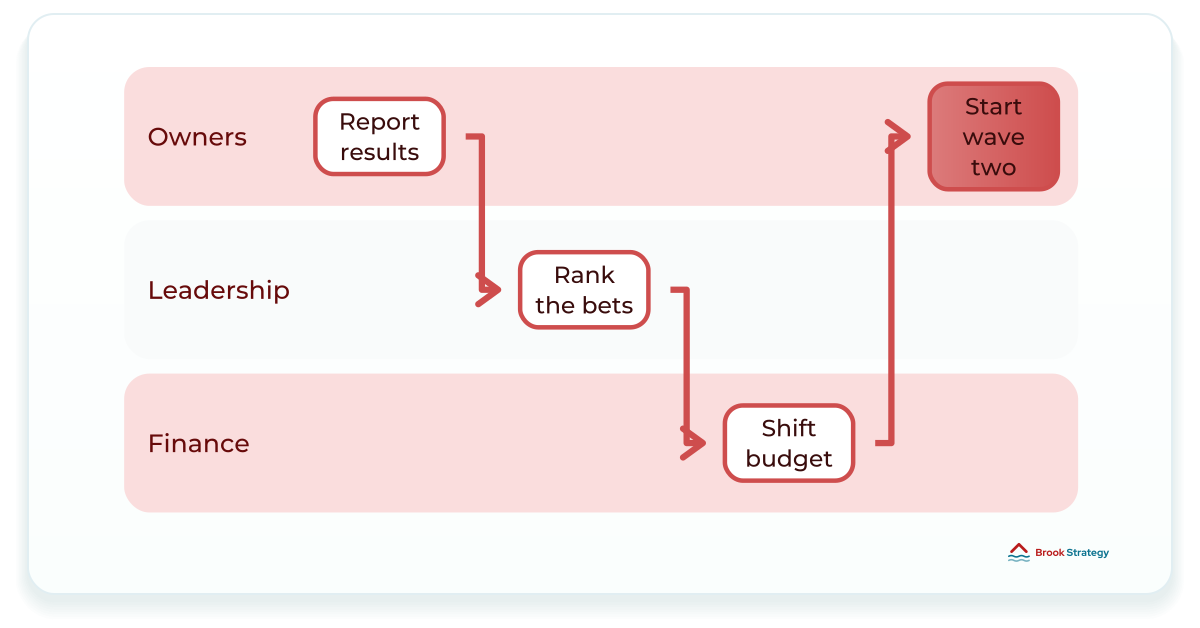
Use the mid-year review to move budget. McKinsey's research on resource allocation found that companies that shifted more capital between business units over fifteen years earned higher shareholder returns than companies that left allocations fixed, and that about a third of business units saw essentially no change in funding year to year (McKinsey on resource allocation). Even if you aren't a multi-unit company, the lesson holds: a roadmap that never moves money is a calendar, not a strategy.
Quarter 3: Scale the Winners and Close the Rest
Scale only bets that hit their milestones and have a reason to keep working at a larger size. A channel that gave good results at a small spend may not hold at four times the budget, so scale in steps and watch the cost to win a customer. If it rises by more than a set margin, pause before spending more.
Close weak bets on their stop dates and write down what you learned. A one-paragraph note per closed bet is enough, and it stops the same idea returning next year under a new name. Give the freed people and budget to the winners at once, because unassigned capacity drifts back to old projects.
If you run a small company, the same quarter looks lighter: one bet to scale and one to close. My advice on growth strategy for small business covers how to size the steps for a team of five or six.
A final habit helps here: keep a short list of ideas that were rejected and the reason. When the same idea returns, you can see whether the reason still holds, which saves a full debate.
Quarter 4: Reset for Next Year
The fourth quarter repeats the diagnosis with a year of new data. Compare the baseline with today across segments, channels and cohorts, and write down the two or three biggest changes. Then rebuild the shortlist, using what you learned about each bet's real size.
Hold the annual decision session in the middle of the quarter, so budget requests reach finance before the planning deadline. Many teams hold it in the last week and then wonder why the first quarter is slow to start.
A Sample Roadmap for a Software Company
Take a mid-market software company with two bets: reworked packaging for the middle tier and a partner channel. The table shows the first six months as a team might write it. The numbers are illustrative, so replace them with your own.
| Month | Packaging bet | Partner bet |
|---|---|---|
| 1 | Interview six lost deals, draft three tier options | Shortlist ten integration partners |
| 2 | Test options with twelve customers | Sign two partners, scope integrations |
| 3 | Launch new tiers for new customers | First integration live |
| 4 | Read win rate against the named rival | Joint webinar, track qualified leads |
| 5 | Adjust tiers from sales feedback | Second integration live |
| 6 | Decision: extend to current customers | Stop-rule check on qualified opportunities |
Look at what the roadmap leaves out: no month-by-month task lists, no design work, no meeting schedules. Those belong in each owner's own plan. The company-level roadmap only shows the milestones that leaders need to see and the dates when they will decide.
When Milestones Slip
Some will. A partner takes six weeks to sign, an engineering team is pulled onto an outage or a test needs more sample than expected. Handle slips in the monthly meeting, with three questions: why did it slip, does the delay change the size of the bet and does the stop date still hold?
One slip with a clear cause is normal. Move the date once, write the reason and carry on. Two slips on the same bet deserve a harder look. In my client work, a bet that keeps slipping is often weaker than it looked at the decision session, or it lacks an owner with enough time. Either way, the fix is a decision in the room, not a new date in the file.
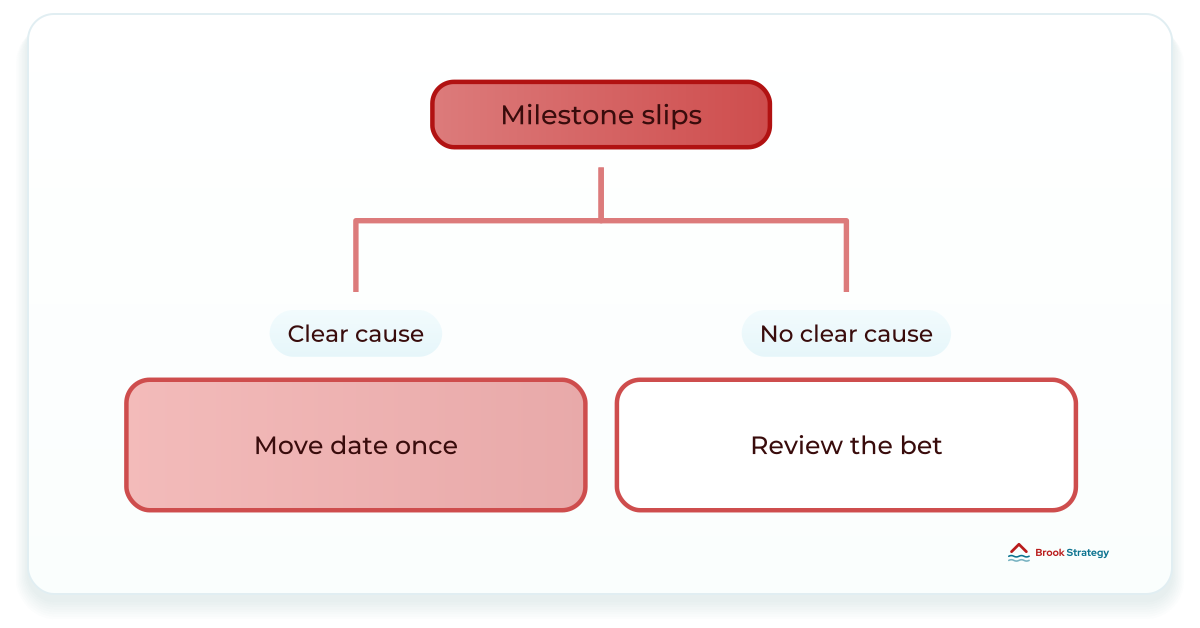
Resist the urge to quietly push every date back. A roadmap that moves without a record loses trust fast, and leaders stop reading it. Keep a short change log at the bottom with the date, the change and the reason.
What Each Bet Needs on the Roadmap
Every bet carries the same short record. Keep it on one line of the roadmap and one page of the scorecard.
| Item | Example | Why it matters |
|---|---|---|
| Owner | Head of partnerships | Someone decides without asking |
| Budget | Two people and a set spend through Q3 | Makes the trade-off visible |
| Milestones | Two integrations live, eight qualified opportunities | Checkable, not activity |
| Leading indicator | Qualified opportunities per month | Readable before revenue arrives |
| Stop rule | Fewer than eight opportunities by end of Q2 | Ends weak bets on a date |
The Review Rhythm That Keeps It Alive
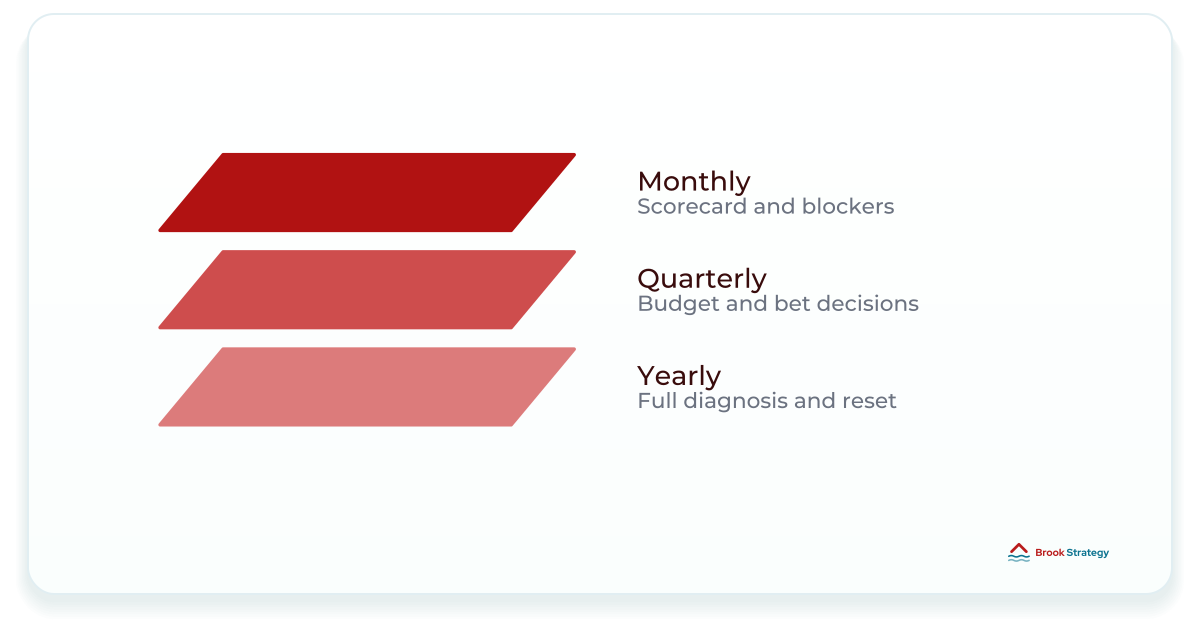
A roadmap fails in the calendar, not on paper. Set three meetings before the year starts:
- Monthly, 45 minutes: owners report on milestones and the scorecard, and nothing else.
- Quarterly, half a day: decide what to continue, scale or stop, and update the roadmap.
- Yearly, one day: redo the diagnosis and choose next year's bets.
Keep the monthly meeting short by sending the scorecard in advance. If a number is red, the owner brings a cause and a proposal. Use the time for decisions, not for reading slides aloud.
How to Adapt the Roadmap to Your Team
A team with a longer sales cycle, such as enterprise software or financial services, should stretch the test windows. If a deal takes six months to close, a quarter is too short to judge a channel by revenue, so judge by qualified opportunities and stage progress instead. A team with a short cycle can read results within weeks and run faster loops.
Also match the detail to your size. A company with fifty people may need swimlanes, dependencies and a program manager. A company with ten needs one page. If you aren't sure where you sit, start with one page and add structure only when you feel its absence.
Questions About the Growth Strategy Roadmap
What Is a Growth Strategy Roadmap?
A growth strategy roadmap is the dated plan behind your growth bets. It shows the milestones for each bet, who owns them, what they cost and which numbers tell you they are working. The strategy decides what to do, and the roadmap decides when and by whom.
How Far Ahead Should a Growth Roadmap Look?
Twelve months is the most useful horizon for most teams. Plan the first quarter in detail, the second in outline and leave the last two as directions you will confirm at each review. Planning every week of a year in advance produces a document that is out of date by March.
How Many Milestones Should Each Growth Bet Have?
Three to five. Each should be a result you can check, such as a launched offer or a set number of qualified opportunities, not an activity. If a milestone can't be confirmed as done or not done, rewrite it.
How Is a Growth Roadmap Different from a Product Roadmap?
A product roadmap lists what you will build and release. A growth roadmap covers revenue bets across pricing, channels, segments and retention, and may include product work only where it supports a bet. The two should reference each other, since many growth bets need product changes.
Who Should Own the Roadmap?
One senior leader who controls revenue, usually the CEO, a chief revenue officer or the head of growth. Each bet then has its own owner. A roadmap owned by a committee tends to be updated by nobody.
How Often Should I Update the Roadmap?
Review it monthly and update it formally each quarter. Monthly reviews are short and check milestones against the scorecard. Quarterly updates may move budget, start new bets or stop old ones.
What Should I Do When a Milestone Slips?
Find the cause in the same meeting. If the cause is a one-off delay, move the date once and note it. If the same bet slips twice, check the stop rule, because repeated delay is often an early sign that the bet is weaker than it looked.
Sources
Note: This article is general information, not legal, financial or tax advice. Figures and examples are estimates based on typical projects, so check current details with your providers and advisers before you decide.
Was this article helpful?
Thank you for letting us know.
Russell Tennant
Russell leads the Brook editorial team and works with our consultants to turn real client engagements into practical guides on roadmaps, go-to-market planning, growth and competitive strategy. Before joining Brook, he spent 11 years in strategy and product marketing roles at software and financial services companies. He has since edited more than 300 articles on strategy practice and drawn on roadmaps and growth plans from over 100 client projects. He is based in Denver, Colorado.