Key Takeaways
- A launch is ready when nine things are settled: segment, value, alternatives, pricing, channels, messaging, readiness, owners and metrics.
- Each point needs evidence from real buyers, not a confident opinion in a meeting.
- Mark gaps as amber and plan to close them in the first pilots instead of pretending they do not exist.
- Set targets and review dates before launch, so the numbers judge the plan and not the other way round.
Most launches that miss do not fail on execution. They fail because one of nine basic questions was never answered, and nobody noticed until the pipeline stayed thin. If you want a partner to work through them with you, go to market strategy consulting starts with the same list.
Below is the checklist I use before a launch plan gets approved. For each point you get the question, why it matters, what evidence to bring and which sources usually supply it. Work through it in order, because later points depend on earlier answers.
The Nine Checks at a Glance
Use the table as a one-page scorecard. If you cannot name the evidence in the last column, that point is not done yet.
| Check | Question to answer | Evidence to bring |
|---|---|---|
| 1. Target Segment | Who exactly will buy first? | The segment is described in one sentence with company type, buyer role and trigger event |
| 2. Customer Problem and Value | What pain does the product remove, and what is it worth? | The problem statement uses phrases taken from buyer interviews |
| 3. Competitive Alternatives | What will buyers do if they do not choose you? | Five or more alternatives are listed, including the status quo |
| 4. Pricing and Packaging | What will you charge, and how is it packaged? | The pricing metric ties to the value the customer gets |
| 5. Sales Motion and Channels | How will buyers find you and buy? | The motion fits the average deal size and sales cycle |
| 6. Messaging and Proof | What do you say, and why should buyers believe it? | A one-sentence message passes the repeat-it-back test with outsiders |
| 7. Product and Team Readiness | Can the product and your people deliver what you promise? | The product is tested with at least a few real customers in the segment |
| 8. Budget, Owners and Timeline | Who does what, by when, with which money? | Every action has a single owner and a date |
| 9. Success Metrics and Review Dates | How will you know it is working? | Three to five metrics with targets and a start baseline |
Your Go-to-Market Checklist, Point by Point
Treat each item as a short working session. Bring the people who own the answer, spend an hour and leave with a written result. Later items refer back to earlier ones, so skipping around costs you rework.
Target Segment
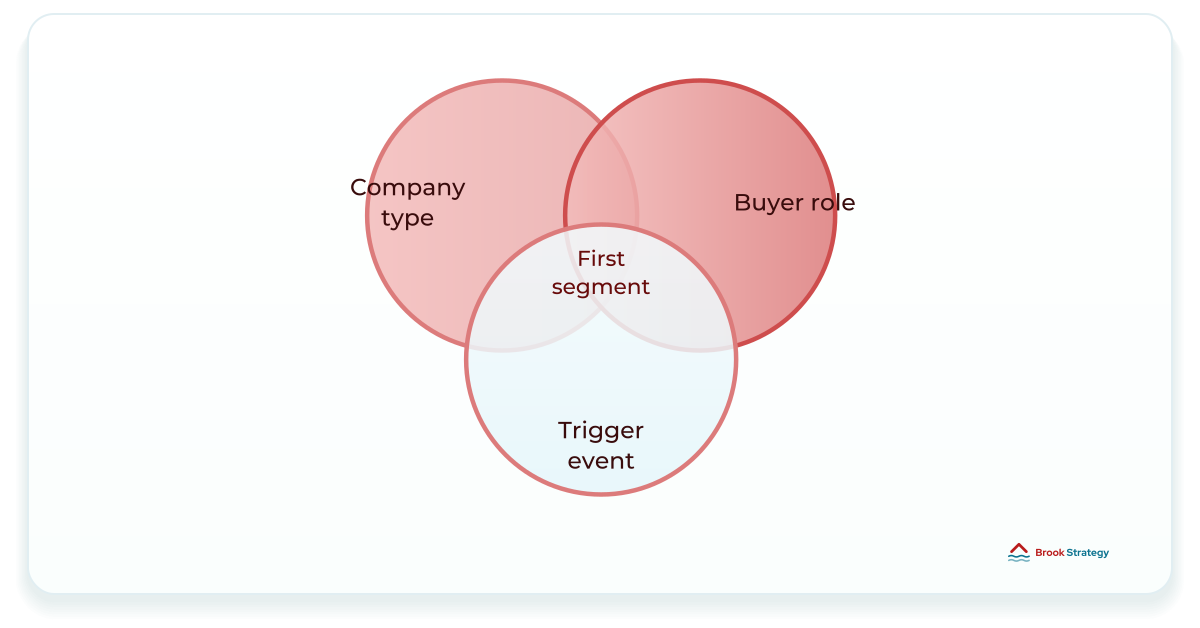
Start with one segment you can name in a sentence: the type of company, the role that signs, and the situation that makes them look for a solution. A launch aimed at everyone gets heard by no one, and sales ends up chasing accounts that were never going to close. In my client work, the first draft of this answer is nearly always too broad.
Test it against data. Pull your best five customers or, before launch, the five prospects who responded most warmly, and see what they share. If you cannot find a pattern, you do not have a segment yet, and further steps will rest on guesses.
What to confirm
- The segment is described in one sentence with company type, buyer role and trigger event
- At least five real people in that segment have confirmed the problem in conversation
- You can estimate how many such accounts exist and reach them
- A second segment is named as the next step, so the first one stays focused
Where the data comes from
Your CRM, closed-won deals and a handful of buyer calls cover most of it. For market size, a LinkedIn Sales Navigator search or an industry database gives a fast first count.
Customer Problem and Value
Write the problem in the buyer's words, then put a number on it where you can: hours lost, revenue leaking, risk avoided. Product teams often describe features here, and buyers do not buy features. They buy the gap between where they are and where they want to be.
Check that the value holds up in a finance conversation. A claim like faster reporting means little until you can say how many hours per month and who gets them back. If you cannot size it, say so openly and plan a way to find out during the first pilots.
What to confirm
- The problem statement uses phrases taken from buyer interviews
- The value is stated in time, money or risk, with the way you measured it
- You know who feels the pain and who controls the budget, and whether they are the same person
- One proof point exists, such as a pilot result or a customer quote
Useful inputs
Interview notes, support tickets and lost-deal reasons are the richest sources. A simple spreadsheet that converts the pain into annual cost is usually enough.
Competitive Alternatives
The strongest competitor is often a spreadsheet, an internal build or doing nothing. List every real alternative, including those, and note why buyers pick each one today. A launch plan that ignores the do-nothing option has not met its real rival.
Then decide where you win and where you do not. Honest positioning says which buyers you are not for, and that makes your message sharper for the ones you want. Teams that skip this step usually end up comparing feature tables they lose.
What to confirm
- Five or more alternatives are listed, including the status quo
- For each, you know why buyers chose it and what they dislike
- You have a clear statement of where you are better, and where you are not
- Your sales team can answer the question, why not the other option, in under a minute
Where to look
G2 and Capterra reviews of rivals show what their buyers dislike, and your own lost-deal notes show why you lose. Win-loss calls fill the gaps.
Pricing and Packaging
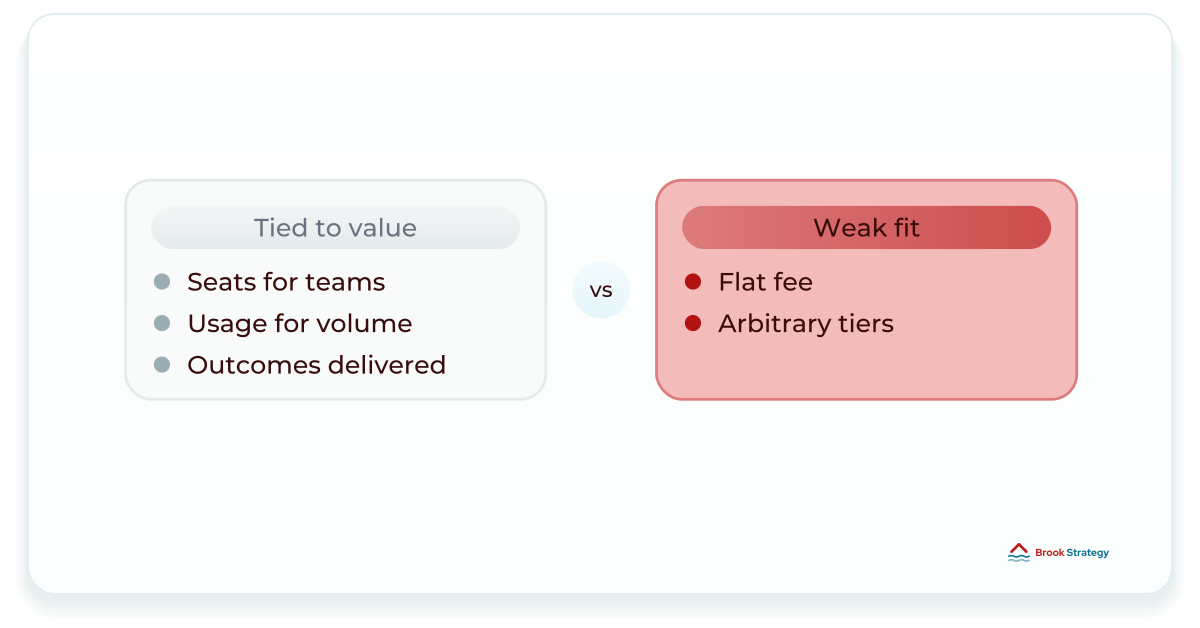
Pricing is part of the launch, not something to fix afterward. Choose the pricing metric first, such as per seat, per usage or per outcome, then decide the tiers. A good metric grows as the customer gets more value, which keeps your price fair and your revenue growing.
Test your price in conversations before you publish it. Ask buyers what they would expect to pay and at what point it feels too cheap or too expensive. If your price is a discount against a rival, plan how you will raise it later, since early customers tend to anchor on it.
What to confirm
- The pricing metric ties to the value the customer gets
- Two or three tiers are drafted with clear differences
- At least ten buyers reacted to the price in conversation
- Discount rules and approval limits are written down before the first deal
Helpful resources
Competitor pricing pages, buyer conversations and a basic willingness-to-pay survey cover the first version. The guide to pricing strategy consulting shows what a deeper study looks like.
Sales Motion and Channels
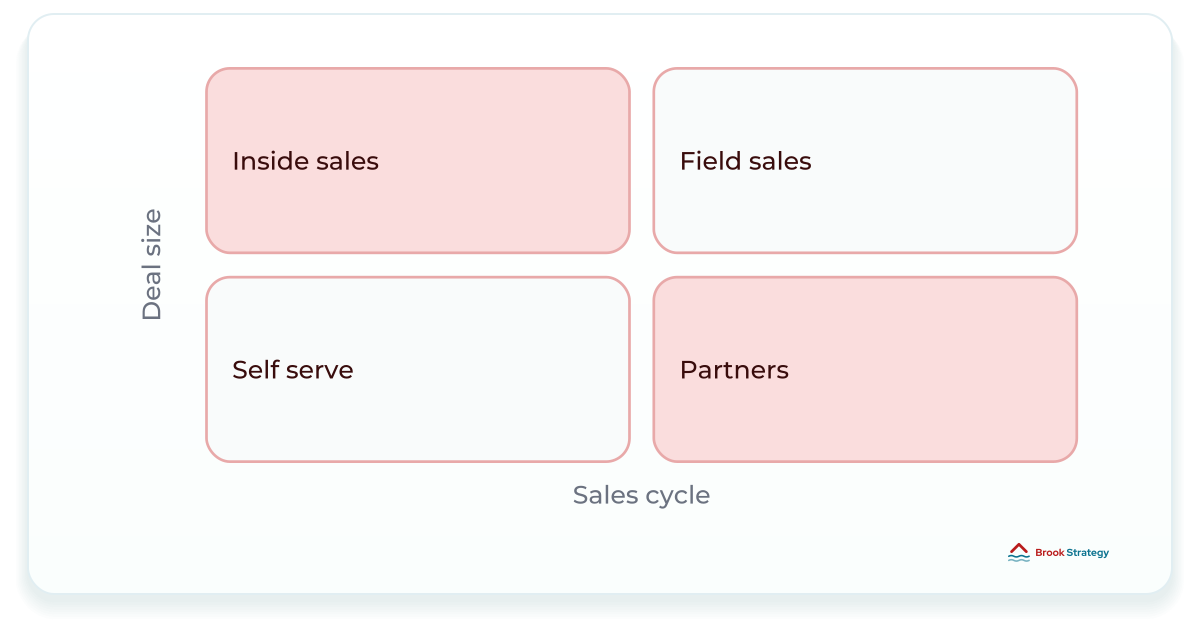
Match the motion to the deal size. Low-priced products usually sell through self-serve and marketing, while larger deals need a sales team and a longer process. Mixing both without a plan creates confusion about who owns the lead.
Pick no more than two or three channels for launch and give each one enough budget to show a result. Spreading small amounts over many channels hides what works. Decide upfront how a lead moves from first contact to a signed deal and who handles each step.
What to confirm
- The motion fits the average deal size and sales cycle
- Two or three launch channels are chosen with a budget for each
- Lead handoff rules between marketing and sales are written down
- You know the expected conversion at each stage, even as a rough guess
Common setups
A CRM such as HubSpot or Salesforce tracks the pipeline, and your website analytics shows channel results. Keep the setup simple enough for the first quarter.
Messaging and Proof
Build the message from the problem and the value, not from the product tour. A short statement should say who it is for, what problem it solves and what makes it different. Test it by reading it aloud to someone outside the company and asking them to repeat it back.
Back every claim with proof: a customer result, a number, a short demo or a recognised reference. Where you have none yet, make a pilot customer part of the plan. Claims without proof get ignored, and sales stops using the deck.
What to confirm
- A one-sentence message passes the repeat-it-back test with outsiders
- Each major claim has a proof point or a plan to get one
- Sales, marketing and customer success use the same wording
- A short list of objections and agreed answers exists
Where it lives
A one-page messaging brief that sales and marketing both sign is enough. Keep it in a shared document that people actually open.
Product and Team Readiness
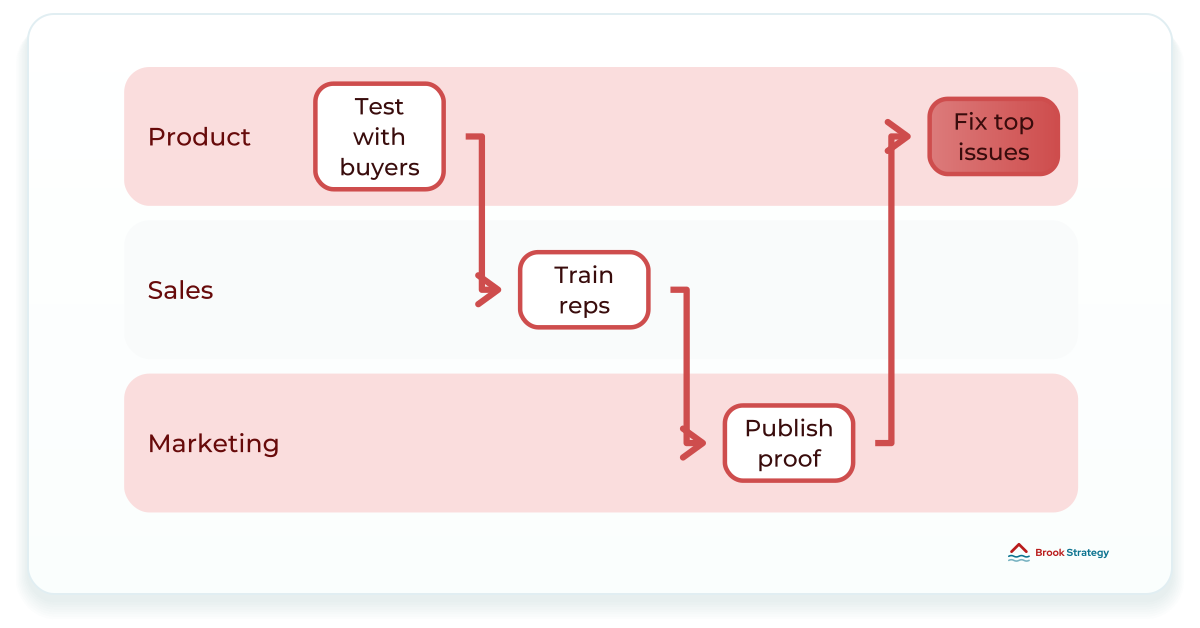
Check that the product works for the target segment today, not on the roadmap. Gaps are fine if you know them and tell buyers early, but surprises damage the first reviews. Onboarding, support and documentation need to be ready for the first customers, who will test them hard.
Prepare sales. Reps need training on the segment, the message, pricing rules and the objections they will hear. A launch with an unprepared team wastes the leads marketing worked to get.
What to confirm
- The product is tested with at least a few real customers in the segment
- Onboarding and support are staffed for the expected first volume
- Sales has been trained and has used the materials in a practice call
- Known product gaps are listed with the answer you will give
Typical needs
A shared drive of sales materials, a recorded demo and a short support playbook cover most launches. Larger teams add a formal enablement program.
Budget, Owners and Timeline
Write the plan as a list of actions with one owner and one date each. Shared ownership slows everything, and a launch with five owners for one task has none. Add a budget range per channel and a reserve for adjustments after the first month.
Plan backwards from the launch date and leave slack for delays, since something always moves. If you want a longer view of how the work spreads over a year, my go to market strategy roadmap shows one way to phase it.
What to confirm
- Every action has a single owner and a date
- Budget is set per channel with a reserve
- Dependencies between teams are marked, such as product release before campaign
- A decision-maker is named for trade-offs when timelines slip
Tracking options
A simple spreadsheet or a board in your work management tool is enough. The best one is the one your team already opens each day.
Success Metrics and Review Dates
Choose a few numbers tied to the plan: pipeline created, win rate, sales cycle length and payback on the launch budget. Set a target for each before you start, because targets set afterward tend to match whatever happened.
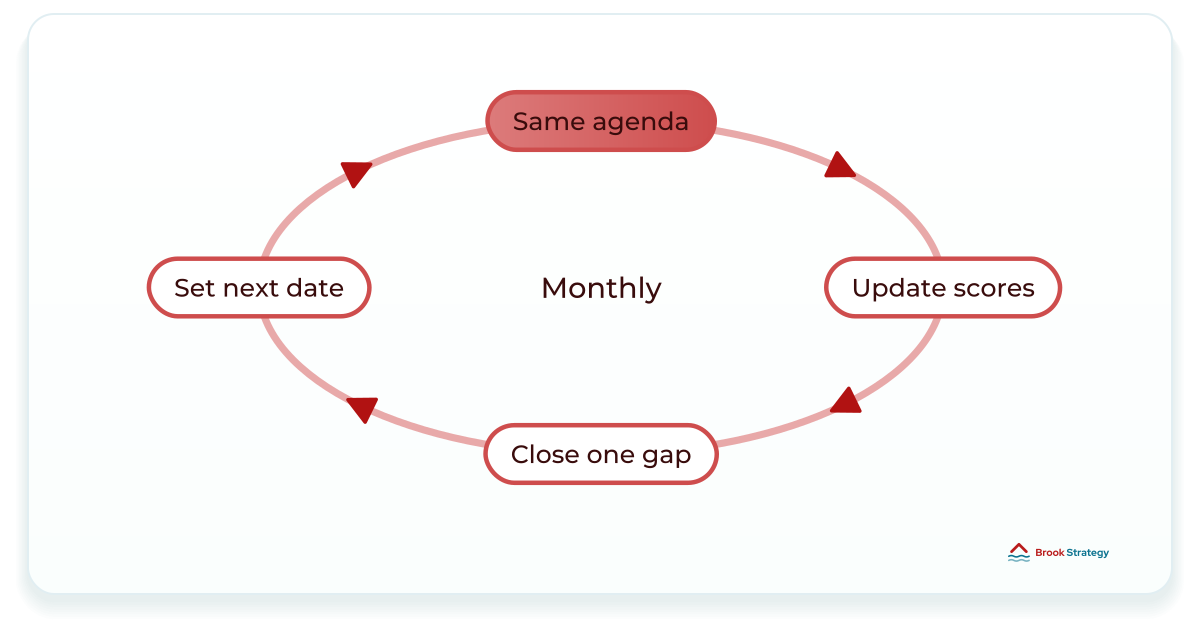
Schedule the reviews now. A short monthly review with the same agenda each time, and a rule for what happens when a number misses, keeps the plan alive. Decide upfront which signals mean adjust, which mean stop and which mean double down.
What to confirm
- Three to five metrics with targets and a start baseline
- Review dates are in calendars for at least the first quarter
- Decision rules exist for adjust, stop and expand
- One person owns the report and delivers it before each review
Reporting setup
Your CRM and web analytics usually hold the data. A single dashboard or a one-page monthly summary is enough to start.
How to Score Your Own Checklist
Give every point a color. Green means you have evidence from buyers or customers. Amber means you have a reasoned opinion and a way to test it. Red means you do not know. Count them, then compare to the table.
| Result | What it means | What to do next |
|---|---|---|
| 7 to 9 green | The plan is ready, with a few items to watch | Launch to the first segment and review monthly |
| 4 to 6 green | Core pieces are solid, but some assumptions are untested | Run a small pilot to close the amber items first |
| 0 to 3 green | The plan is mostly opinion | Spend two to four weeks on buyer interviews before you commit budget |
How to Choose Which Gaps to Close First
When several points are amber, close the ones that sit earliest on the list. A weak segment makes every later answer less useful, while a missing review date is easy to add in an afternoon. After that, rank the remaining gaps by how much money rides on them.
- Segment, value and alternatives come first, since everything else builds on them.
- Pricing and channels come second, because they set the economics of the launch.
- Messaging and readiness follow, as they depend on the first two groups.
- Owners and metrics can be completed last, but must be done before launch.
If your team cannot agree on the answers, or you have launched before and missed, an outside review can shorten the debate. The consultants I work with run a free call that goes through this list with your numbers.
Questions About the Go-to-Market Checklist
How Long Should a Go-to-Market Plan Be?
I suggest you keep it to about five pages. One page each for the segment and value, the competitive view, pricing, the channel and sales motion, and the plan with owners and metrics. Longer plans tend to go unread. The checklist above gives you the headings, and a short appendix can hold the research.
Who Should Own the Go-to-Market Plan?
One named leader should own it, usually the head of product marketing, the head of growth or the founder in a small company. Product, sales and marketing each own parts of the plan, but a single owner resolves trade-offs and keeps the review rhythm going.
What Is the Difference Between a Go-to-Market Strategy and a Marketing Plan?
A marketing plan covers campaigns and channels. A go-to-market strategy decides who you sell to, what you offer, how you price and how you sell. The marketing plan sits inside it as one part, next to sales, pricing and partners.
How Many Customers Should I Talk to Before Launching?
Aim for at least ten to fifteen conversations in your target segment. Patterns usually appear after the first eight or so. If answers keep varying, your segment is probably too broad, and you should narrow it before you continue.
Can I Use This Checklist for a New Feature or a New Market?
Yes. For a feature, you can often shorten the checklist to segment, value, messaging and metrics. For a new market, spend more time on competitors, pricing and channels, since those usually differ the most from your home market.
What If I Cannot Answer Every Point Yet?
Gaps are normal. Mark each point green, amber or red, and plan a way to turn the amber and red items into evidence during the first pilots. A launch with a few honest amber items is safer than one that pretends all is known.
When Should I Bring in a Consultant?
Consider it when you have several segments and cannot rank them, when launches have missed before, or when teams disagree on the target buyer. An outside view and fresh interviews save time. A free call is usually enough to see if it is worth doing.
Note: This article is general information, not legal, financial or tax advice. Figures and examples are estimates based on typical projects, so check current details with your providers and advisers before you decide.
Was this article helpful?
Thank you for letting us know.
Russell Tennant
Russell leads the Brook editorial team and works with our consultants to turn real client engagements into practical guides on roadmaps, go-to-market planning, growth and competitive strategy. Before joining Brook, he spent 11 years in strategy and product marketing roles at software and financial services companies. He has since edited more than 300 articles on strategy practice and drawn on roadmaps and growth plans from over 100 client projects. He is based in Denver, Colorado.